
Search Engine Optimization (SEO) and Generative Engine Optimization (GEO)
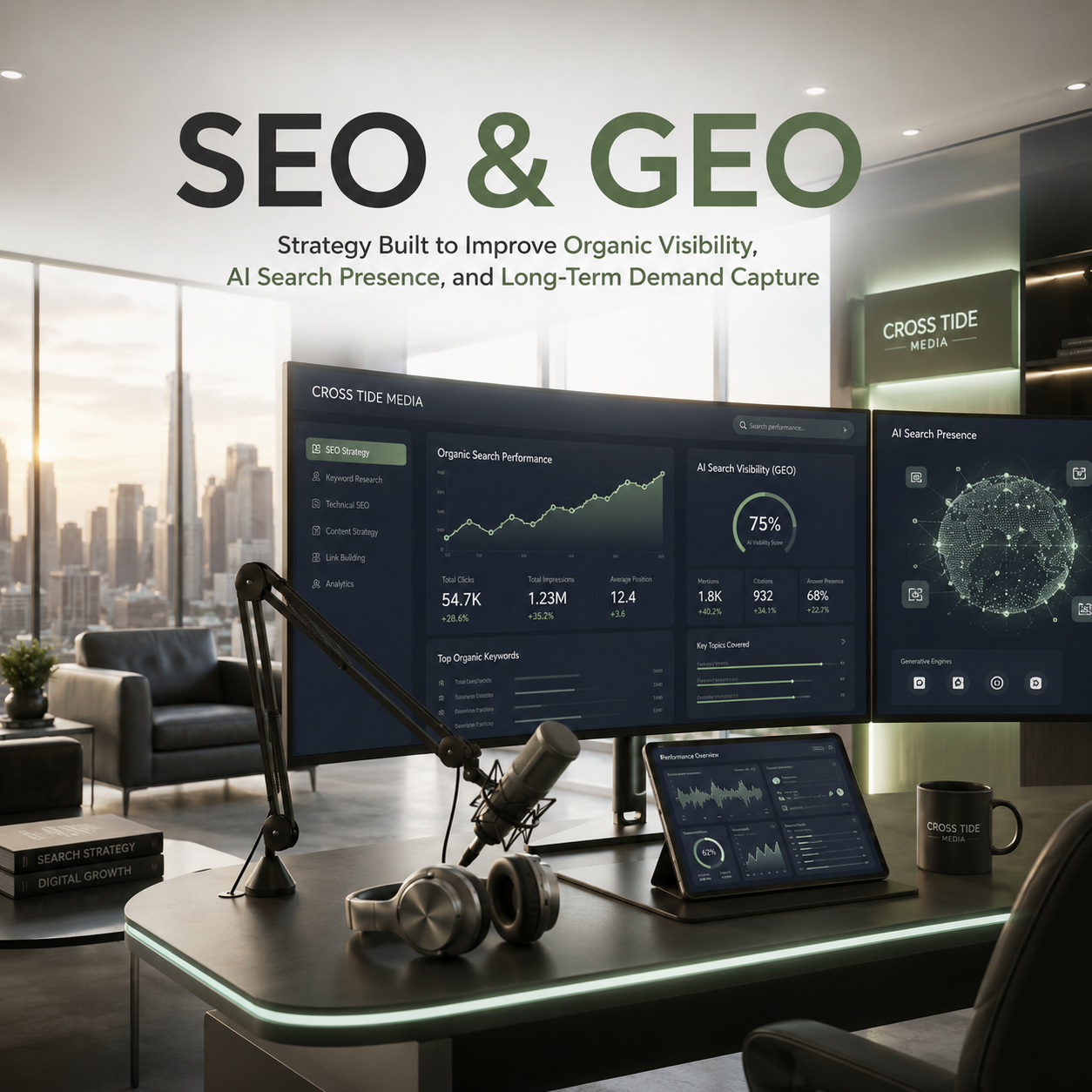
SEO and GEO Strategy Built to Improve Organic Visibility, AI Search Presence, and Long-Term Demand Capture
Search behavior has changed. People still use traditional search engines to find businesses, services, products, and answers, but they are also discovering brands through AI-generated search experiences, answer engines, and conversational search tools. That means modern visibility is no longer limited to ranking in standard search results. It now includes how a brand appears across organic search, AI-assisted search experiences, and generative discovery environments.
Traditional SEO remains one of the most important long-term growth channels in digital marketing because it helps businesses earn visibility when people search with intent. GEO, or generative engine optimization, expands that strategy by helping brands improve how they are understood, surfaced, referenced, and cited in AI-driven search environments. Together, SEO and GEO help businesses strengthen both traditional organic presence and emerging AI search visibility.
At Crosstide Media, we build SEO and GEO strategies around search intent, technical structure, content quality, entity clarity, site experience, and measurable performance. Whether the goal is to improve rankings, drive qualified organic traffic, increase search visibility, support lead generation, or strengthen brand presence in AI search environments, we help businesses build search strategies designed for long-term relevance and growth.
Jump To
What Is Search Engine Optimization (SEO) and Generative Engine Optimization (GEO)?
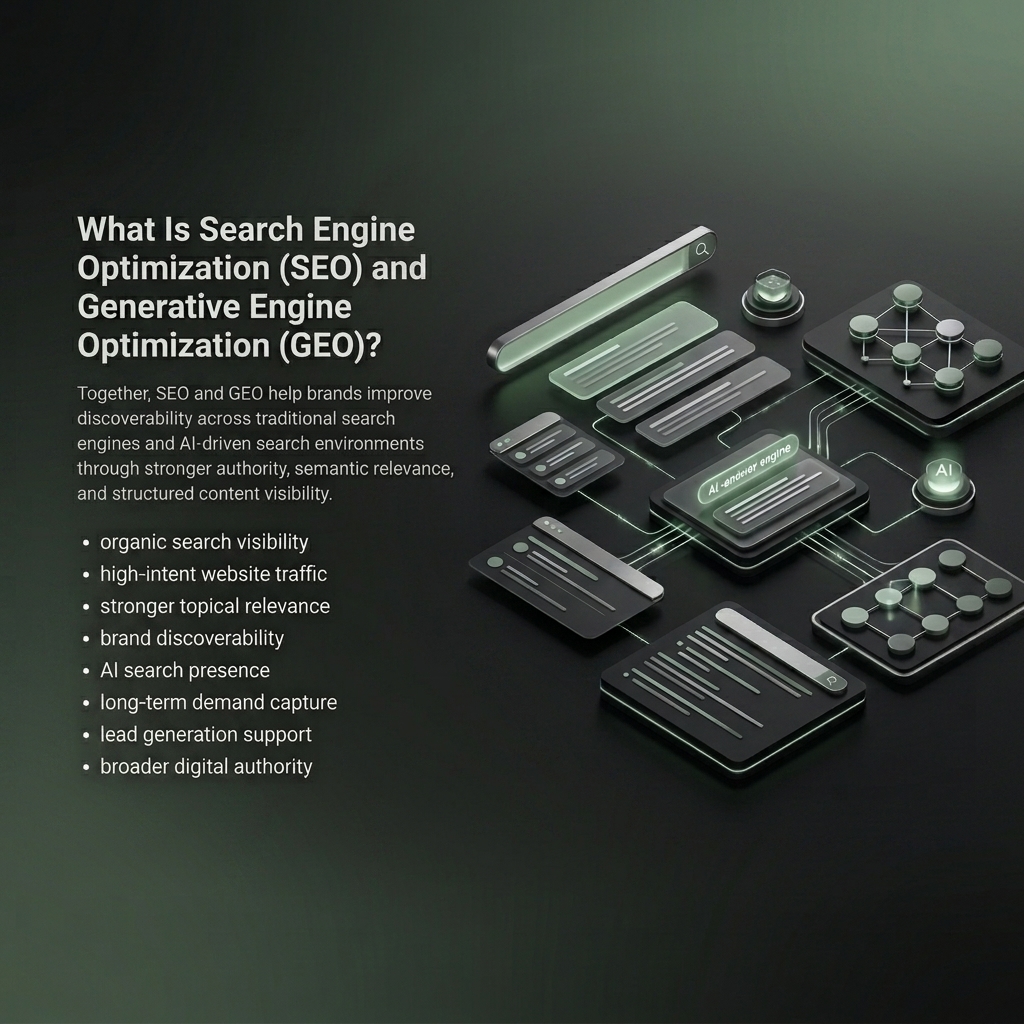
Search engine optimization, or SEO, is the process of improving a website so it can rank more effectively in organic search results for relevant queries. SEO helps businesses increase visibility in search engines, attract qualified traffic, and improve how search engines understand the website, its content, and its relevance to user intent.
Generative engine optimization, or GEO, is the practice of improving how a brand, website, and content are understood and surfaced in AI-driven search and answer environments. While SEO focuses heavily on rankings, crawlability, content relevance, and organic traffic, GEO also considers how a business is summarized, referenced, and included in AI-generated answers or conversational search results.
Together, SEO and GEO help support:
- organic search visibility
- high-intent website traffic
- stronger topical relevance
- brand discoverability
- AI search presence
- long-term demand capture
- lead generation support
- broader digital authority
This makes SEO and GEO one of the most important long-term foundations in digital marketing.
Why SEO and GEO Matter
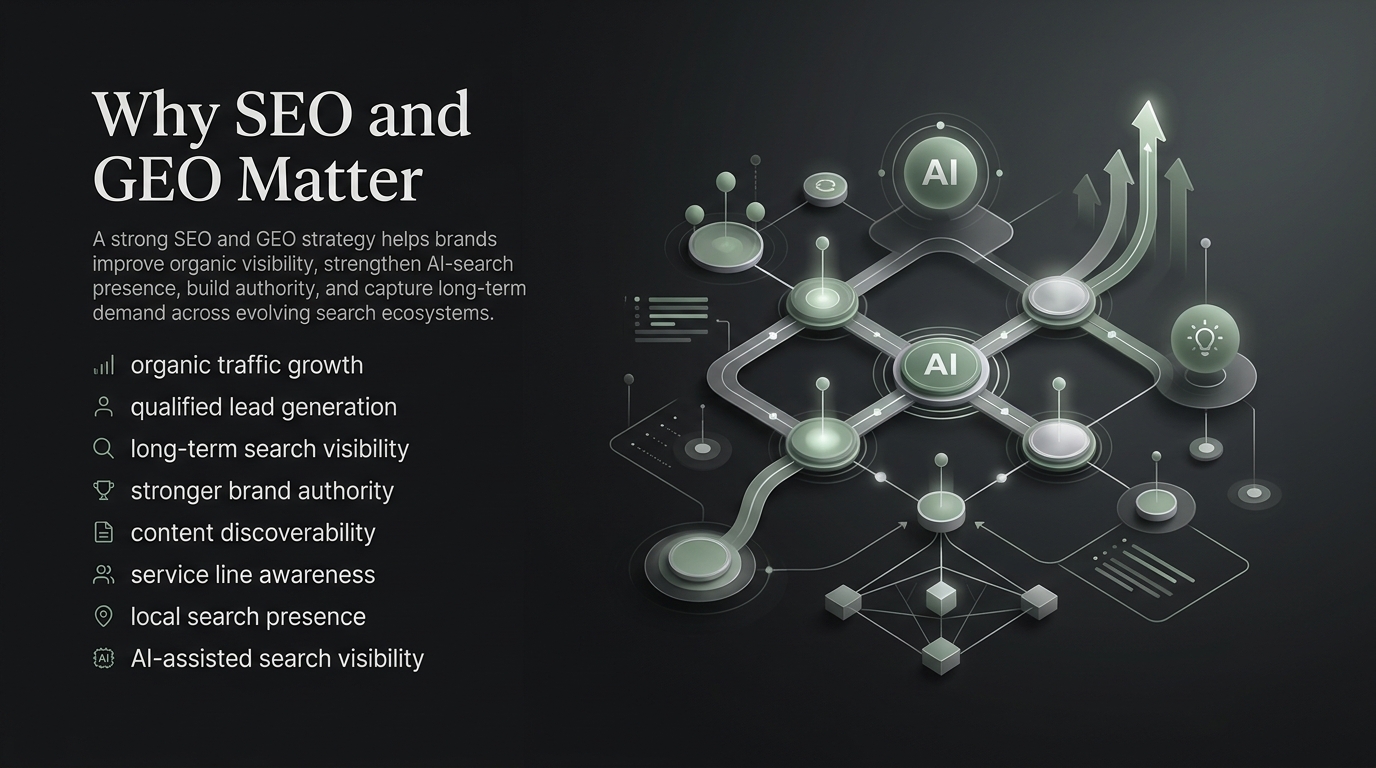
SEO and GEO matter because search remains one of the most important ways people discover businesses, evaluate options, compare providers, and find answers. Some users are ready to act right away. Others are researching, learning, and narrowing their choices. In both cases, visibility matters.
A strong SEO and GEO strategy can help support:
- organic traffic growth
- qualified lead generation
- long-term search visibility
- stronger brand authority
- content discoverability
- service line awareness
- local search presence
- AI-assisted search visibility
Why businesses invest in SEO and GEO
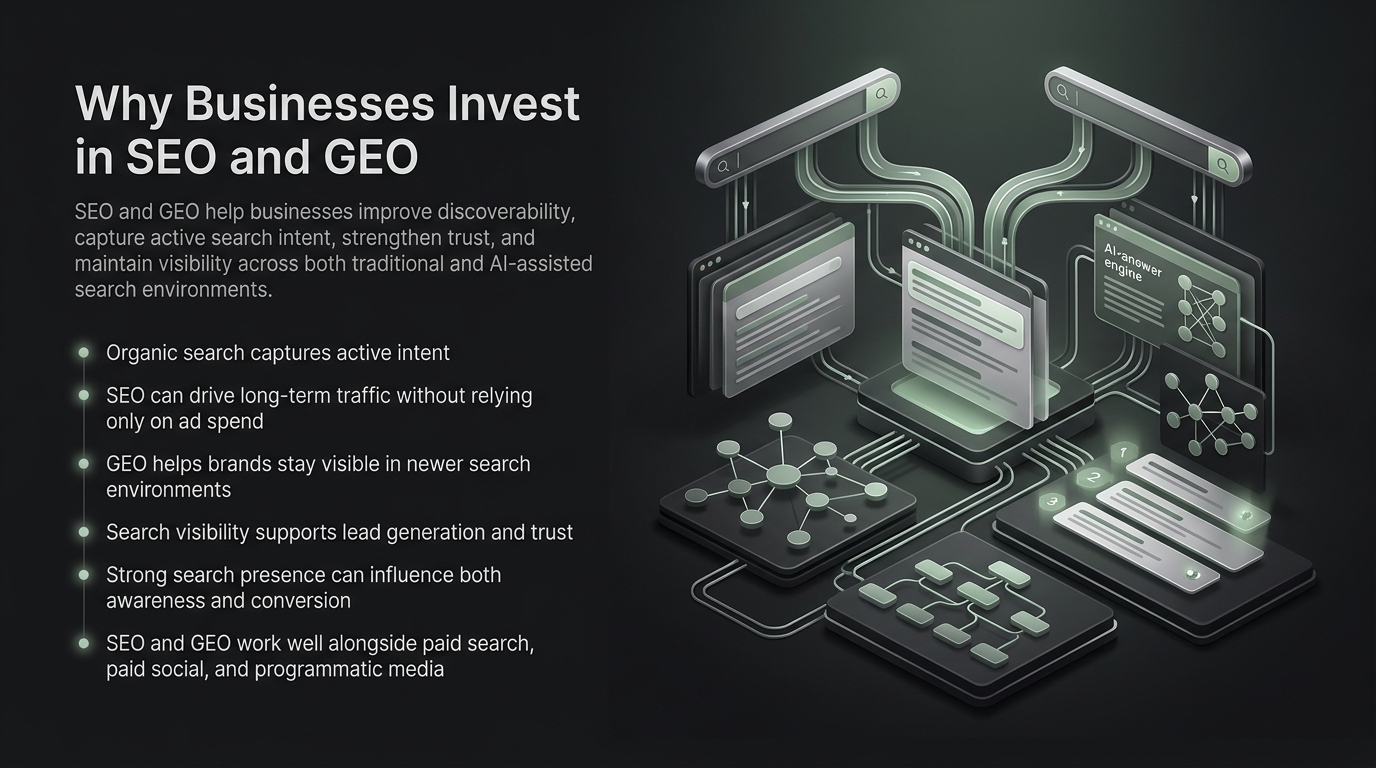
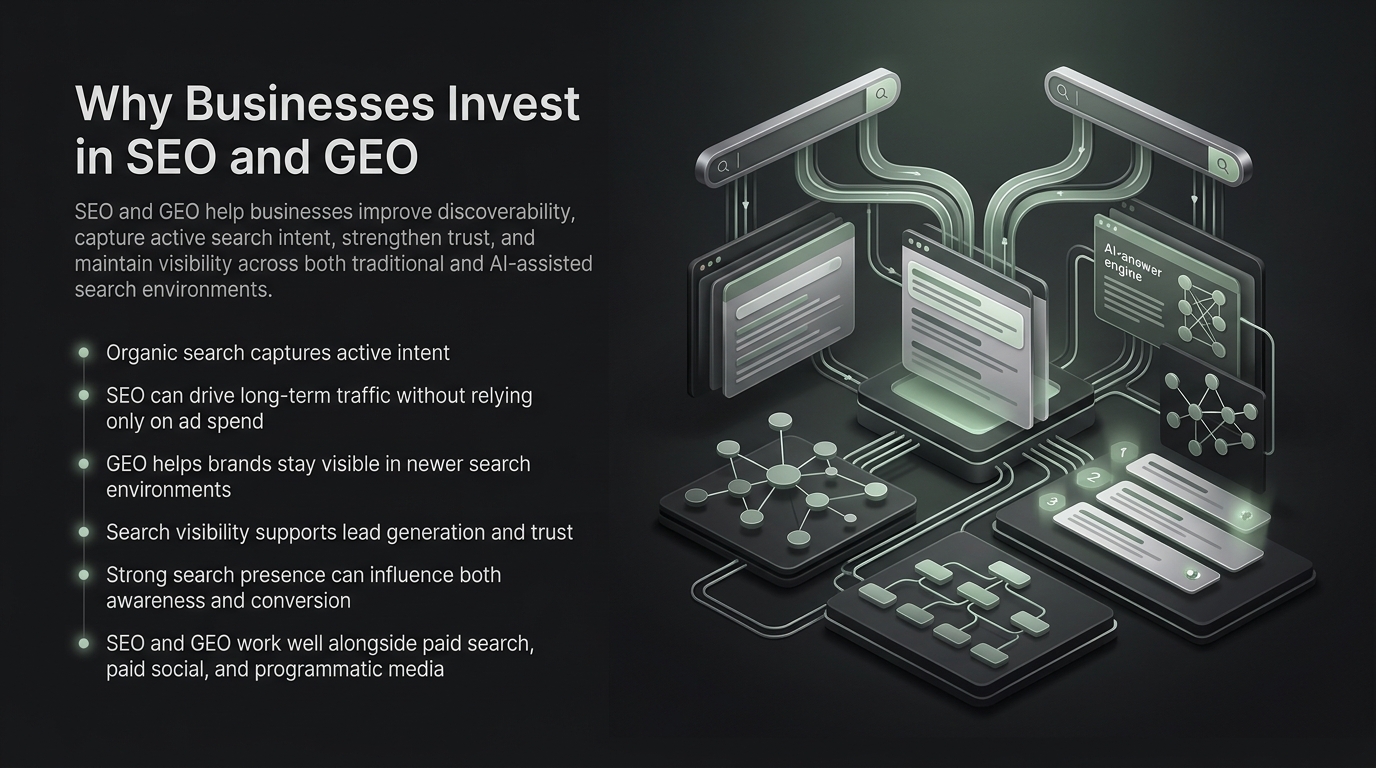
- Organic search captures active intent
- SEO can drive long-term traffic without relying only on ad spend
- GEO helps brands stay visible in newer search environments
- Search visibility supports lead generation and trust
- Strong search presence can influence both awareness and conversion
- SEO and GEO work well alongside paid search, paid social, and programmatic media
For Crosstide Media, SEO and GEO are valuable because they help businesses capture demand, build trust, and strengthen visibility across both traditional and emerging search behavior.
Why businesses invest in SEO and GEO
- Organic search captures active intent
- SEO can drive long-term traffic without relying only on ad spend
- GEO helps brands stay visible in newer search environments
- Search visibility supports lead generation and trust
- Strong search presence can influence both awareness and conversion
- SEO and GEO work well alongside paid search, paid social, and programmatic media
For Crosstide Media, SEO and GEO are valuable because they help businesses capture demand, build trust, and strengthen visibility across both traditional and emerging search behavior.
How Search Behavior Is Changing
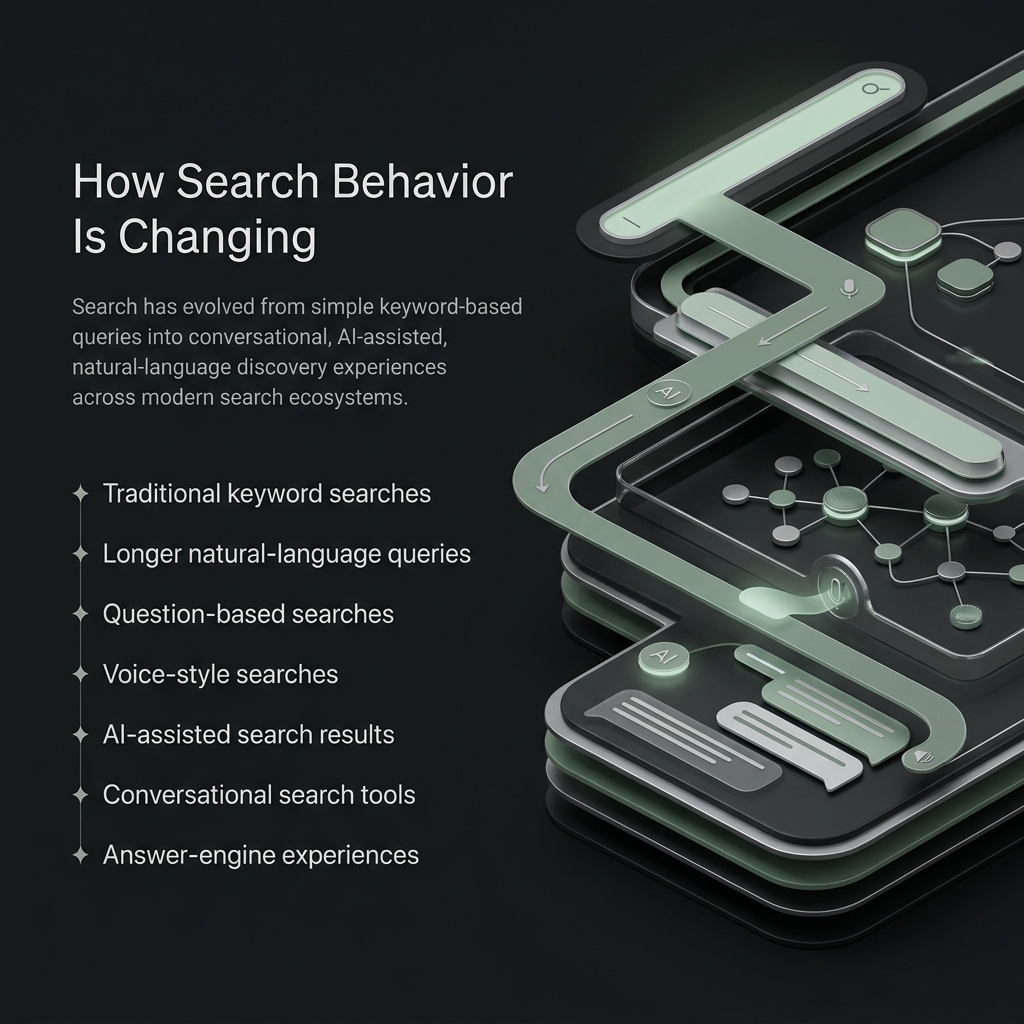
Search is no longer limited to typing a short keyword into a search engine and clicking one of ten blue links. Users now search in multiple ways:
- traditional keyword searches
- longer natural-language queries
- question-based searches
- voice-style searches
- AI-assisted search results
- conversational search tools
- answer-engine experiences
That shift matters because businesses need content and site structure that can work in both traditional search environments and newer generative search experiences.
What this means for brands
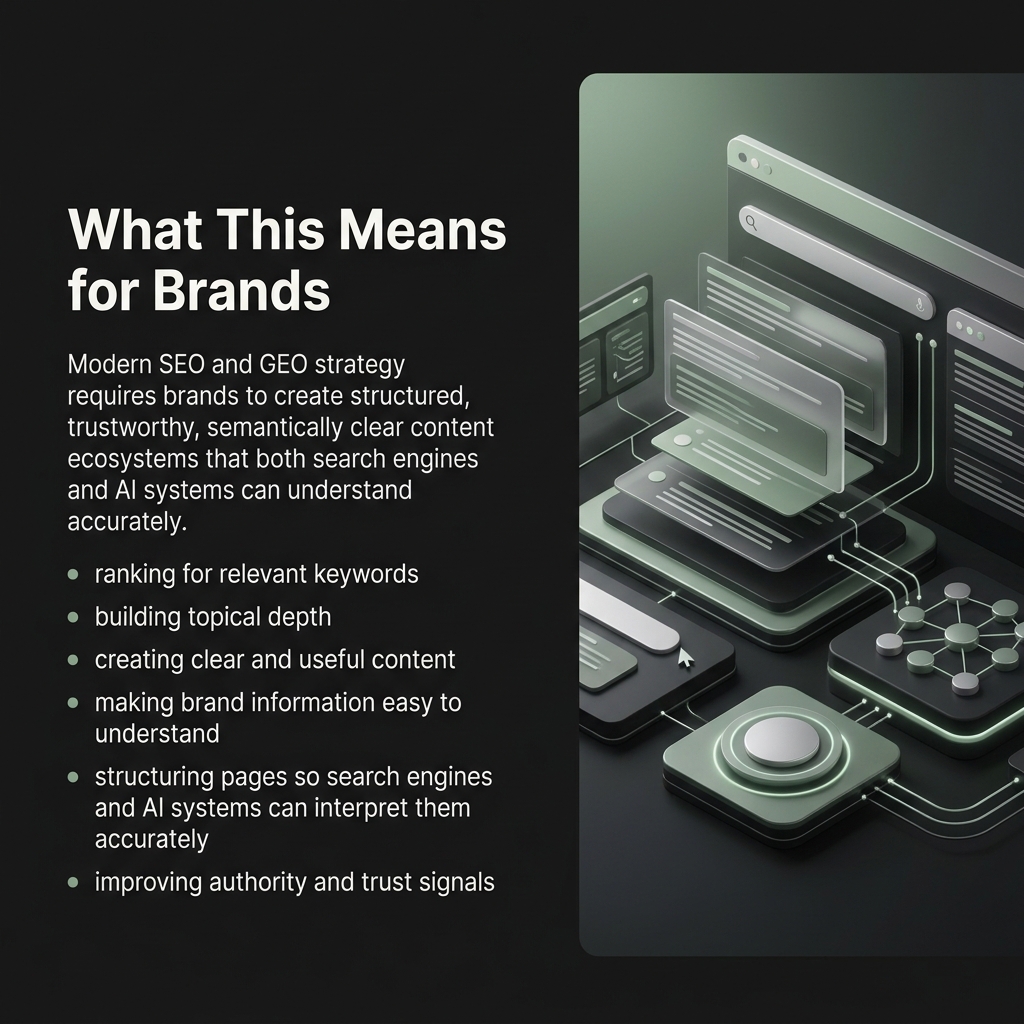
It means search strategy now needs to consider:
- ranking for relevant keywords
- building topical depth
- creating clear and useful content
- making brand information easy to understand
- structuring pages so search engines and AI systems can interpret them accurately
- improving authority and trust signals
The strongest search strategy is no longer just about rankings. It is about overall discoverability and clarity.
How SEO Works
SEO works by improving how search engines crawl, understand, evaluate, and rank a website’s pages. Strong SEO helps ensure that the right pages appear for the right searches and that the content aligns with what users are actually looking for.
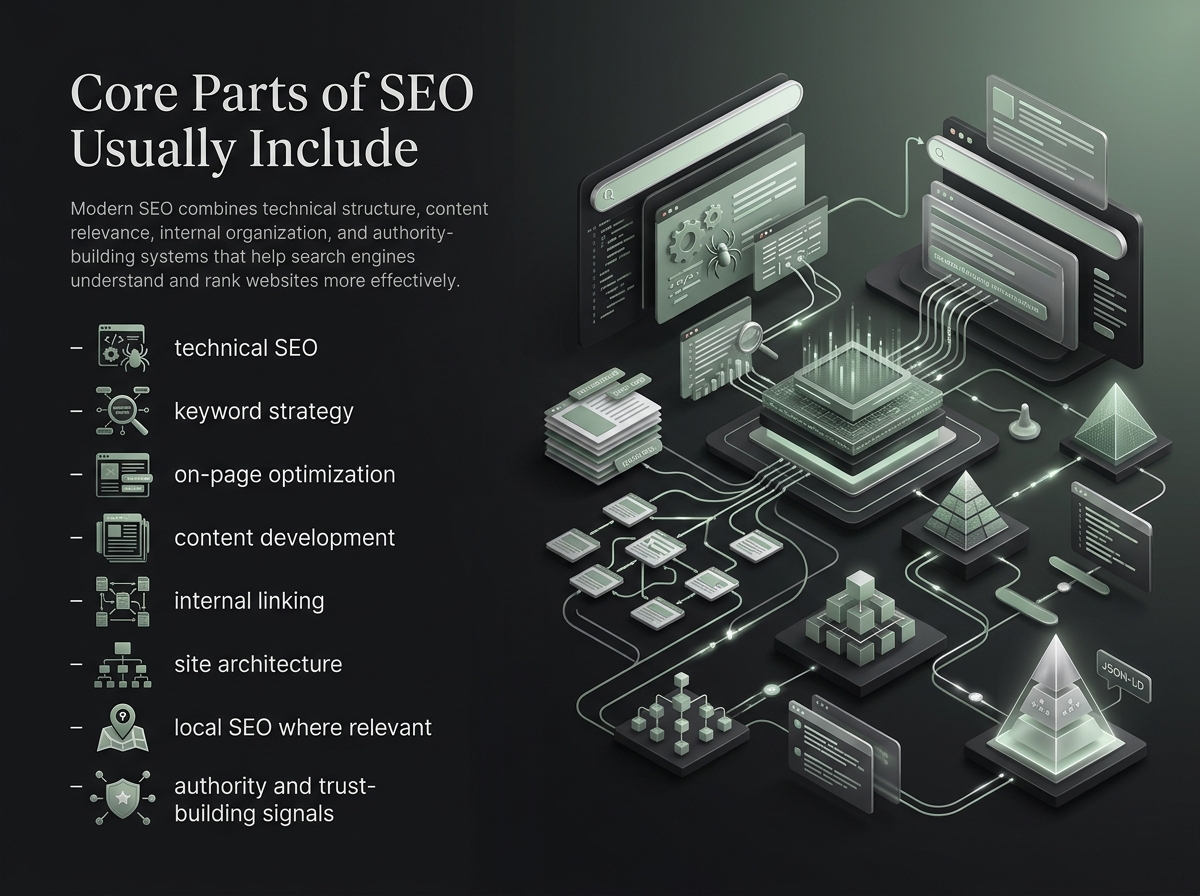
Core parts of SEO usually include
- technical SEO
- keyword strategy
- on-page optimization
- content development
- internal linking
- site architecture
- local SEO where relevant
- authority and trust-building signals
Why SEO matters for long-term growth
Paid media can help drive immediate traffic, but SEO helps businesses build a long-term source of organic visibility that can continue generating traffic and leads over time. A strong SEO strategy can make it easier for users to find the business naturally when they search.
Why SEO matters for long-term growth
Paid media can help drive immediate traffic, but SEO helps businesses build a long-term source of organic visibility that can continue generating traffic and leads over time. A strong SEO strategy can make it easier for users to find the business naturally when they search.
How GEO Works
GEO focuses on helping brands become more understandable and referenceable in AI-driven search environments. While there is overlap with traditional SEO, GEO places more emphasis on clarity, structured information, topical depth, brand consistency, and content that can be summarized or referenced accurately.
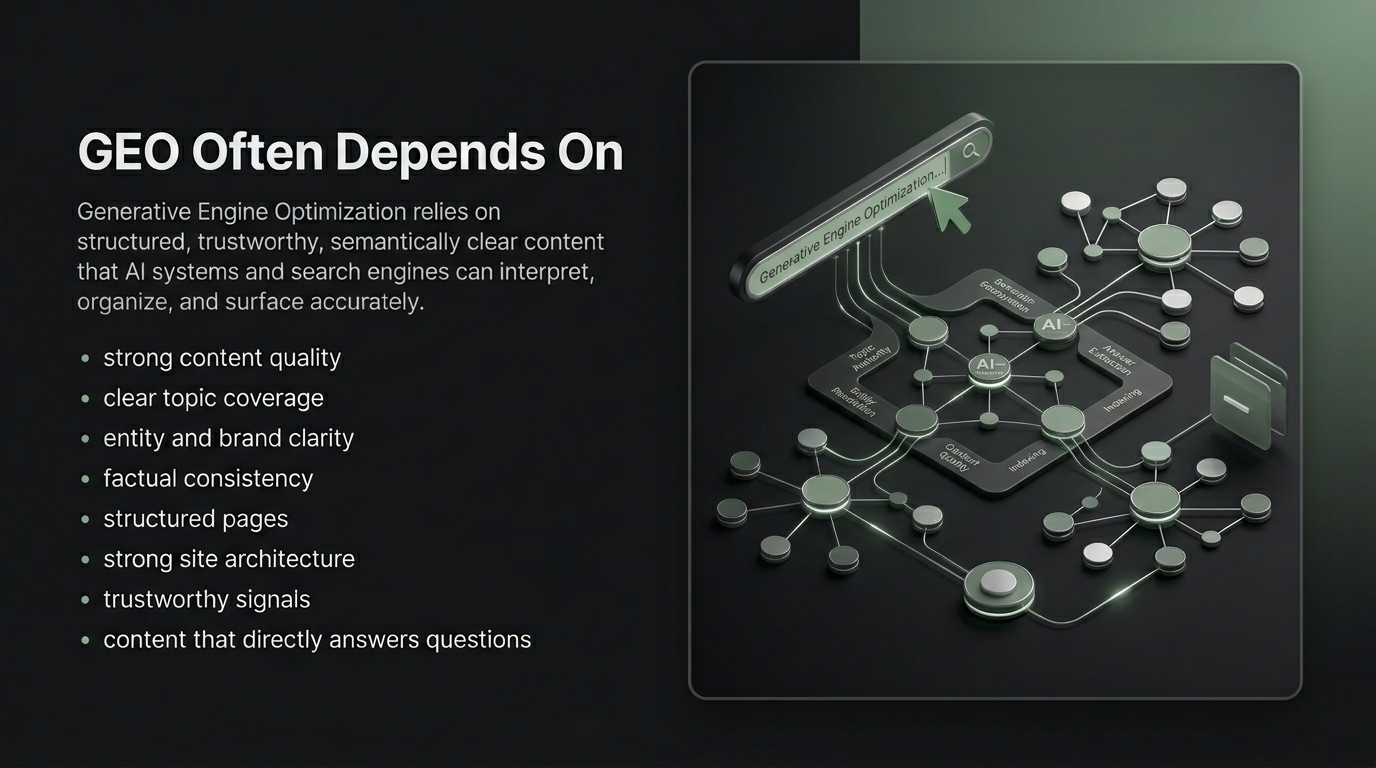
GEO often depends on
- strong content quality
- clear topic coverage
- entity and brand clarity
- factual consistency
- structured pages
- strong site architecture
- trustworthy signals
- content that directly answers questions
Why GEO matters
As more users rely on AI-generated summaries and conversational discovery, businesses need to make sure they are not only searchable, but also understandable. GEO helps improve the chances that the brand, its services, and its expertise are represented accurately in those environments.
For Crosstide Media, GEO is not separate from SEO. It is an extension of modern search strategy.

Why GEO matters
As more users rely on AI-generated summaries and conversational discovery, businesses need to make sure they are not only searchable, but also understandable. GEO helps improve the chances that the brand, its services, and its expertise are represented accurately in those environments.
For Crosstide Media, GEO is not separate from SEO. It is an extension of modern search strategy.
The Role of Search Intent
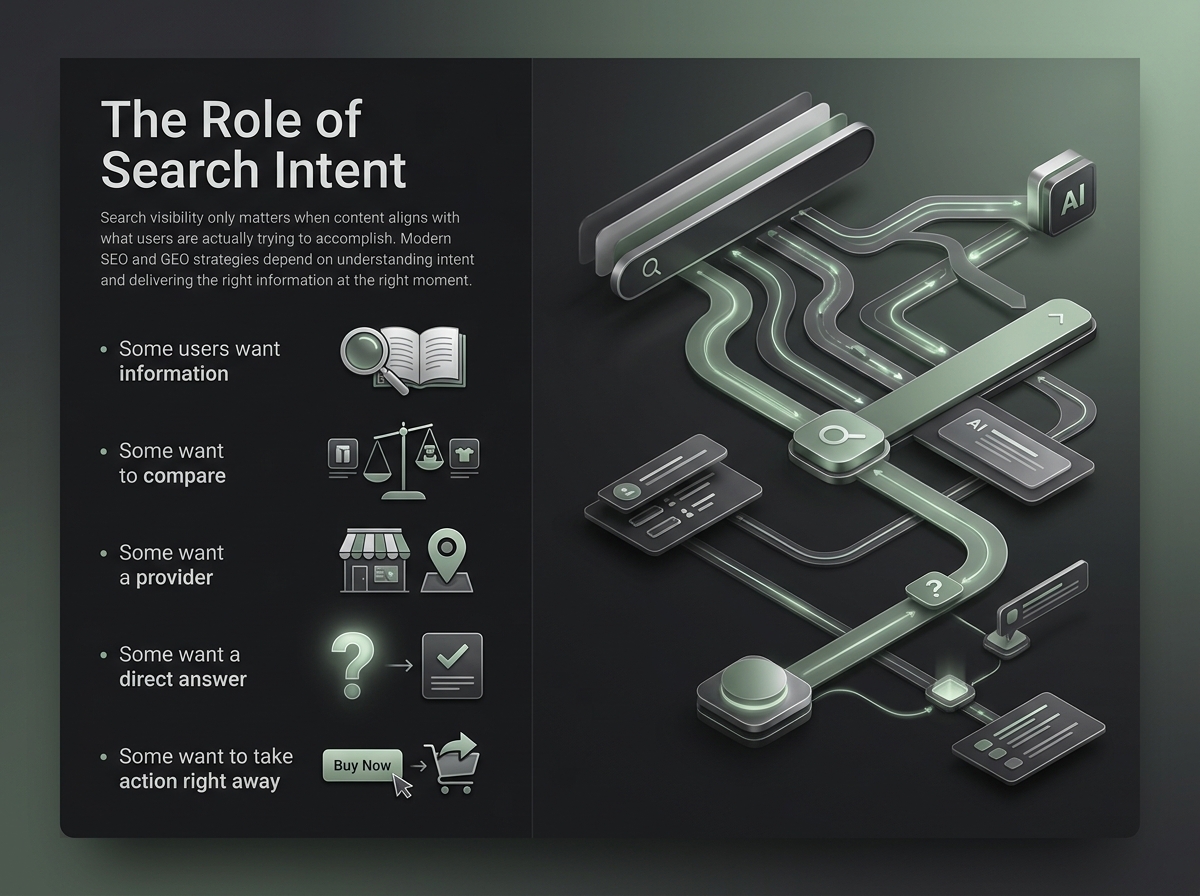
Search intent is one of the most important ideas in SEO and GEO because visibility only matters when the content matches what the user actually wants.
- Some users want information.
- Some want to compare.
- Some want a provider.
- Some want a direct answer.
- Some want to take action right away.
A strong search strategy needs to align content to those intent types.
Common search intent categories

Informational intent
Users want to learn, understand, or research a topic.
Commercial intent
Users are evaluating options, comparing providers, or researching solutions.
Transactional intent
Users are ready to take action, contact a business, schedule, buy, or request something.
Navigational intent
Users are trying to find a specific business, page, or brand.
Why intent matters
Search intent influences:
- keyword selection
- page type
- content format
- messaging
- conversion path
- internal linking
- call-to-action strategy
For Crosstide Media, intent is one of the main drivers of successful SEO and GEO because the right content is not just relevant. It also needs to match the stage of the user journey.

Keyword Strategy and Topic Strategy
Keyword strategy remains a foundational part of SEO because it helps identify what people are searching for and how demand is expressed in search. But modern SEO also requires broader topic strategy so the site can build authority around subject areas instead of only chasing individual terms.
A strong keyword and topic strategy should consider
- core service keywords
- location-based keywords
- long-tail keywords
- problem-aware queries
- comparison queries
- branded queries
- topical clusters
- question-based searches
- supporting educational content
- conversion-oriented content themes
Keyword strategy should help answer
- What services are people searching for?
- How do they phrase the problem?
- Which queries signal strong intent?
- Which topics need supporting content?
- Which pages should target which themes?
Topic strategy matters because
Modern search engines and AI systems often look for topical depth and relevance, not just isolated keyword usage. A strong site should show that it meaningfully covers the subject areas that matter to the business and the audience.

Technical SEO Foundations
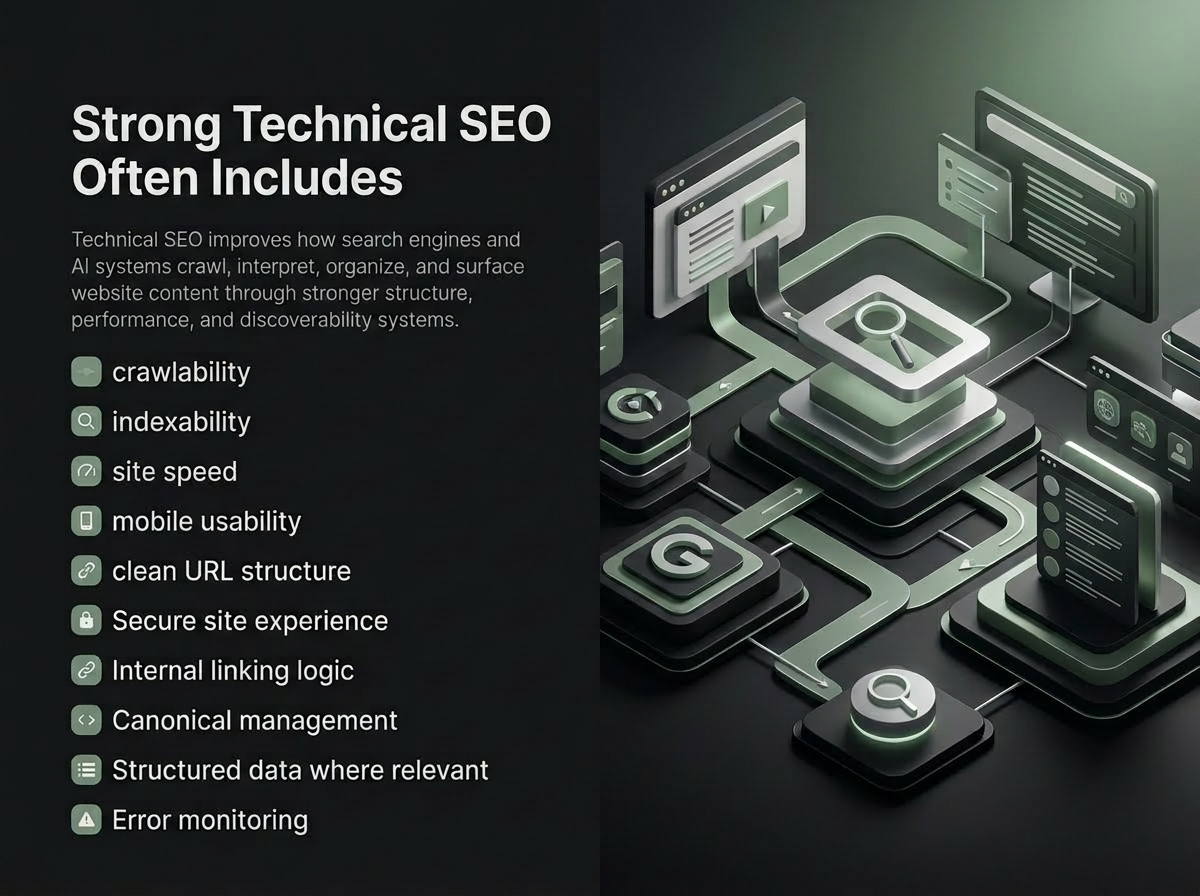
Technical SEO is the part of search strategy that helps ensure the website can be crawled, indexed, understood, and rendered efficiently.
Strong technical SEO often includes
- crawlability
- indexability
- site speed
- mobile usability
- clean URL structure
- secure site experience
- internal linking logic
- canonical management
- structured data where relevant
- error monitoring
Strong technical SEO often includes
- crawlability
- indexability
- site speed
- mobile usability
- clean URL structure
- secure site experience
- internal linking logic
- canonical management
- structured data where relevant
- error monitoring
Why technical SEO matters
Even strong content can underperform if search engines have trouble crawling or understanding the site. Technical issues can limit rankings, reduce discoverability, and weaken overall site performance.

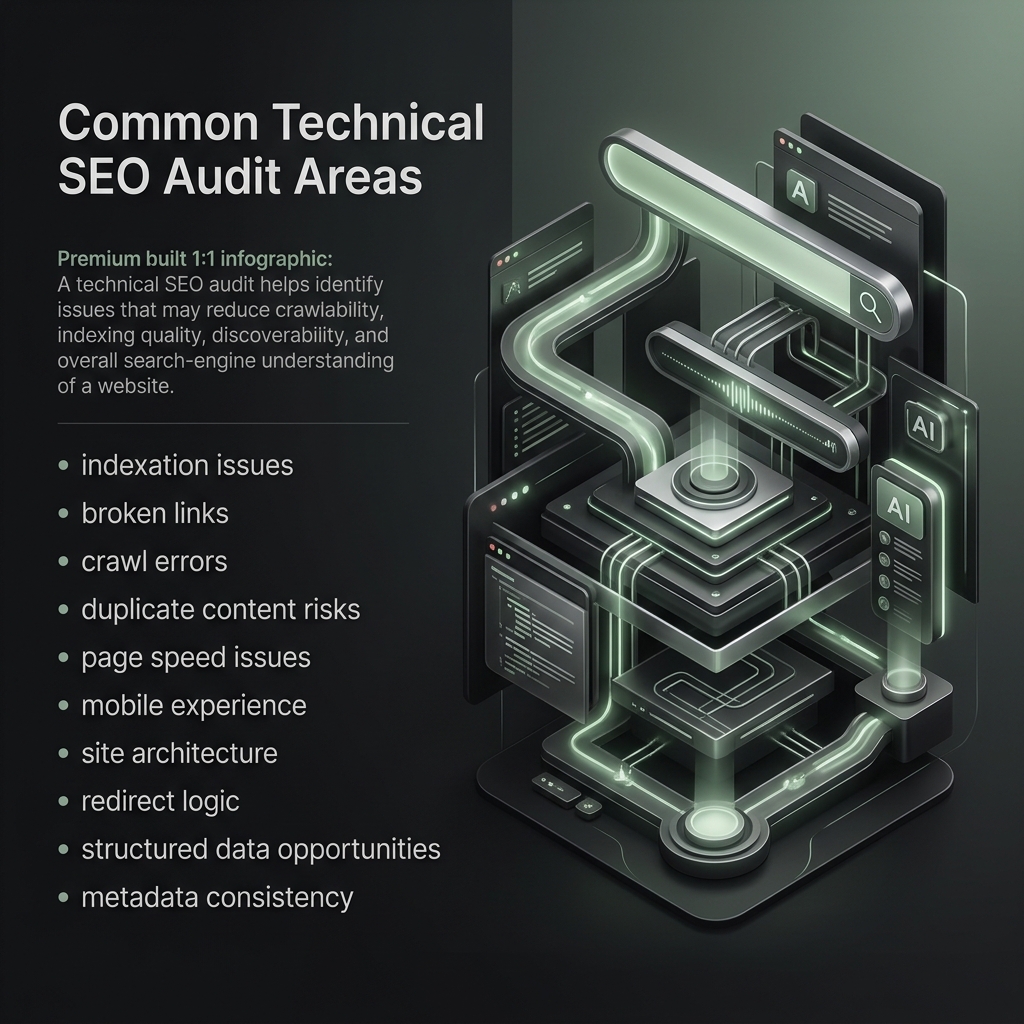
Common technical SEO audit areas
A technical audit may review:
- indexation issues
- broken links
- crawl errors
- duplicate content risks
- page speed issues
- mobile experience
- site architecture
- redirect logic
- structured data opportunities
- metadata consistency
For Crosstide Media, technical SEO is one of the foundations that supports everything else.
Content Strategy for SEO and GEO
Content is one of the strongest drivers of both SEO and GEO because search visibility depends heavily on how well a site explains its services, answers user questions, covers important topics, and supports the user journey.
Strong content strategy should include
- service pages
- location pages where relevant
- supporting educational content
- FAQ content
- solution pages
- topical clusters
- comparison content where appropriate
- trust-building content
- conversion-focused page structures
Good content for SEO and GEO should be
- clear
- useful
- original
- well-structured
- aligned to search intent
- easy to navigate
- factually consistent
- strong enough to support both organic rankings and AI understanding
Why content quality matters
The strongest content does more than include keywords. It helps users understand the topic, trust the brand, and take the next step. It also helps search engines and AI systems determine what the page is about and when it should be surfaced.
On-Page SEO and Site Structure
On-page SEO helps improve how each page communicates its topic, relevance, and purpose to both users and search systems.
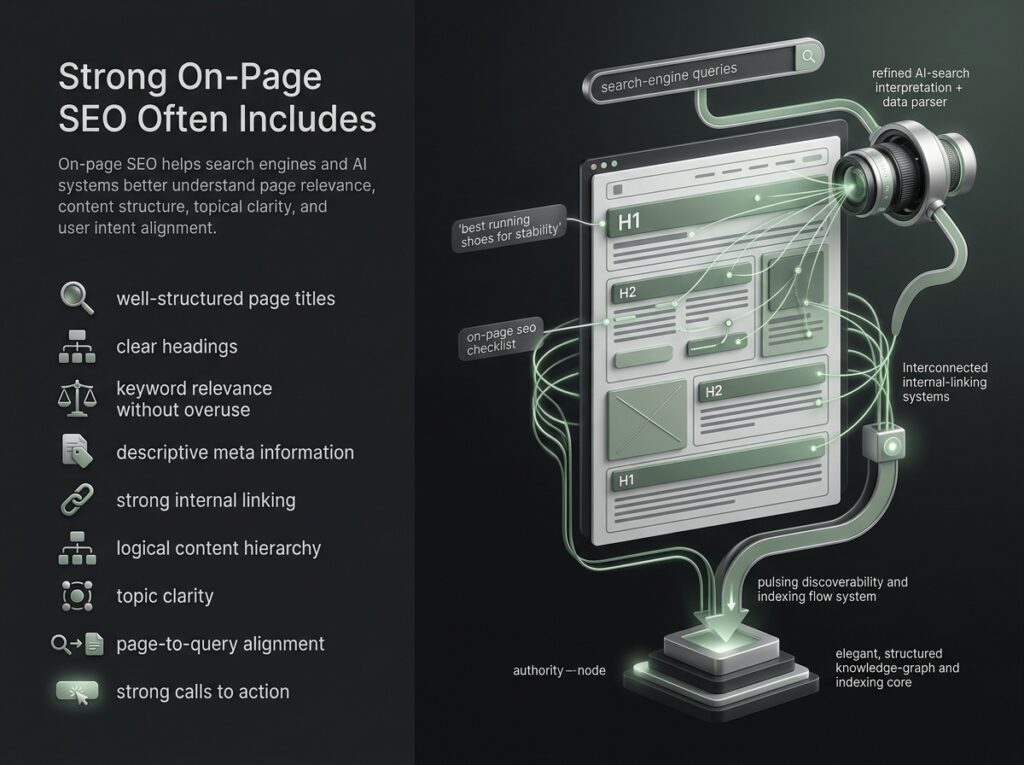
Strong on-page SEO often includes
- well-structured page titles
- clear headings
- keyword relevance without overuse
- descriptive meta information
- strong internal linking
- logical content hierarchy
- topic clarity
- page-to-query alignment
- strong calls to action
Strong on-page SEO often includes
- well-structured page titles
- clear headings
- keyword relevance without overuse
- descriptive meta information
- strong internal linking
- logical content hierarchy
- topic clarity
- page-to-query alignment
- strong calls to action
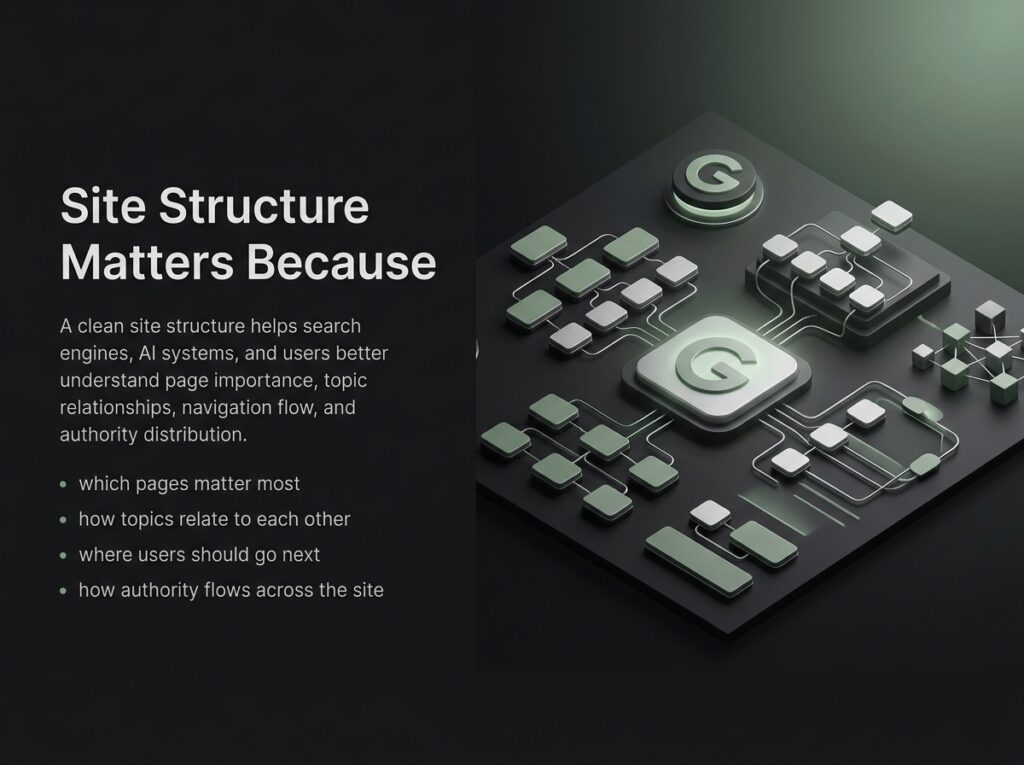
Site structure matters because
A clean site structure helps users and search engines understand:
- which pages matter most
- how topics relate to each other
- where users should go next
- how authority flows across the site
Strong site structure often improves discoverability, crawl efficiency, and user experience at the same time.
Local SEO and Geographic Relevance
For businesses that serve specific markets, local SEO is an important part of search strategy. Local visibility helps businesses appear for searches tied to geographic intent and nearby service demand.
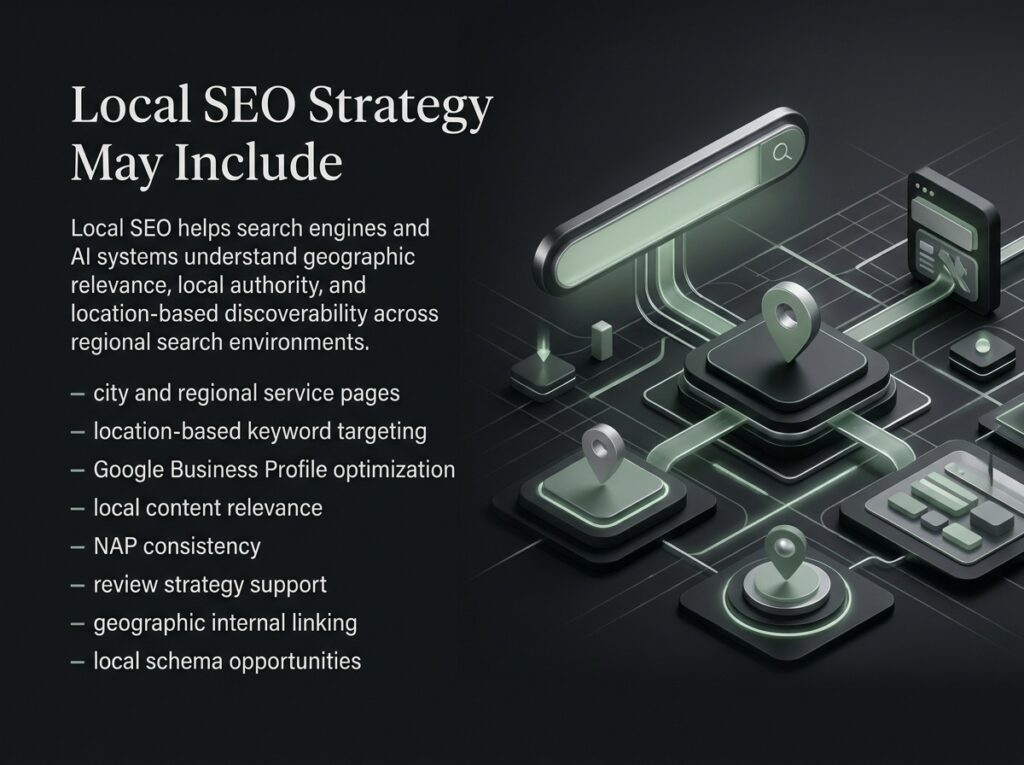
Local SEO strategy may include
- city and regional service pages
- location-based keyword targeting
- Google Business Profile optimization
- local content relevance
- NAP consistency
- review strategy support
- geographic internal linking
- local schema opportunities
Local SEO strategy may include
- city and regional service pages
- location-based keyword targeting
- Google Business Profile optimization
- local content relevance
- NAP consistency
- review strategy support
- geographic internal linking
- local schema opportunities
Why local SEO matters
Local SEO helps businesses show up when users search with geographic qualifiers or when search engines infer local relevance from the query. For many service businesses, local search visibility is one of the biggest drivers of qualified organic traffic.
Authority, Trust, and Credibility Signals
Search visibility is not only about keywords and structure. It also depends on how credible and trustworthy the site appears.
Strong authority and trust signals may include
- expert and useful content
- consistent brand information
- strong service explanations
- credibility indicators
- references to real experience
- authoritativeness within the topic area
- reputation signals
- high-quality supporting pages
- stronger user experience
Why this matters for SEO and GEO
Search engines and AI systems both benefit from clear, trustworthy information. Brands that explain what they do clearly, consistently, and credibly are more likely to earn visibility and be represented accurately in search environments.
Auditing and Optimization Process
A strong SEO and GEO strategy should begin with a structured audit and continue with ongoing optimization over time.
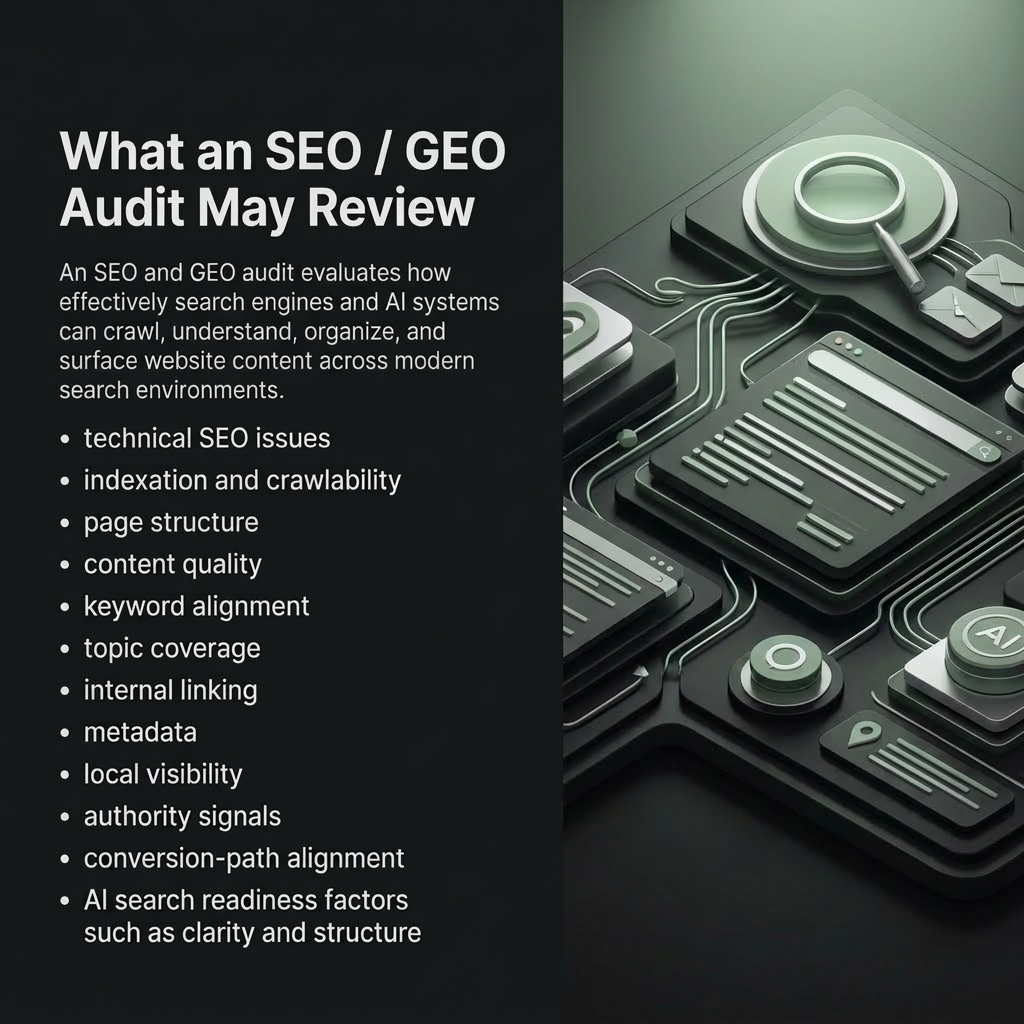
What an SEO / GEO audit may review
- technical SEO issues
- indexation and crawlability
- page structure
- content quality
- keyword alignment
- topic coverage
- internal linking
- metadata
- local visibility
- authority signals
- conversion-path alignment
- AI search readiness factors such as clarity and structure
Common optimization phases
Audit phase
- identify technical issues
- review current rankings and visibility
- analyze existing content
- evaluate page structure
- assess competitive positioning
Strategy phase
- define priorities
- map keywords and topics
- identify content opportunities
- improve site architecture
- plan technical fixes
Execution phase
- optimize existing pages
- build new content
- improve internal linking
- address technical issues
- strengthen authority and relevance
Ongoing growth phase
- monitor performance
- update content
- expand topic coverage
- refine based on new search behavior
- improve search and AI visibility over time
SEO and GEO are not one-time tasks. They perform best when treated as ongoing growth channels.
Measurement, Reporting, and Long-Term Growth
SEO and GEO should be measured through visibility, traffic quality, engagement, and business outcomes.
Common SEO / GEO metrics include
- organic traffic
- non-branded traffic
- rankings
- impressions
- click-through rate
- landing-page engagement
- leads
- conversion rate
- location-based performance
- topic-level performance
- page-level growth
Strong reporting should also include
- changes in search visibility
- content performance
- keyword trend movement
- technical improvements made
- conversion-path insights
- strategic next steps
Why long-term thinking matters
SEO and GEO often build value over time. Unlike short-term media channels, search strategy compounds when the site becomes stronger, more useful, and more visible. That makes it one of the most important long-term investments in digital marketing.

How SEO and GEO Fit Into the Marketing Landscape
SEO and GEO are not isolated channels. They work best as part of a broader marketing system.
SEO / GEO and paid search
Paid search captures immediate demand, while SEO and GEO build long-term visibility and help reduce reliance on paid traffic alone.
SEO / GEO and paid social
Paid social builds awareness and engagement, while SEO and GEO capture users when they search later or explore solutions in more detail.
SEO / GEO and programmatic media
Programmatic channels can create awareness and drive exposure, while SEO and GEO help the brand show up when users begin researching, comparing, and deciding.
SEO / GEO and website strategy
Search performance is deeply connected to the quality of the website itself. Better structure, stronger content, clearer service pages, and stronger UX often support both SEO/GEO and conversion performance. That is why SEO and GEO should be treated as part of a connected marketing strategy, not just a technical checklist.

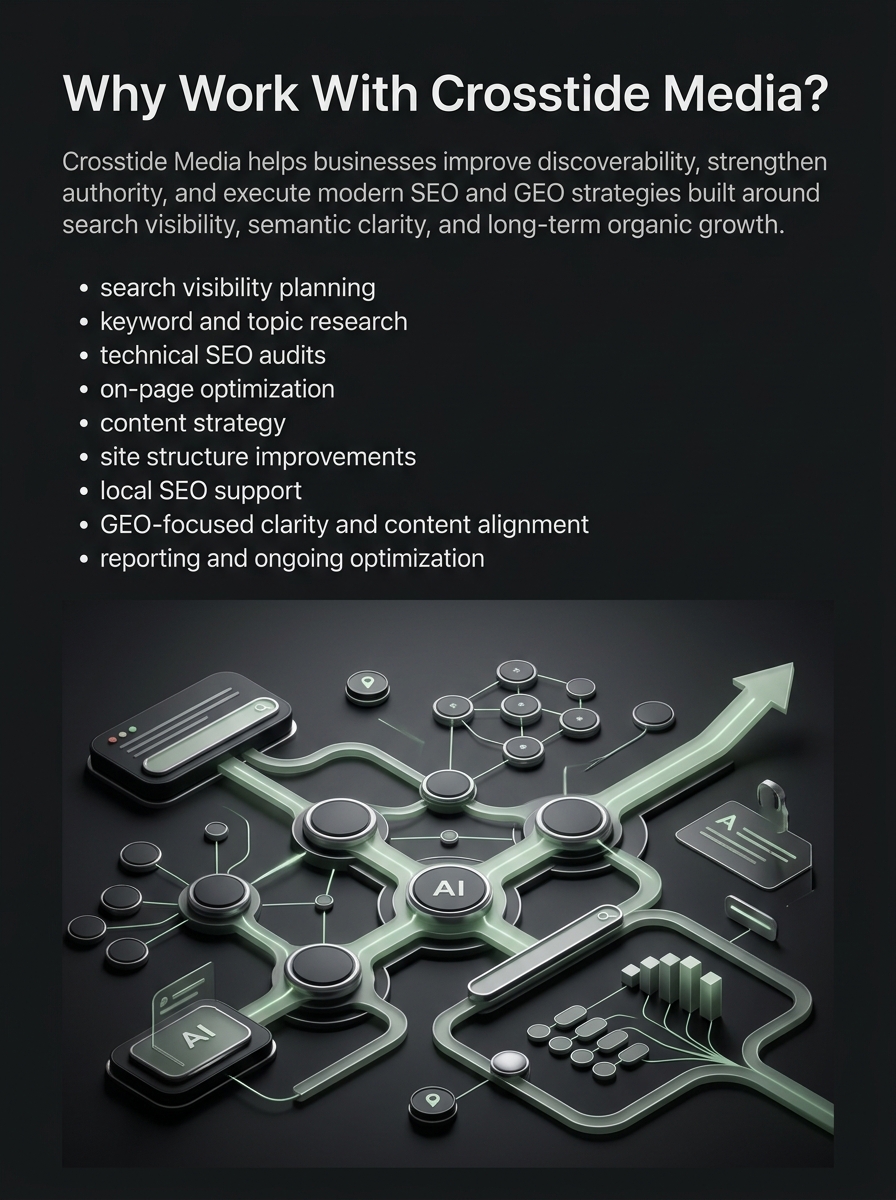
Why Work With Crosstide Media?
Effective SEO and GEO require more than adding keywords to pages. It takes search strategy, technical structure, content planning, user-intent alignment, authority building, and ongoing optimization.
Crosstide Media helps businesses execute SEO and GEO strategies with:
- search visibility planning
- keyword and topic research
- technical SEO audits
- on-page optimization
- content strategy
- site structure improvements
- local SEO support
- GEO-focused clarity and content alignment
- reporting and ongoing optimization
We approach SEO and GEO as both a visibility channel and a long-term growth investment. Our focus is on helping brands improve organic presence, strengthen AI search discoverability, and create more meaningful opportunities for traffic, trust, and conversion.
Whether the goal is higher rankings, stronger organic traffic, better search visibility, or broader search relevance across both traditional and AI-driven environments, Crosstide Media helps businesses build search strategies with the structure and discipline required for long-term success.
Why Work With Crosstide Media?
Effective SEO and GEO require more than adding keywords to pages. It takes search strategy, technical structure, content planning, user-intent alignment, authority building, and ongoing optimization.
Crosstide Media helps businesses execute SEO and GEO strategies with:
- search visibility planning
- keyword and topic research
- technical SEO audits
- on-page optimization
- content strategy
- site structure improvements
- local SEO support
- GEO-focused clarity and content alignment
- reporting and ongoing optimization
We approach SEO and GEO as both a visibility channel and a long-term growth investment. Our focus is on helping brands improve organic presence, strengthen AI search discoverability, and create more meaningful opportunities for traffic, trust, and conversion.
Whether the goal is higher rankings, stronger organic traffic, better search visibility, or broader search relevance across both traditional and AI-driven environments, Crosstide Media helps businesses build search strategies with the structure and discipline required for long-term success.
Frequently Asked Questions
What is search engine optimization?
What is generative engine optimization?
What is the difference between SEO and GEO?
Why are SEO and GEO important?
Is SEO still important if AI search is growing?
What does a strong SEO strategy include?
What does a GEO strategy include?
How long does SEO take?
Can SEO and GEO help with lead generation?
Why work with an SEO and GEO partner?
Build a Smarter SEO and GEO Strategy
If your business needs a stronger long-term search strategy, Crosstide Media can help you plan, build, and optimize an SEO and GEO approach built around better content, stronger technical structure, improved organic visibility, and clearer reporting. Whether your goal is to improve rankings, increase qualified traffic, build AI search presence, strengthen local visibility, or support long-term lead generation, we help brands use SEO and GEO in a smarter, more growth-focused way.
Why Brands Choose Crosstide Media
Brands work with Crosstide Media because effective SEO and GEO require more than surface-level optimization. Strong results come from the right mix of search strategy, topic planning, content structure, technical discipline, user-intent alignment, and ongoing improvement. Our approach is built to help businesses improve discoverability, strengthen search relevance, reduce missed opportunity in organic channels, and make better decisions through clearer reporting and more actionable search insights.
Talk to Crosstide Media About SEO and GEO
If you are looking for a search strategy partner that can help you improve organic visibility, strengthen your search presence, and support long-term growth across both traditional search and AI-driven discovery, Crosstide Media can help. We build SEO and GEO strategies with the planning, structure, optimization discipline, and reporting needed to support lasting search performance.