
Paid Search (PPC)
Paid Search Advertising and Google Ads Management Built to Drive High-Intent Traffic, Qualified Leads, and Measurable Growth
Paid search advertising helps businesses reach potential customers at the exact moment they are searching for a product, service, or solution online. As one of the most intent driven forms of digital marketing, paid search gives brands the ability to appear in front of users who are actively looking for what they offer. That is what makes PPC advertising one of the most important lead generation and website traffic channels in the digital marketing landscape.
Google Ads is often the foundation of a strong paid search strategy because Google remains one of the primary places people go when they need to find a business, compare providers, request a quote, schedule a service, or make a buying decision. A well managed Google Ads campaign can help businesses increase search visibility, capture qualified traffic, drive more calls and form submissions, and turn active search demand into measurable business growth.
At Crosstide Media, we build paid search campaigns around keyword strategy, search intent, account structure, ad copy, landing page alignment, and performance tracking. Whether the goal is more leads, stronger Google Ads performance, better website traffic quality, or a more efficient PPC strategy, we help businesses build paid search campaigns designed to drive meaningful results.
Jump To
What Is Paid Search (PPC)?
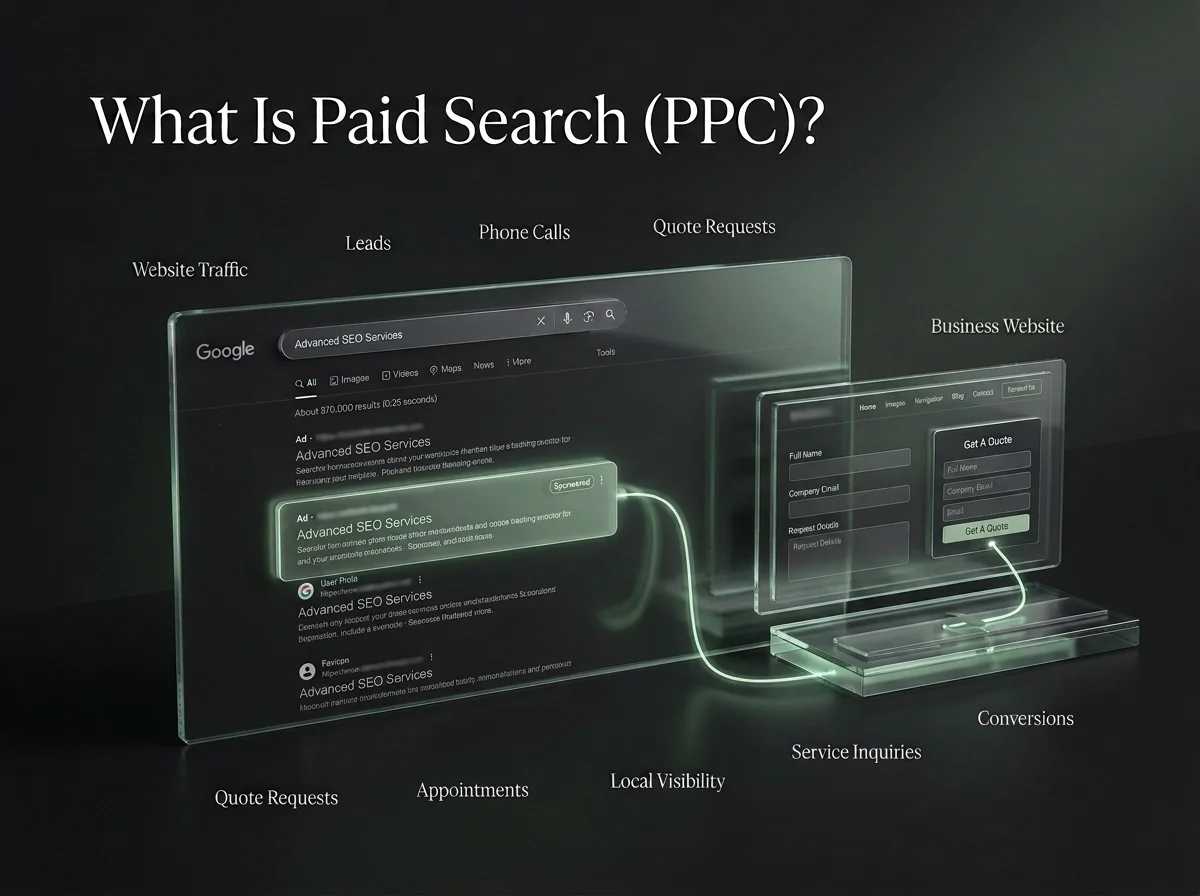
Paid search advertising, often called PPC or pay-per-click advertising, is a digital marketing strategy that allows businesses to place ads in search engine results for relevant keywords. When someone searches for a service, product, or solution related to the advertiser’s business, paid search ads can appear above or within the organic search results.
In most cases, Google Ads is the primary platform used for paid search management because it allows advertisers to show Google search ads for high-value keyword queries and control how campaigns are structured, targeted, and optimized.
Paid search can help businesses drive:
- high-intent website traffic
- lead generation
- phone calls
- quote requests
- appointment bookings
- local search visibility
- service inquiries
- measurable conversion activity
Unlike many other forms of advertising, PPC is built around active search behavior. That makes paid search one of the strongest channels for businesses that want to capture existing demand.
Why Paid Search Advertising Matters
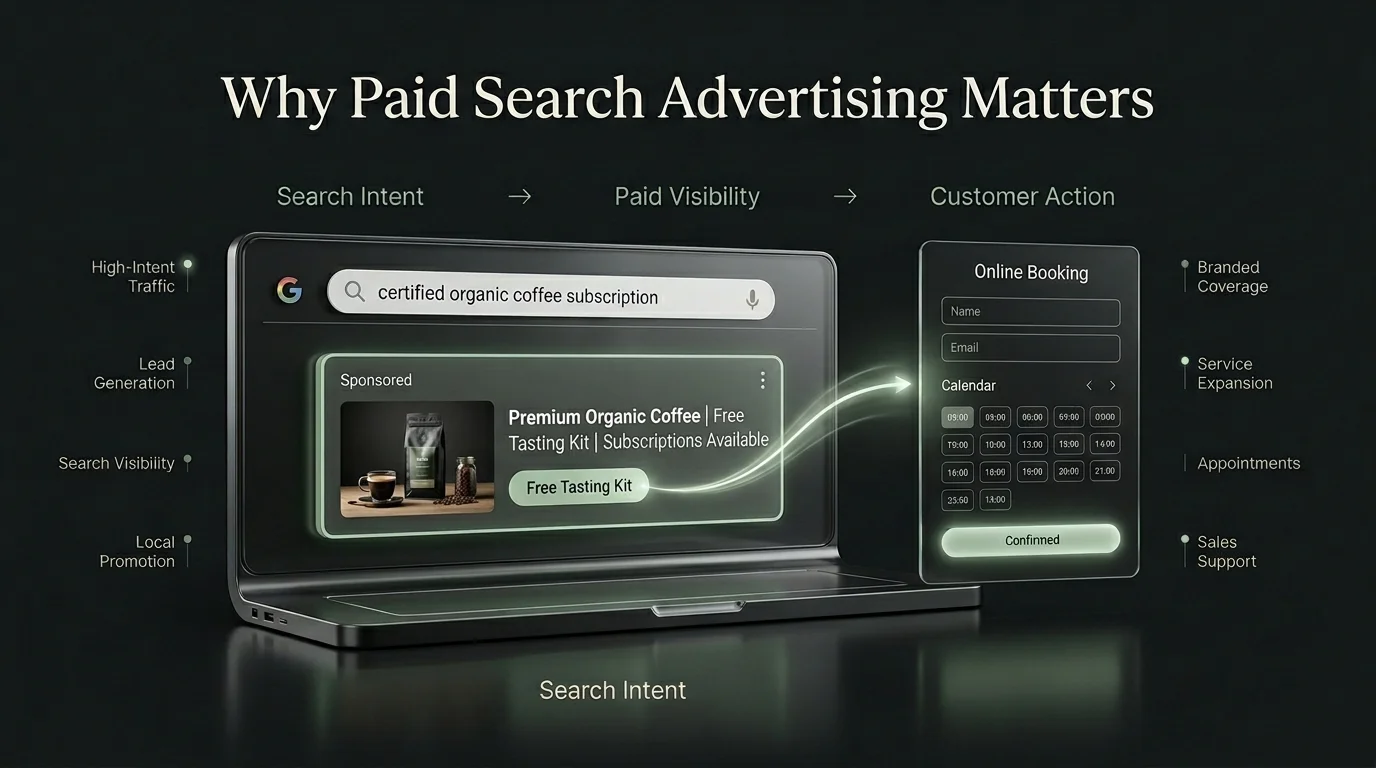
Paid search advertising matters because it reaches people when they are already searching. That level of intent makes PPC one of the most valuable digital marketing channels for businesses that want to generate leads, increase qualified website traffic, and show up when potential customers are close to taking action.
A strong paid search campaign can help support:
- high-intent traffic
- lead generation
- Google search visibility
- local service promotion
- branded search coverage
- service line expansion
- appointment generation
- sales support
Why businesses invest in PPC management
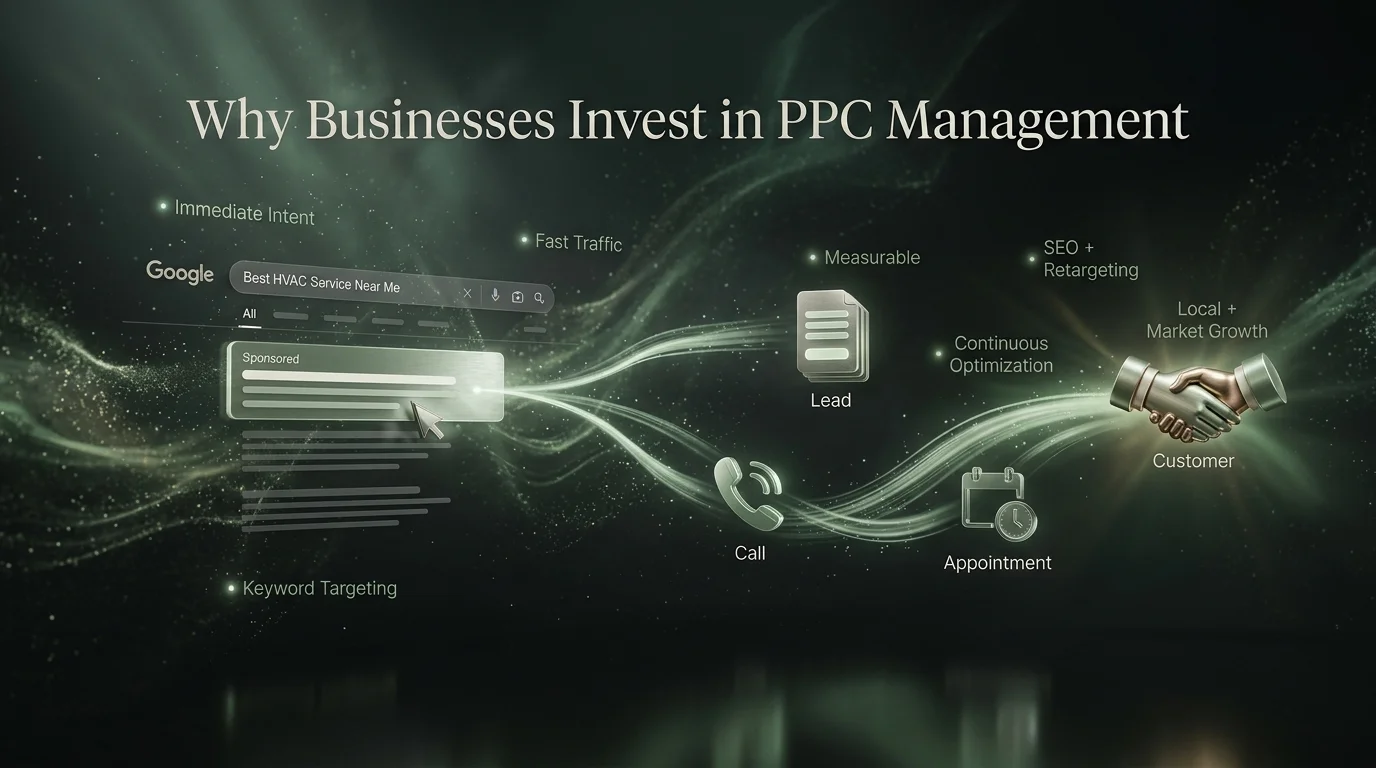
- Paid search reaches users with immediate intent
- Google Ads can drive traffic quickly
- PPC campaigns are highly measurable
- Keyword targeting helps align ads to real demand
- Campaigns can be optimized continuously
- Paid search works well with SEO and retargeting
- Google Ads can support both local and broader market growth
For many businesses, paid search becomes one of the main drivers of qualified website traffic because it captures people who are actively looking for what the company offers.
Why Google Ads Is Important for Business Growth
Google Ads plays a central role in paid search advertising because Google Search is one of the most important places consumers go to find businesses, compare solutions, research services, and make buying decisions. If a business is not visible when a user searches, that opportunity often goes to a competitor.
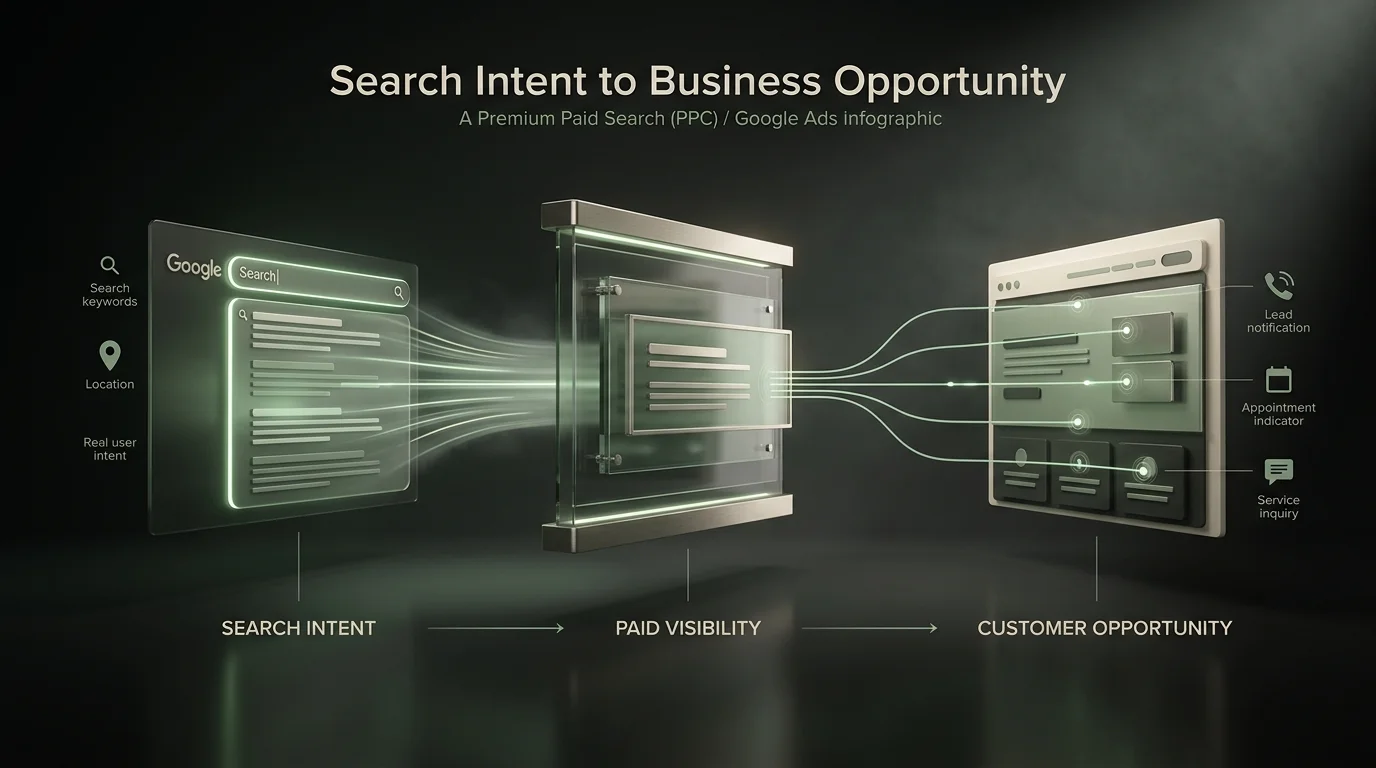
A strong Google Ads strategy can help businesses:
- appear for valuable search terms
- increase visibility in Google search results
- capture demand at the point of intent
- generate more qualified clicks
- drive more calls and leads
- support specific service lines or locations
- strengthen search marketing performance
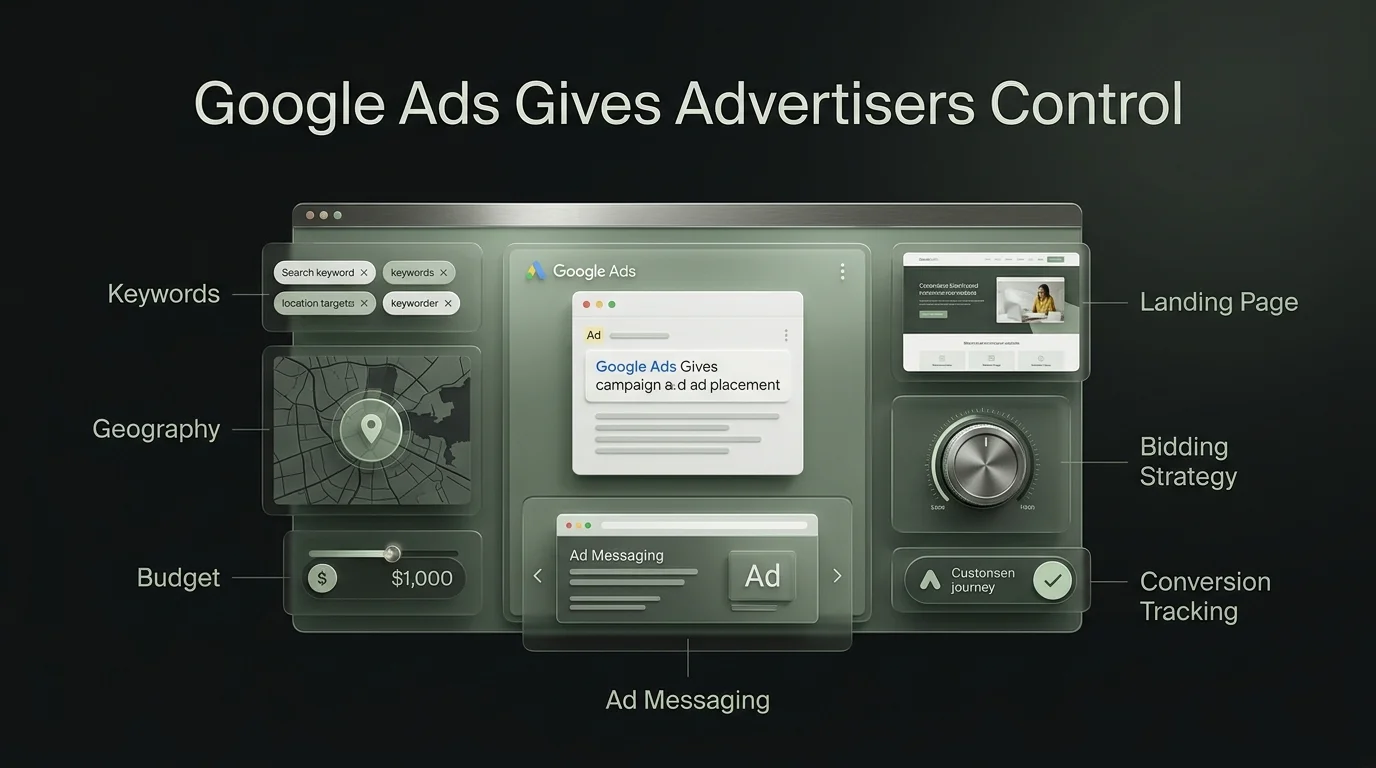
Google Ads is especially important because it allows advertisers to control:
- keywords
- geography
- budgets
- ad messaging
- landing pages
- bidding strategy
- conversion tracking
That level of control makes Google Ads one of the most effective tools for businesses that want to turn search demand into measurable results.
How Paid Search and Google Ads Work
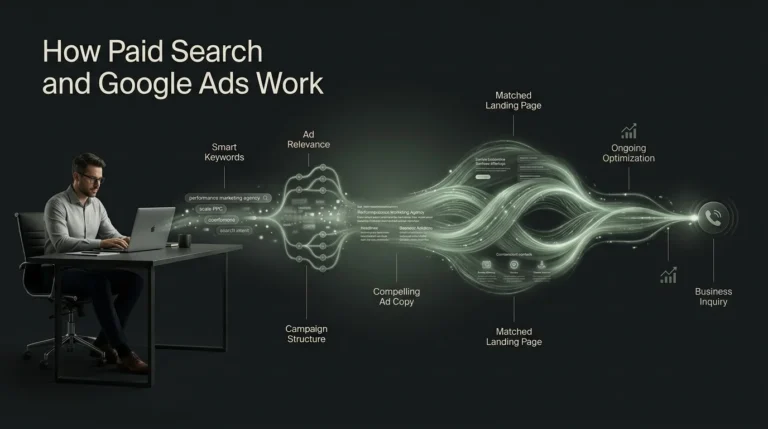
Paid search works by matching advertiser keywords with user searches. When someone searches a term related to the campaign, Google evaluates which ads to show based on several factors, including relevance, bidding, ad quality, landing-page experience, and expected performance.
A strong paid search campaign is not just about bidding on keywords. It depends on how well the entire system works together.
Core parts of a successful PPC campaign
A strong paid search campaign usually includes:
- smart keyword selection
- clear campaign structure
- strong ad relevance
- compelling search ad copy
- well-matched landing pages
- accurate conversion tracking
- budget control
- ongoing optimization
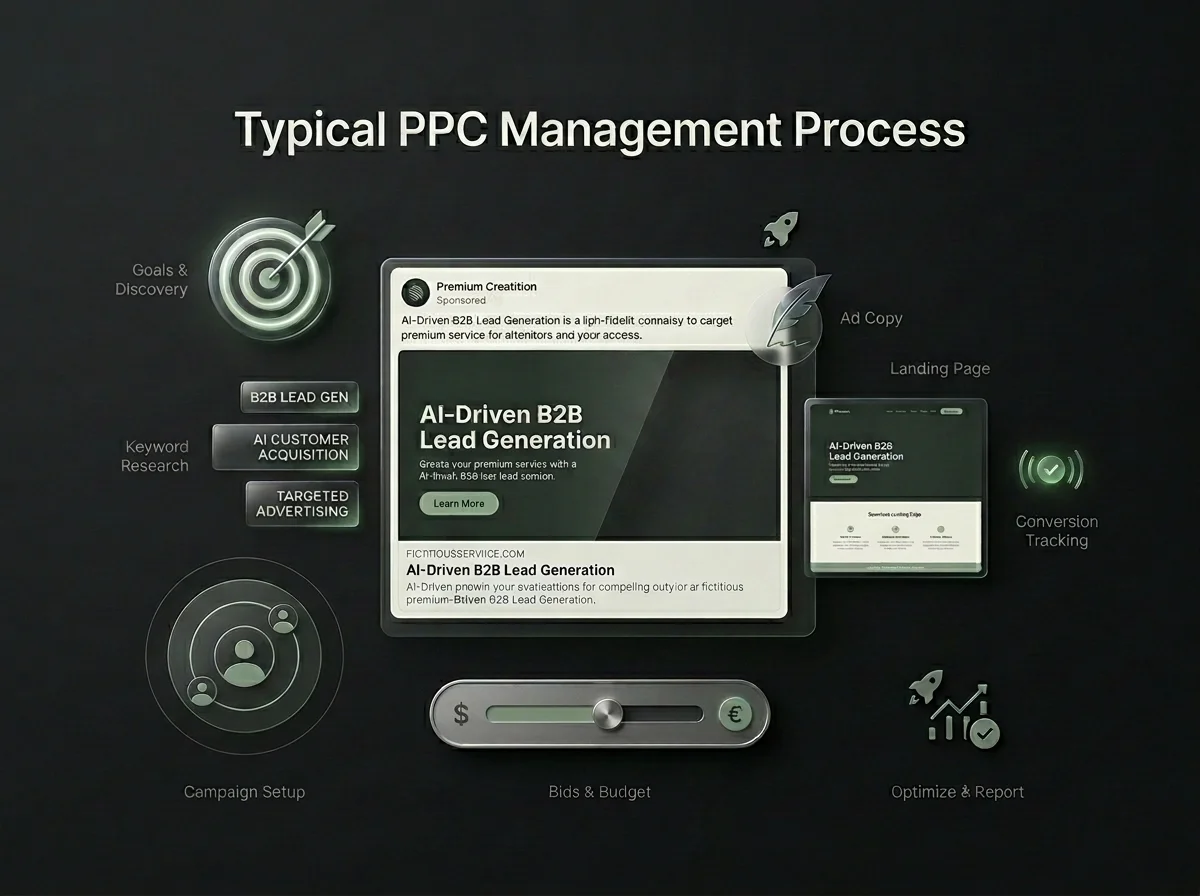
Typical PPC management process
A well-managed Google Ads campaign usually includes:
- business and goal discovery
- keyword research and intent mapping
- campaign and ad group setup
- ad copy development
- landing-page alignment
- conversion tracking setup
- bid and budget configuration
- launch, optimization, and reporting
That structure helps create a paid search account built for long-term performance instead of short-term traffic volume alone.
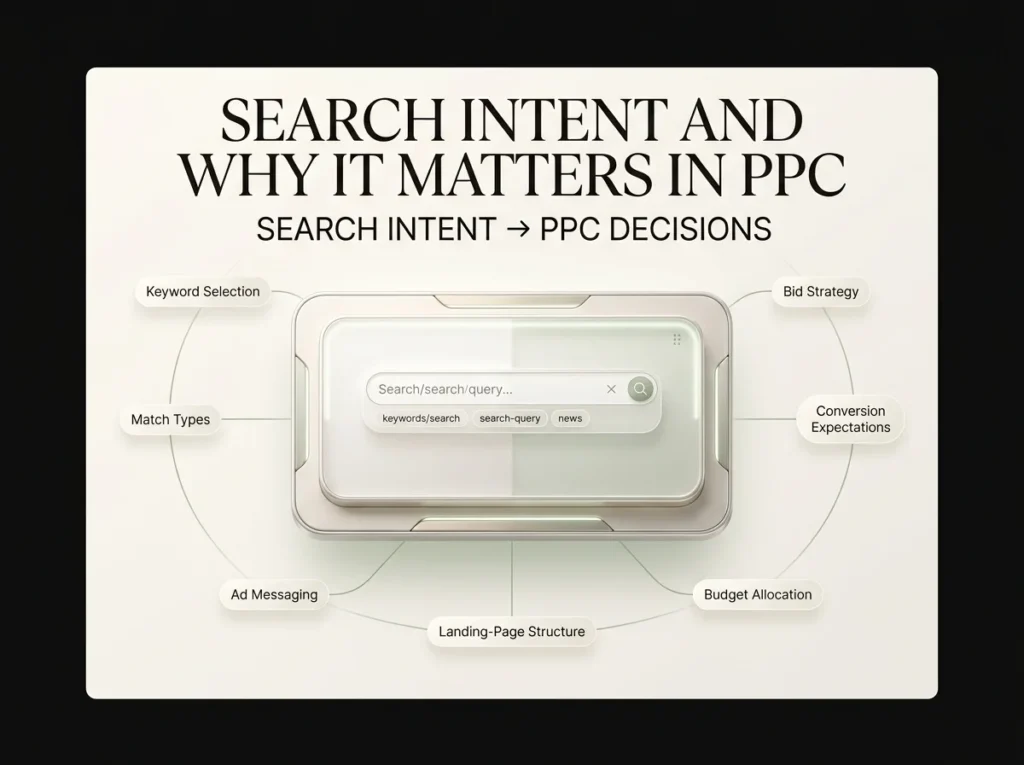
Search Intent and Why It Matters in PPC
Search intent is one of the most important parts of paid search strategy because not every keyword has the same value. Some users are just researching. Others are comparing providers. Others are ready to call, book, request a quote, or buy.
A strong PPC campaign should be built around intent, not just keyword volume.
Common search intent categories
High-intent searches
These are usually the most valuable searches because they often come from users ready to take action.
Examples often include:
- service + location searches
- near me queries
- quote-related searches
- urgent need searches
- best provider searches
- appointment-based terms
Brands that often benefit most from Amazon DSP
Mid-intent searches
These often come from users who know what they need but are still comparing options.
Examples may include:
- cost-related terms
- service comparison terms
- best company queries
- solution evaluation terms
Lower-intent or informational searches
These can still be useful, but they often need different bidding, filtering, or messaging because the user may not be close to conversion.
Why intent matters in paid search management
Search intent affects:
- keyword selection
- match types
- ad messaging
- landing-page structure
- bid strategy
- conversion expectations
- budget allocation
For Crosstide Media, one of the biggest drivers of PPC performance is understanding which keywords reflect real commercial intent and which ones create wasted spend.
Keyword Strategy for Paid Search Campaigns
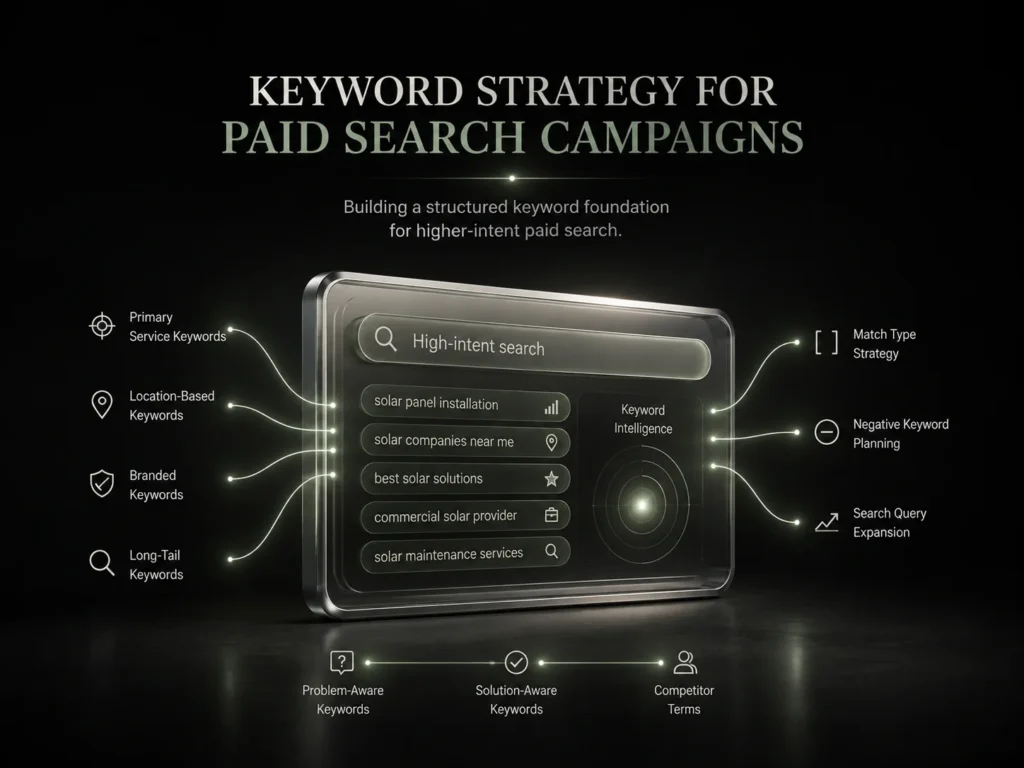
Keyword strategy is one of the most important parts of paid search advertising because it determines which search queries a business chooses to compete for. The right keyword strategy helps attract qualified traffic, improve ad relevance, and reduce wasted spend.
A strong keyword strategy should focus on relevance, intent, and business value.
Core parts of a strong PPC keyword strategy
Keyword planning often includes:
- primary service keywords
- location-based keywords
- branded keywords
- long-tail keywords
- problem-aware keywords
- solution-aware keywords
- competitor terms where appropriate
- match type strategy
- negative keyword planning
- search query expansion
Common keyword groups in Google Ads
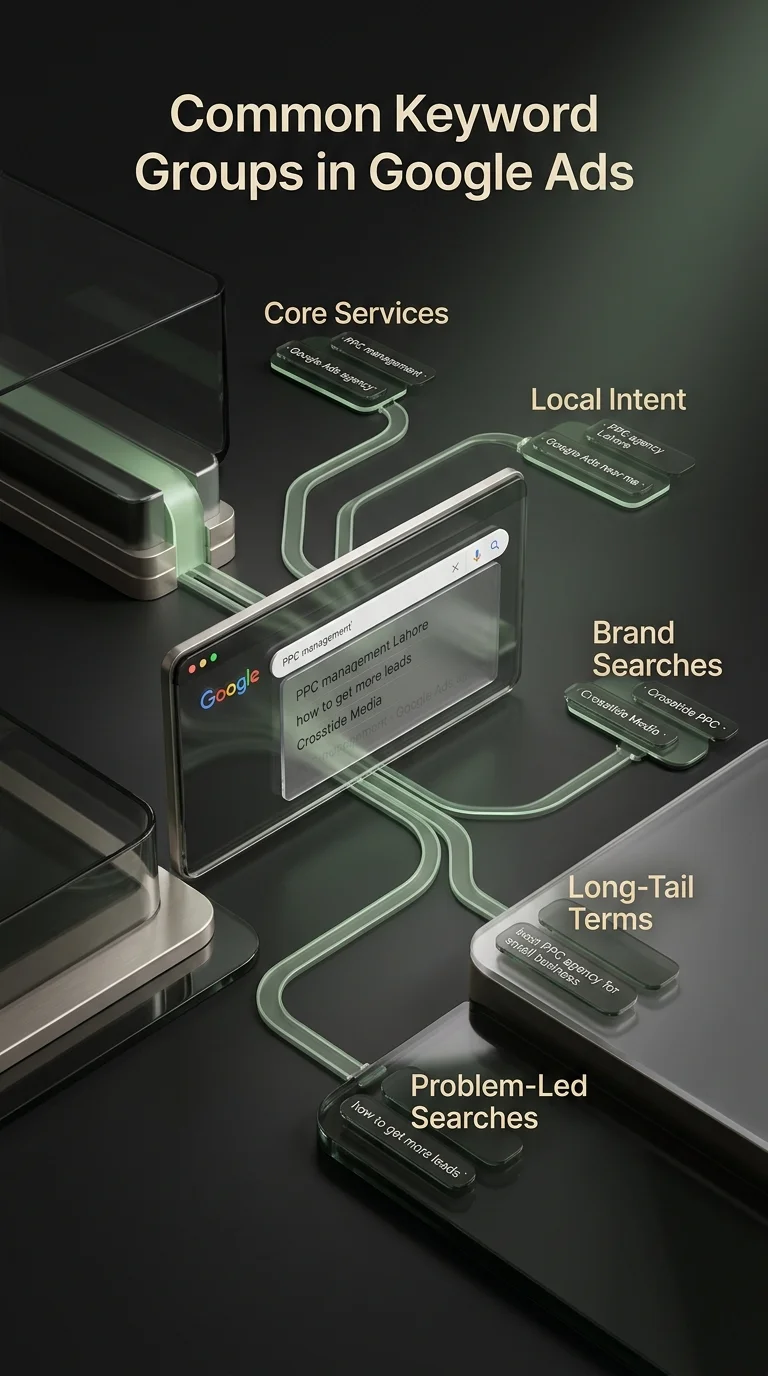
Core service keywords
These are searches directly tied to the main services or products being promoted.
Location-based keywords
These connect business intent with geographic demand and are often essential for local PPC campaigns.
Branded keywords
These protect and support search traffic connected to the business name.
Long-tail keywords
These often have lower volume but can carry stronger intent and better lead efficiency.
Problem-based keywords
These reflect how users search when they know the problem but not the exact solution.
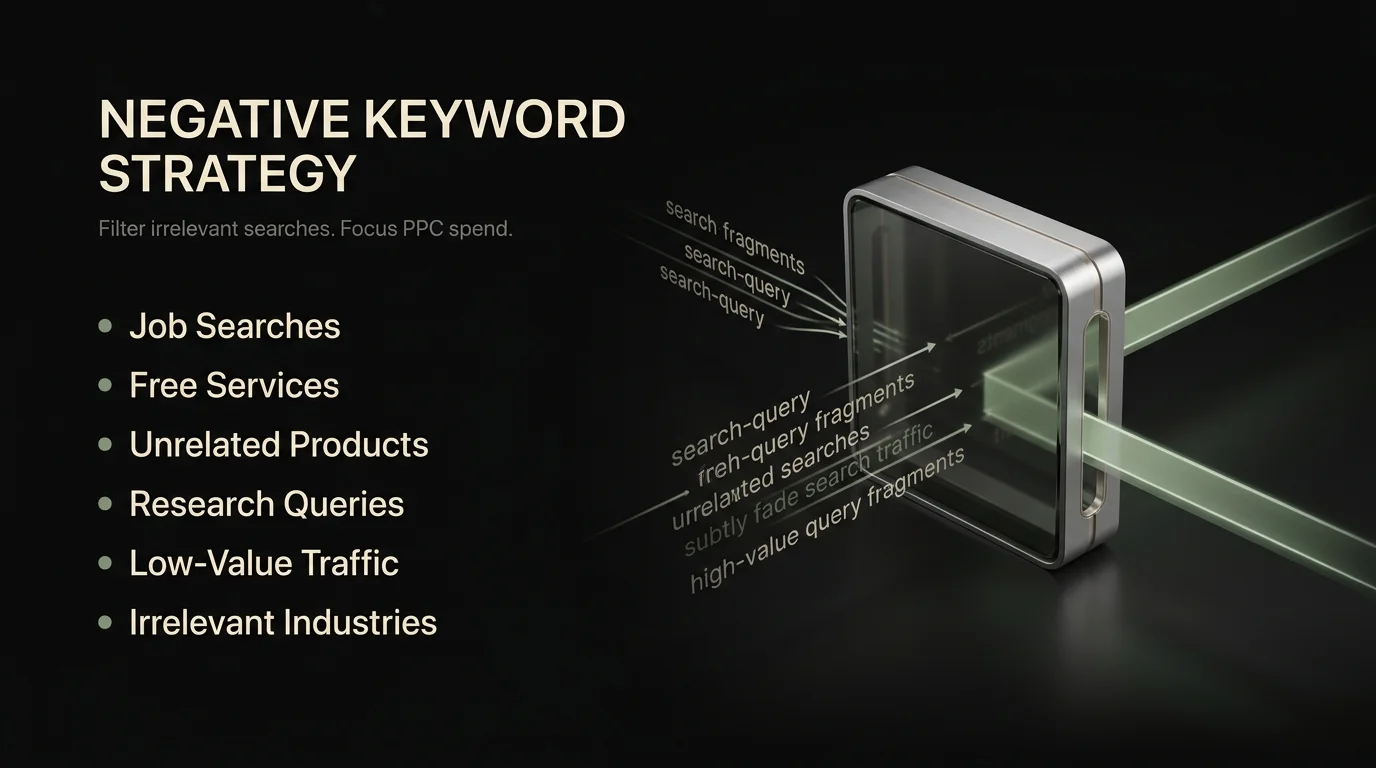
Negative keyword strategy
Negative keywords are critical in Google Ads management because they help filter out irrelevant traffic. A strong negative keyword strategy can reduce waste from searches related to:
- jobs
- free services
- unrelated products
- research-only queries
- low-value informational traffic
- irrelevant industries or service types
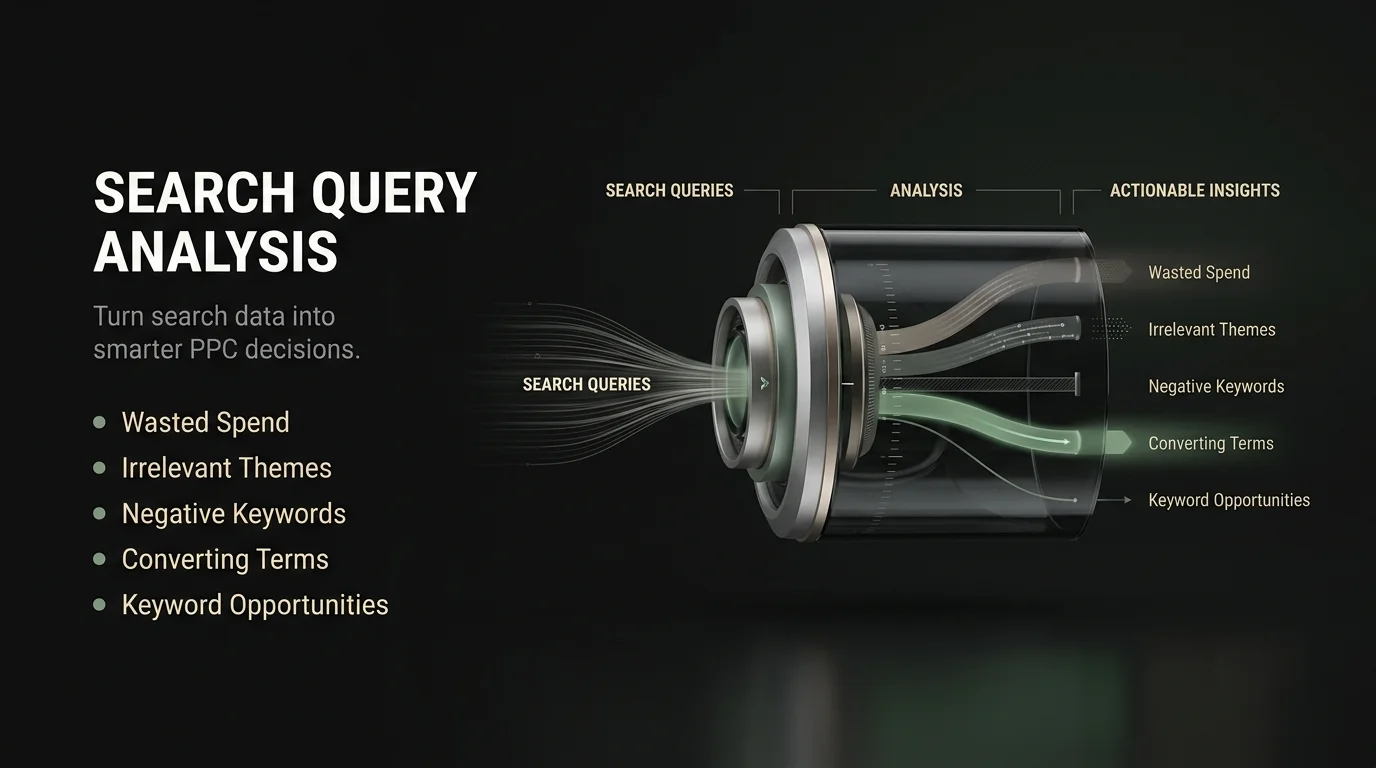
Search query analysis
Reviewing real search terms is one of the most important parts of PPC optimization. Search query analysis helps identify:
- wasted spend
- irrelevant traffic themes
- new negative keyword needs
- strong converting terms
- new keyword expansion opportunities
Keyword strategy should evolve over time as real data comes in.
Google Ads Campaign Setup and Account Structure
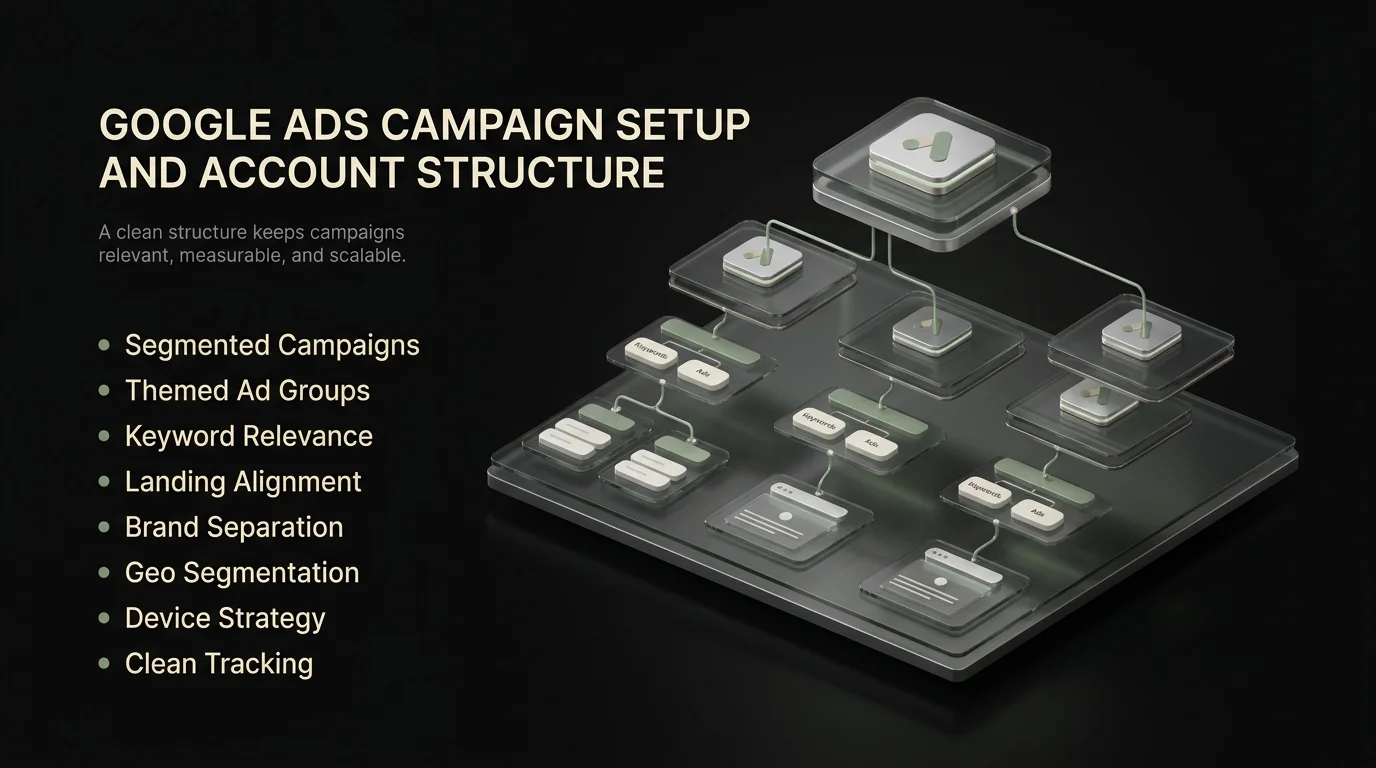
A strong Google Ads account needs clean structure. Without it, even good keywords can underperform. Poor setup often leads to messy reporting, weak relevance, inefficient budgets, and lower-quality traffic.
Strong Google Ads structure usually includes
- clearly segmented campaigns
- tightly themed ad groups
- keyword-to-ad relevance
- landing-page alignment
- branded and non-branded separation
- geographic segmentation when needed
- device considerations where appropriate
- clean tracking setup
Common campaign segmentation approaches
Paid search campaigns may be structured by:
- service category
- product line
- location
- search intent
- brand vs non-brand
- lead type
- priority offer
- conversion goal
Why setup matters in PPC
The initial setup affects:
- ad relevance
- quality signals
- reporting clarity
- testing capability
- budget control
- keyword efficiency
- conversion performance
For Crosstide Media, account structure is a major part of successful PPC management because it shapes how the campaign performs over time.
PPC Audits and Ongoing Optimization
A strong paid search strategy includes both a strong setup phase and a structured PPC audit and optimization process. Many Google Ads accounts carry hidden inefficiencies that reduce performance even if the account is technically active.
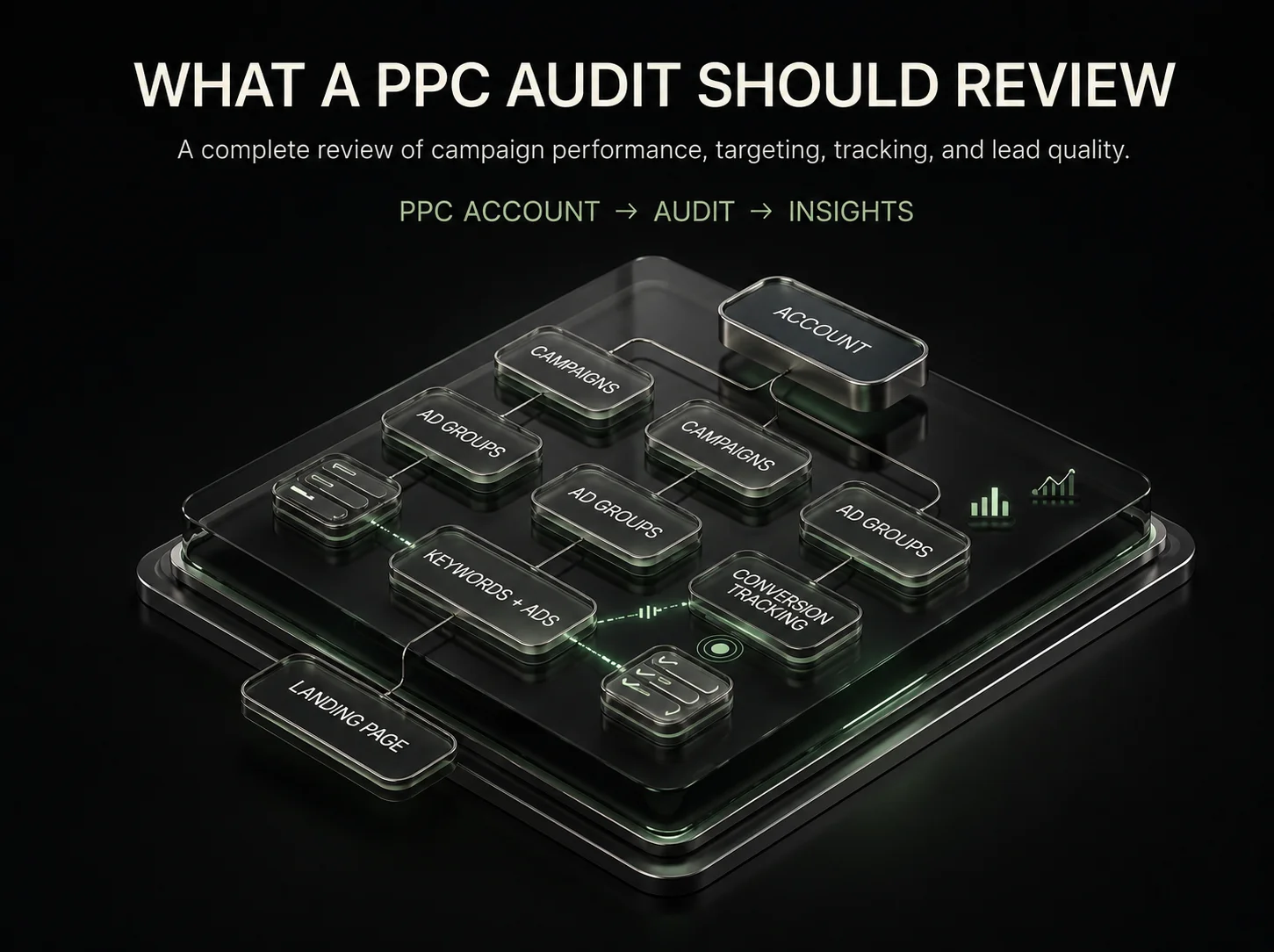
What a PPC audit should review
A paid search audit may review:
- campaign structure
- keyword targeting
- match types
- negative keyword coverage
- search query quality
- ad copy performance
- extension use
- landing-page alignment
- conversion tracking accuracy
- budget distribution
- bidding approach
- geography performance
- device performance
- lead quality trends
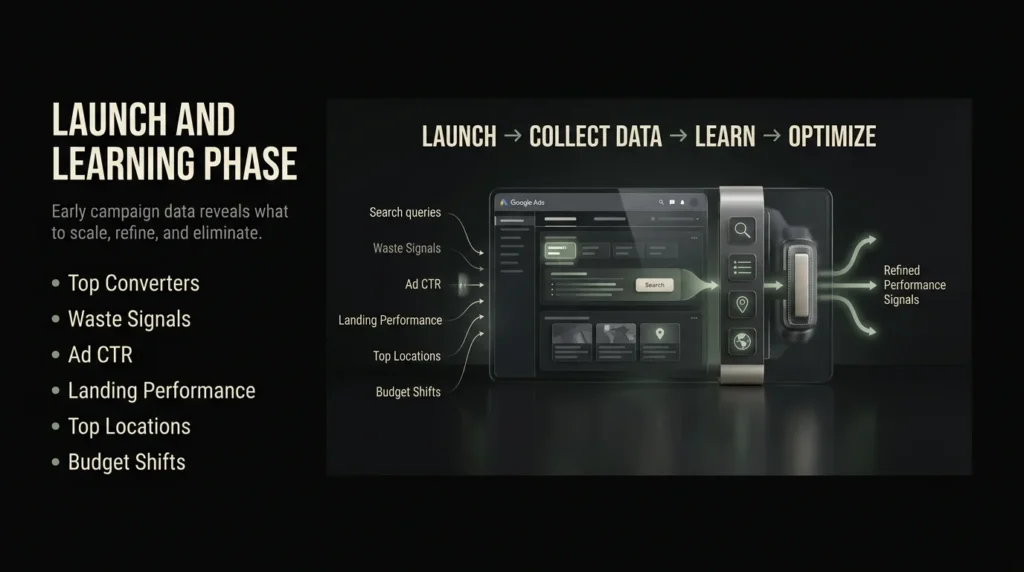
Launch and learning phase
After a new build or account restructure, the campaign enters a learning phase where real performance data begins to show:
- which keywords convert best
- where waste exists
- which ads drive better click-through rate
- which landing pages perform best
- which locations are strongest
- which budget shifts may improve efficiency
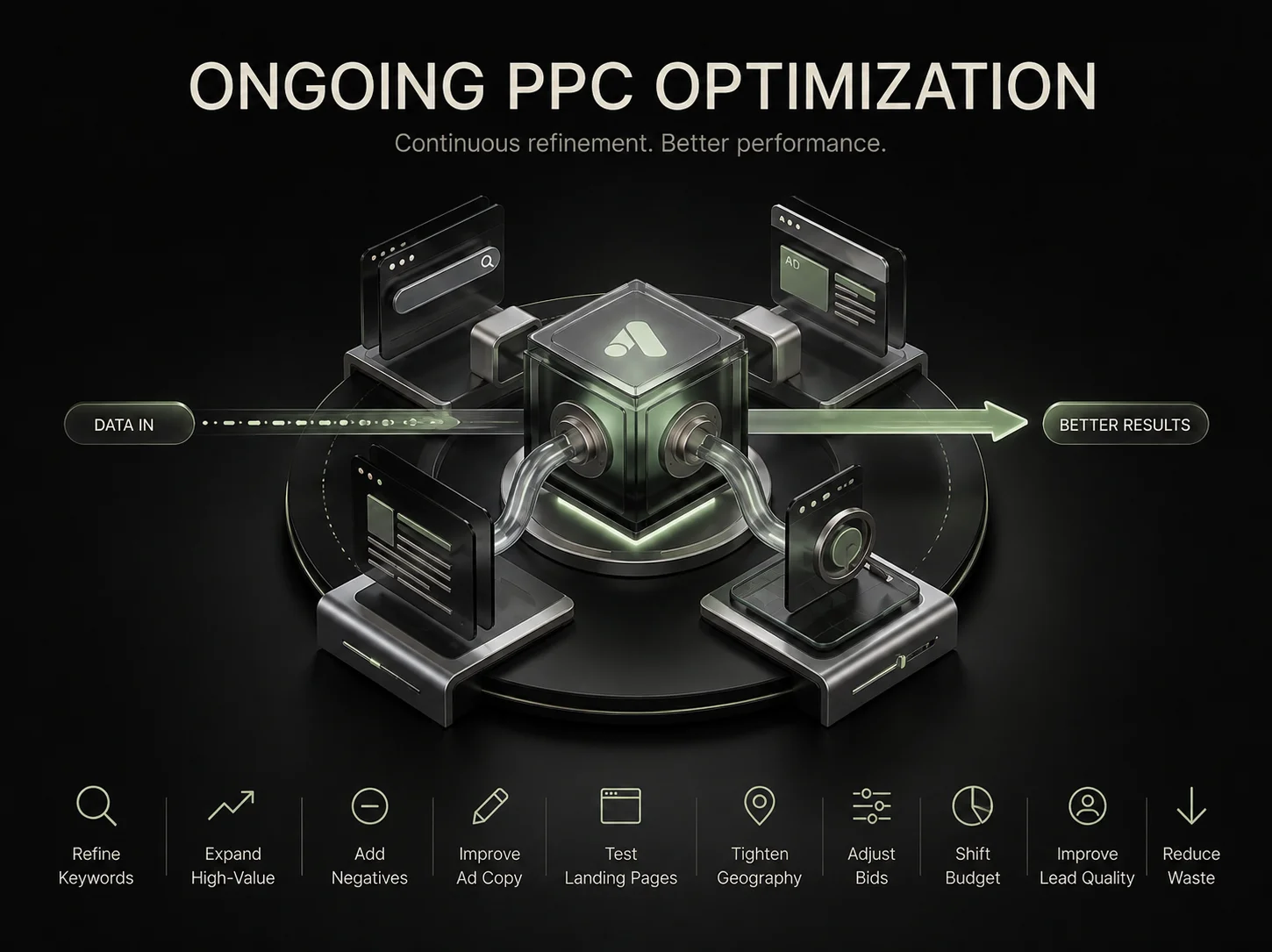
Ongoing PPC optimization
Paid search should be actively managed over time. Optimization may include:
- refining keyword lists
- expanding high-value queries
- adding negative keywords
- improving search ad copy
- testing landing-page alignment
- tightening geography
- adjusting bids
- reallocating budget
- improving lead quality efficiency
- reducing wasted spend
This is where a large share of long-term Google Ads performance improvement comes from.
Ad Copy Strategy, Search Ads, and Extensions
Ad copy is one of the first things a user sees in Google search results, so it plays a major role in click quality and campaign efficiency. Strong search ads need to reflect the keyword, communicate the offer, build confidence, and encourage the right action.
Strong PPC ad copy should do the following
- match search intent
- reflect the user’s query
- clearly state the service or offer
- communicate a value proposition
- reduce hesitation
- make the next step clear

Search ad strategy often includes
- keyword relevance in headlines
- benefit-driven messaging
- local relevance where useful
- trust signals
- offer clarity
- strong calls to action
- multiple ad variations for testing
Why ad extensions matter
Extensions can improve visibility and give users more reasons to engage. Strong Google Ads management often includes:
- sitelink extensions
- callout extensions
- structured snippets
- call extensions
- location extensions
- lead form support where appropriate
A strong ad strategy is not just about getting the click. It is about getting the right click from the right search.
Landing Pages and PPC Conversion Strategy
Landing pages are one of the most important parts of paid search performance because the click only matters if the page can convert the visitor into a lead, call, form submission, or other meaningful action.
A paid search landing page should closely match the ad and keyword that brought the user in.
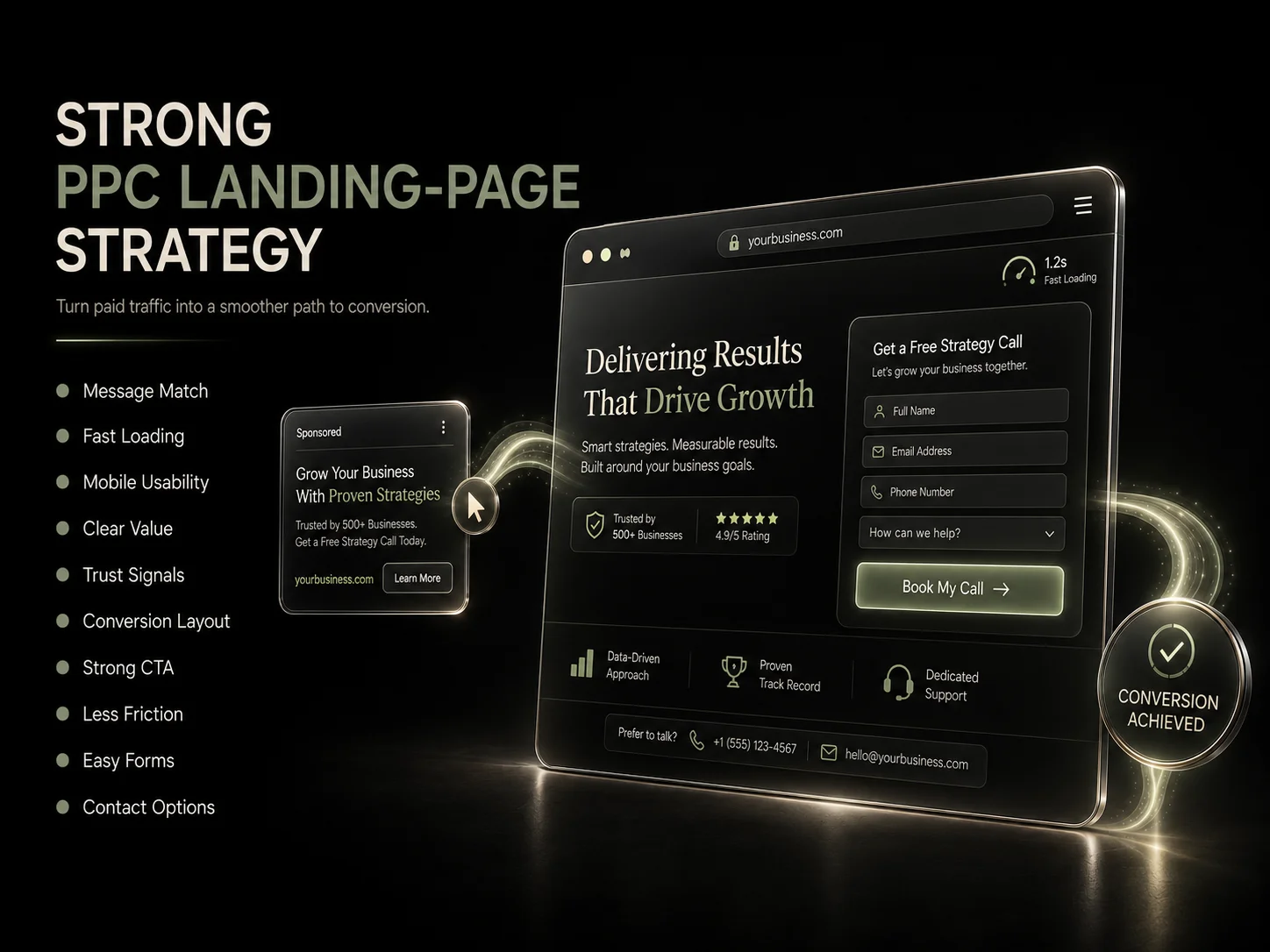
Strong PPC landing-page strategy should consider
- message match between keyword, ad, and page
- fast load speed
- mobile usability
- clear value proposition
- trust signals
- conversion-focused layout
- strong CTA placement
- reduced friction
- easy form experience
- visible contact options
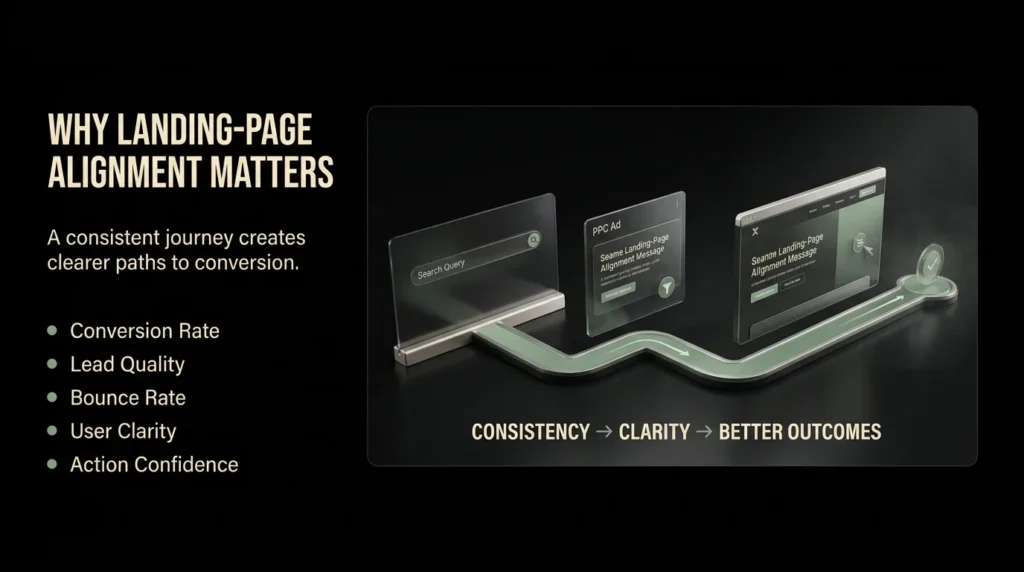
Why landing-page alignment matters
Even strong Google Ads campaigns can underperform if the landing-page experience is weak. Landing pages have a direct effect on:
- conversion rate
- lead quality
- bounce rate
- user clarity
- action confidence
For Crosstide Media, landing-page alignment is one of the most important parts of paid search lead generation performance
Paid Search Budgeting, Bidding, and Cost Efficiency
A strong PPC strategy is not just about driving clicks. It is about driving the right traffic efficiently.
Budget strategy should consider
- business priorities
- lead value
- keyword competitiveness
- location strategy
- seasonality
- branded vs non-branded balance
- service-line priorities
- conversion potential
- sales cycle considerations
Common bidding considerations
Paid search bidding should align with the campaign goal. A strong Google Ads strategy may balance:
- cost per click
- cost per lead
- lead quality
- impression share
- conversion volume
- return on ad spend
- efficiency by campaign type
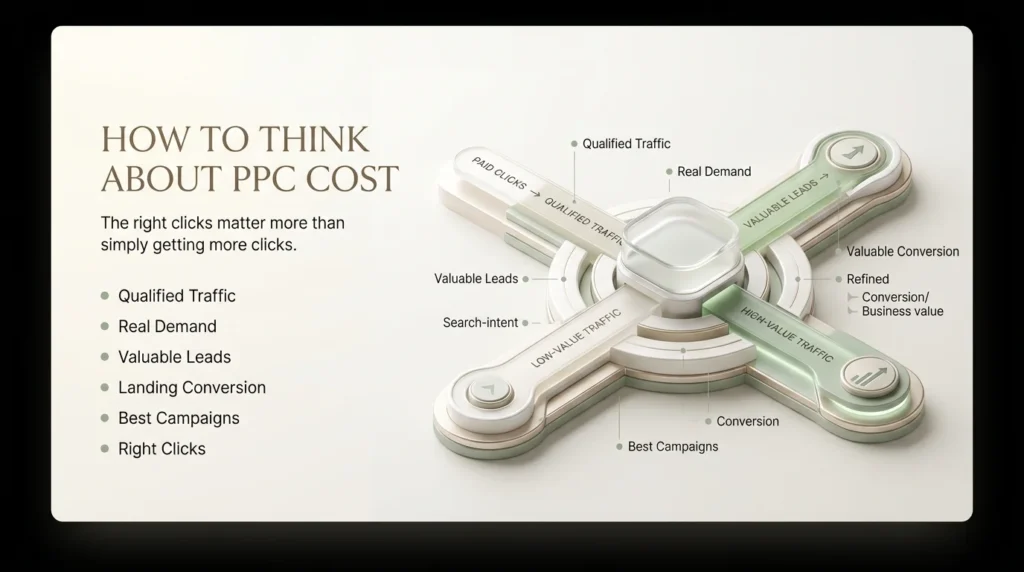
How to think about PPC cost
The more useful question is not only what the click costs, but also:
- Is this traffic qualified?
- Are these searches aligned with real demand?
- Are the leads valuable?
- Is the landing page converting?
- Is budget concentrated in the best campaigns?
- Am I paying for the right clicks or just more clicks?
The strongest paid search strategy looks at cost in relation to business value, not just traffic volume.
PPC Reporting, Attribution, and Lead Tracking
Paid search is one of the most measurable digital marketing channels, but only when tracking and reporting are set up correctly.
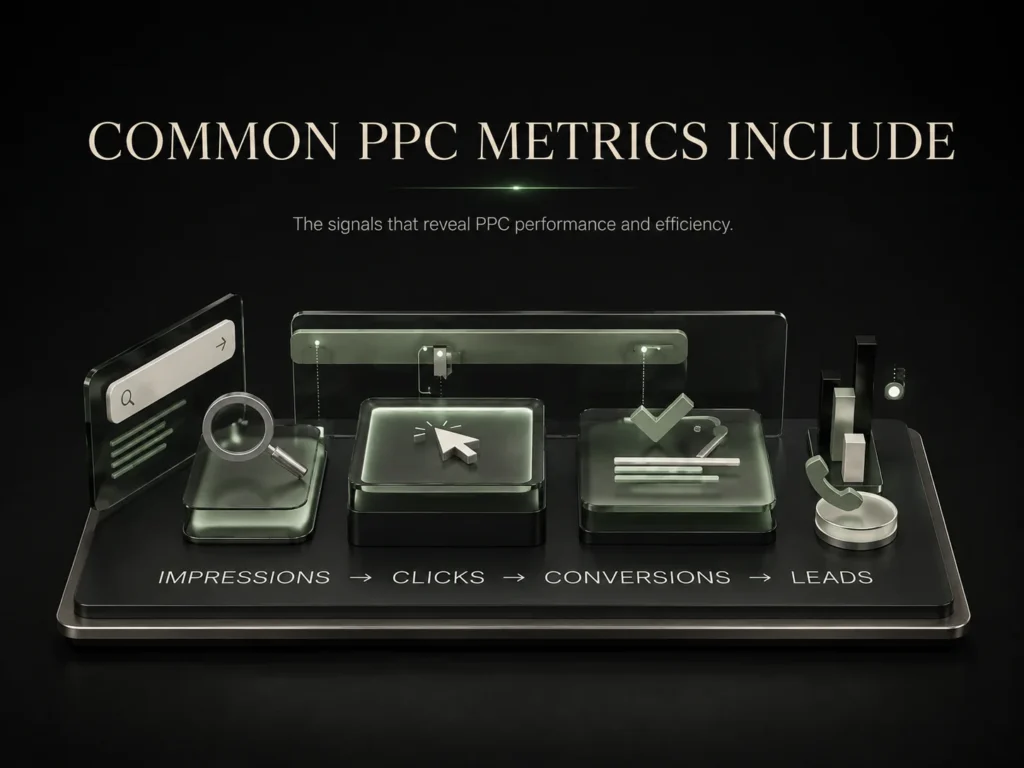
Common PPC metrics include
- impressions
- clicks
- click-through rate
- average CPC
- conversion rate
- cost per conversion
- impression share
- search query quality
- landing-page engagement
- phone calls
- form submissions
- lead volume
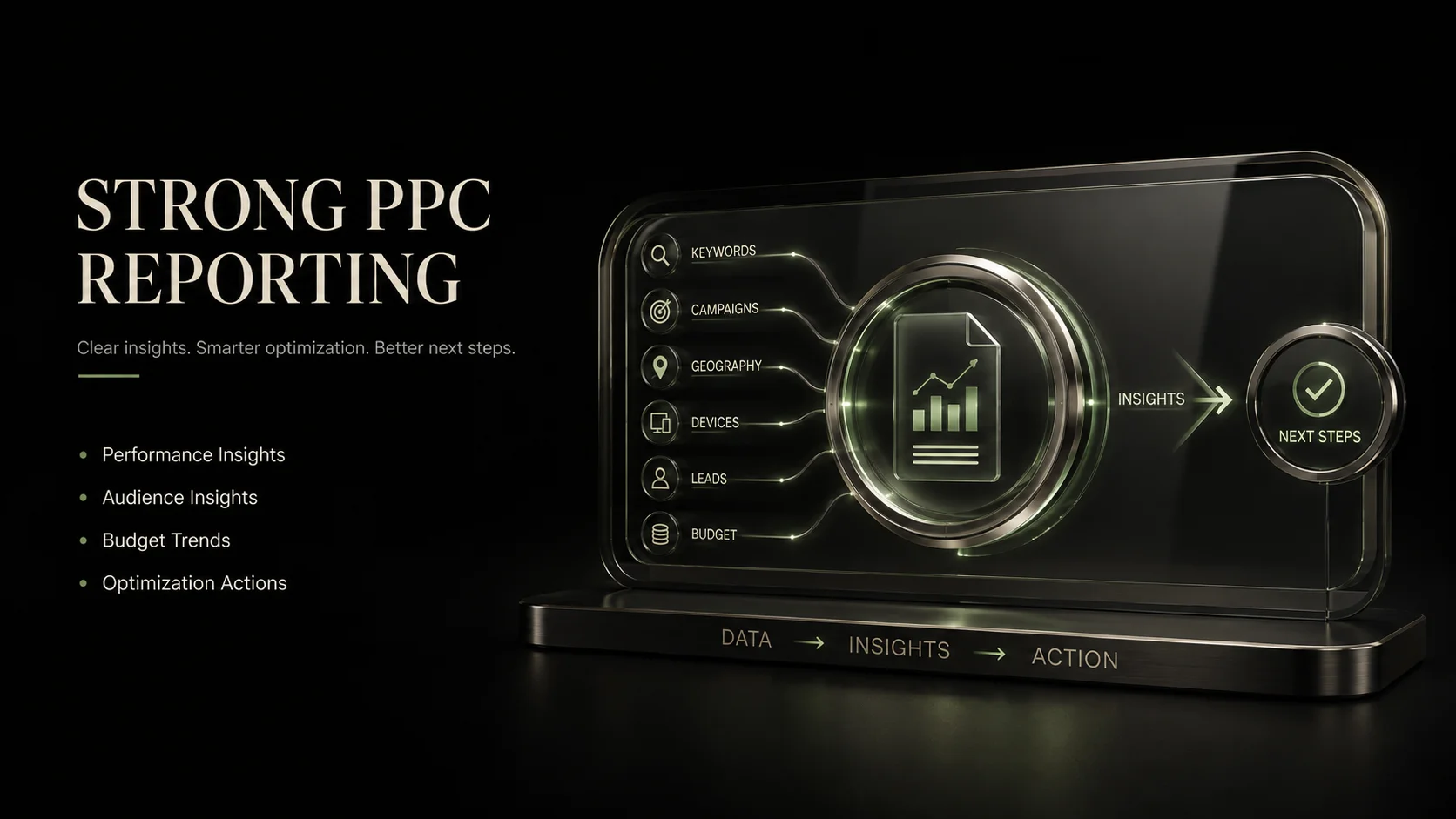
Strong PPC reporting should also include
- keyword-level performance
- campaign-level efficiency
- geography insights
- device insights
- lead quality indicators
- budget allocation trends
- optimization actions taken
- next-step recommendations
Why reporting matters
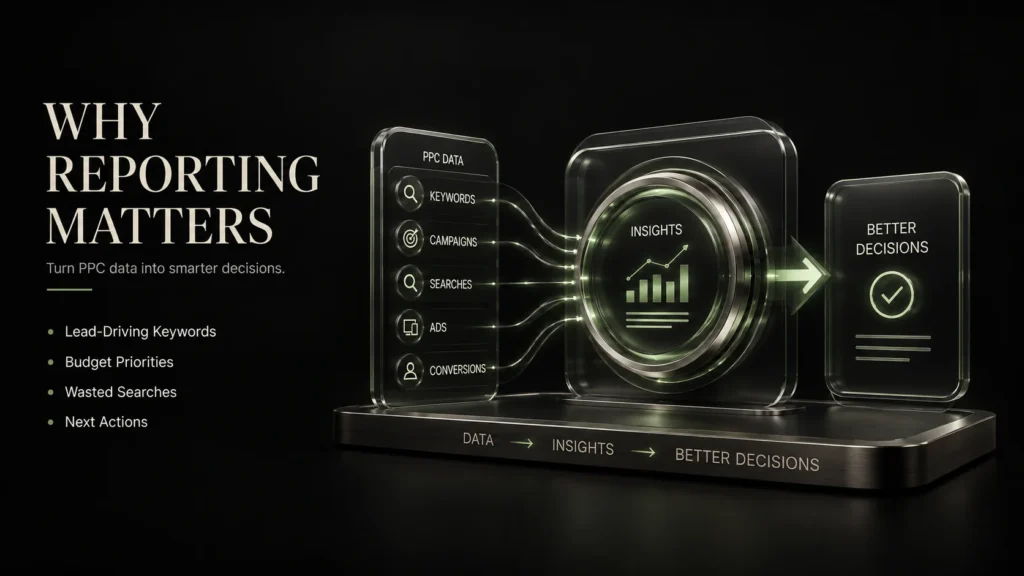
Good PPC reporting should help answer:
- Which keywords drive qualified leads?
- Which campaigns deserve more budget?
- Which searches waste spend?
- Which ads perform best?
- What should be changed next?
That is what turns paid search reporting into a strategic decision-making tool.
How Paid Search Fits Into SEO and the Broader Marketing Mix
Paid search plays an important role in the broader digital marketing landscape because it captures active demand. While channels like SEO, display, video, CTV, social, and retargeting can create awareness and influence future action, paid search is often where users go when they are ready to search, compare, and convert.
How PPC complements SEO
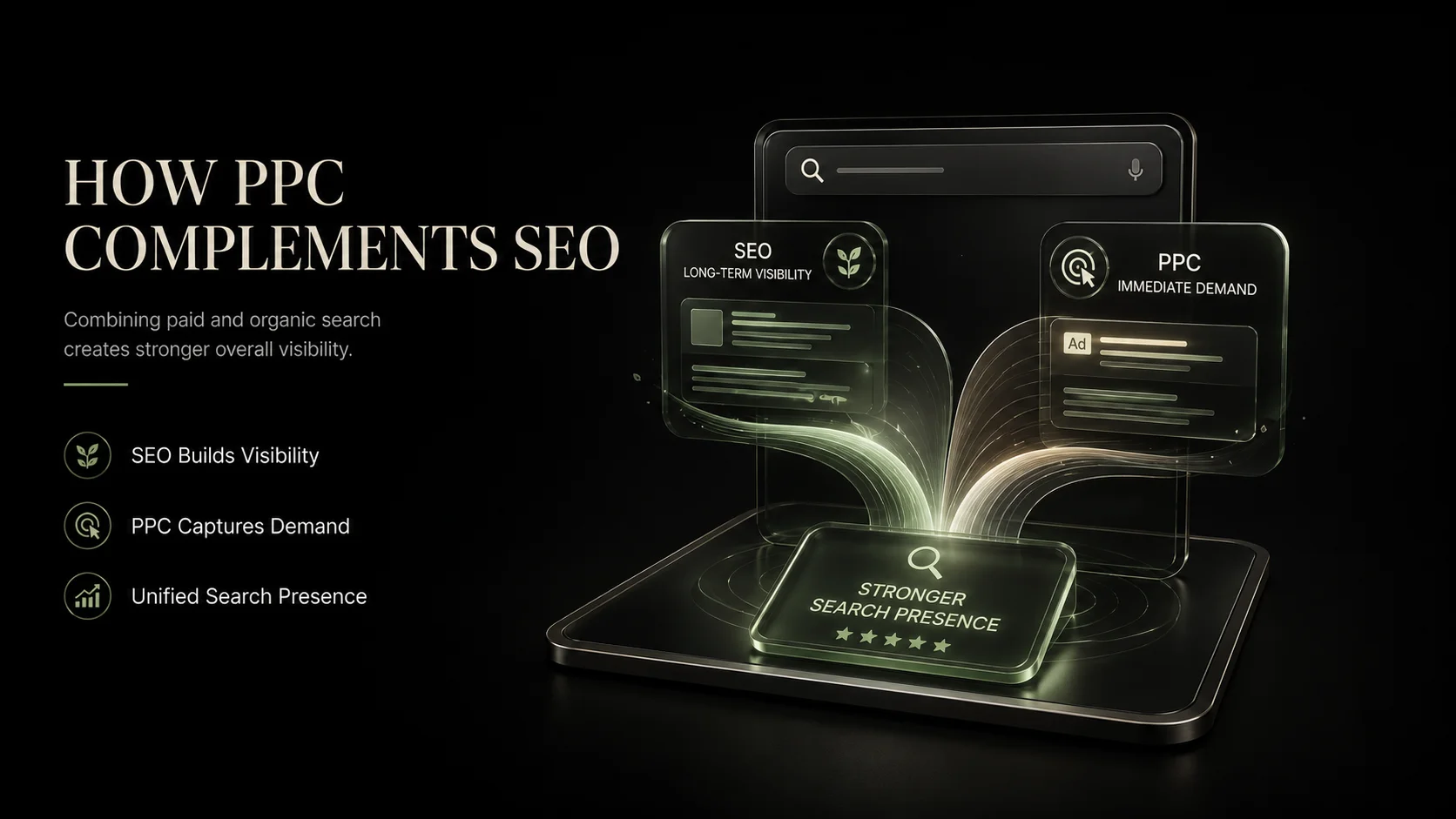
SEO and paid search work especially well together.
- SEO helps build long-term organic visibility
- PPC helps capture immediate search demand
- SEO supports content depth and organic rankings
- PPC helps fill visibility gaps while SEO grows
- SEO and PPC together strengthen total search presence
How paid search supports other media tactics
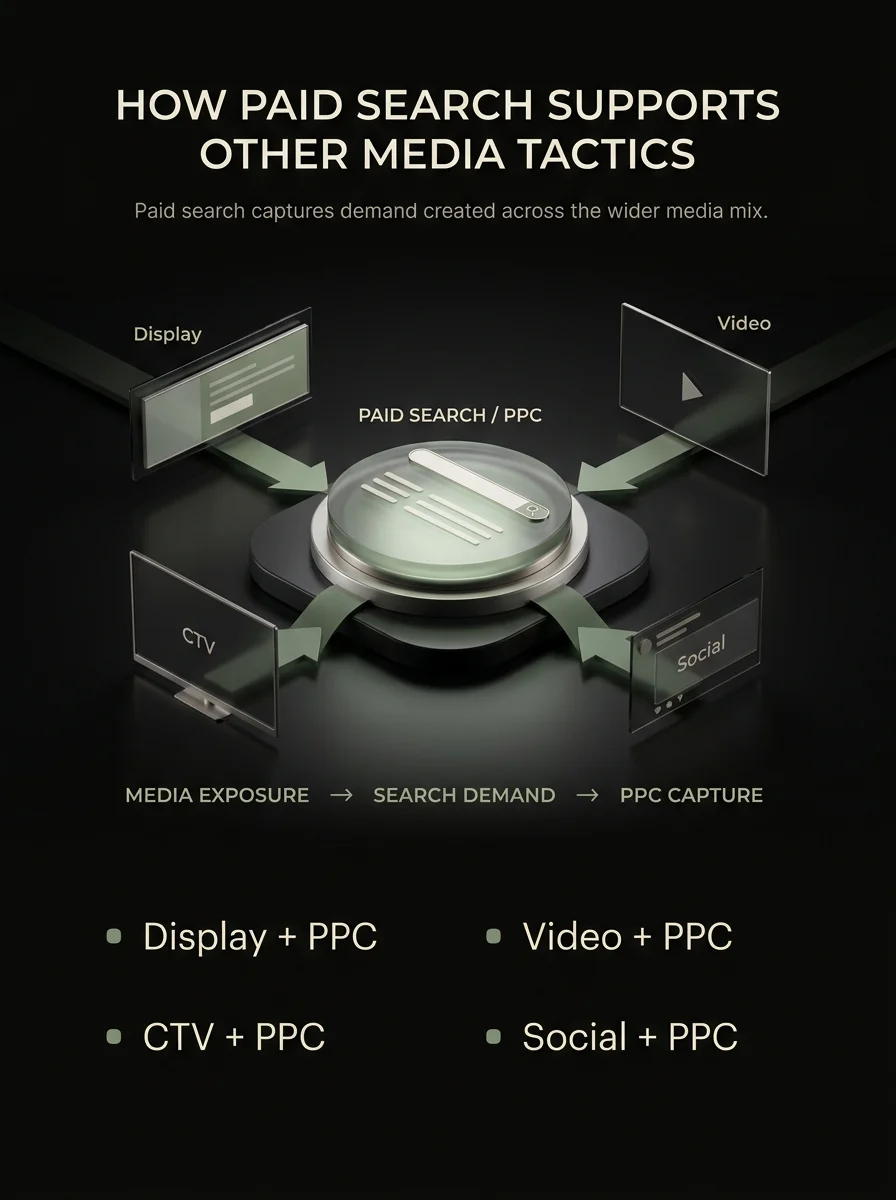
Display and PPC
Display builds awareness and retargets visitors, while PPC captures users when they actively search later.
Video and PPC
Video builds recall and education, while PPC captures demand when users move into action mode.
CTV and PPC
CTV creates broad awareness, while paid search captures branded and service-related searches after exposure.
Social and PPC
Social creates interest and audience familiarity, while PPC captures high-intent solution-seeking behavior.
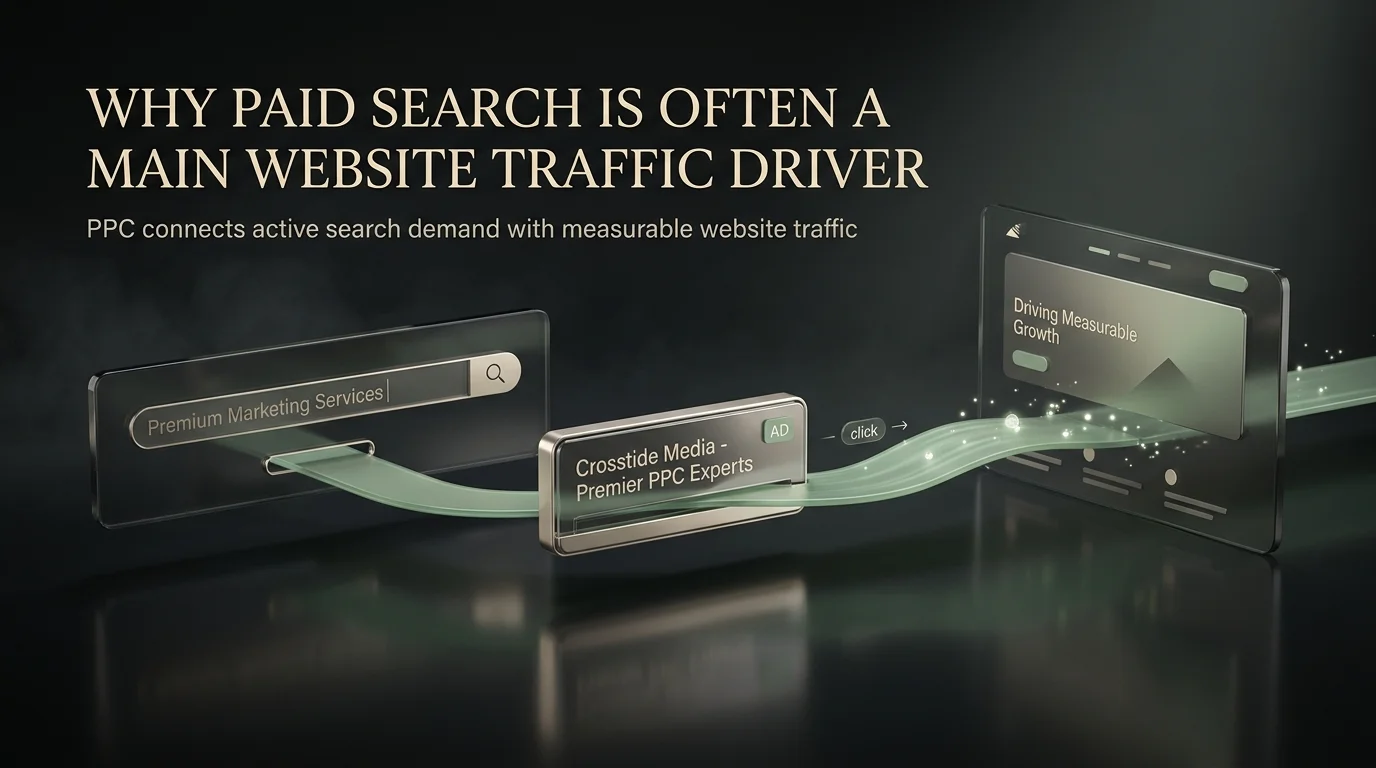
Why paid search is often a main website traffic driver
For many businesses, paid search becomes one of the most important traffic drivers because it reaches people who are already searching. That makes PPC one of the clearest bridges between advertising and measurable website performance.
Why Work With Crosstide Media?
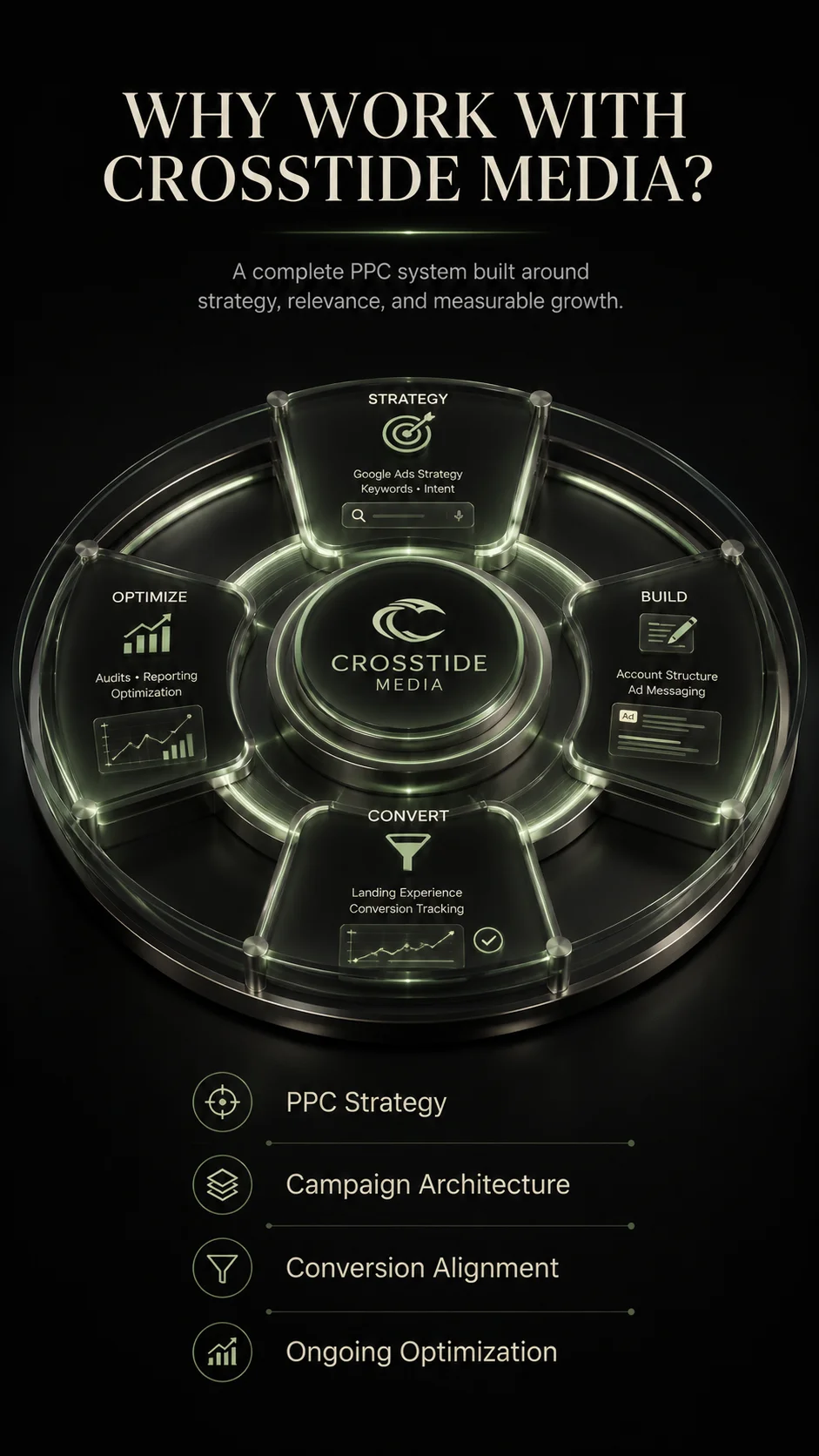
Effective paid search requires more than launching keywords in Google Ads. It takes strategic keyword planning, clean campaign structure, strong search ad copy, landing-page alignment, conversion tracking, ongoing auditing, and performance-focused optimization.
Crosstide Media helps advertisers execute paid search campaigns with:
- Google Ads strategy
- PPC account setup
- keyword research and planning
- search intent mapping
- ad copy development
- landing-page alignment
- conversion tracking setup
- PPC audits
- reporting and ongoing optimization
We approach paid search as both a demand-capture channel and a measurable performance investment. Our focus is on helping brands use Google Ads and PPC advertising in a way that improves search visibility, reduces wasted spend, and drives stronger business results.
Whether the goal is lead generation, service inquiries, appointment bookings, phone calls, or broader search visibility, Crosstide Media helps businesses build paid search campaigns with the structure and discipline required for long-term growth.
Frequently Asked Questions
What is paid search advertising?
What does PPC mean?
Why is Google Ads important for lead generation?
Is paid search good for local businesses?
Why is keyword strategy important in PPC?
Why is keyword strategy important in PPC?
What is a PPC audit?
What makes a good PPC landing page?
How does paid search work with SEO?
Why work with a paid search agency or PPC management partner?
Build a Smarter Paid Search Strategy
If your business needs a more strategic PPC approach, Crosstide Media can help you plan, launch, and optimize paid search campaigns built around stronger keyword strategy, better Google Ads account structure, stronger landing-page alignment, and clearer reporting. Whether your goal is to increase qualified website traffic, generate more leads, improve Google Ads performance, or build a stronger demand-capture strategy, we help brands use paid search advertising in a smarter, more results-focused way.
Why Brands Choose Crosstide Media
Brands work with Crosstide Media because effective paid search requires more than simply turning on Google Ads. Strong results come from the right mix of keyword intelligence, search intent strategy, campaign structure, ad messaging, landing-page experience, measurement, and ongoing optimization. Our approach is built to help advertisers improve traffic quality, reduce waste, increase lead efficiency, and make better decisions through clearer reporting and more actionable campaign insights.
Talk to Crosstide Media About Paid Search Advertising
If you are looking for a paid search partner that can help you improve Google Ads performance, capture more high-intent traffic, and drive more measurable results, Crosstide Media can help. We build PPC campaigns with the strategic planning, technical setup, keyword intelligence, creative alignment, and optimization discipline needed to support long-term growth.