
Programmatic Mobile Advertising
Mobile Advertising Campaigns Built for Modern User Behavior and Measurable Results
Programmatic mobile advertising helps brands connect with consumers across smartphones and tablets through automated media buying, audience targeting, and real-time optimization. As mobile devices continue to shape how people browse, shop, watch, scroll, and engage with content throughout the day, advertisers need mobile campaigns that are built for how users actually behave across screens, environments, and formats.
For advertisers focused on awareness, traffic, engagement, and conversion support, programmatic mobile advertising offers a flexible way to reach audiences in both mobile web and in-app environments. It can support everything from mobile display and video campaigns to retargeting, location-based targeting, and broader omnichannel strategy when paired with the right creative, audience structure, and landing-page experience.
At Crosstide Media, we build programmatic mobile advertising campaigns around premium inventory access, strong audience strategy, mobile-first creative, and measurable performance. Whether the goal is to drive awareness, increase site traffic, support lead generation, or improve broader digital media efficiency, we help brands execute mobile campaigns built for stronger engagement and smarter results.

Jump To
What Is Programmatic Mobile Advertising?
Programmatic mobile advertising is the automated buying and delivery of digital ads across smartphones and tablets through advertising technology platforms rather than manual publisher-by-publisher buying. These campaigns can run across mobile websites, apps, mobile video environments, games, streaming platforms, and other digital properties accessed on mobile devices.
This format gives advertisers a way to reach users in the environments where they spend a large share of their digital time. Mobile campaigns can support prospecting, retargeting, local targeting, traffic generation, lead generation, app promotion, and conversion support depending on campaign goals and media structure.
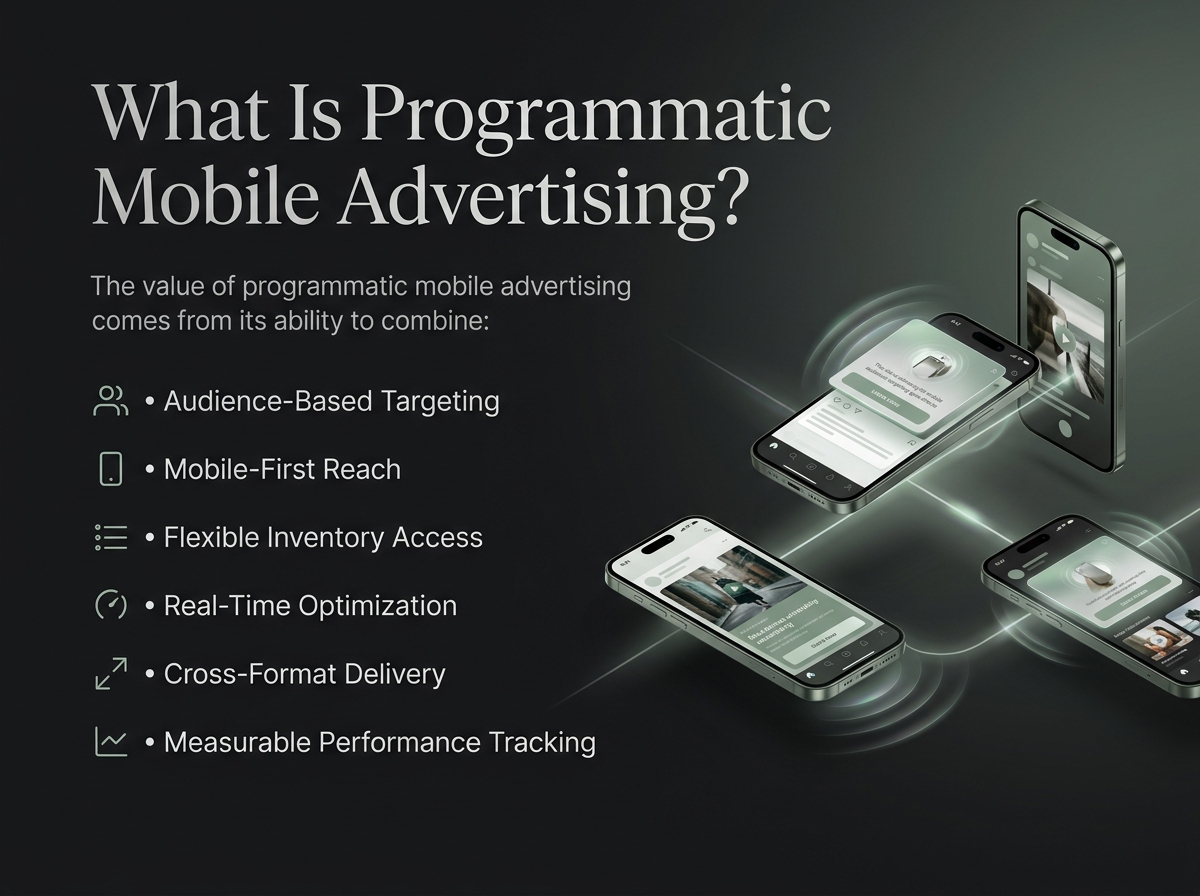
The value of programmatic mobile advertising comes from its ability to combine:
- Audience-based targeting
- Mobile-first reach
- Flexible inventory access
- Real-time optimization
- Cross-format delivery
- Measurable performance tracking
This makes programmatic mobile advertising a strong option for brands that want to connect with users throughout the day in the moments when mobile devices are closest at hand.
Why Programmatic Mobile Advertising Matters
Mobile advertising matters because mobile behavior now influences nearly every stage of the customer journey. Consumers use phones to research products, browse services, read content, watch videos, compare options, visit websites, fill out forms, and take action throughout the day. That means advertisers need campaigns designed for the speed, screen size, and behavior patterns of mobile environments.
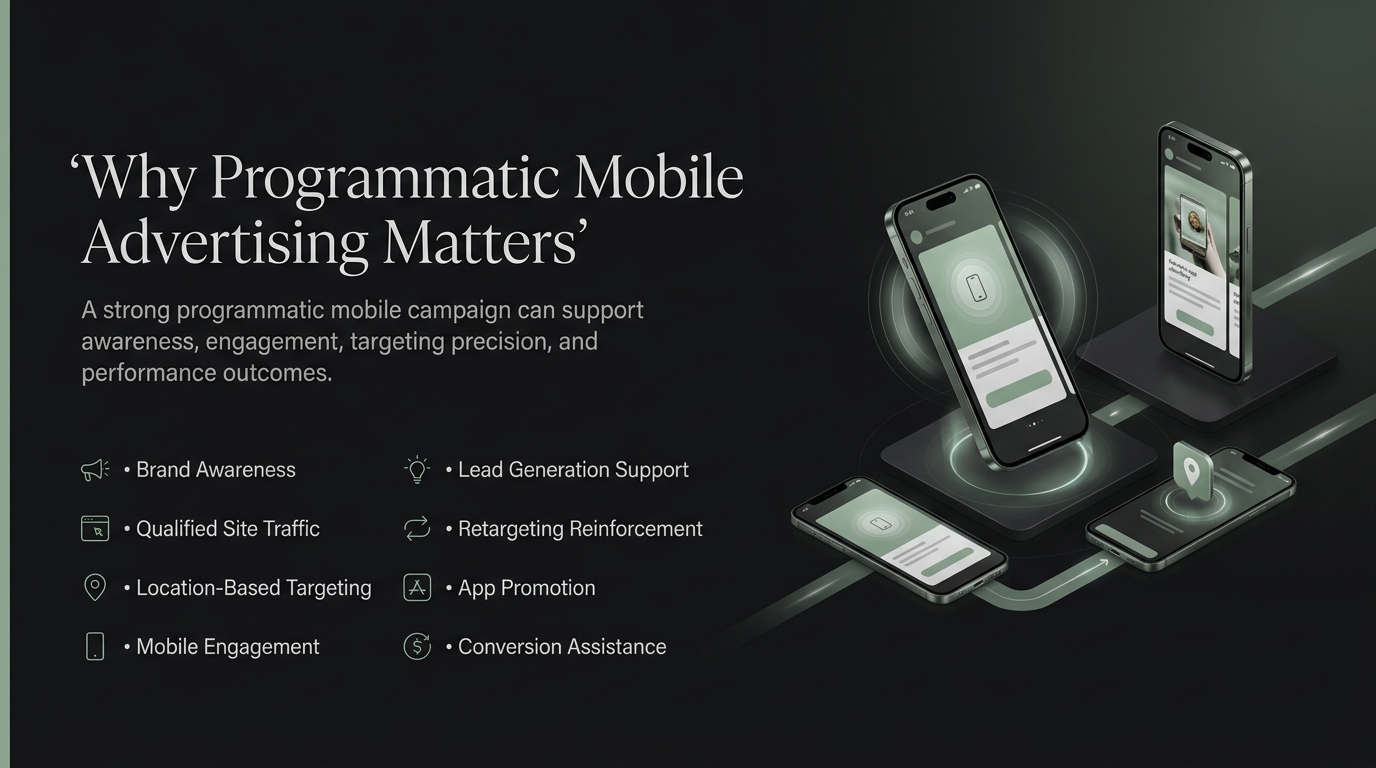
A strong programmatic mobile campaign can help support:
- Brand awareness
- Qualified site traffic
- Location-based targeting
- Mobile engagement
- Lead generation support
- Retargeting reinforcement
- App promotion
- Conversion assistance
Why advertisers use programmatic mobile advertising
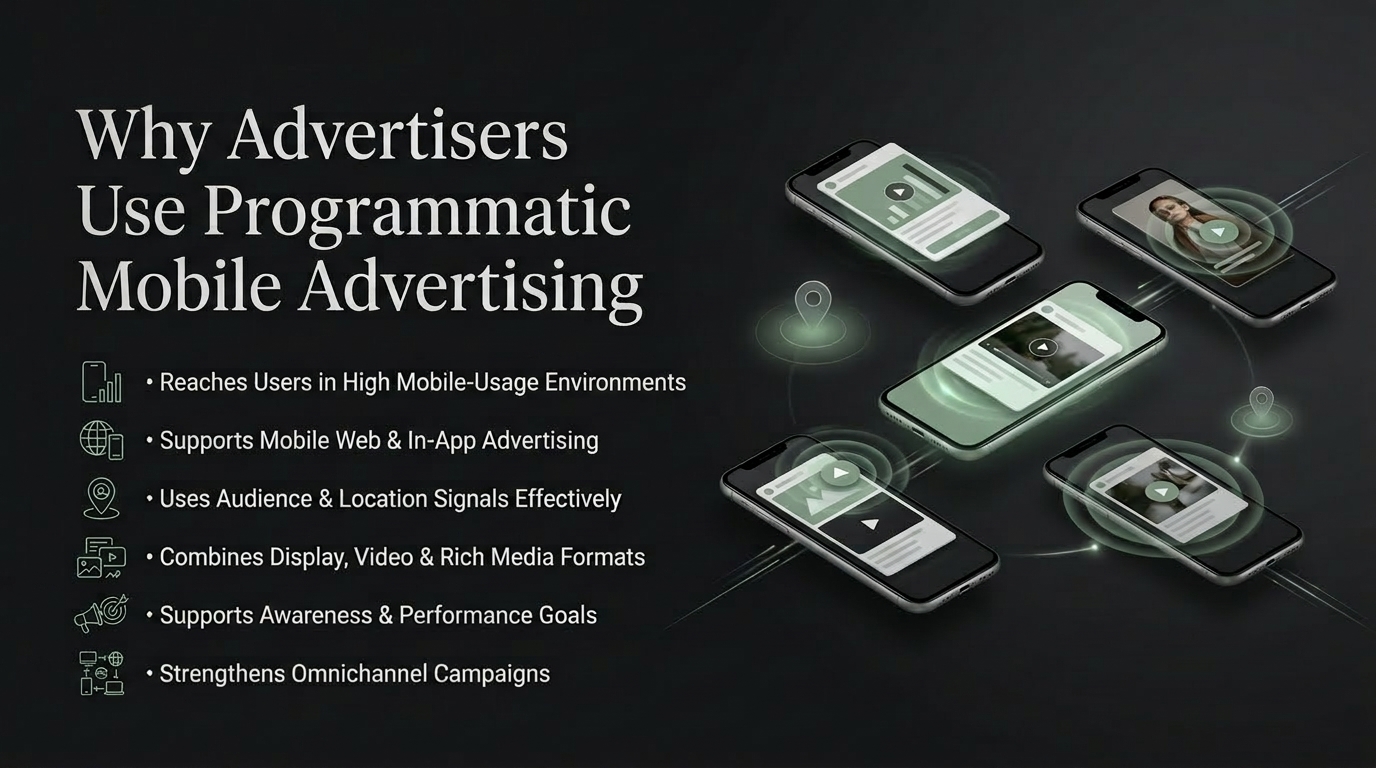
- It reaches users where they spend a large share of their time
- It supports both mobile web and in-app environments
- It allows advertisers to use audience and location signals effectively
- It can combine display, video, and rich media formats
- It supports awareness and performance-focused goals
- It can strengthen broader omnichannel campaigns
For Crosstide Media, programmatic mobile advertising is valuable because it combines device-level relevance, strong reach, flexible creative options, and measurable campaign performance in one of the most important digital environments.
Why advertisers use programmatic mobile advertising
- It reaches users where they spend a large share of their time
- It supports both mobile web and in-app environments
- It allows advertisers to use audience and location signals effectively
- It can combine display, video, and rich media formats
- It supports awareness and performance-focused goals
- It can strengthen broader omnichannel campaigns
For Crosstide Media, programmatic mobile advertising is valuable because it combines device-level relevance, strong reach, flexible creative options, and measurable campaign performance in one of the most important digital environments.

How Programmatic Mobile Buying Works
Programmatic mobile buying uses digital media platforms and automated bidding technology to connect advertisers with mobile ad inventory made available through publishers, apps, exchanges, and premium supply partners. Campaigns are usually structured around audience targets, devices, environments, formats, geography, budgets, creative assets, pacing controls, and performance goals.
In practice, mobile campaigns may include inventory across mobile websites, in-app environments, mobile video placements, gaming apps, content apps, streaming platforms, and other mobile-first digital properties. Advertisers can choose how much weight to place on mobile web, in-app, display, video, or richer interactive formats depending on the campaign goal and the behavior they want to influence.
Typical programmatic mobile workflow
A well-managed campaign usually includes:
- audience planning and segmentation
- inventory strategy by device, environment, and format
- creative setup and mobile QA
- bid and pacing controls
- mobile landing-page alignment
- brand safety and suitability review
- mid-flight optimization
- reporting and attribution analysis
Why this buying model is useful
Programmatic mobile advertising gives advertisers more control over:
- who sees the ad
- where the ad appears
- which devices and environments are prioritized
- how mobile display and video are balanced
- which audiences and placements perform best
- how spend is adjusted while campaigns are live
That makes mobile advertising more adaptable than a basic one-size-fits-all digital media strategy, especially for brands that want stronger audience relevance, better mobile creative performance, and clearer reporting.
Mobile Ad Formats and Inventory Types
Programmatic mobile campaigns can run across several major ad formats and environments. The right mix depends on campaign goals, creative resources, audience behavior, and how users are expected to engage on mobile devices.
Mobile display ads
Mobile display ads include standard banner units, native-style placements, interstitial units, and other visual ad formats shown within mobile sites and apps. These can be useful for awareness, traffic generation, retargeting, and broad mobile reach.
Mobile video ads
Mobile video ads are often one of the strongest formats for attention and storytelling on mobile devices. These can run in-stream, out-stream, in-feed, rewarded, interstitial, and other mobile video placements depending on the app, publisher, or platform environment.
Rich media and interactive mobile formats
Some campaigns may include expanded units, swipeable experiences, interactive ad treatments, dynamic creative, or other mobile-first formats that are designed to create stronger engagement.
Native mobile placements
Native mobile placements can appear within mobile content feeds, app environments, recommendation units, and publisher layouts where they visually align more closely with the surrounding experience.
Cross-device delivery
Mobile campaigns may run across:
- smartphones
- tablets
- mobile web environments
- apps
- streaming apps
- gaming apps
- publisher apps
- video-enabled mobile placements
Inventory mix considerations
Performance can vary based on:
- display vs video format
- mobile web vs in-app environment
- device type
- screen size
- connection speed
- publisher quality
- app quality
- landing-page experience
Mobile Web vs In-App Advertising
Mobile web advertising
Mobile web advertising appears on websites accessed through a mobile browser. These placements can be useful for driving traffic directly to a website, aligning with content environments, and supporting campaigns where the landing-page experience is a key part of success.
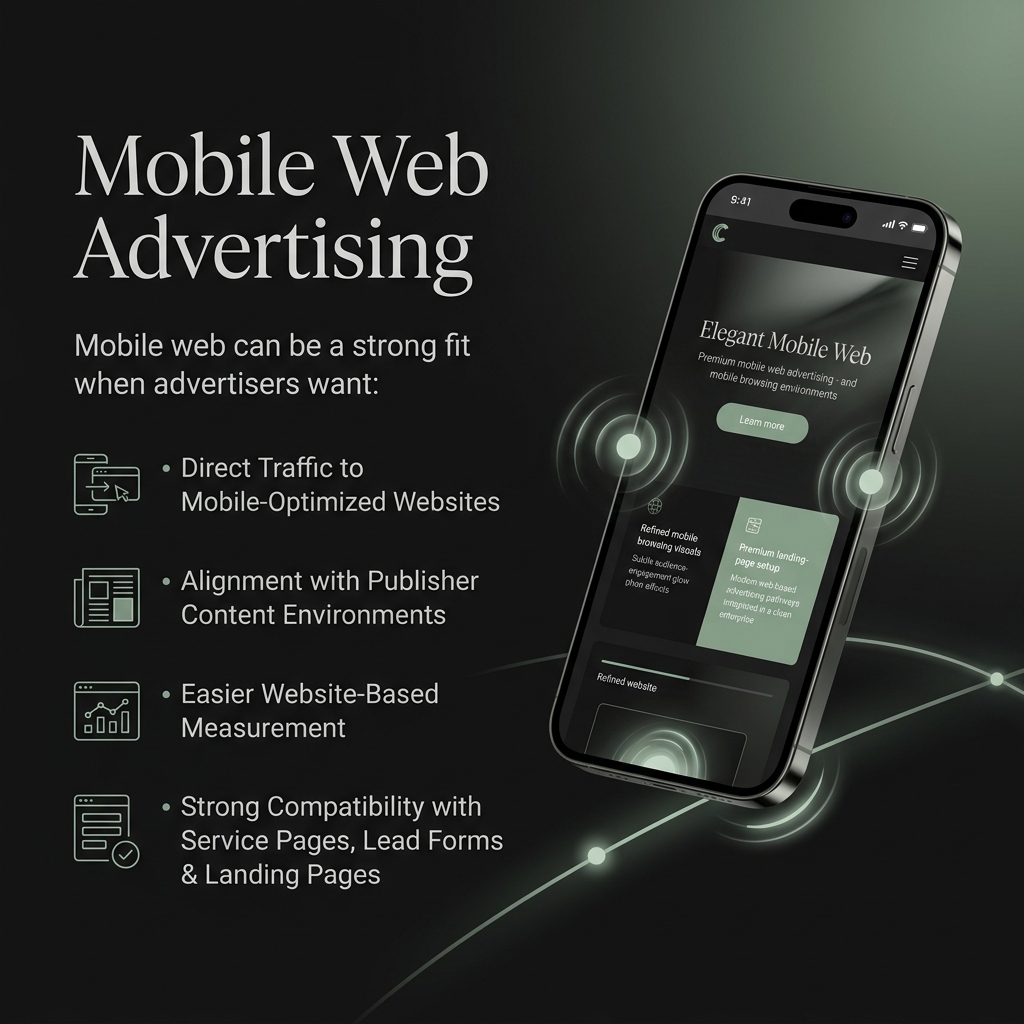
Mobile web can be a strong fit when advertisers want:
- Direct traffic to mobile-optimized websites
- Alignment with publisher content environments
- Easier website-based measurement
- Strong compatibility with service pages, lead forms, and landing pages
In-app advertising
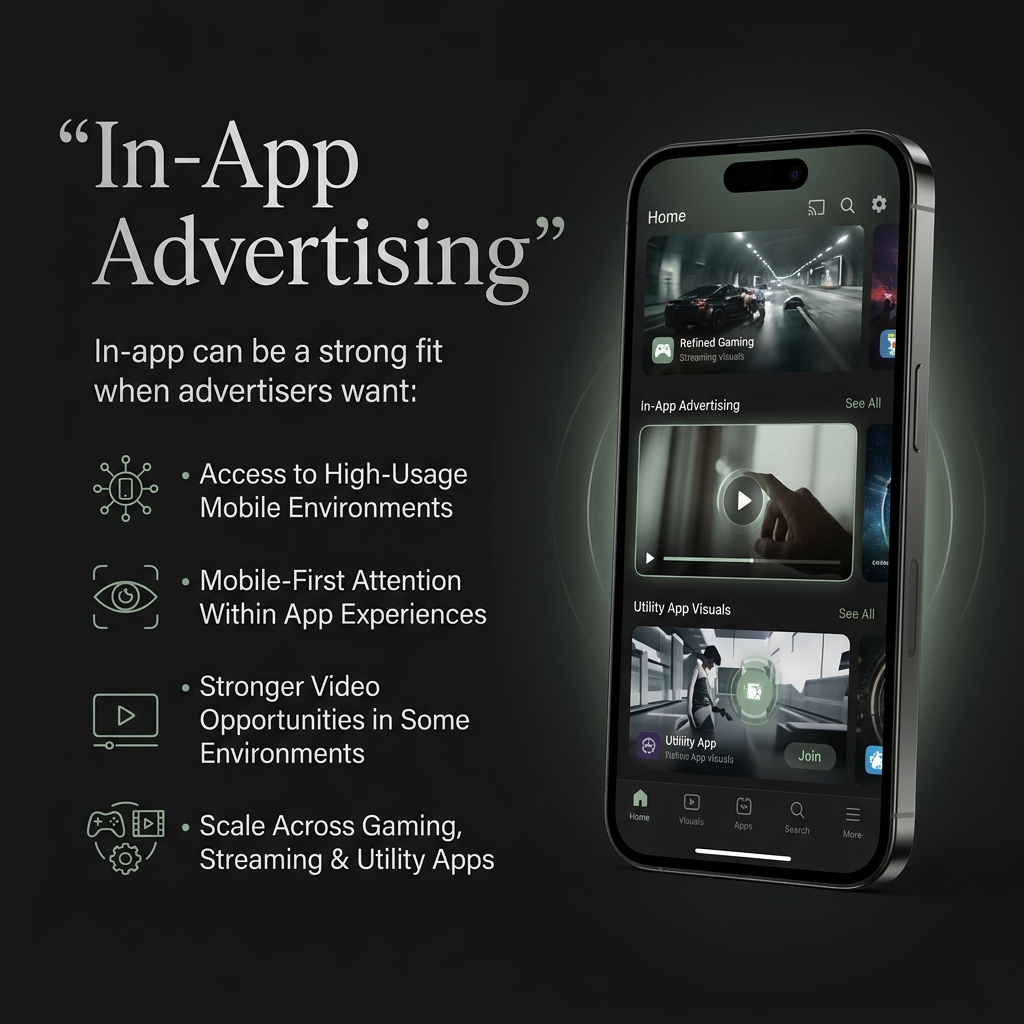
In-app advertising appears inside mobile applications rather than browser-based websites. These placements can offer strong reach, high-frequency usage environments, and access to users inside games, utility apps, streaming apps, social environments, and other app-based experiences.
In-app can be a strong fit when advertisers want:
- Access to high-usage mobile environments
- Mobile-first attention within app experiences
- Stronger video opportunities in some environments
- scale across gaming, streaming, and utility apps
In-app advertising
In-app advertising appears inside mobile applications rather than browser-based websites. These placements can offer strong reach, high-frequency usage environments, and access to users inside games, utility apps, streaming apps, social environments, and other app-based experiences.
In-app can be a strong fit when advertisers want:
- Access to high-usage mobile environments
- Mobile-first attention within app experiences
- Stronger video opportunities in some environments
- scale across gaming, streaming, and utility apps
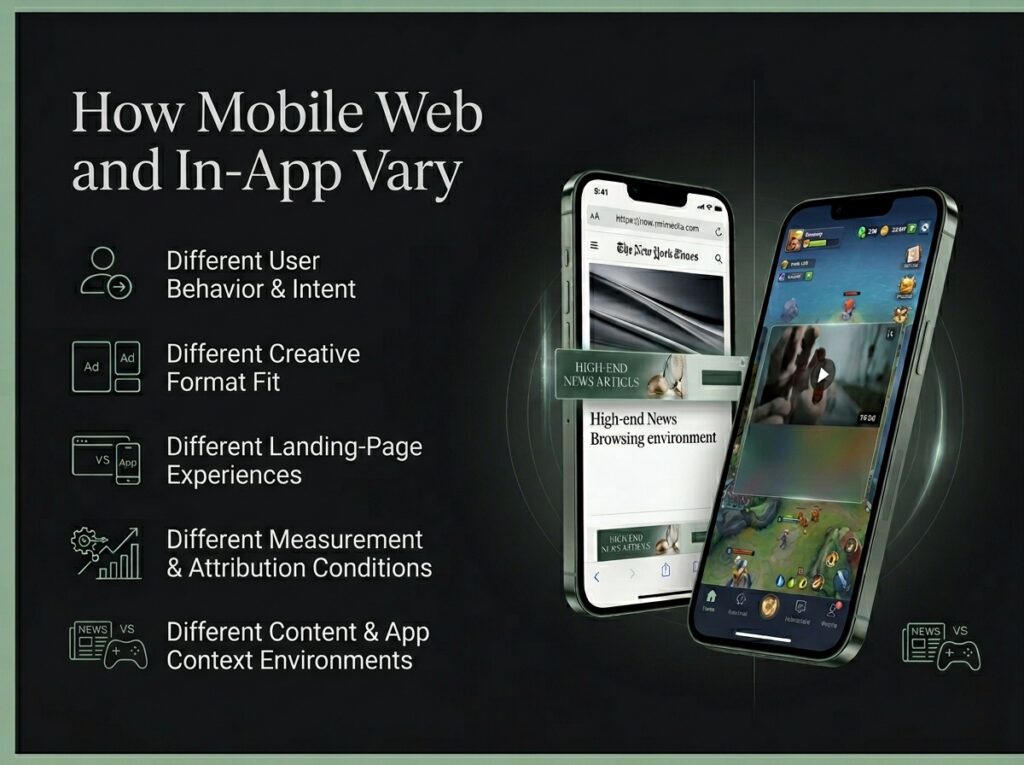
How mobile web and in-app vary
These environments can differ in several important ways:
- User behavior: app usage and browser usage often reflect different intent and browsing patterns
- Creative fit: some formats perform better in-app, while others align more naturally with mobile websites
- Landing-page experience: mobile web often connects more directly to a browser-based site visit, while in-app clicks may require more careful experience planning
- Measurement: reporting and attribution can vary depending on app environment, privacy conditions, and tracking setup
- Context: publisher websites and apps may create very different user experiences even when reaching similar audiences
For Crosstide Media, the right mix between mobile web and in-app depends on campaign goals, audience behavior, creative format, landing-page readiness, and the type of action the advertiser wants to drive.
Premium Mobile Inventory and Supply Strategy
Not all mobile inventory creates the same value. Two campaigns with similar budgets can perform very differently depending on publisher quality, app quality, placement visibility, environment, user experience, and supply path efficiency.

Common supply approaches
Programmatic mobile campaigns may source inventory through:
- Premium mobile publishers
- Curated app inventory
- Private marketplace deals
- Programmatic exchange buying
- Mobile video environments
- Selective open-market buying
Common supply approaches
Programmatic mobile campaigns may source inventory through:
- Premium mobile publishers
- Curated app inventory
- Private marketplace deals
- Programmatic exchange buying
- Mobile video environments
- Selective open-market buying
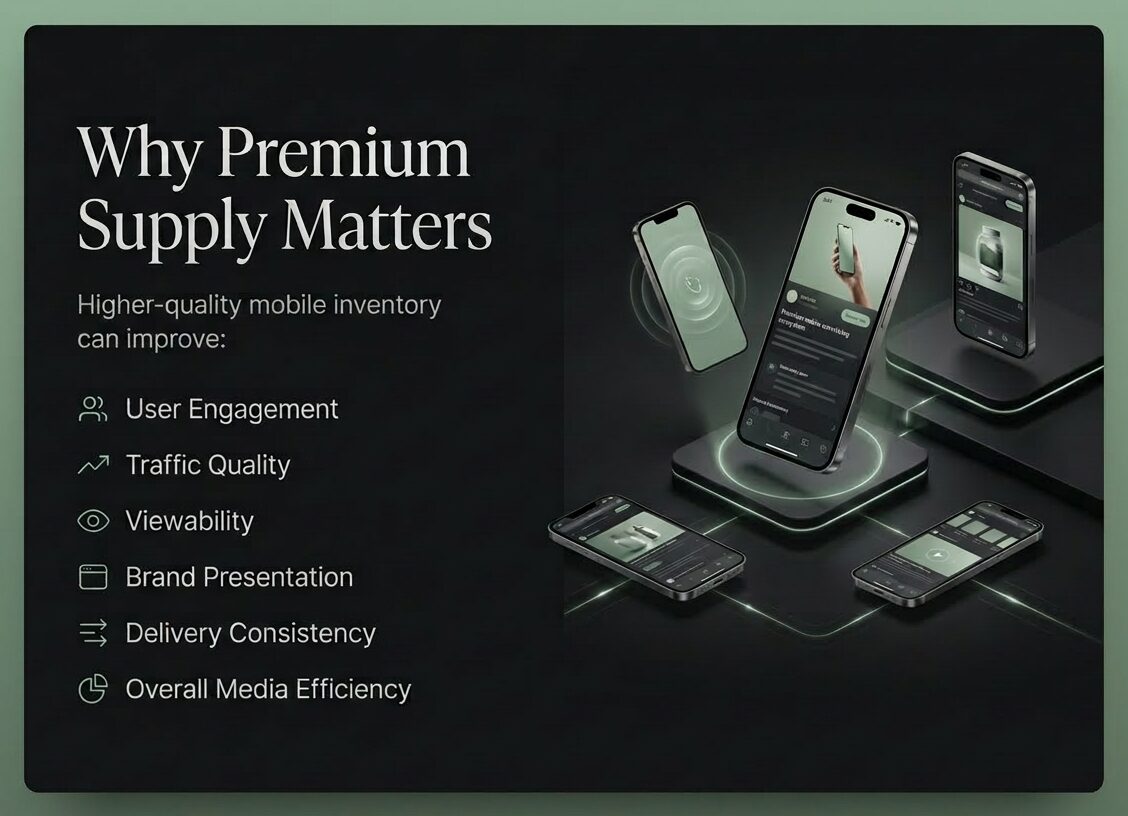
Why premium supply matters
Higher-quality mobile inventory can improve:
- User engagement
- Traffic quality
- Viewability
- Brand presentation
- Delivery consistency
- Overall media efficiency
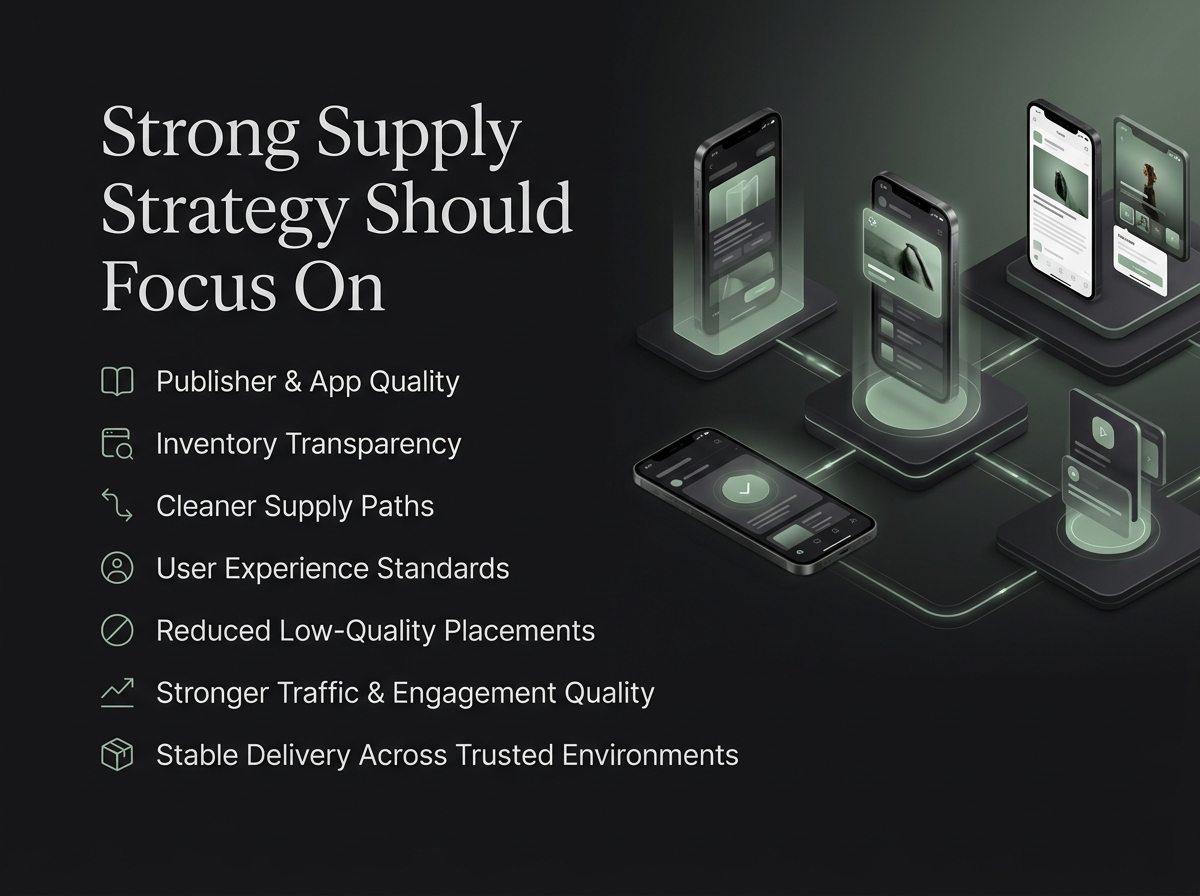
Strong supply strategy should focus on
- Publisher and app quality
- Inventory transparency
- Cleaner supply paths
- User experience standards
- Reduced low-quality placements
- Stronger traffic and engagement quality
- Stable delivery across trusted environments
For Crosstide Media, supply quality is not just a media control issue. It directly affects campaign efficiency, brand experience, and downstream performance.
Strong supply strategy should focus on
- Publisher and app quality
- Inventory transparency
- Cleaner supply paths
- User experience standards
- Reduced low-quality placements
- Stronger traffic and engagement quality
- Stable delivery across trusted environments
For Crosstide Media, supply quality is not just a media control issue. It directly affects campaign efficiency, brand experience, and downstream performance.
Advanced Mobile Audience Targeting
Programmatic mobile advertising campaigns can be built using a mix of audience, geographic, behavioral, contextual, device, and first-party data signals.
Common targeting layers
- Demographic targeting
- Geographic targeting
- Contextual targeting
- Behavioral audiences
- In-market audiences
- First-party audience onboarding
- Retargeting pools
- Modeled audiences
- Device targeting
- Operating system targeting
- Carrier or connection-related targeting where available
- Daypart targeting
Audience-first mobile strategy
One of the strongest advantages of mobile advertising is the ability to combine device-level access with audience targeting and real-time behavior patterns. Rather than relying only on site lists or app lists, advertisers can structure campaigns around the users most likely to matter to the business.
This can support:
- new customer prospecting
- local market targeting
- location-based relevance
- lead generation support
- retargeting reinforcement
- cross-channel audience alignment
First-party data strategy
First-party data can play an important role in mobile campaigns when the goal is to connect ad exposure with real business outcomes. Depending on campaign structure, it may support:
- site-visitor retargeting
- lead re-engagement
- customer suppression
- audience segmentation by funnel stage
- prospecting expansion from known converters
Geographic targeting options
Geographic precision may include:
- country
- region
- state
- DMA
- city
- ZIP code
- radius targeting
- location-based campaign structuring depending on platform support
Targeting best practices
The strongest mobile campaigns avoid becoming too complex too early. Over-layering targeting can restrict delivery, increase costs, and make optimization harder. A better approach is to prioritize the most valuable signals, choose the right environments, and optimize based on actual performance and post-click quality.
Creative Strategy and Mobile Ad Specifications
Creative has an outsized impact on mobile advertising because mobile users make decisions quickly and screen space is limited. A strong mobile ad needs to communicate clearly, load cleanly, fit the environment, and guide the user toward the next step without friction.
Why good mobile creative matters
Good mobile creative is essential because the ad often has only a short moment to capture attention. If the format is cluttered, hard to read, visually weak, or poorly matched to the environment, performance can drop quickly. On mobile devices, creative has to work within smaller screens, faster scrolling behavior, and shorter attention windows.

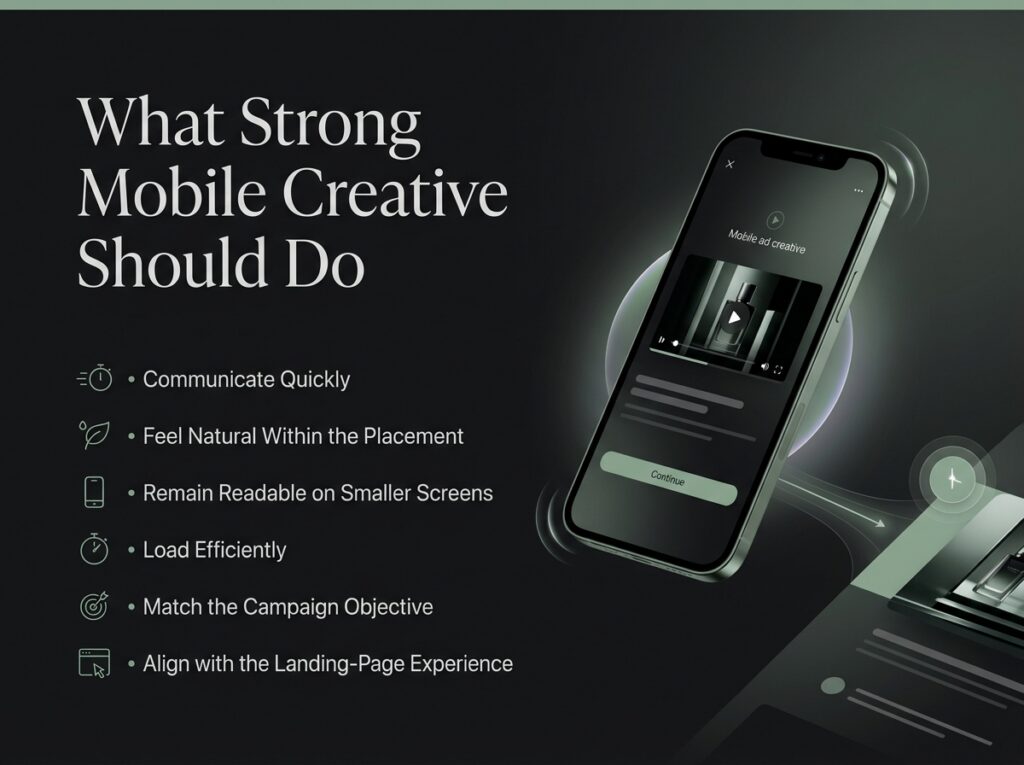
What strong mobile creative should do
- Communicate quickly
- Feel natural within the placement
- Remain readable on smaller screens
- Load efficiently
- Match the campaign objective
- Align with the landing-page experience
What strong mobile creative should do
- Communicate quickly
- Feel natural within the placement
- Remain readable on smaller screens
- Load efficiently
- Match the campaign objective
- Align with the landing-page experience
Mobile display vs mobile video creative
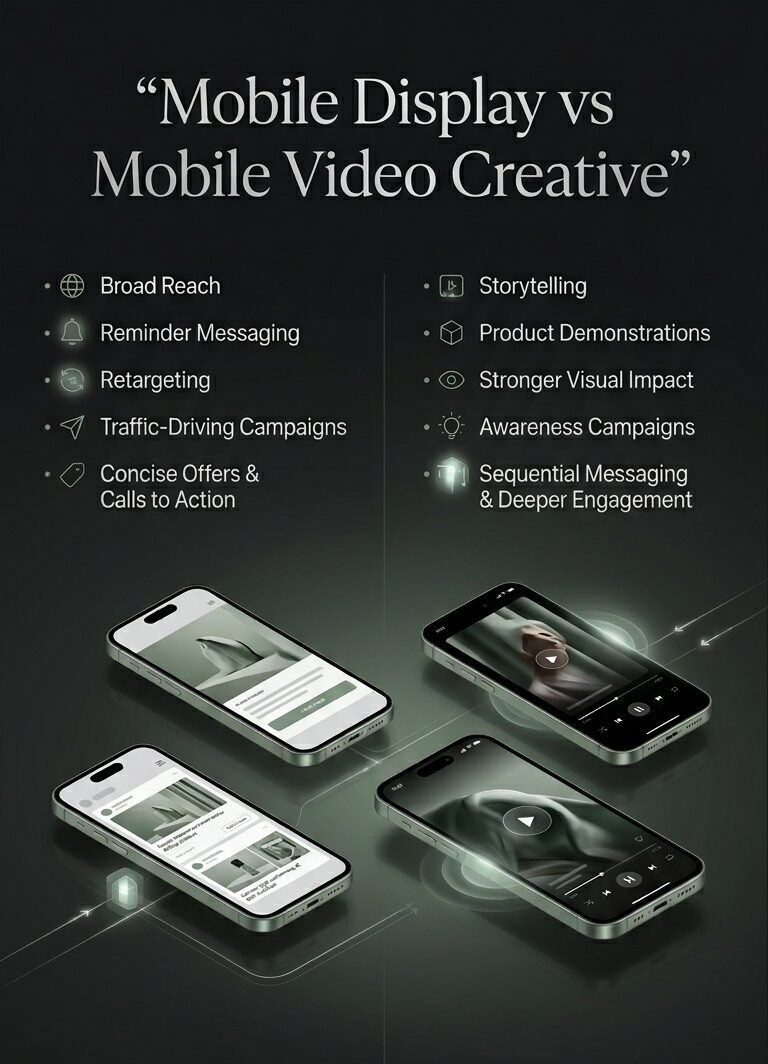
Mobile display and mobile video serve different roles and should be treated differently.
Mobile display creative is often best for:
- broad reach
- reminder messaging
- retargeting
- traffic-driving campaigns
- concise offers or calls to action
Mobile video creative is often best for:
- storytelling
- product demonstrations
- stronger visual impact
- awareness campaigns
- sequential messaging and deeper engagement
Both can be effective, but the strongest campaigns usually choose formats based on what the user needs to understand quickly and what the environment can support well.
Performance-oriented mobile creative approach
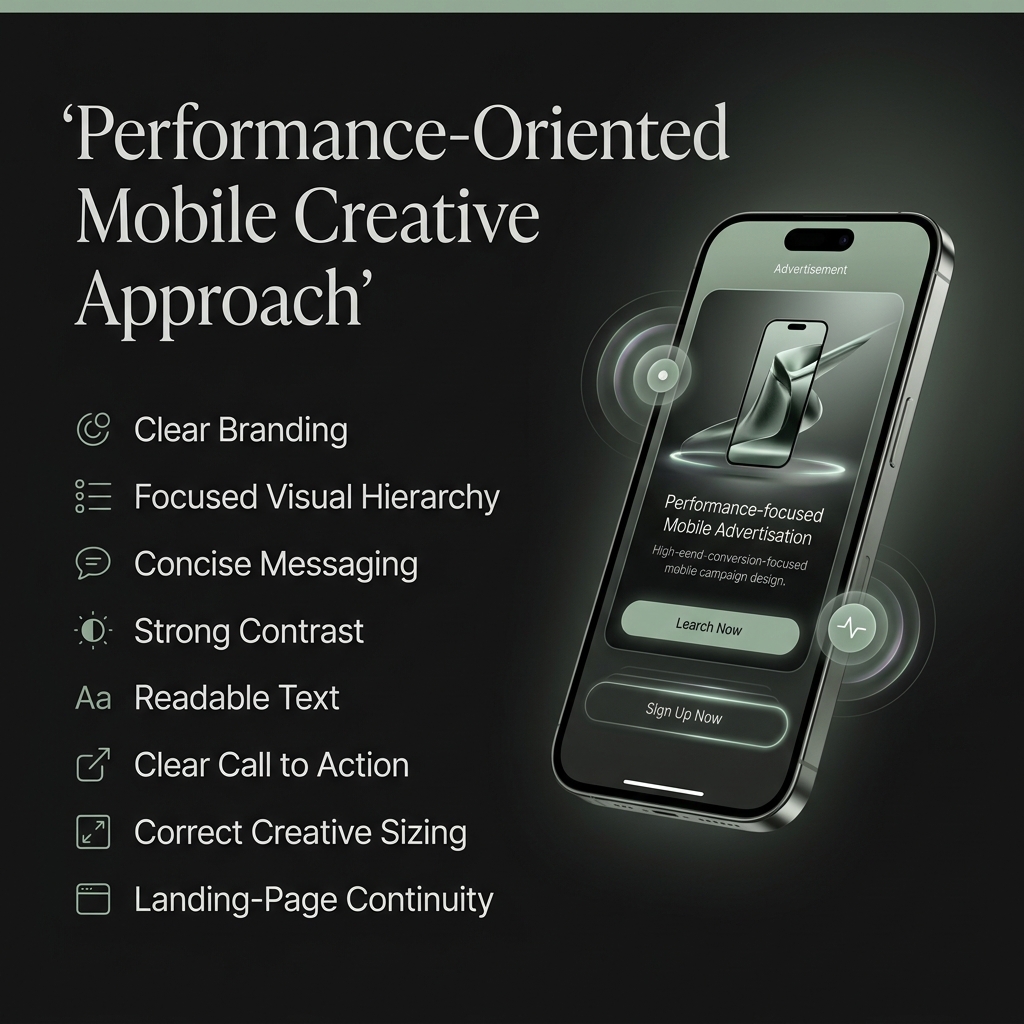
Strong mobile creative usually includes:
- Clear branding
- Focused visual hierarchy
- Concise messaging
- Strong contrast
- Readable text
- A clear call to action
- Creative sized correctly for the environment
- Landing-page continuity
A strong campaign structure usually balances:
- reach
- frequency
- audience quality
- cost efficiency
- creative fatigue risk
Performance-oriented mobile creative approach
Strong mobile creative usually includes:
- Clear branding
- Focused visual hierarchy
- Concise messaging
- Strong contrast
- Readable text
- A clear call to action
- Creative sized correctly for the environment
- Landing-page continuity
A strong campaign structure usually balances:
- reach
- frequency
- audience quality
- cost efficiency
- creative fatigue risk
Key message priorities
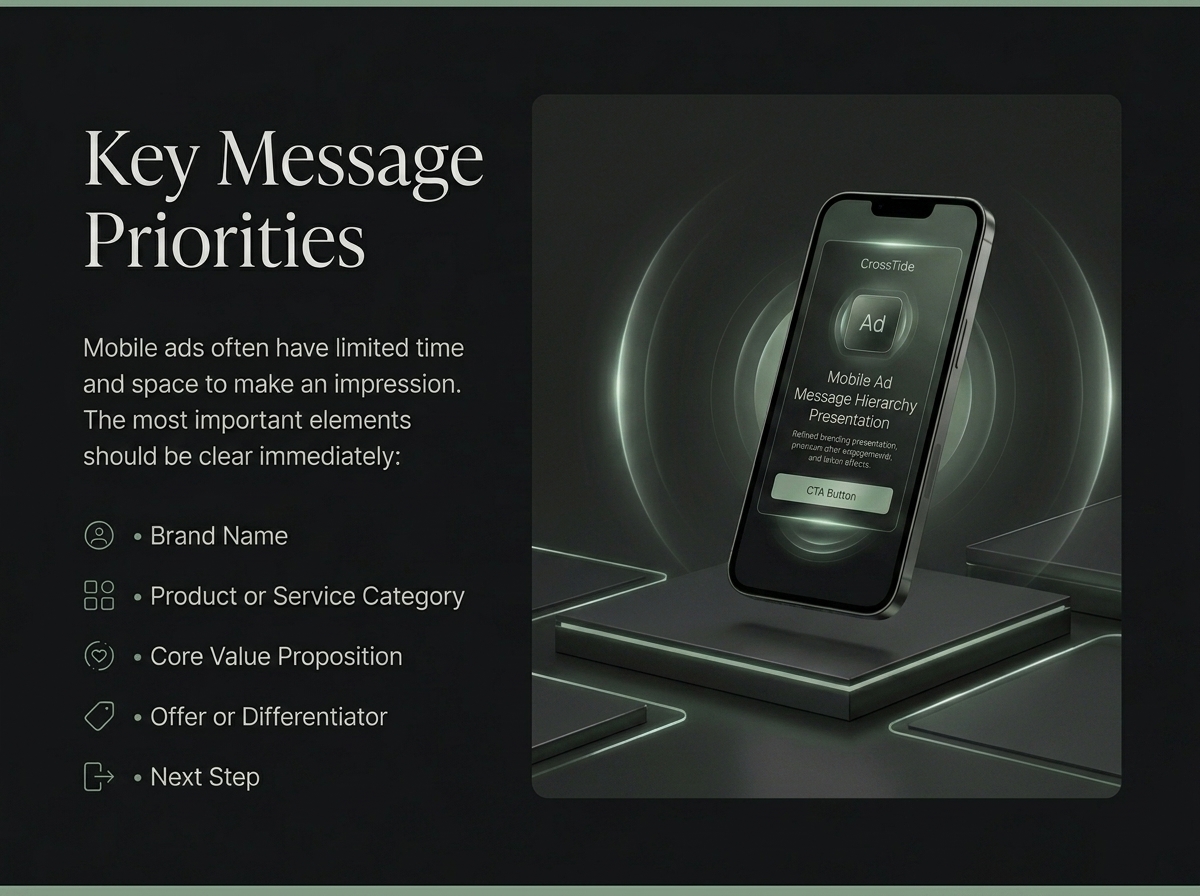
Mobile ads often have limited time and space to make an impression. The most important elements should be clear immediately:
- Brand name
- Product or service category
- Core value proposition
- Offer or differentiator
- Next step
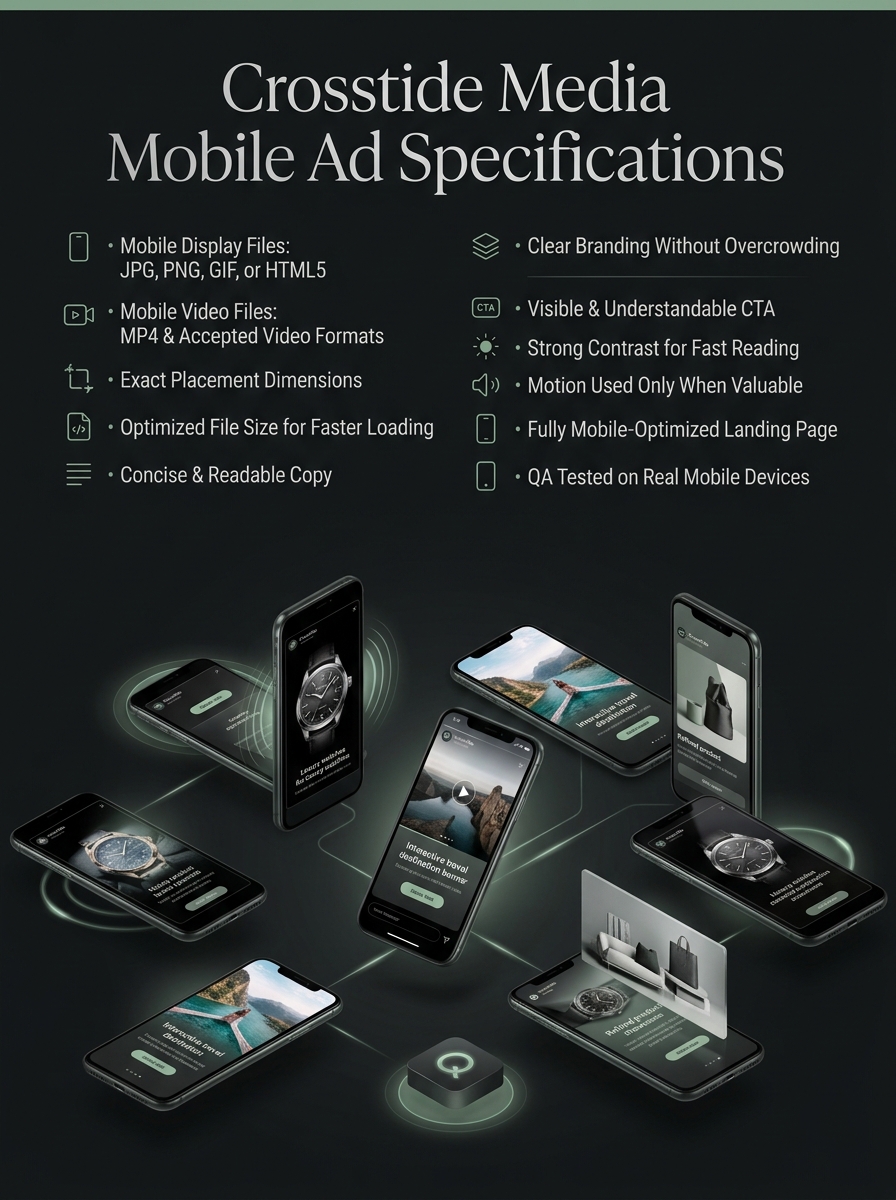
Crosstide Media mobile ad specifications
Use the following as a strong baseline for most programmatic mobile campaigns:
- Mobile display files: JPG, PNG, GIF, or HTML5 depending on platform support
- Mobile video files: MP4 and other accepted video formats depending on inventory requirements
- Dimensions: build to exact required sizes for each placement
- File size: keep assets optimized for faster loading and delivery
- Text density: keep copy concise and readable on smaller screens
- Branding: clear without overcrowding the unit
- CTA: visible and easy to understand
- Contrast: strong enough for quick reading and varied environments
- Animation or motion: used carefully and only where it improves the experience
- Landing page: fully mobile-optimized before launch
- QA: test creative and destination experience on actual mobile devices before launch
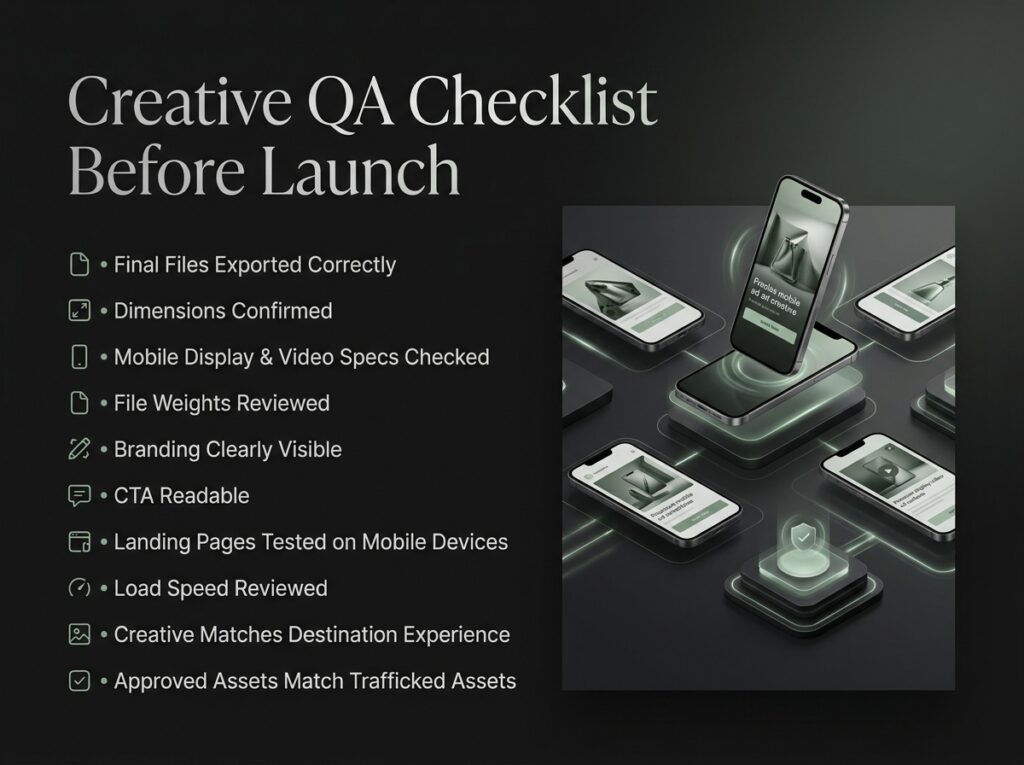
Creative QA checklist before launch
- Final files exported correctly
- Dimensions confirmed
- Mobile display and video specs checked
- File weights reviewed
- Branding clearly visible
- CTA readable
- Landing pages tested on mobile devices
- Load speed reviewed
- Creative matches destination experience
- Approved assets match trafficked assets
Creative QA checklist before launch
- Final files exported correctly
- Dimensions confirmed
- Mobile display and video specs checked
- File weights reviewed
- Branding clearly visible
- CTA readable
- Landing pages tested on mobile devices
- Load speed reviewed
- Creative matches destination experience
- Approved assets match trafficked assets
Creative best practices by campaign goal
Awareness campaigns
- Lead with branding
- Keep messaging simple
- Prioritize visual clarity and fast recognition
Consideration campaigns
- Highlight core differentiators
- Use stronger product or service context
- Make the value proposition obvious
Response-oriented campaigns
- Clarify the next step
- Reduce friction between the ad and landing page
- Pair strong creative with a fast mobile destination
Programmatic Mobile Advertising Pricing, CPMs, CPCs, and Media Efficiency
Programmatic mobile advertising pricing varies based on format, environment, audience specificity, inventory quality, device mix, geography, and supply path.
Common pricing variables
- mobile web vs in-app environment
- display vs video format
- publisher quality
- app quality
- audience targeting
- geography
- device mix
- campaign timing
- seasonality
- supply path efficiency
Common pricing models
Mobile advertising is often evaluated through CPM and CPC models, though stronger campaign analysis should go beyond cost alone.
Advertisers may evaluate campaigns using:
- CPM
- CPC
- click-through rate
- video completion metrics when applicable
- landing-page engagement
- CPA
- ROAS
- assisted conversion trends
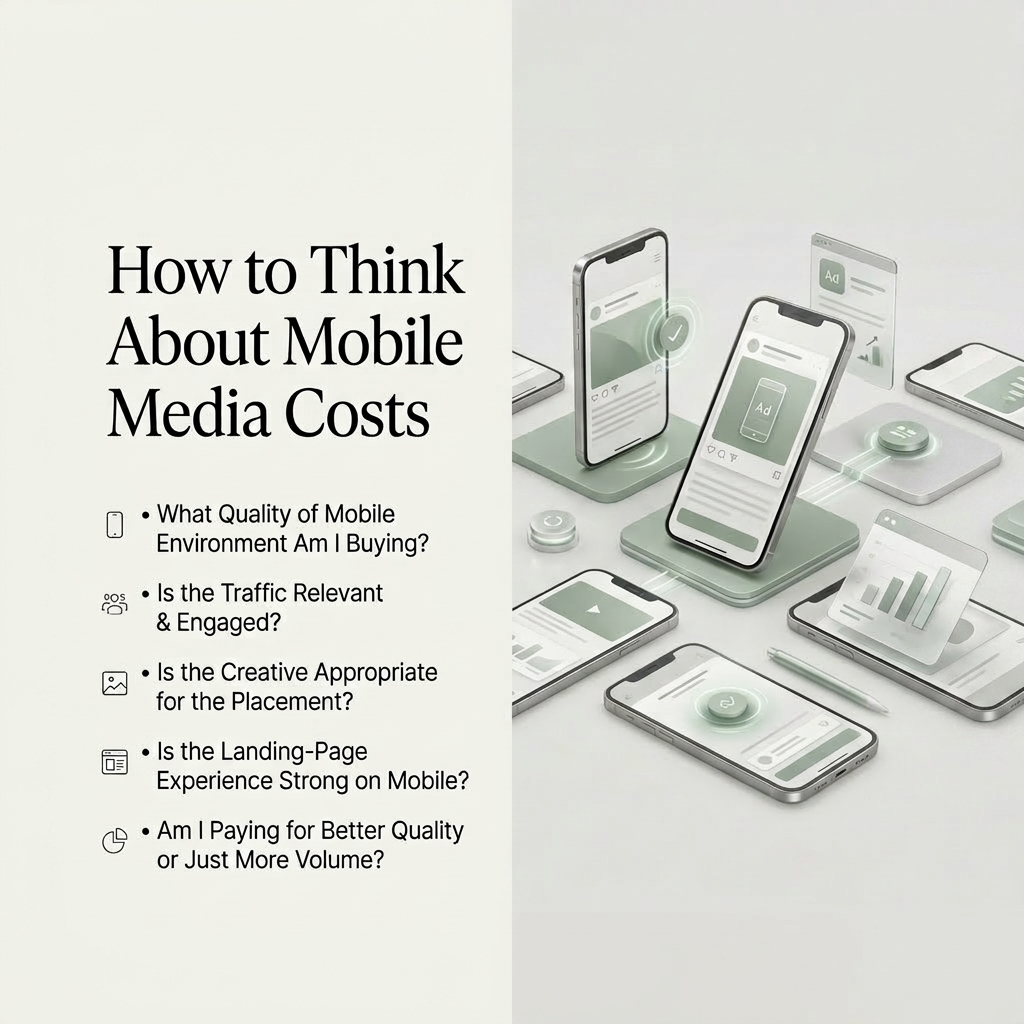
How to think about mobile media costs
The more useful question is not only what the CPM or CPC is, but also:
- What quality of mobile environment am I buying?
- Is the traffic relevant and engaged?
- Is the creative appropriate for the placement?
- Is the landing-page experience strong on mobile?
- Am I paying for better quality or just more volume?
A higher cost is not automatically negative if it comes with:
- stronger placement quality
- higher engagement
- better video completion or post-click behavior
- more qualified traffic
- less wasted spend
The strongest pricing analysis looks at cost alongside traffic quality, engagement, site behavior, conversion performance, and broader media efficiency.
Budget Planning and Optimization Strategy
Programmatic mobile campaigns need enough budget to generate meaningful reach, useful testing volume, and enough delivery to evaluate environments, formats, audiences, and creative performance with confidence.
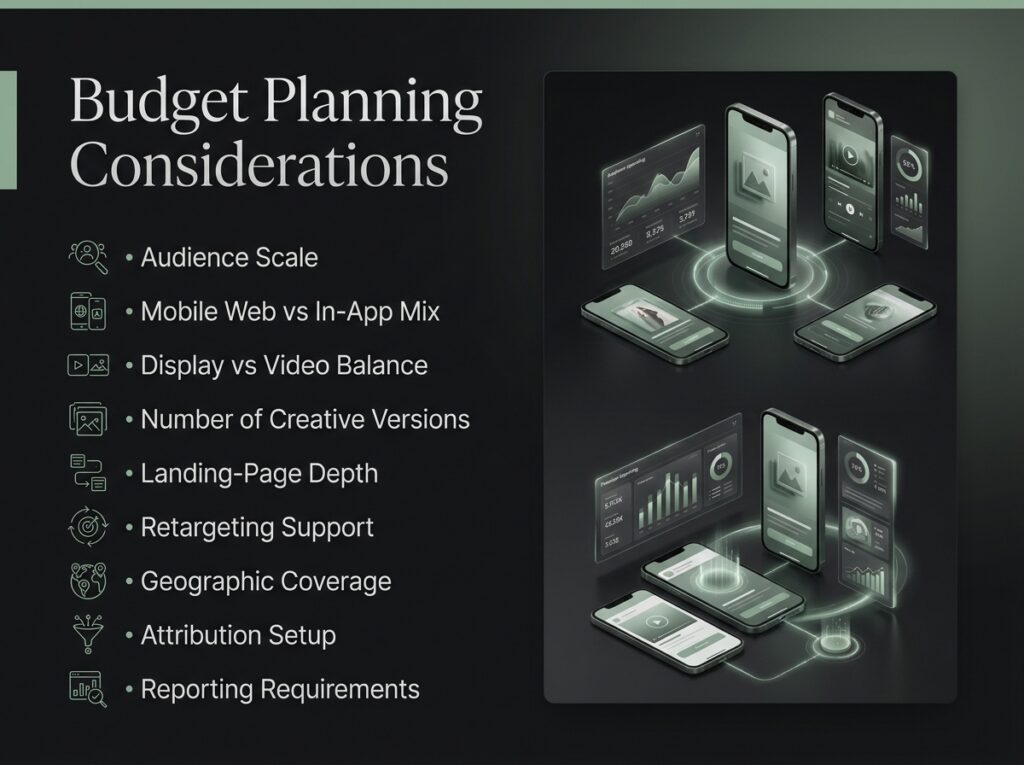
Budget planning considerations
- Audience scale
- Mobile web vs in-app mix
- Display vs video balance
- Number of creative versions
- Landing-page depth
- Retargeting support
- Geographic coverage
- Attribution setup
- Reporting requirements
A budget that is too small can make it difficult to understand whether performance is being driven by the environment, the format, the audience, or the creative.
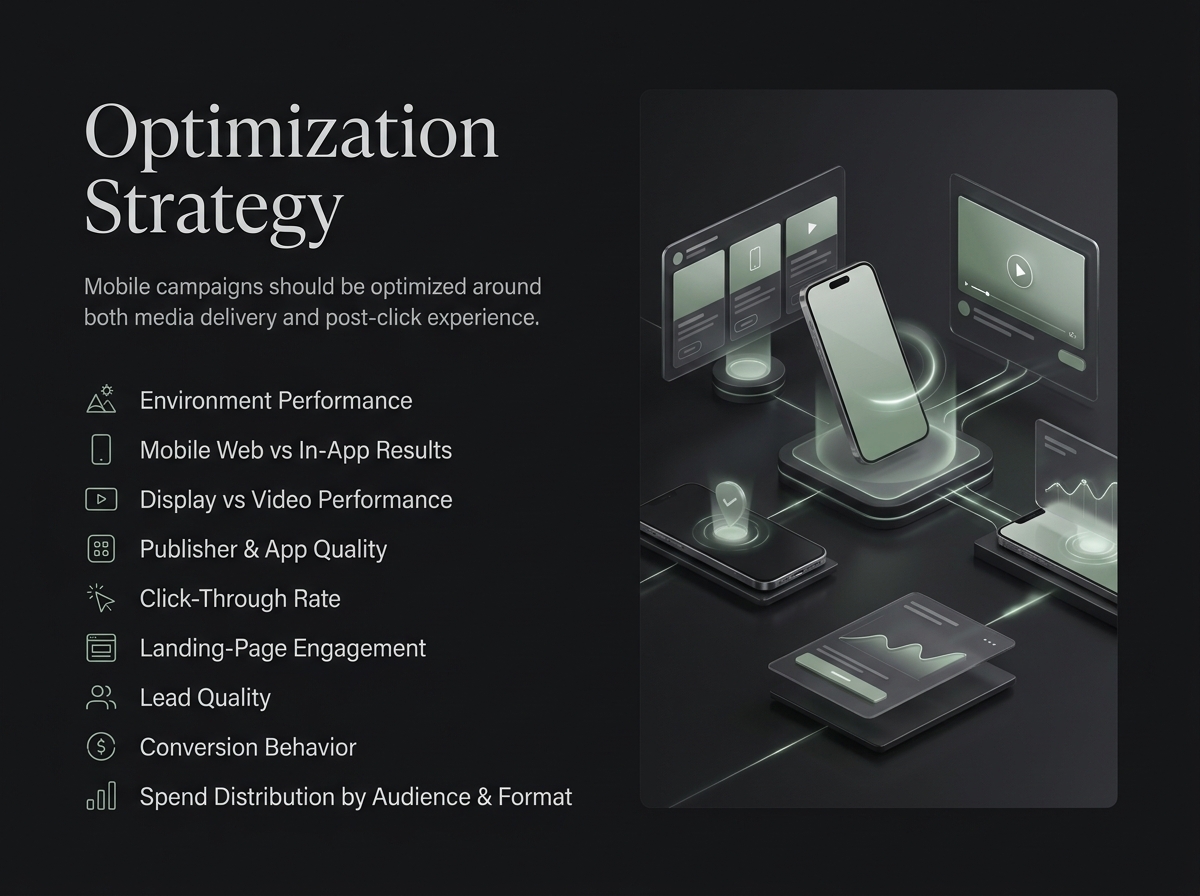
Optimization strategy
Mobile campaigns should be optimized around both media delivery and post-click experience.
A strong optimization structure usually looks at:
- Environment performance
- Mobile web vs in-app results
- Display vs video performance
- Publisher and app quality
- Click-through rate
- Landing-page engagement
- Lead quality
- Conversion behavior
- Spend distribution by audience and format
Optimization strategy
Mobile campaigns should be optimized around both media delivery and post-click experience.
A strong optimization structure usually looks at:
- Environment performance
- Mobile web vs in-app results
- Display vs video performance
- Publisher and app quality
- Click-through rate
- Landing-page engagement
- Lead quality
- Conversion behavior
- Spend distribution by audience and format
Measurement and Attribution
Programmatic mobile advertising can be measured across delivery metrics, engagement behavior, post-click quality, and broader business outcomes.
Common campaign metrics
- Impressions
- Clicks
- Click-through rate
- CPM
- CPC
- Reach
- Frequency
- Device distribution
- Video completion metrics where applicable
- Publisher- or app-level delivery
Post-click and business outcome metrics
- Landing-page engagement
- Time on site
- Bounce behavior
- Lead volume
- Conversion rate
- CPA
- ROAS
- Assisted conversions
Advanced measurement approaches
- Audience-quality analysis
- Mobile web vs in-app comparison
- Display vs video comparison
- Publisher and app performance analysis
- Time-to-conversion review
- Incremental lift analysis
- Cross-channel attribution review
Attribution reality
Mobile advertising often influences users before conversion happens later through another device, another session, or another channel. Because of that, mobile campaigns should not be judged only by last-click conversions. A stronger framework combines delivery quality, engagement signals, landing-page behavior, conversion patterns, and broader media impact.
What strong reporting should include
- Delivery by environment and format
- Mobile web vs in-app performance
- Display vs video performance
- Audience and geography performance
- Landing-page engagement
- Optimization actions taken during flight
- Lead and conversion insights
- Key findings and recommended next steps
That makes reporting more useful as a media decision tool rather than just a delivery report.
Brand Safety, Placement Quality, and Supply Standards
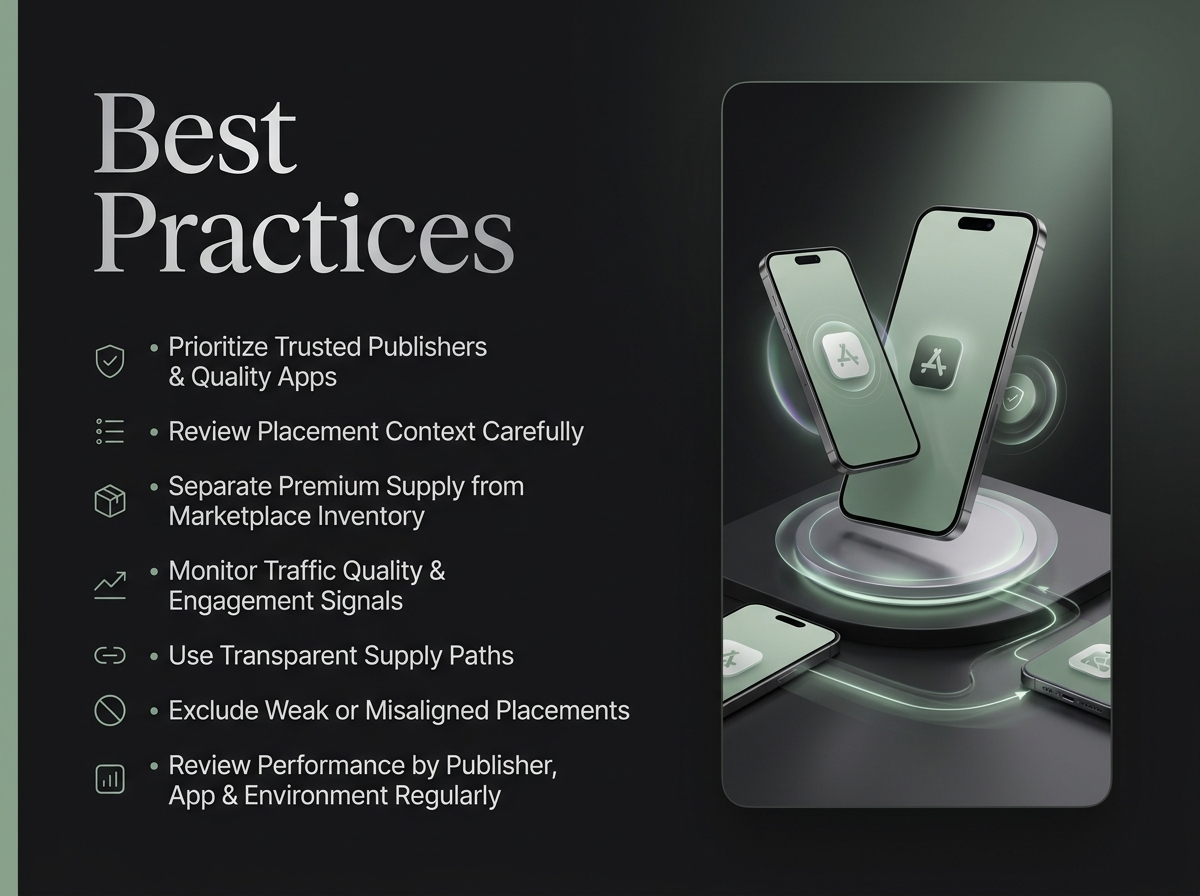
Brand safety in mobile advertising depends on publisher quality, app quality, placement transparency, user experience standards, and supply path control.
Best practices
- Prioritize trusted publishers and quality apps
- Review placement context carefully
- Separate premium supply from broader marketplace inventory
- Monitor traffic quality and engagement signals
- Use transparent supply paths
- Exclude weak or misaligned placements
- Review performance by publisher, app, and environment regularly
For Crosstide Media, placement quality is not just a brand concern. It directly affects traffic quality, user experience, and campaign performance.
Why Work With Crosstide Media?
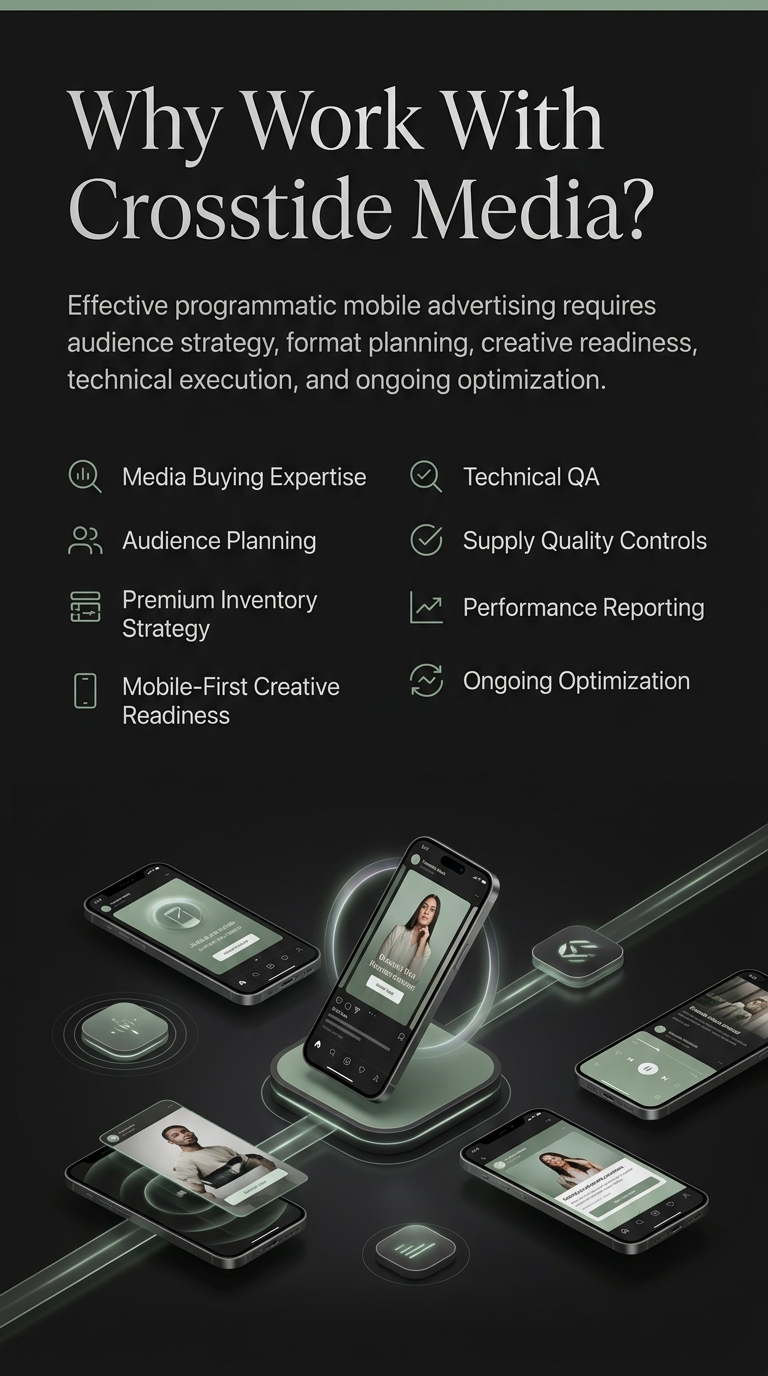
Effective programmatic mobile advertising requires more than simply resizing desktop creative and launching it across phones. It takes audience strategy, environment selection, format planning, creative testing, landing-page readiness, technical setup, measurement discipline, and ongoing optimization.
Crosstide Media helps advertisers execute mobile campaigns with:
- Media buying expertise
- Audience planning
- Premium inventory strategy
- Mobile-first creative readiness
- Technical QA
- Supply quality controls
- Performance reporting
- Ongoing optimization
We approach programmatic mobile advertising as both a traffic-driving channel and a measurable media investment. Our focus is on building campaigns that combine premium environments, strong creative alignment, smart targeting, and actionable reporting so brands can grow with more confidence.
Whether the goal is awareness, qualified traffic, lead generation, retargeting, mobile video reach, or broader omnichannel support, Crosstide Media helps brands build mobile campaigns with the structure and discipline required for modern media buying.
Why Work With Crosstide Media?
Effective programmatic mobile advertising requires more than simply resizing desktop creative and launching it across phones. It takes audience strategy, environment selection, format planning, creative testing, landing-page readiness, technical setup, measurement discipline, and ongoing optimization.
Crosstide Media helps advertisers execute mobile campaigns with:
- Media buying expertise
- Audience planning
- Premium inventory strategy
- Mobile-first creative readiness
- Technical QA
- Supply quality controls
- Performance reporting
- Ongoing optimization
We approach programmatic mobile advertising as both a traffic-driving channel and a measurable media investment. Our focus is on building campaigns that combine premium environments, strong creative alignment, smart targeting, and actionable reporting so brands can grow with more confidence.
Whether the goal is awareness, qualified traffic, lead generation, retargeting, mobile video reach, or broader omnichannel support, Crosstide Media helps brands build mobile campaigns with the structure and discipline required for modern media buying.
Frequently Asked Questions
What is programmatic mobile advertising?
What is the difference between mobile web and in-app advertising?
Is in-app advertising better than mobile web advertising?
What formats can be used in programmatic mobile advertising?
Is mobile video more effective than mobile display?
Why does creative matter so much in mobile advertising?
What makes a mobile landing page effective?
How is programmatic mobile advertising measured?
What affects programmatic mobile advertising costs?
Why work with a managed programmatic mobile advertising partner?
Build a Smarter Programmatic Mobile Advertising Campaign
If your brand needs a more strategic mobile advertising approach, Crosstide Media can help you plan, launch, and optimize campaigns built around stronger mobile creative, better inventory quality, smarter audience targeting, and clearer reporting. Whether your goal is to increase awareness, drive qualified traffic, improve in-app reach, support lead generation, or strengthen broader media performance, we help brands build programmatic mobile advertising campaigns designed to work more efficiently across today’s mobile-first digital landscape.
Why Brands Choose Crosstide Media
Brands work with Crosstide Media because effective mobile advertising requires more than just putting ads on phones. Strong results come from the right mix of audience strategy, environment selection, creative discipline, landing-page readiness, campaign structure, and ongoing optimization. Our approach is built to help advertisers improve traffic quality, reduce waste, maintain stronger media standards, and make better decisions through clearer reporting and more actionable campaign insights.
Talk to Crosstide Media About Programmatic Mobile Advertising
If you are looking for a programmatic mobile advertising partner that can help you reach the right audience, improve campaign efficiency, and deliver more measurable results, Crosstide Media can help. We build programmatic mobile advertising campaigns with the strategic planning, technical setup, inventory quality controls, creative alignment, and optimization discipline needed to support long-term growth.