
Demand-Side Platforms
Demand-Side Platform Strategy for Programmatic Media Buying, Audience Intelligence, and Cross-Channel Advertising Performance
Demand-side platforms, or DSPs, are the core buying engines behind much of modern programmatic advertising. A DSP gives advertisers and agencies a centralized way to buy media across websites, apps, connected TV, streaming audio, mobile, video, native placements, and other digital environments. Instead of negotiating with publishers one by one, a DSP makes it possible to evaluate inventory, apply audience data, bid in real time, manage budgets, control frequency, and optimize media performance across multiple channels from one system.
That matters because DSPs sit close to the center of how the ad-supported internet works. A large share of the websites, streaming platforms, apps, tools, and digital content people use every day are funded by advertising. Programmatic infrastructure helps keep that ecosystem working at scale by connecting advertisers to publishers more efficiently. On the buying side, advertisers use DSPs. On the selling side, publishers use SSPs. Between them, marketplaces and exchanges help connect available inventory with advertiser demand.
At Crosstide Media, DSP strategy is not just about platform access. It is about knowing how to use the right platforms, data sources, audience signals, private marketplace relationships, and buying methods in a way that creates better results for clients. We have built access across major DSP platforms and use that access alongside first-party data strategy, custom partnerships, PMP negotiation, pricing leverage, inventory quality control, and cross-channel media planning to create smarter programmatic campaigns. The technology is powerful, but it is also difficult to use well. That is exactly why experience, technical knowledge, and buying expertise matter.

Jump To
What Is a Demand-Side Platform?
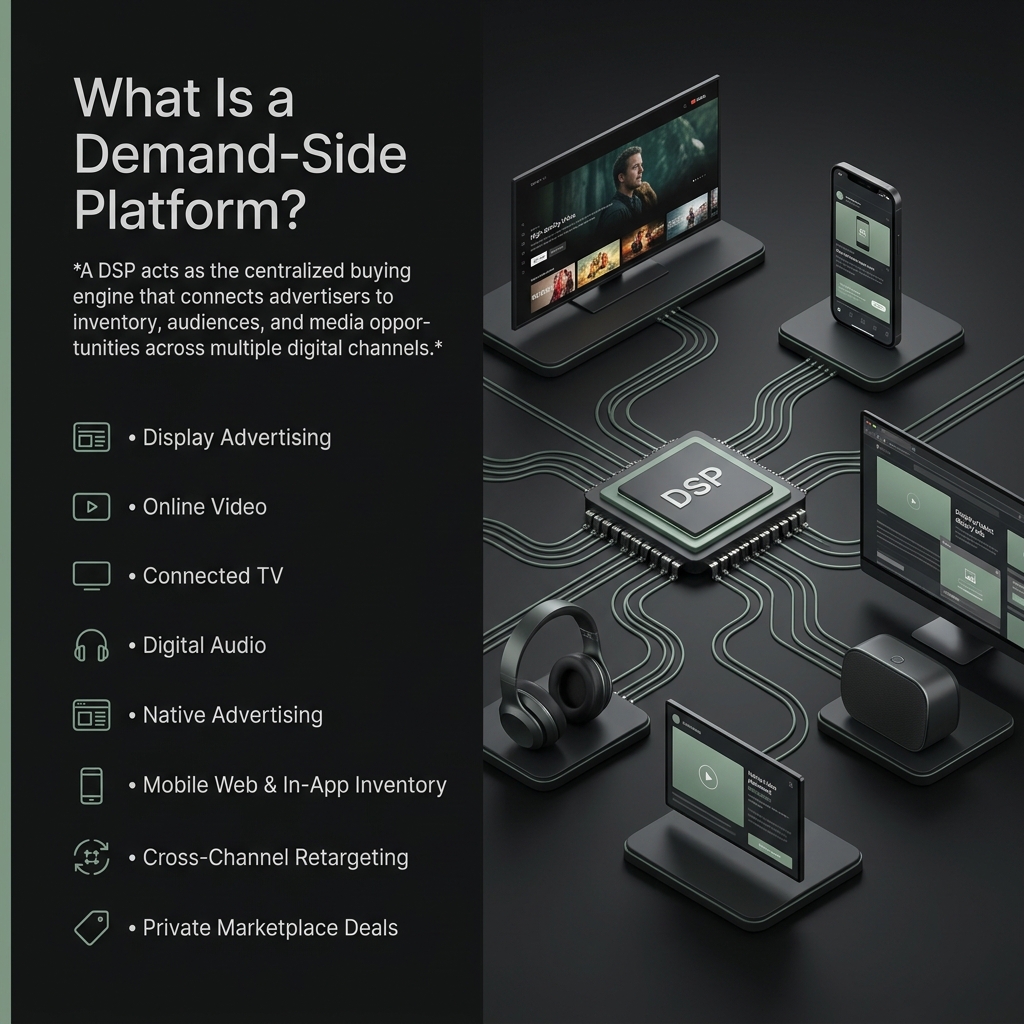
A demand-side platform is software used by advertisers and agencies to buy digital ad inventory programmatically across many publishers and channels. Instead of buying ad space manually one site at a time, a DSP gives buyers one system to manage audience targeting, bidding, frequency controls, creative delivery, reporting, and optimization at scale.
A DSP can support:
- display advertising
- online video
- connected TV
- digital audio
- native advertising
- mobile web and in-app inventory
- digital out-of-home in some platforms
- cross-channel retargeting
- private marketplace and guaranteed deals
This is what makes DSPs so important in programmatic advertising. They give advertisers one operating system for multi-channel media buying.
Why DSPs Matter
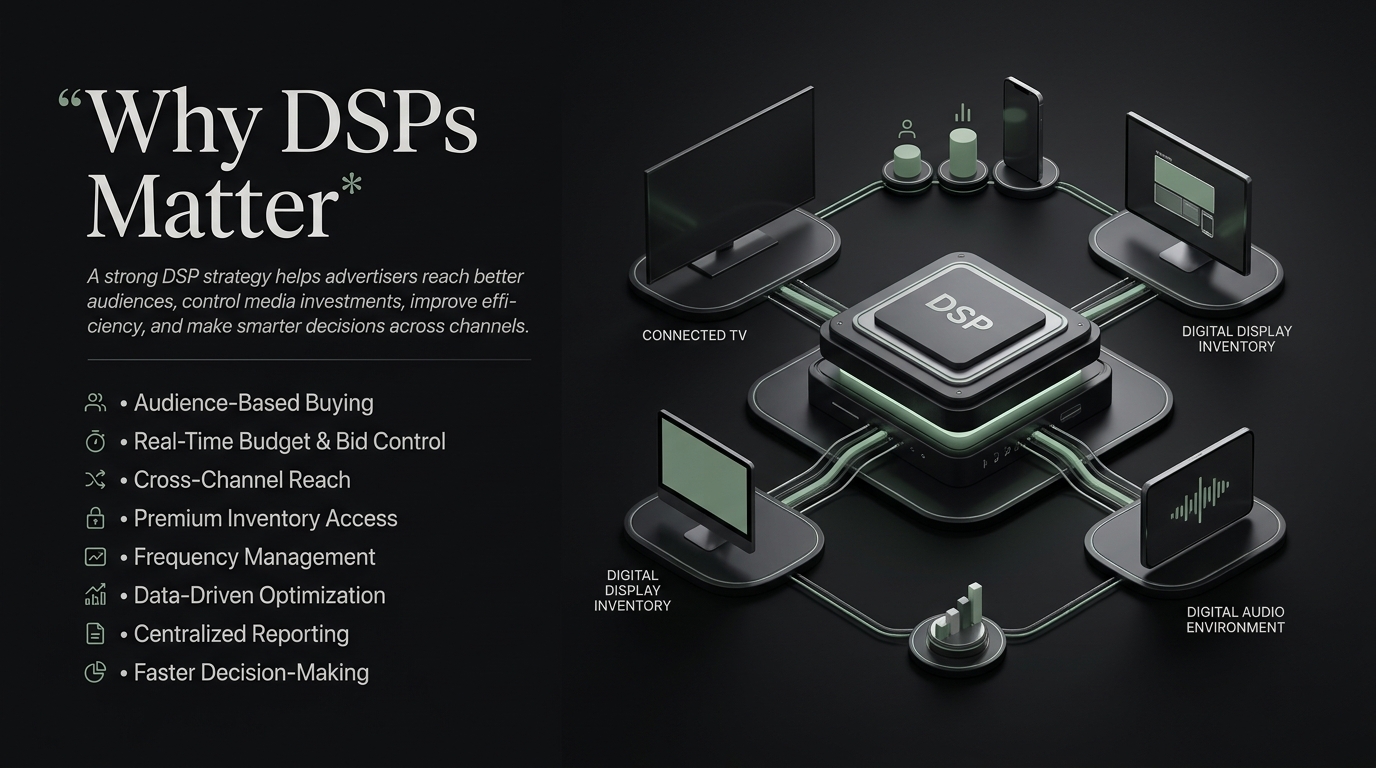
DSPs matter because digital media is fragmented. Audiences move between websites, streaming apps, mobile devices, premium publishers, audio platforms, connected TV environments, and other digital touchpoints throughout the day. Without a DSP, buying across all of those surfaces would be slower, less coordinated, harder to optimize, and far more difficult to scale.
A strong DSP strategy can help support:
- audience-based buying instead of only placement-based buying
- real-time budget and bid control
- cross-channel reach
- premium inventory access
- frequency management
- data-driven optimization
- centralized reporting
- faster decision-making
For Crosstide Media, a DSP is valuable because it helps bring structure and efficiency to a very complex media environment. It turns fragmented media opportunities into a coordinated programmatic strategy.
How a DSP Works
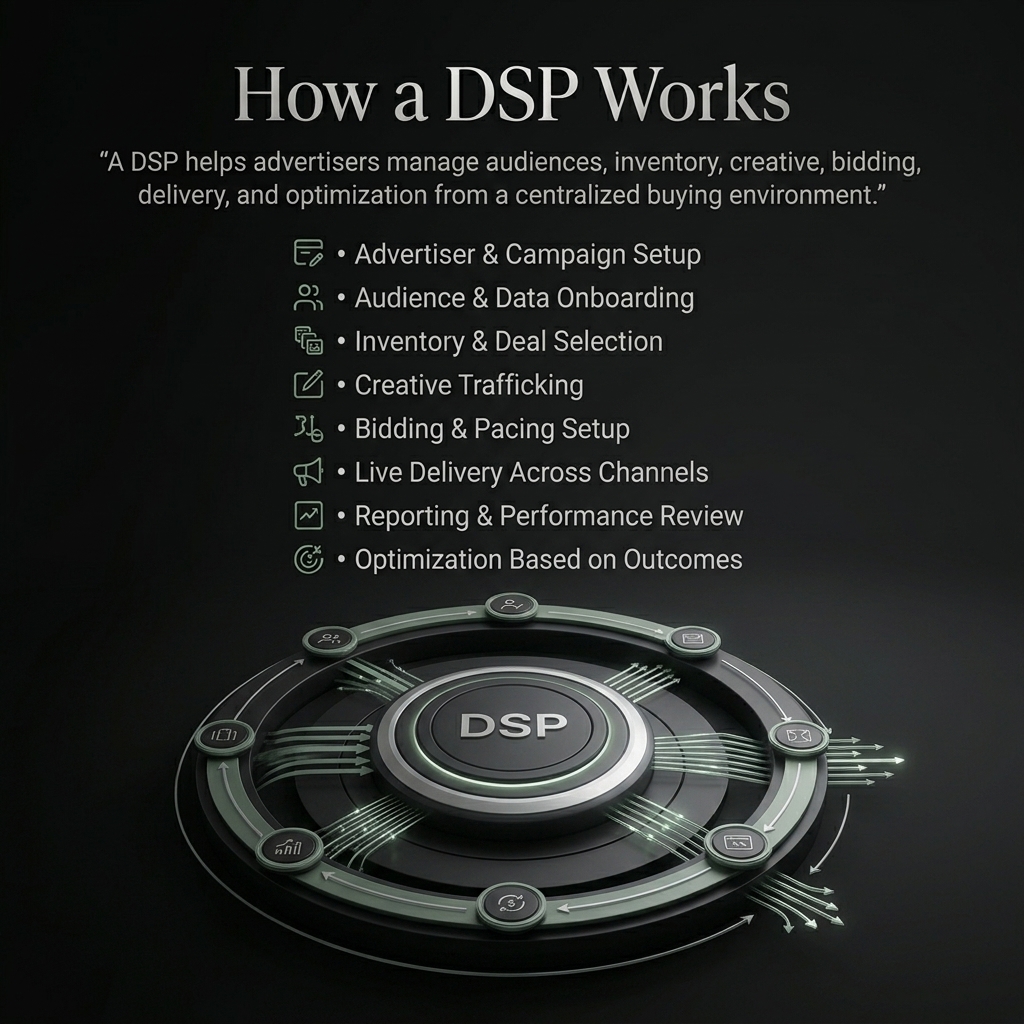
At a practical level, a DSP helps advertisers evaluate an impression opportunity and decide whether to bid on it. When a user opens a website, app, streaming environment, or digital media surface, the publisher’s sell-side technology can make that impression available in milliseconds. The DSP evaluates the opportunity using signals such as audience attributes, device type, content environment, geography, prior engagement, campaign goals, frequency rules, and bid logic. If the impression fits the campaign strategy, the DSP can bid for it. If the bid wins, the ad is served.
A typical DSP workflow usually includes:
- advertiser and campaign setup
- audience and data onboarding
- inventory and deal selection
- creative trafficking
- bidding and pacing setup
- live delivery across channels
- reporting and performance review
- optimization based on outcomes
This is why DSPs are central to programmatic advertising. They make real-time media buying operationally possible at scale.
DSP vs SSP vs Ad Exchange
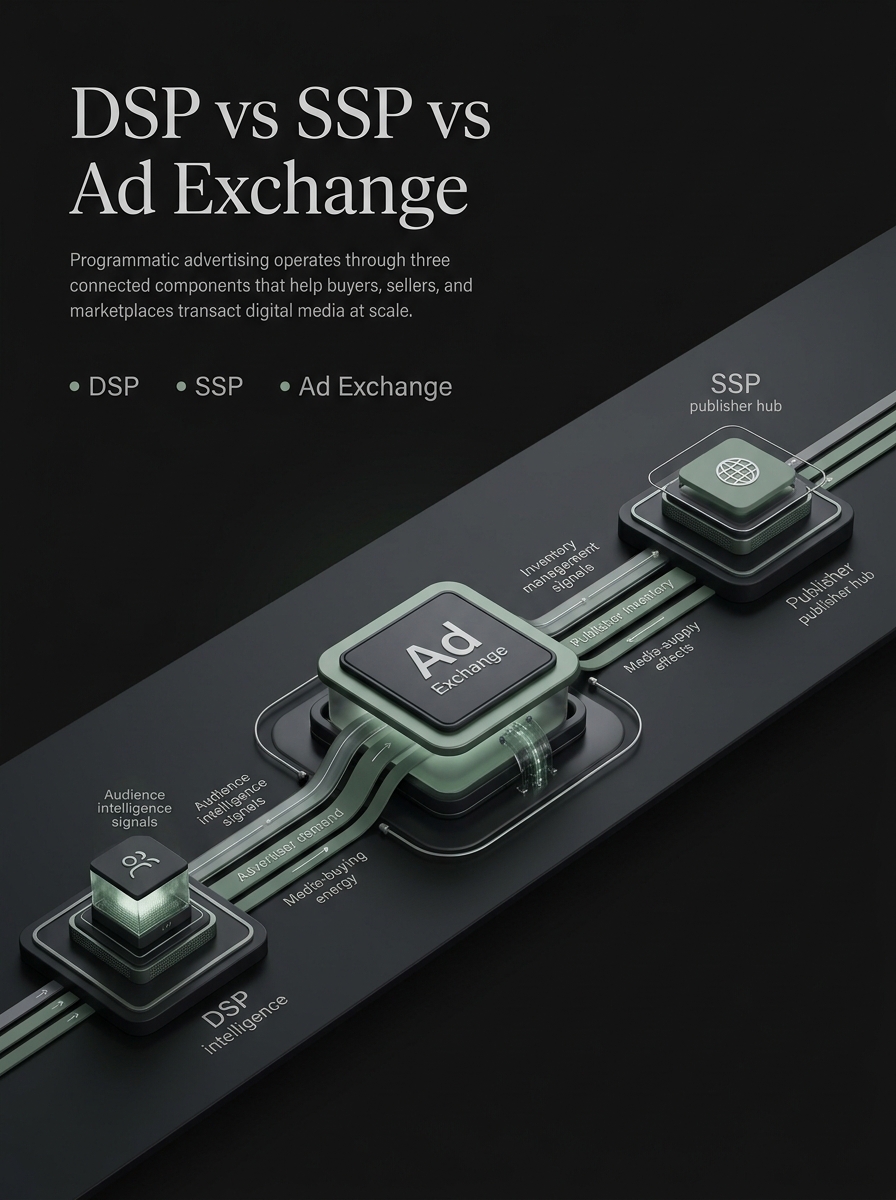
A DSP is only one part of the programmatic ecosystem. To understand how digital media buying works, it helps to understand the other pieces around it.
DSP
The DSP is used by advertisers and agencies. It helps the buying side decide what to buy, where to buy it, how much to bid, and how to optimize media delivery.
SSP
The SSP, or supply-side platform, is used by publishers. It helps the selling side package inventory, expose impressions to multiple buyers, manage yield, and maximize revenue from available ad space.
Ad Exchange
An ad exchange acts like a marketplace where impressions can be bought and sold between buyers and sellers in real time. In many cases, DSPs connect to exchanges and SSPs so advertisers can access inventory from many publishers without building separate direct deals for everything.

Why this structure matters
The simplified version is this:
Together, these systems help power programmatic advertising at scale.
- advertisers use DSPs
- publishers use SSPs
- exchanges help connect the two sides
How DSPs Help Power the Internet
One of the most important things to understand about DSPs is that they are not just ad-buying tools. They are part of the infrastructure that helps support the modern internet.
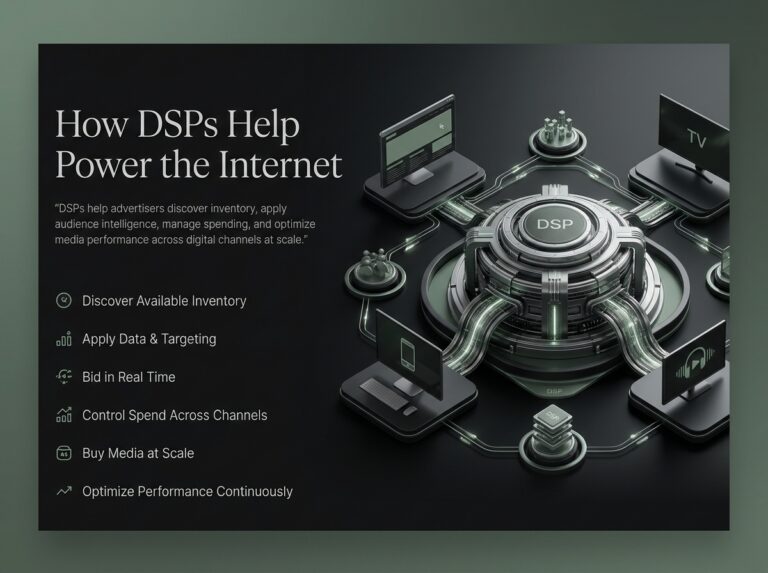
Advertising is one of the main reasons so much content is available to users for free. News sites, blogs, entertainment sites, streaming content, free tools, apps, and many digital services rely on advertising revenue to operate. Programmatic advertising has made that system more scalable by helping publishers monetize inventory and helping advertisers buy access to audiences more efficiently.
DSPs help this process by making it easier for advertisers to:
- discover available inventory
- apply data and targeting
- bid in real time
- control spend across channels
- buy media at scale
- optimize performance continuously
That is one reason DSPs matter far beyond the ad industry itself. They help keep the digital publishing economy moving.
Major DSPs in the Market
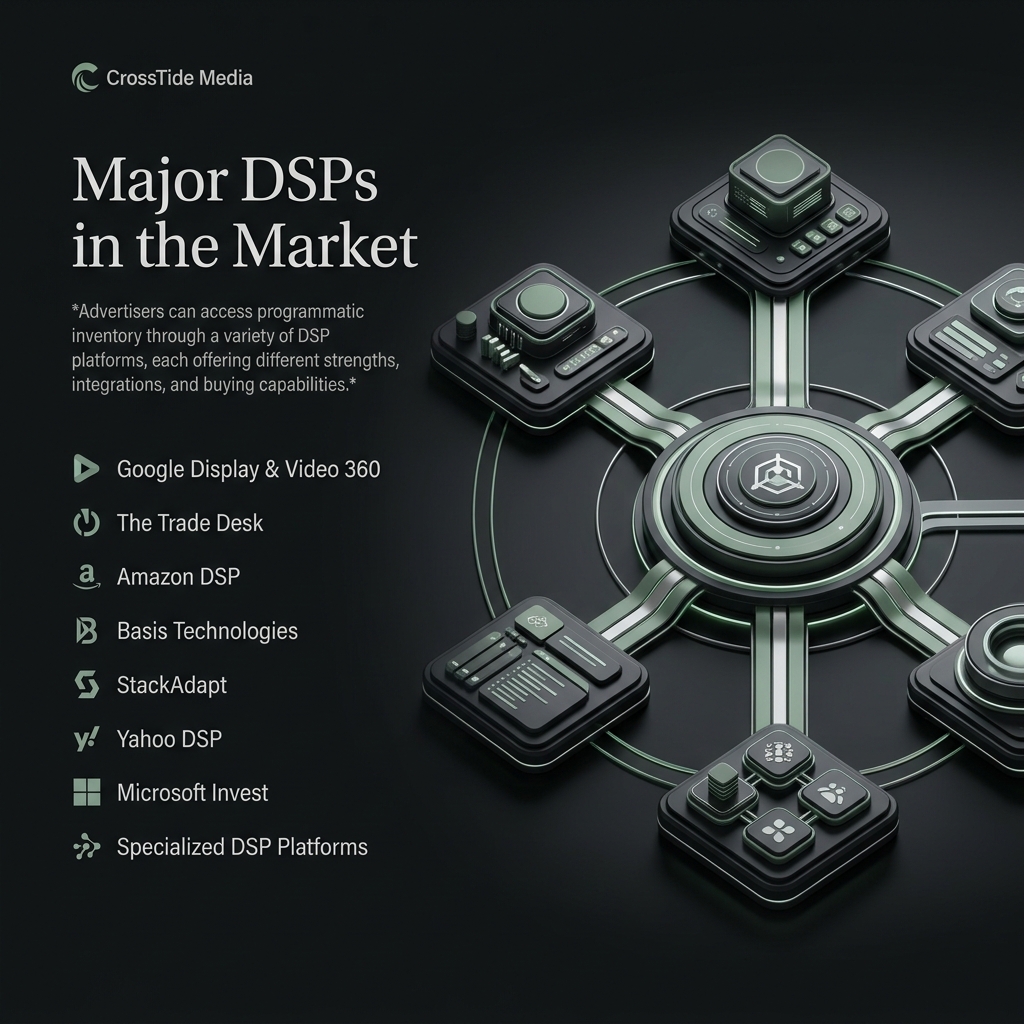
There are several major DSPs in the market, and each one has different strengths depending on the advertiser’s goals, budget, vertical, and preferred media mix.
Some of the most recognized DSPs include:
- Google Display & Video 360
- The Trade Desk
- Amazon DSP
- Basis Technologies
- StackAdapt
- Yahoo DSP
- Microsoft Invest
- smaller or more specialized DSP options depending on geography, vertical, or channel focus
Not every platform is the right fit for every campaign. The strongest choice depends on the type of media being bought, the available data, the required inventory access, the team using the platform, and the overall campaign objective.
Google Display & Video 360
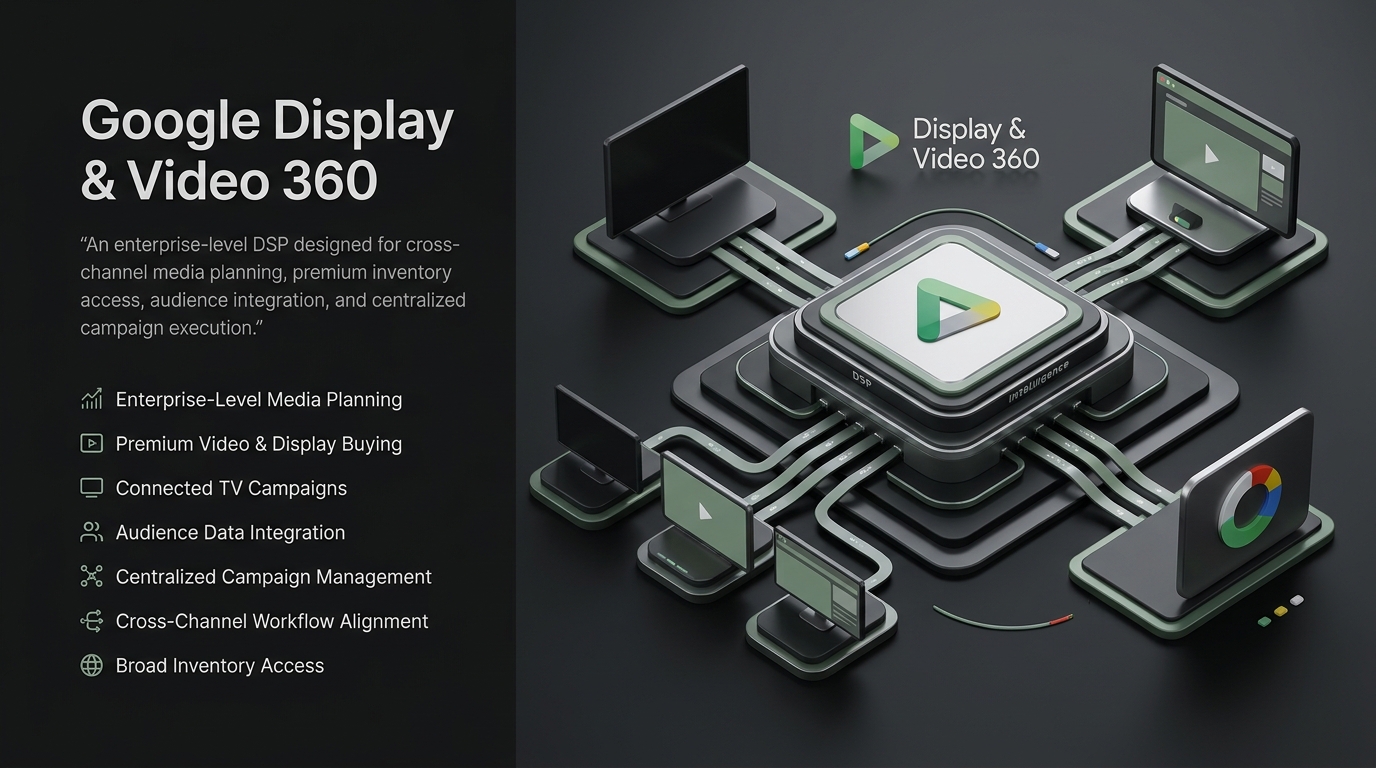
Display & Video 360, often called DV360, is one of the most recognized enterprise DSPs in programmatic media. It is often used by larger brands, agencies, and advertisers that want access to display, video, connected TV, audio, and premium inventory with deeper integration into the broader Google advertising ecosystem.
DV360 is often strong for:
- enterprise-level media planning
- premium video and display buying
- connected TV campaigns
- audience data integration
- centralized campaign management
- cross-channel workflow alignment
- broad inventory access across multiple buying methods
For advertisers already using Google tools heavily, DV360 can play an important role in broader programmatic strategy.
Google Display & Video 360
Display & Video 360, often called DV360, is one of the most recognized enterprise DSPs in programmatic media. It is often used by larger brands, agencies, and advertisers that want access to display, video, connected TV, audio, and premium inventory with deeper integration into the broader Google advertising ecosystem.
DV360 is often strong for:
- enterprise-level media planning
- premium video and display buying
- connected TV campaigns
- audience data integration
- centralized campaign management
- cross-channel workflow alignment
- broad inventory access across multiple buying methods
For advertisers already using Google tools heavily, DV360 can play an important role in broader programmatic strategy.
The Trade Desk
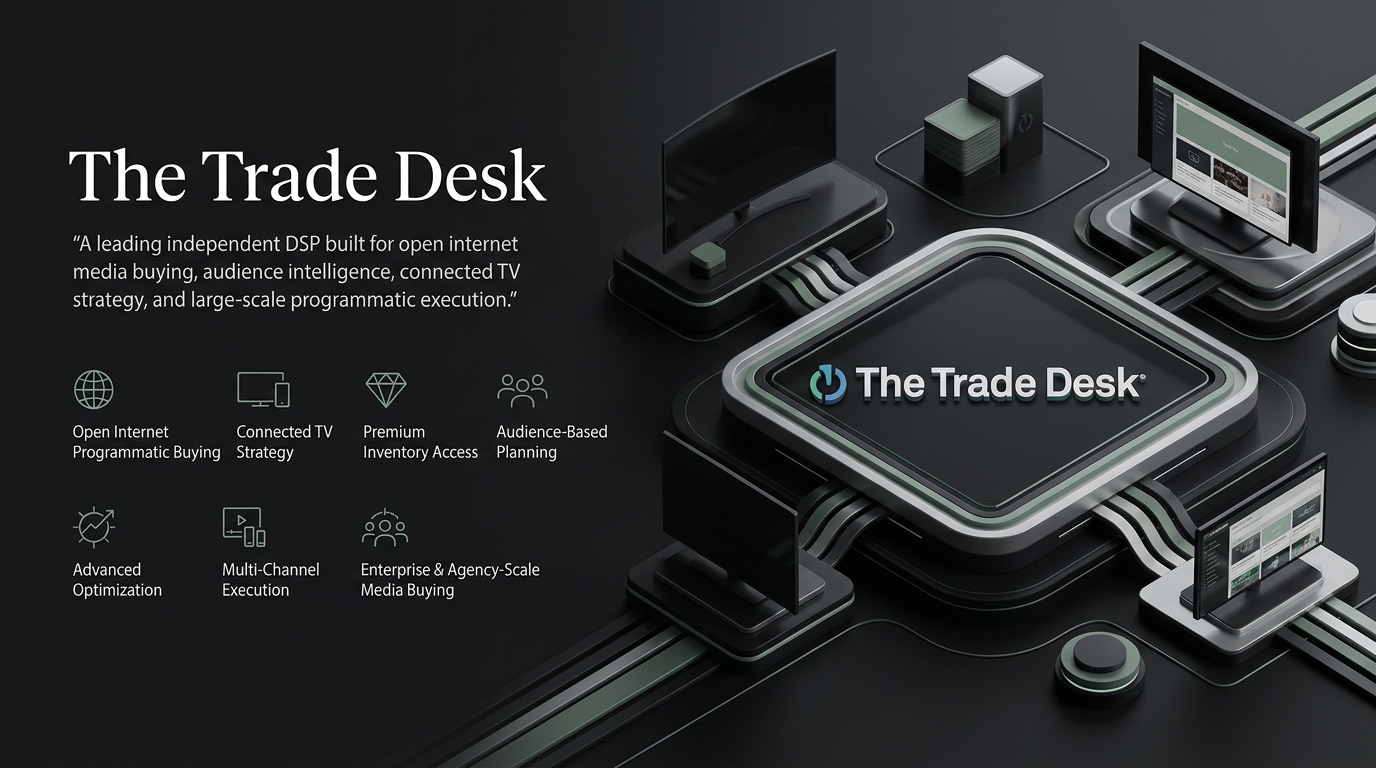
The Trade Desk is one of the best-known independent DSPs in programmatic advertising. It is widely used for premium programmatic buying across display, video, connected TV, audio, native, and digital out-of-home.
The Trade Desk is often strong for:
- open internet programmatic buying
- connected TV strategy
- premium inventory access
- audience-based planning
- advanced optimization
- multi-channel execution
- larger-scale agency and enterprise media buying
For many sophisticated buyers, The Trade Desk is one of the most important platforms in the programmatic market.
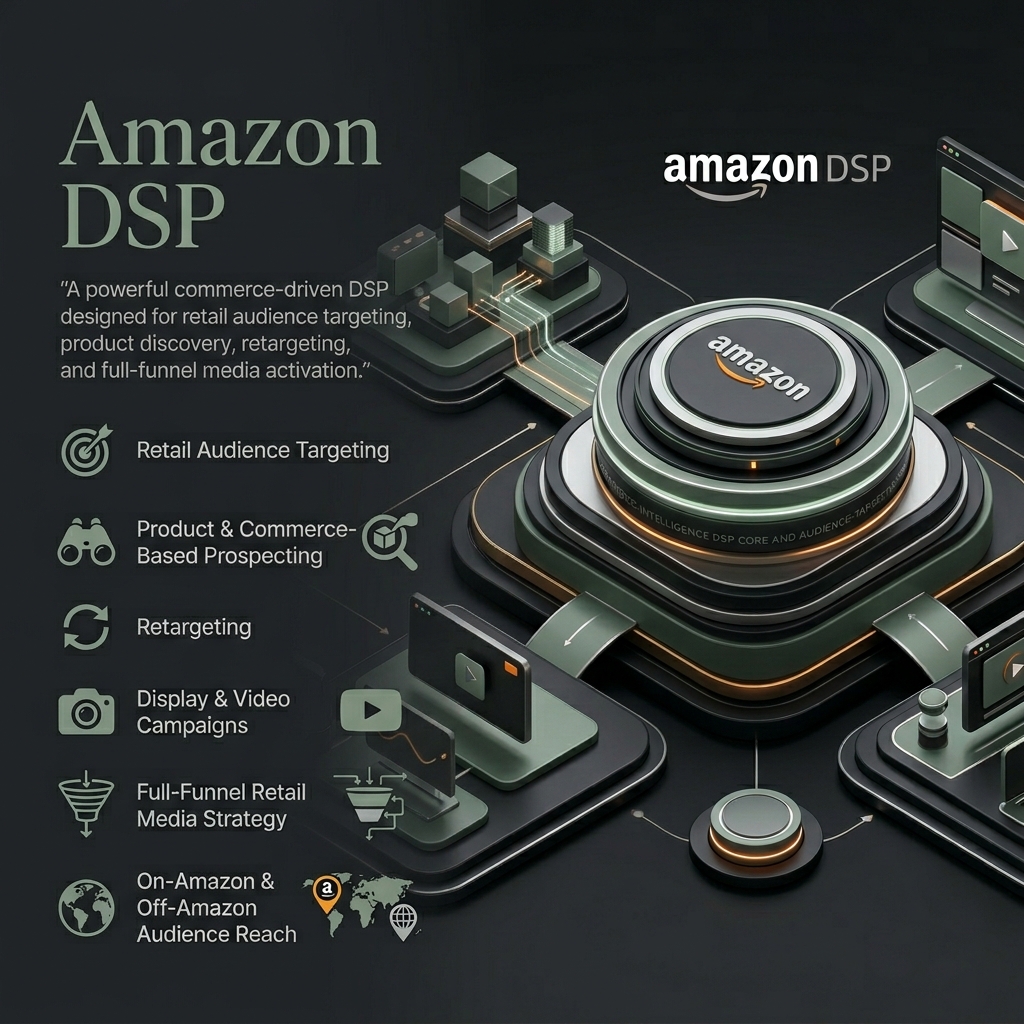
Amazon DSP
Amazon DSP is especially relevant for advertisers who want to leverage commerce-driven audience data, retail media strategy, and programmatic buying on and off Amazon.
Amazon DSP is often strong for:
- retail audience targeting
- product and commerce-based prospecting
- retargeting
- display and video campaigns
- full-funnel retail media strategy
- on-Amazon and off-Amazon audience reach
For brands that care about shopping behavior and commerce intent, Amazon DSP can bring a different kind of value than more general DSP platforms.
Amazon DSP
Amazon DSP is especially relevant for advertisers who want to leverage commerce-driven audience data, retail media strategy, and programmatic buying on and off Amazon.
Amazon DSP is often strong for:
- retail audience targeting
- product and commerce-based prospecting
- retargeting
- display and video campaigns
- full-funnel retail media strategy
- on-Amazon and off-Amazon audience reach
For brands that care about shopping behavior and commerce intent, Amazon DSP can bring a different kind of value than more general DSP platforms.
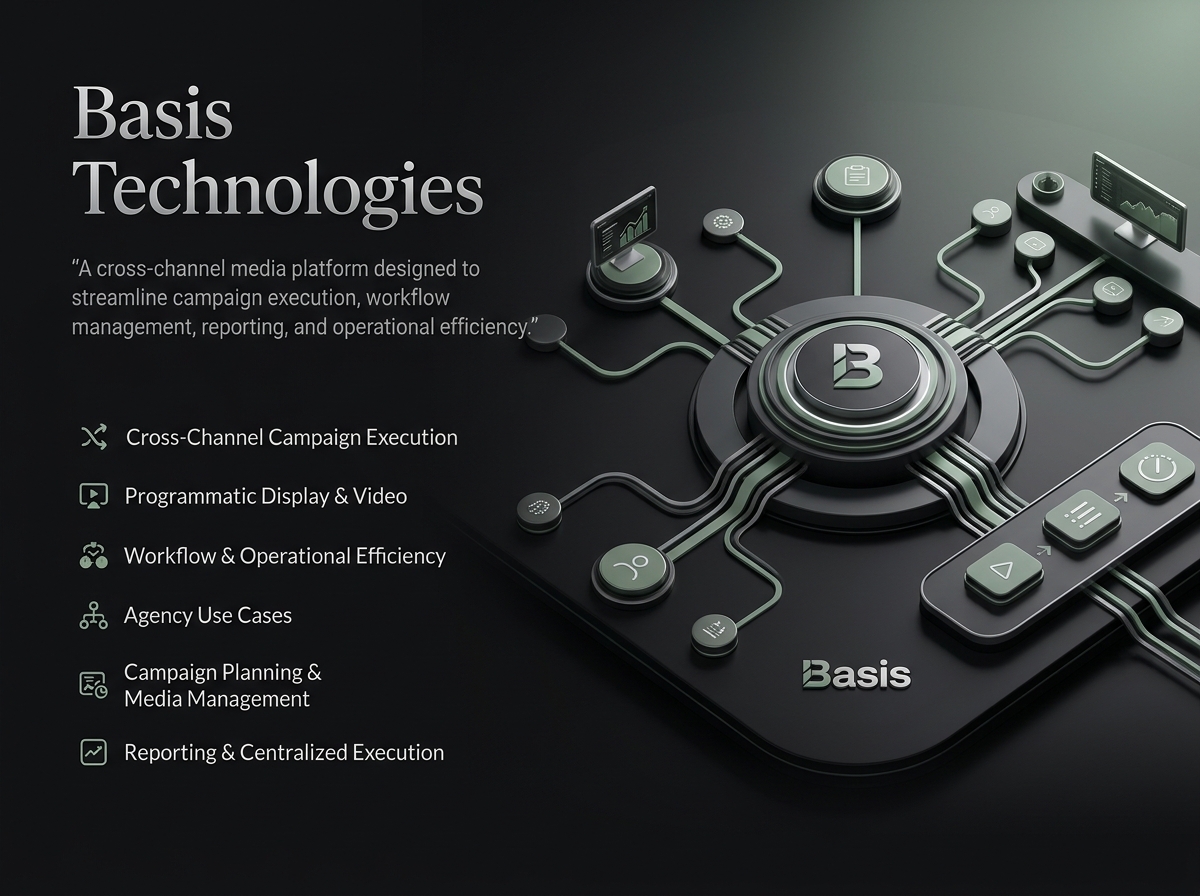
Basis Technologies
Basis is an important DSP and programmatic workflow platform that is often used by agencies and advertisers who want a combination of media buying, operational workflow, planning support, and campaign management tools in one environment.
Basis is often strong for:
- cross-channel campaign execution
- programmatic display and video
- workflow and operational efficiency
- agency use cases
- campaign planning and media management
- reporting and centralized execution
Basis can be especially useful when advertisers need both media buying capability and stronger campaign operations support.
StackAdapt
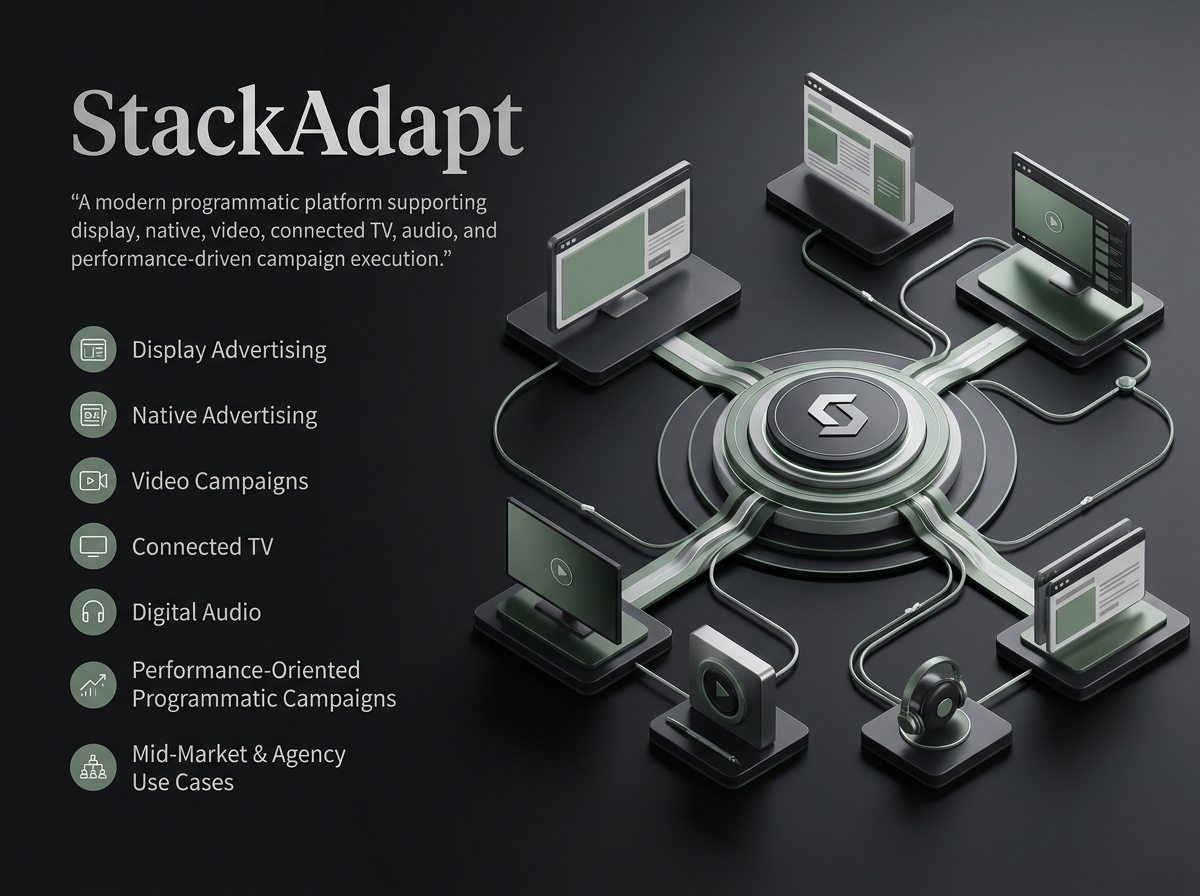
StackAdapt has become a widely recognized DSP, particularly for advertisers and agencies looking for a platform that supports multiple channels with a relatively accessible interface and broad media support.
StackAdapt is often strong for:
- display
- native
- video
- connected TV
- audio
- performance-oriented programmatic campaigns
- mid-market and agency use cases
For some advertisers, StackAdapt can be a strong fit when usability, flexibility, and multi-channel execution are priorities
StackAdapt
StackAdapt has become a widely recognized DSP, particularly for advertisers and agencies looking for a platform that supports multiple channels with a relatively accessible interface and broad media support.
StackAdapt is often strong for:
- display
- native
- video
- connected TV
- audio
- performance-oriented programmatic campaigns
- mid-market and agency use cases
For some advertisers, StackAdapt can be a strong fit when usability, flexibility, and multi-channel execution are priorities
Yahoo DSP
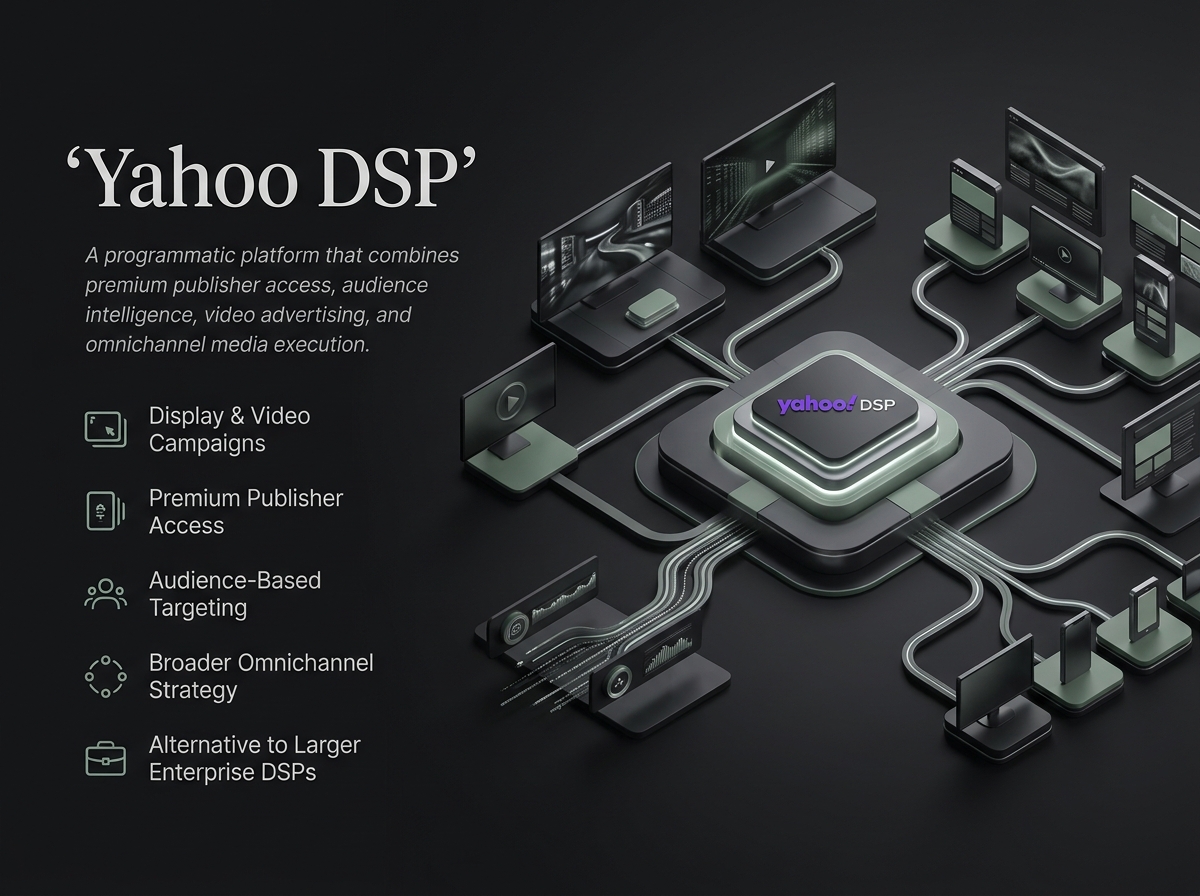
Yahoo DSP remains a relevant option for some advertisers, especially when access to Yahoo-owned environments, premium publisher relationships, or broader omnichannel execution matters.
Yahoo DSP is often useful for:
- display and video campaigns
- premium publisher access
- audience-based targeting
- broader omnichannel strategy
- advertisers looking for alternatives to the largest enterprise DSPs
Platform fit depends on campaign goals, inventory needs, and how Yahoo’s ecosystem aligns with the broader buying strategy.

Microsoft Invest and Why It Closed
Microsoft Invest was once an important part of the programmatic ecosystem, especially through its connection to Xandr and earlier AppNexus infrastructure. It played a meaningful role in display, video, and open internet programmatic buying.
However, Microsoft moved away from maintaining Invest as an active DSP product. Its decline reflected a broader shift in the market where DSP competition became more concentrated among a smaller group of major platforms, while Microsoft focused more on other advertising priorities, partnerships, and product directions.
Microsoft Invest and Why It Closed
Microsoft Invest was once an important part of the programmatic ecosystem, especially through its connection to Xandr and earlier AppNexus infrastructure. It played a meaningful role in display, video, and open internet programmatic buying.
However, Microsoft moved away from maintaining Invest as an active DSP product. Its decline reflected a broader shift in the market where DSP competition became more concentrated among a smaller group of major platforms, while Microsoft focused more on other advertising priorities, partnerships, and product directions.
Why this matters
Microsoft Invest is a good example of how quickly the DSP landscape can change. Platforms do not remain equally relevant forever. Some consolidate, some reposition, and some disappear. That is why real expertise matters. It is not enough to know what a DSP is. Buyers need to know which platforms still matter, which ones are losing relevance, and which ones create real strategic advantage.
Other DSP Platforms in the Market
Beyond the largest platforms, there are smaller or more specialized DSPs that can be useful depending on the campaign, market, or advertiser need.
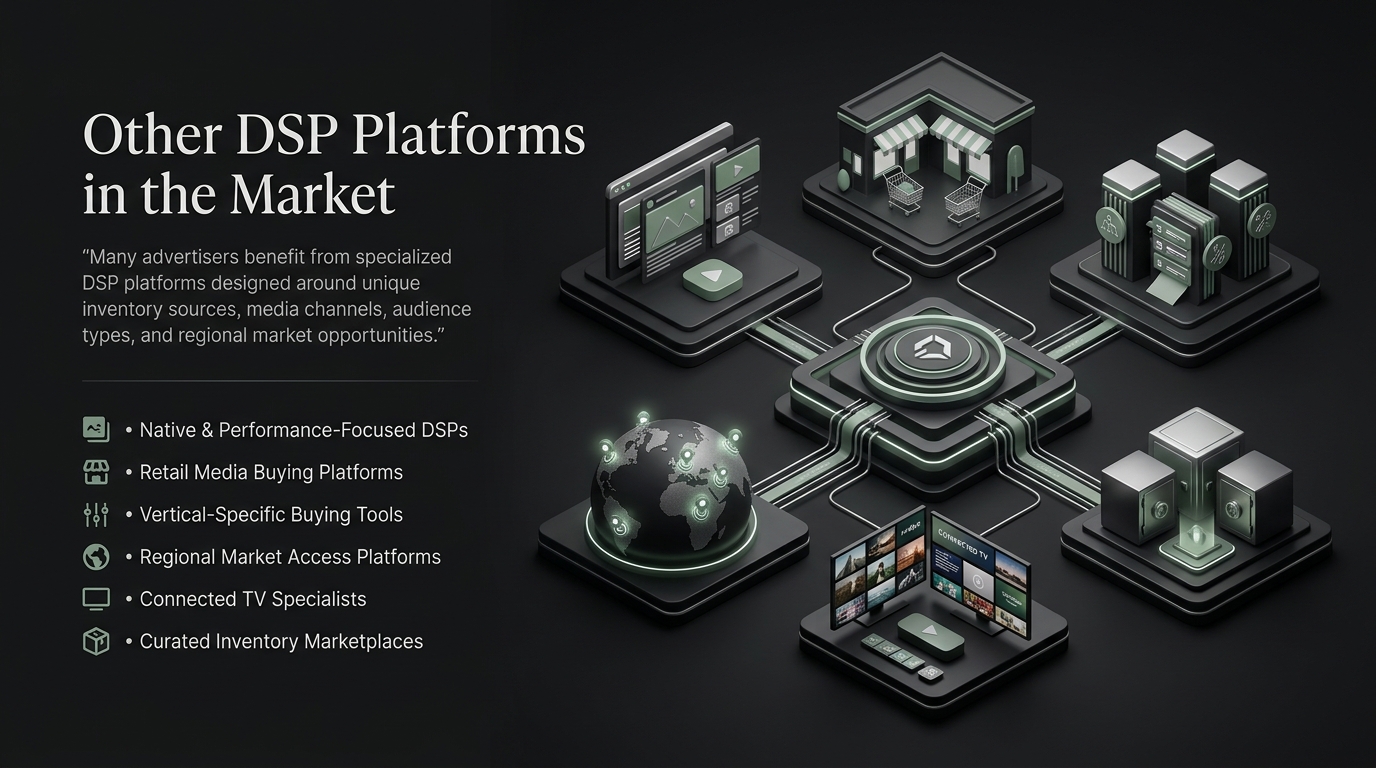
These may include:
- media buying platforms with stronger native or performance specializations
- retail-media-adjacent DSP environments
- vertical-specific buying tools
- regional platforms with local market access
- connected TV-focused or audio-focused programmatic solutions
- curated programmatic access points built around specialized inventory
Why smaller DSPs still matter
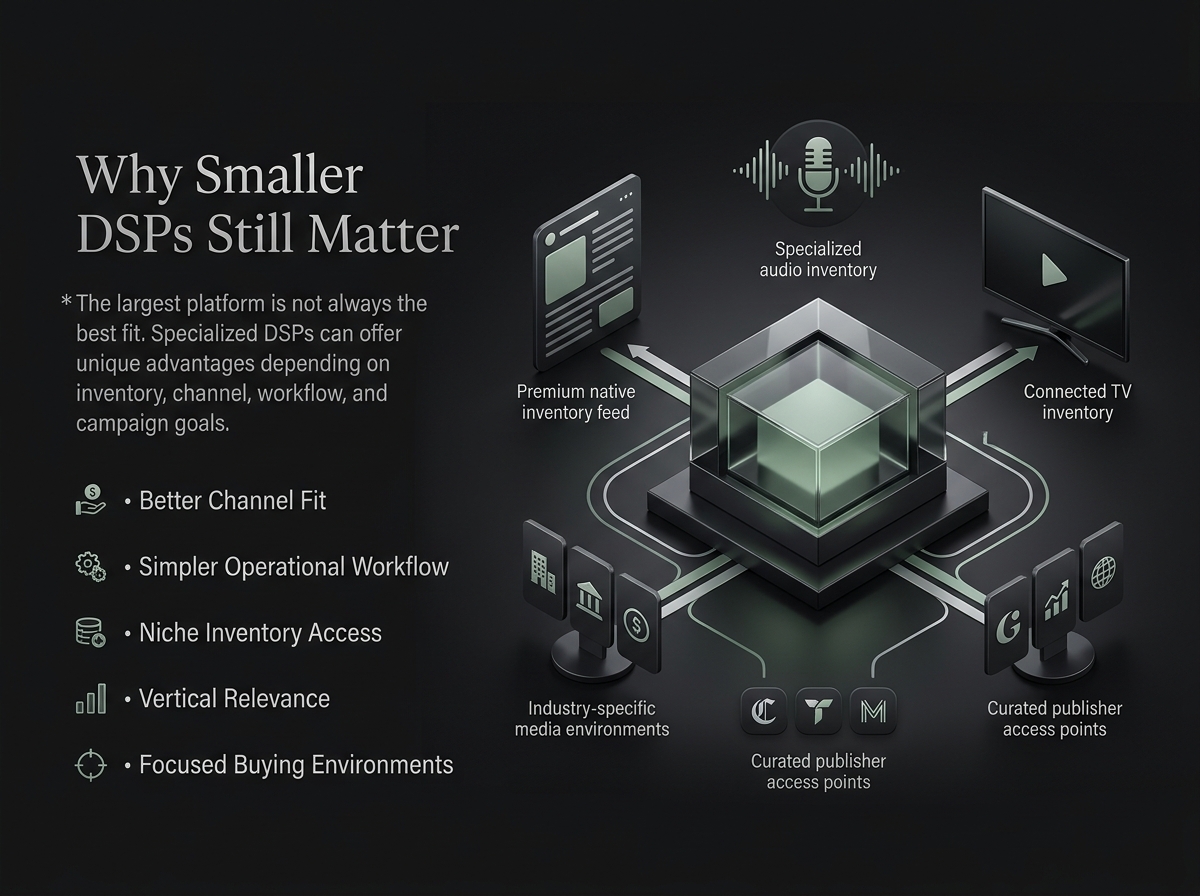
Not every campaign needs the biggest platform. In some cases, a smaller DSP or specialized platform may offer:
- better fit for a certain channel
- simpler operational workflow
- niche inventory access
- vertical relevance
- more focused buying environments
For Crosstide Media, the value comes from knowing when a large DSP is best and when a more specialized platform creates a better outcome.
Audience Data, Identity, and Custom Partnerships
One of the biggest reasons DSPs are so valuable is that they allow advertisers to combine media buying with data strategy. A strong DSP campaign is not just about placing ads. It is about placing ads in front of the right audience using the right combination of signals, partnerships, and activation methods.
At Crosstide Media, this is one of the areas where experience matters most. We do not just use DSPs to buy inventory. We use them to activate stronger audience strategy through first-party data, custom audience planning, retail and behavioral signals, private marketplace relationships, identity solutions, and partner-based inventory access that can improve precision and reduce waste.
Common data inputs in DSP campaigns
DSP campaigns may use:
- first-party audience data
- CRM data
- website visitor retargeting
- customer onboarding
- demographic targeting
- geographic targeting
- contextual targeting
- behavioral audiences
- in-market audiences
- modeled or lookalike audiences
- household targeting where supported
Custom partnerships and data strategy
Custom partnerships can play an important role in DSP performance. Depending on the advertiser, campaign, or platform mix, these may include:
- custom audience onboarding partners
- private marketplace relationships
- premium publisher access
- industry-specific data providers
- retail or commerce signal partnerships
- cross-channel measurement partners
- custom identity and match solutions
- strategic data partnerships that improve audience precision
Why this matters
The strength of a DSP is not just that it can buy impressions. It is that it can combine media buying with audience intelligence, data partnerships, and more strategic planning. At Crosstide Media, this is one of the major ways we help separate average programmatic execution from smarter, more premium media buying.

First-Party Data, PMPs, and Pricing Strategy
One of the biggest differences between average programmatic execution and premium programmatic execution is how the advertiser uses first-party data, private marketplace access, and deal strategy.
At Crosstide Media, this is a major part of how we build smarter DSP campaigns. Access to platforms alone is not enough. The real advantage comes from knowing how to activate first-party data correctly, negotiate stronger PMP opportunities, use custom partnerships strategically, and make better pricing decisions across platforms, publishers, and inventory types.
First-party data strategy
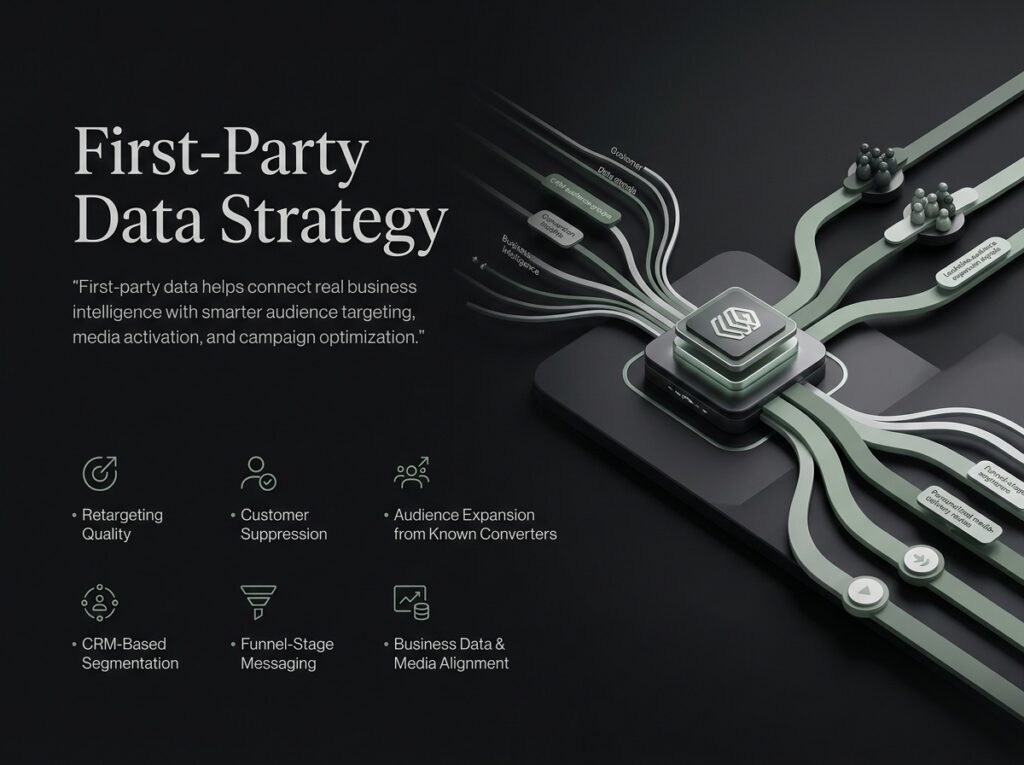
First-party data can help improve:
- retargeting quality
- customer suppression
- audience expansion from known converters
- CRM-based segmentation
- funnel-stage messaging
- better alignment between business data and media delivery
For Crosstide Media, funnel-based segmentation is one of the most useful ways to connect targeting strategy with business goals.
PMP and deal strategy
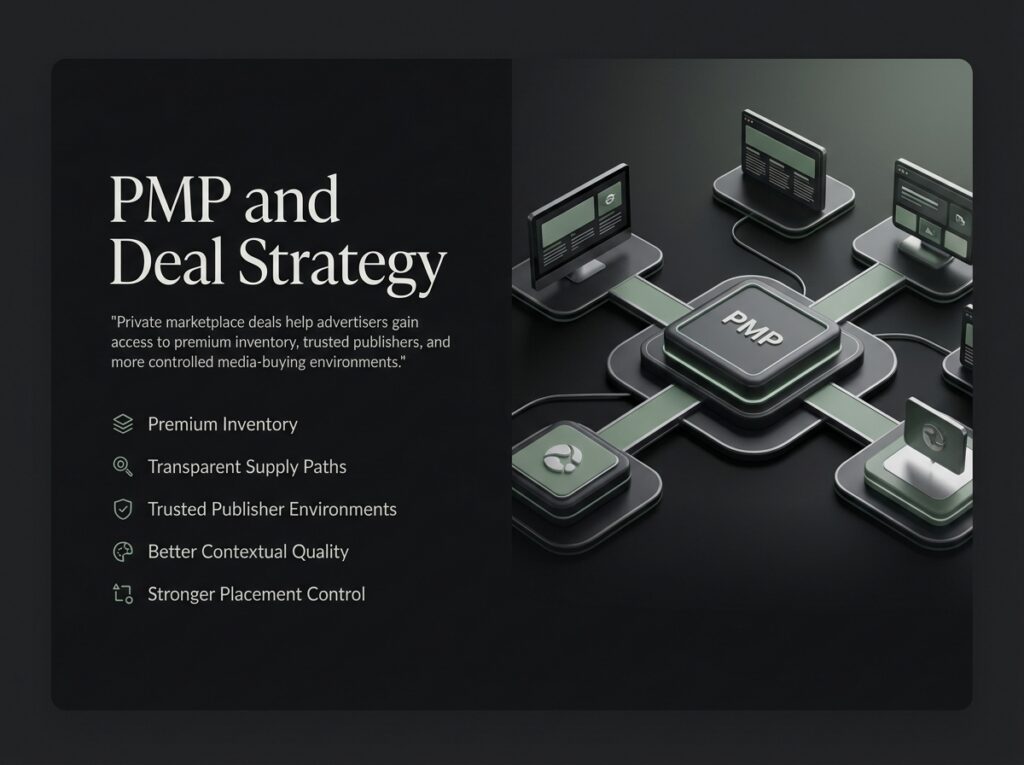
Private marketplace deals, or PMPs, can help advertisers access:
- premium inventory
- more transparent supply paths
- more trusted publisher environments
- better contextual quality
- stronger control over where ads run
Pricing and negotiation
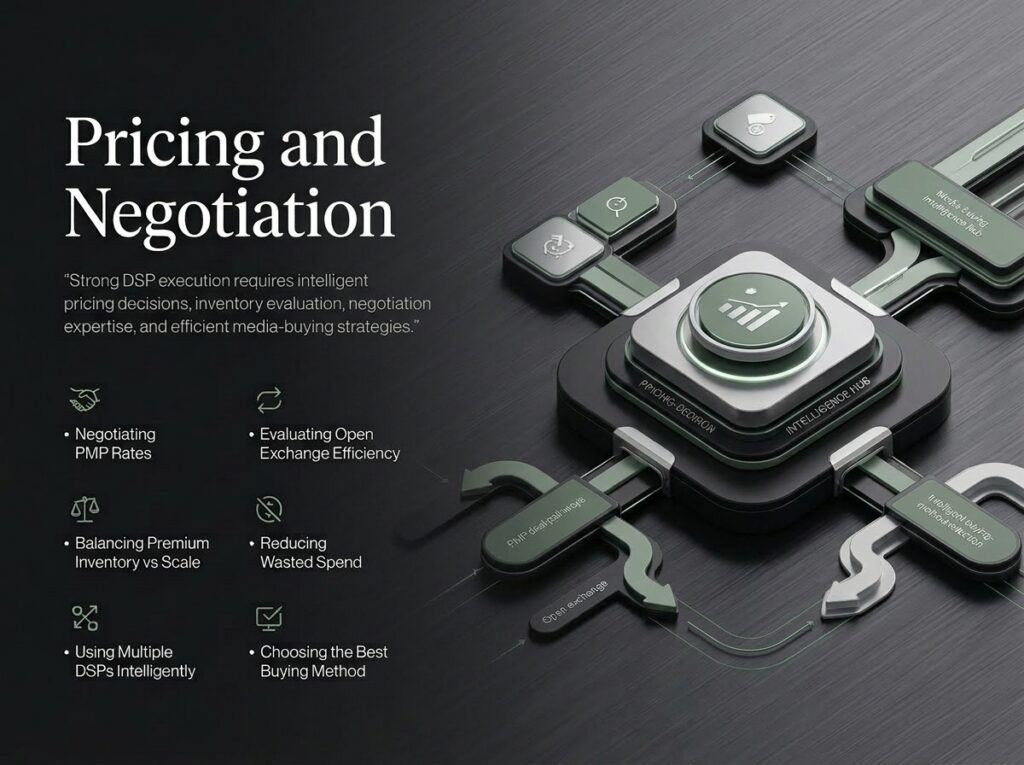
Strong DSP execution also involves pricing strategy. That can include:
- negotiating PMP rates
- evaluating open exchange efficiency
- balancing premium inventory vs scale
- reducing wasted spend
- using multiple DSPs or deal paths intelligently
- choosing the best buying method for each objective
At Crosstide Media, what separates us is not just that we have access to major DSP platforms. It is that we know how to use them together through first-party data strategy, PMP negotiation, custom partnerships, pricing discipline, cleaner supply paths, and stronger programmatic execution.
Pricing and negotiation
Strong DSP execution also involves pricing strategy. That can include:
- negotiating PMP rates
- evaluating open exchange efficiency
- balancing premium inventory vs scale
- reducing wasted spend
- using multiple DSPs or deal paths intelligently
- choosing the best buying method for each objective
At Crosstide Media, what separates us is not just that we have access to major DSP platforms. It is that we know how to use them together through first-party data strategy, PMP negotiation, custom partnerships, pricing discipline, cleaner supply paths, and stronger programmatic execution.
What You Can Buy Through a DSP
One of the biggest advantages of DSPs is the variety of media they can access.
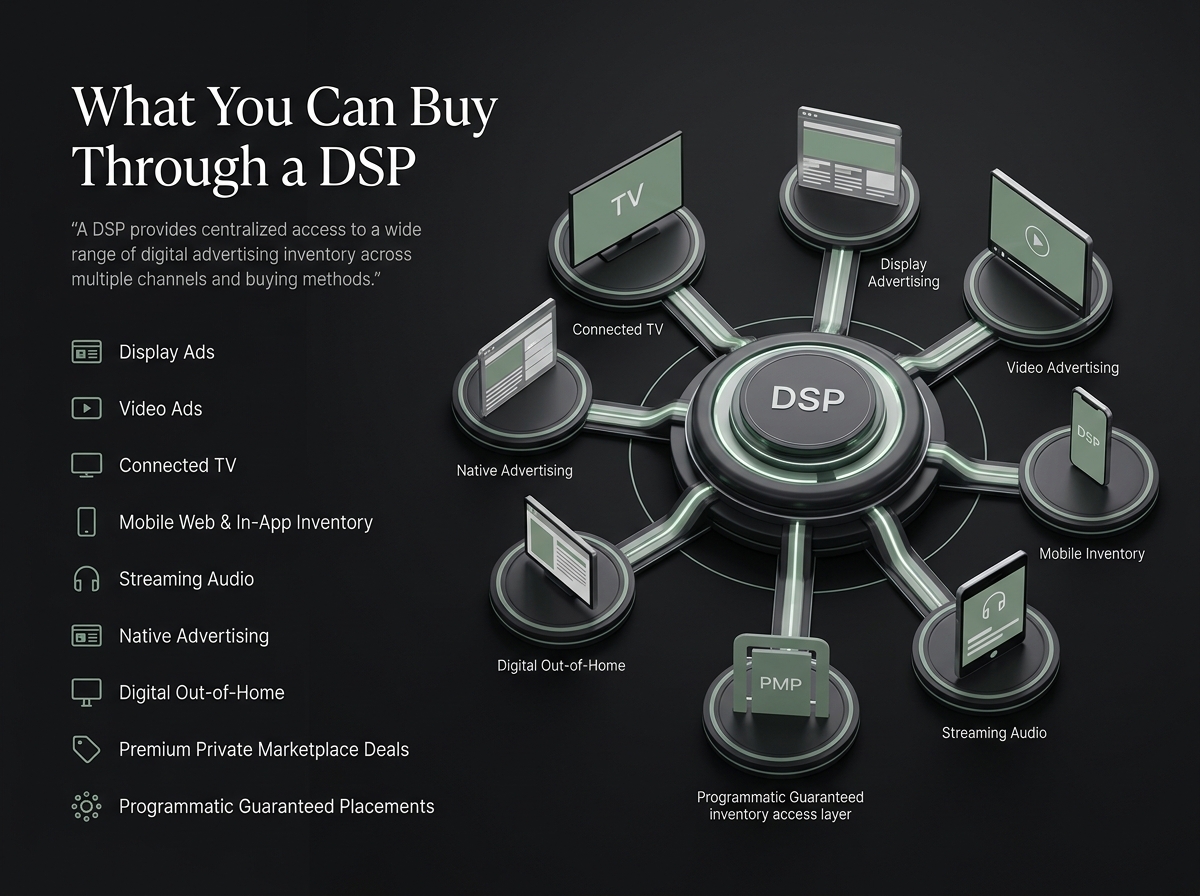
A DSP can often be used to buy:
- display ads
- video ads
- connected TV
- mobile web and in-app inventory
- streaming audio
- native advertising
- digital out-of-home
- premium private marketplace deals
- programmatic guaranteed placements
This is what makes DSPs such powerful tools for modern cross-channel advertising. They do not force advertisers to think about media as separate silos. They help unify planning and buying across different environments.
Who Benefits Most From DSP Advertising
DSP advertising can benefit many kinds of advertisers, but it is especially valuable for brands that need scale, audience precision, or broader cross-channel strategy.
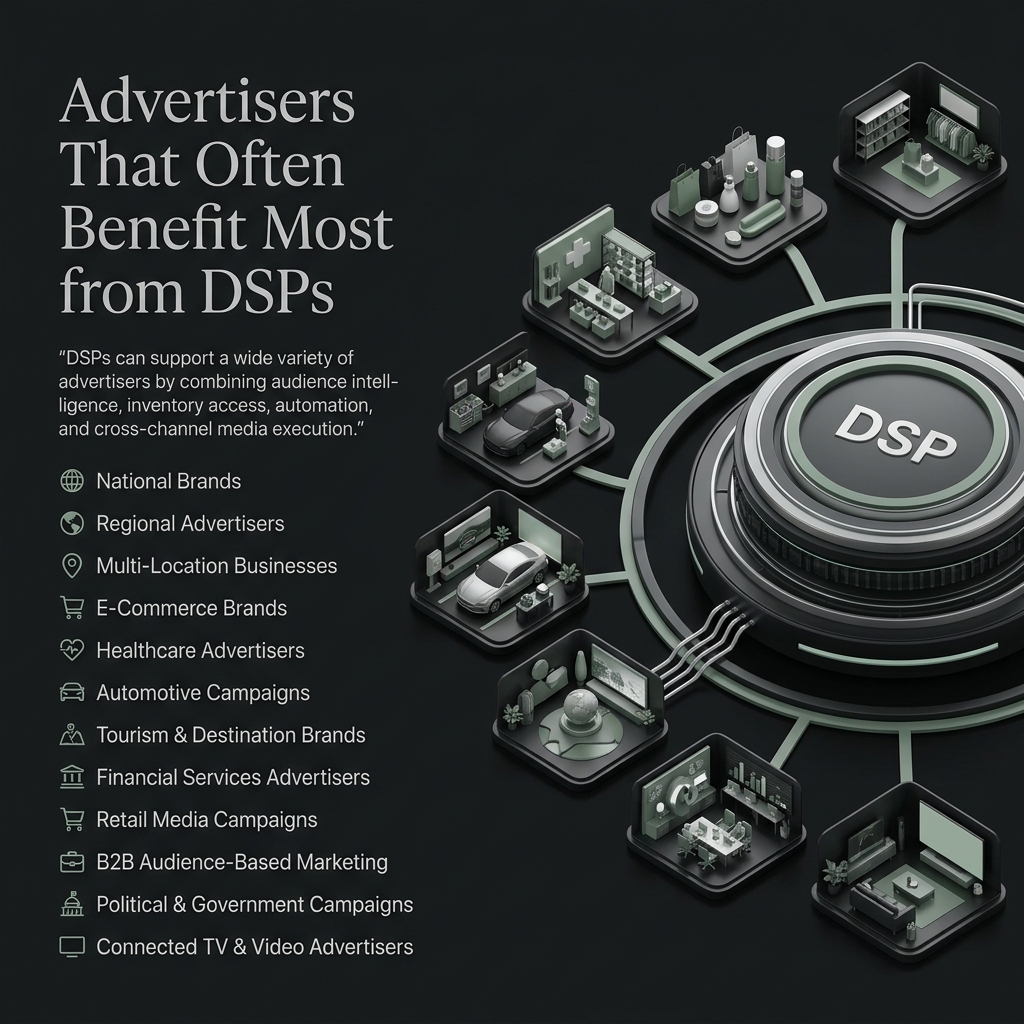
Advertisers that often benefit most from DSPs include
- national brands
- regional advertisers
- multi-location businesses
- e-commerce brands
- healthcare advertisers
- automotive campaigns
- tourism and destination brands
- financial services advertisers
- retail media campaigns
- B2B advertisers using account or audience-based targeting
- political and government campaigns
- brands investing in connected TV or video strategy
DSPs can also be useful for local and SMB advertisers, but only when the strategy, budget, and goals justify the complexity of the platform.
Why DSPs Are Powerful but Difficult
DSPs are powerful, but they are not simple. That is one of the most important things to understand.
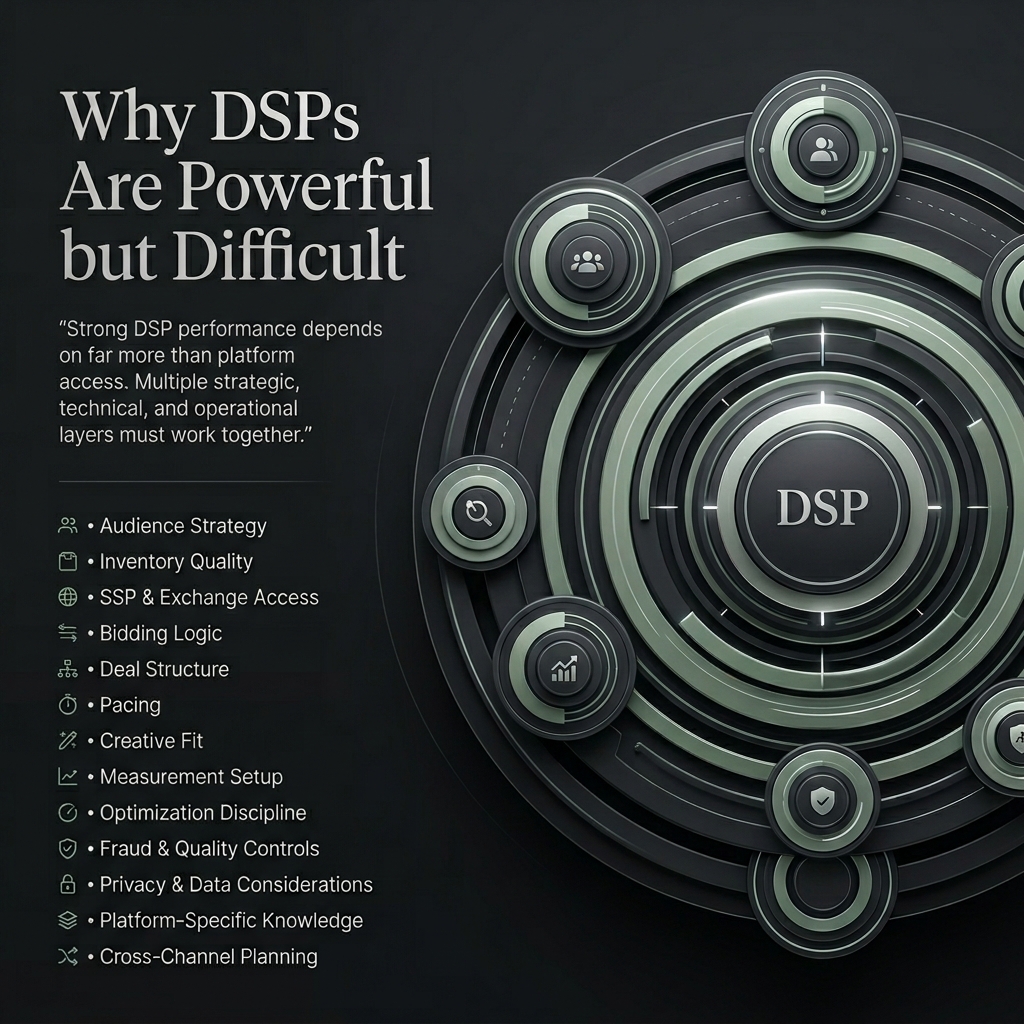
The platform itself may look like software, but strong DSP performance depends on many layers working together:
- audience strategy
- inventory quality
- SSP and exchange access
- bidding logic
- deal structure
- pacing
- creative fit
- measurement setup
- optimization discipline
- fraud and quality controls
- privacy and data considerations
- platform-specific knowledge
- channel-specific planning across display, video, CTV, audio, and native
The platform itself may look like software, but strong DSP performance depends on many layers working together:
- audience strategy
- inventory quality
- SSP and exchange access
- bidding logic
- deal structure
- pacing
- creative fit
- measurement setup
- optimization discipline
- fraud and quality controls
- privacy and data considerations
- platform-specific knowledge
- channel-specific planning across display, video, CTV, audio, and native
Why expertise matters
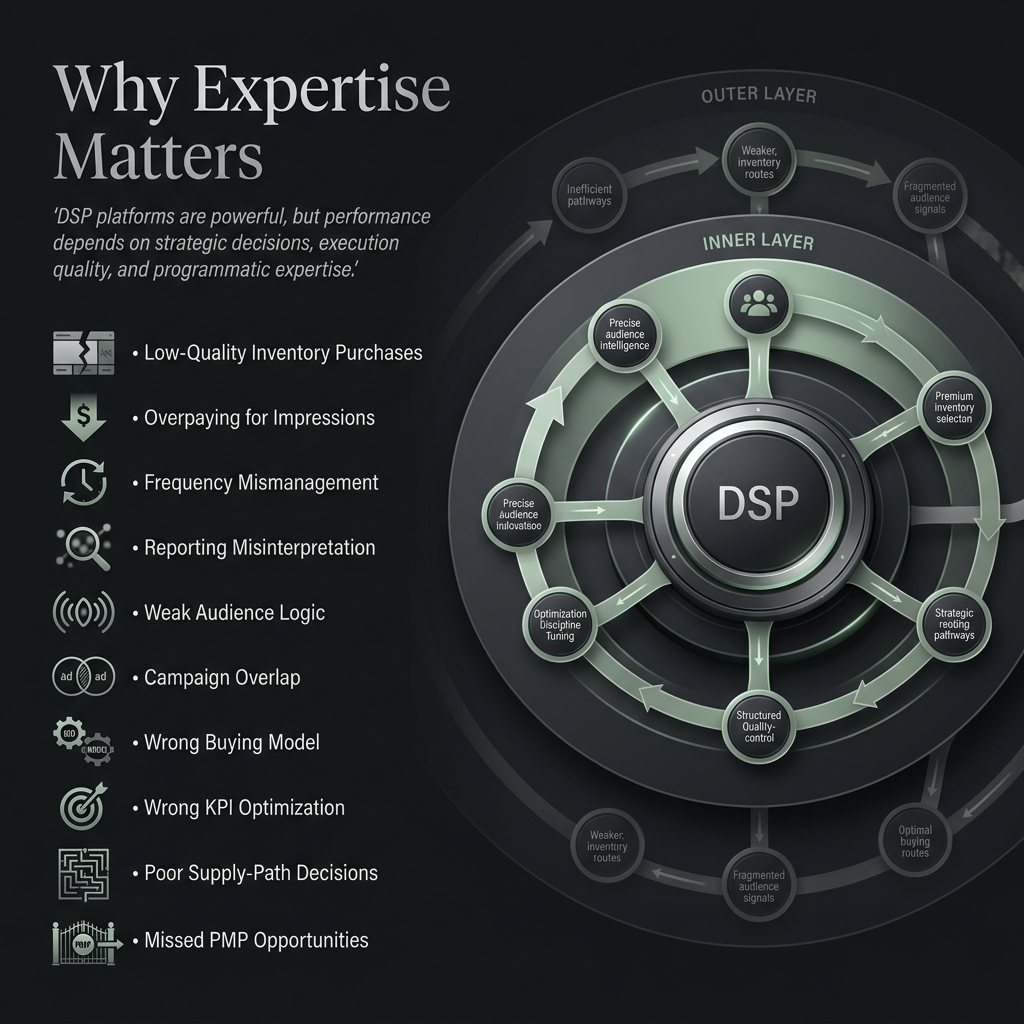
Without experience, it is easy to:
- buy low-quality inventory
- overpay for impressions
- mismanage frequency
- misread reporting
- build weak audience logic
- create campaign overlap
- use the wrong buying model
- optimize toward the wrong KPI
- misjudge supply-path quality
- leave PMP leverage on the table
For Crosstide Media, DSPs are not self-managing tools. They require real media expertise, technical knowledge, negotiation skill, and strategic discipline. That knowledge is premium because the cost of getting it wrong can be high.
Account Setup and Campaign Structure
Strong DSP performance usually starts with clean structure. Campaigns need to be organized in a way that supports channel clarity, budget control, audience logic, reporting, and optimization.
A strong DSP setup may include
- campaign segmentation by objective
- audience separation by funnel stage
- channel separation by format
- geography planning
- prospecting vs retargeting separation
- deal-type separation
- creative alignment by inventory type
- clean tracking and reporting structure
Common segmentation approaches
DSP campaigns may be structured by:
- awareness vs performance goals
- display vs video vs CTV vs audio
- audience type
- geography
- publisher quality tier
- private marketplace vs open exchange
- creative theme
- campaign objective
Why structure matters
The initial setup affects:
- reporting clarity
- budget efficiency
- optimization speed
- channel understanding
- audience overlap
- scaling potential

Auditing and Optimization Process
A strong DSP strategy should include both a setup phase and a structured audit-and-optimization process.
What a DSP audit should review
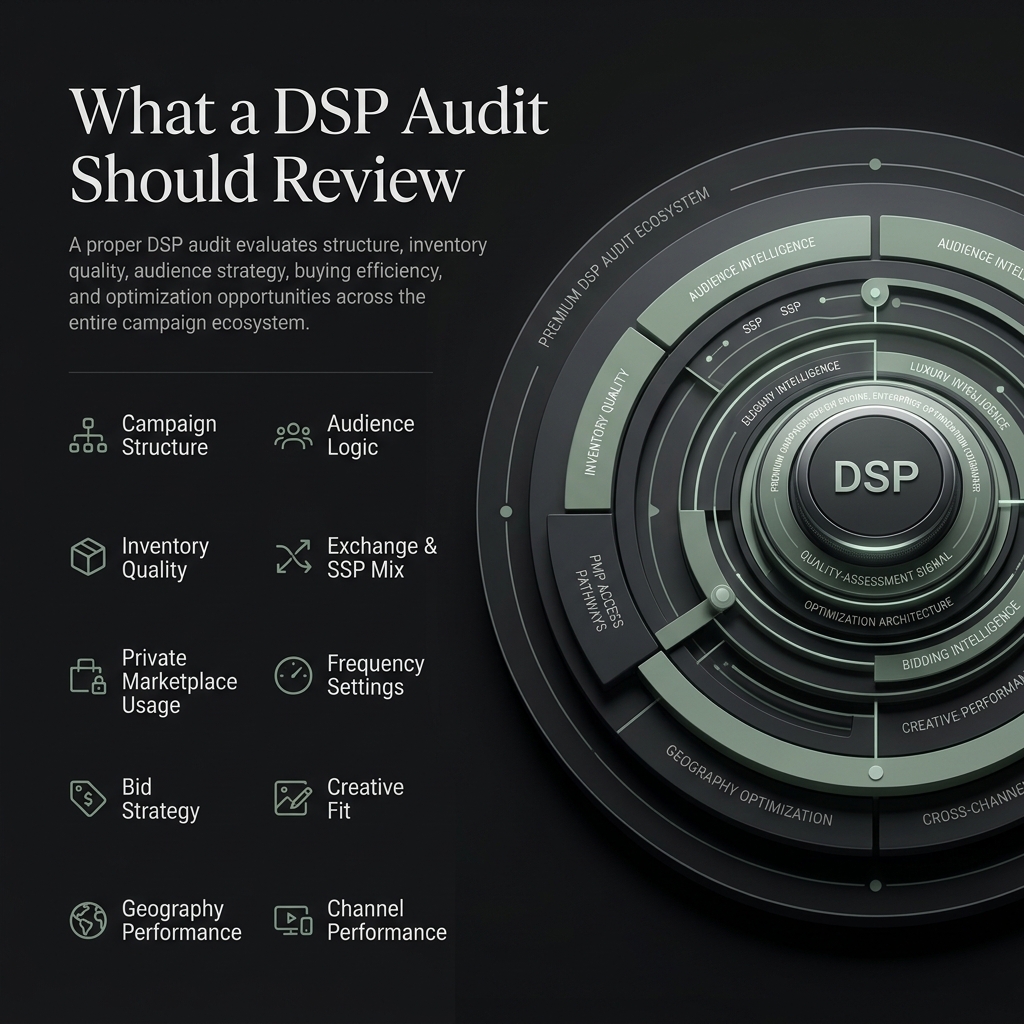
A DSP audit may evaluate:
- campaign structure
- audience logic
- inventory quality
- exchange and SSP mix
- private marketplace usage
- frequency settings
- bid strategy
- creative fit
- geography performance
- channel performance
- fraud and quality controls
- measurement setup
- attribution logic
- budget allocation
- performance by inventory source
What a DSP audit should review
A DSP audit may evaluate:
- campaign structure
- audience logic
- inventory quality
- exchange and SSP mix
- private marketplace usage
- frequency settings
- bid strategy
- creative fit
- geography performance
- channel performance
- fraud and quality controls
- measurement setup
- attribution logic
- budget allocation
- performance by inventory source
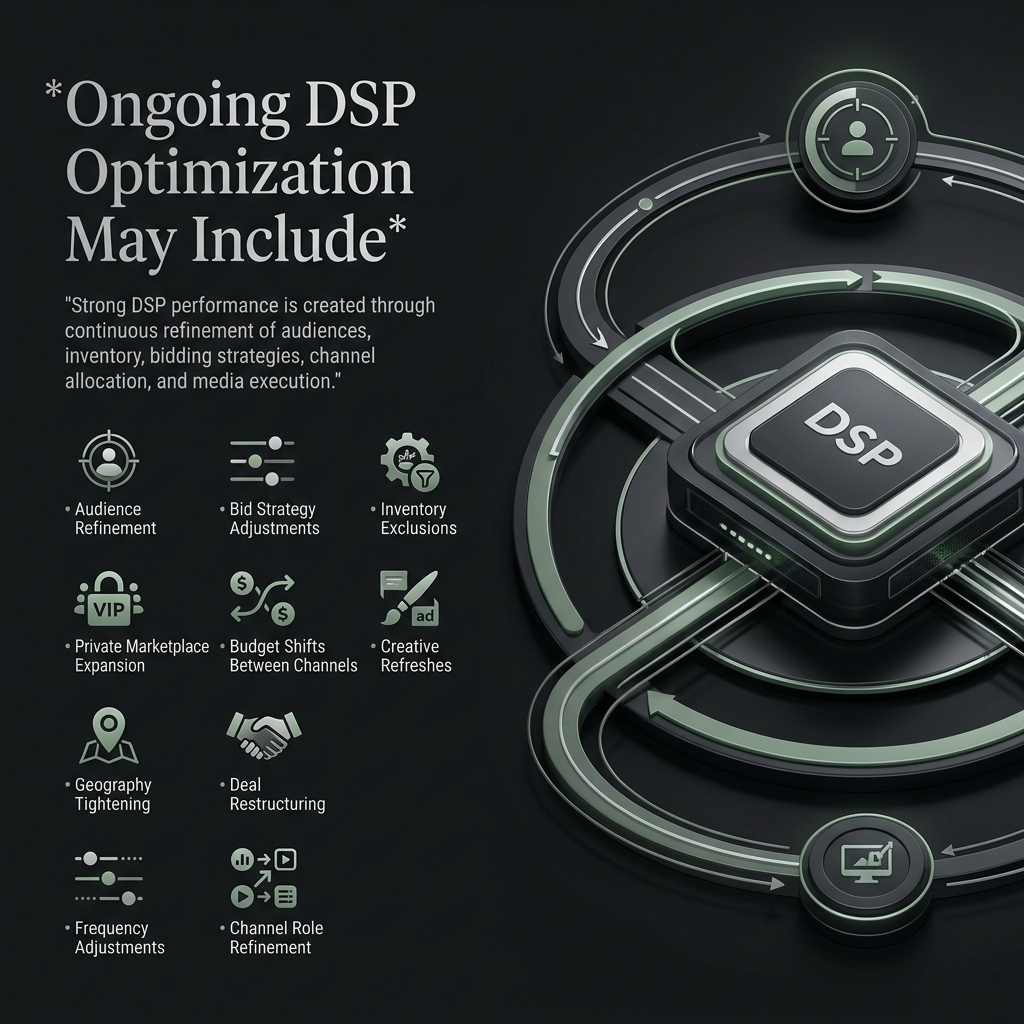
Ongoing DSP optimization may include
- audience refinement
- bid strategy adjustments
- inventory exclusions
- private marketplace expansion
- budget shifts between channels
- creative refreshes
- geography tightening
- deal restructuring
- frequency adjustments
- channel role refinement
This is where a large share of DSP efficiency improvements happens.
Budgeting, Buying Models, and Media Efficiency
DSP budgets should be guided by business goals, audience scale, inventory strategy, and the role the platform is playing in the overall media plan.
- CPM buying
- private marketplace deals
- programmatic guaranteed
- open exchange buying
- curated inventory packages
- video and connected TV rate structures
- channel mix
- audience value
- premium vs open inventory
- awareness vs performance balance
- frequency goals
- geography
- creative needs
- attribution expectations
The more useful question is not only what the CPM is, but also:
- Is the inventory high quality?
- Are we reaching the right audience?
- Is frequency controlled correctly?
- Are we buying premium value or just more volume?
- Is the channel serving the right role in the campaign?
- Is the data strategy improving performance?
A higher CPM is not automatically a negative if it comes with better inventory, stronger attention, better audience relevance, and more meaningful outcomes.
Measurement, Attribution, and Reporting
DSP campaigns should be measured across both media delivery and business outcomes.
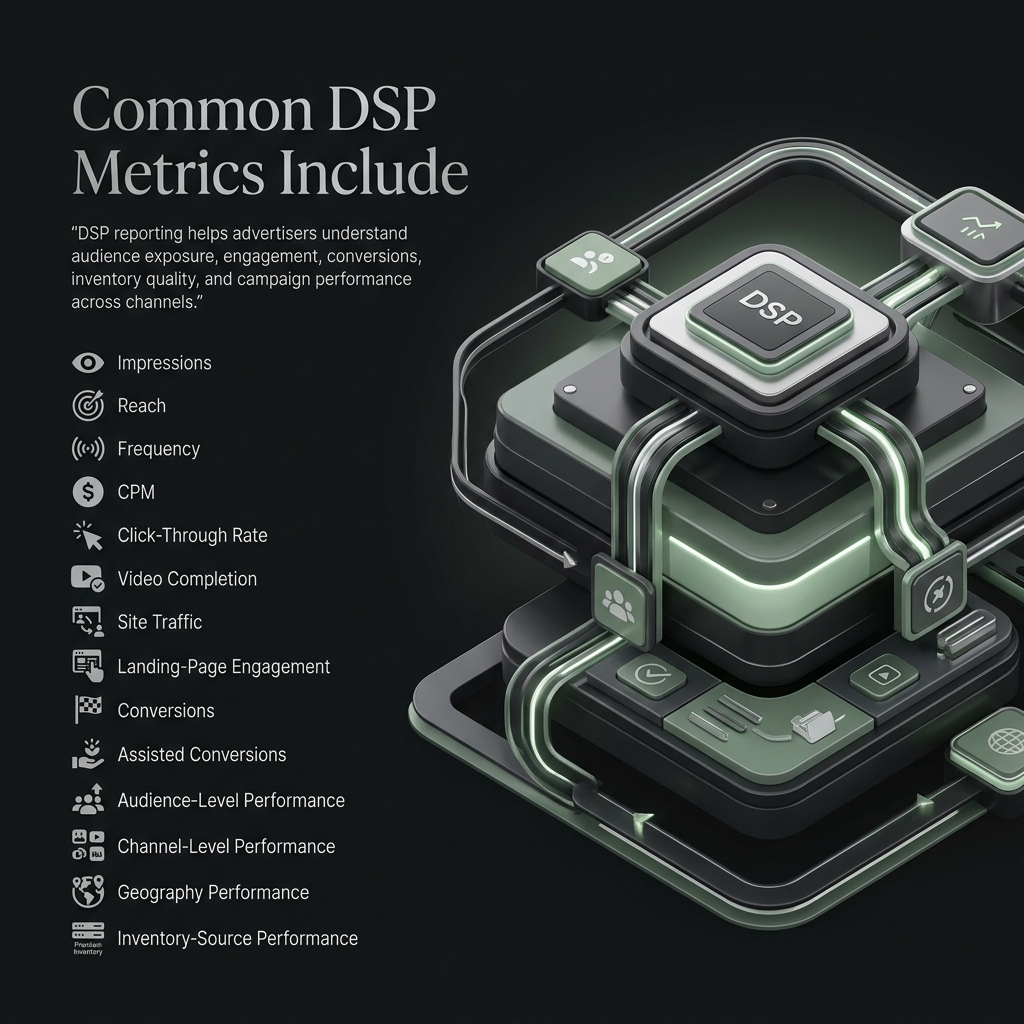
Common DSP metrics include
- impressions
- reach
- frequency
- CPM
- click-through rate
- video completion
- site traffic
- landing-page engagement
- conversions
- assisted conversions
- audience-level performance
- channel-level performance
- geography performance
- inventory-source performance
Common DSP metrics include
- impressions
- reach
- frequency
- CPM
- click-through rate
- video completion
- site traffic
- landing-page engagement
- conversions
- assisted conversions
- audience-level performance
- channel-level performance
- geography performance
- inventory-source performance
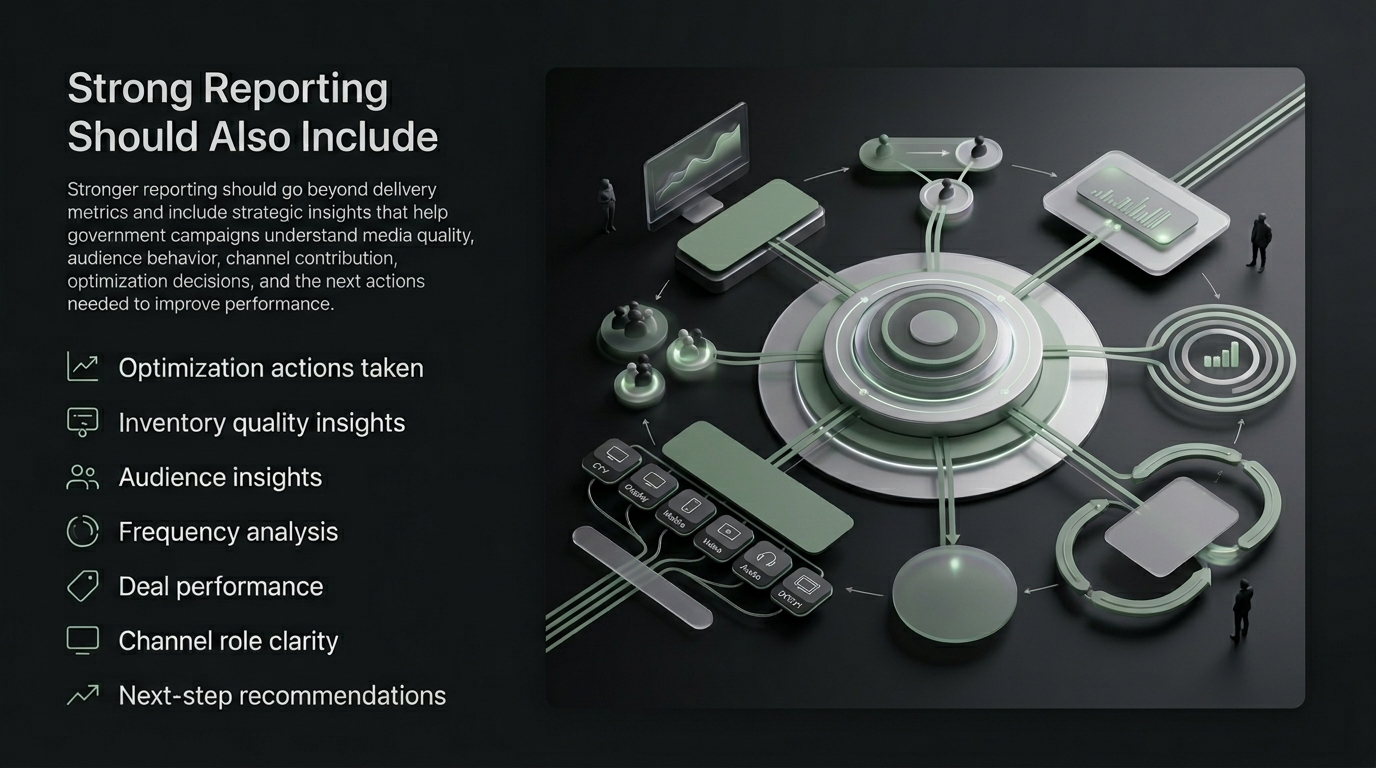
Strong reporting should also include
- optimization actions taken
- inventory quality insights
- audience insights
- frequency analysis
- deal performance
- channel role clarity
- next-step recommendations

Why attribution matters
DSP campaigns often influence users before they convert later through another device, session, or channel. Because of that, DSPs should not be judged only through last-click logic. A stronger reporting framework combines delivery quality, audience performance, conversion signals, and cross-channel impact.
Why attribution matters
DSP campaigns often influence users before they convert later through another device, session, or channel. Because of that, DSPs should not be judged only through last-click logic. A stronger reporting framework combines delivery quality, audience performance, conversion signals, and cross-channel impact.
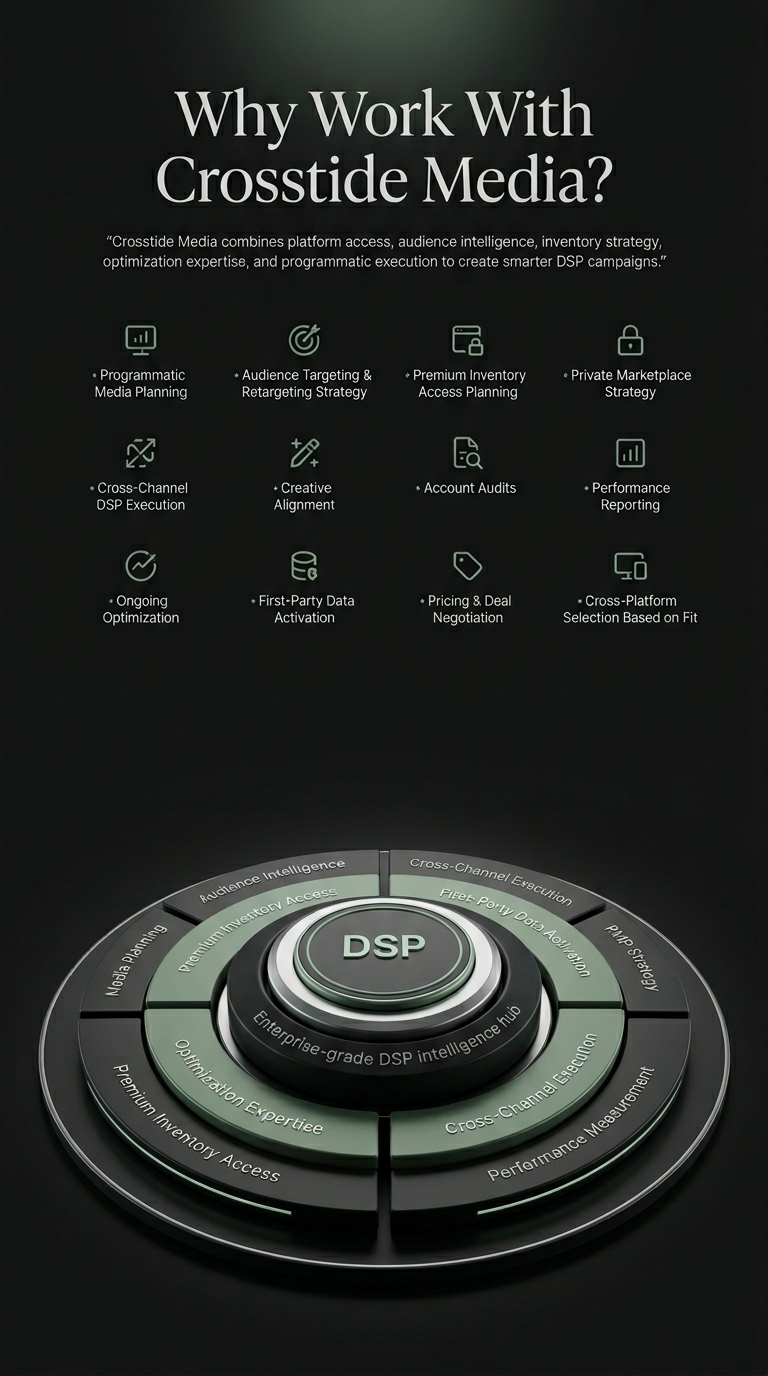
Why Work With Crosstide Media?
Effective DSP advertising requires more than having access to a platform. It takes audience intelligence, inventory strategy, deal expertise, data planning, creative discipline, measurement logic, and ongoing optimization.
Crosstide Media helps advertisers execute DSP strategies with:
- programmatic media planning
- audience targeting and retargeting strategy
- premium inventory access planning
- private marketplace strategy
- cross-channel DSP execution
- creative alignment
- account audits
- performance reporting
- ongoing optimization
- first-party data activation
- pricing and deal negotiation
- cross-platform selection based on fit
We have access to the major DSP platforms and use them strategically based on campaign need, media type, audience goals, and inventory quality. What separates us is not simply access. It is the ability to leverage those platforms intelligently through data partnerships, PMP negotiation, first-party data strategy, custom audience planning, pricing discipline, and deep programmatic buying experience.
We approach DSPs as powerful media engines that require real expertise to use well. Our focus is on helping advertisers buy smarter, reduce waste, improve inventory quality, and create stronger programmatic performance across the channels that matter most.
Whether the goal is awareness, connected TV reach, retail audience targeting, lead generation support, or broader cross-channel growth, Crosstide Media helps brands use demand-side platforms with the structure and discipline required for long-term success.
Frequently Asked Questions
What is a demand-side platform?
What is the difference between a DSP and an SSP?
What can you buy through a DSP?
What are the major DSPs?
What happened to Microsoft Invest?
Why are DSPs important in advertising?
How do DSPs help power the internet?
Are DSPs difficult to use?
Who should use DSP advertising?
Why work with a DSP partner?
Build a Smarter DSP Strategy
If your business needs a more strategic programmatic approach, Crosstide Media can help you plan, launch, and optimize DSP campaigns built around stronger audience intelligence, better inventory quality, smarter data use, and clearer reporting. Whether your goal is to improve cross-channel performance, strengthen connected TV strategy, expand retail media targeting, or build a more effective programmatic advertising system, we help brands use demand-side platforms in a smarter, more results-focused way.
Why Brands Choose Crosstide Media
Brands choose Crosstide Media because effective DSP advertising requires more than software access. Strong results come from the right mix of audience strategy, inventory discipline, data partnerships, first-party data activation, PMP negotiation, pricing intelligence, measurement logic, optimization, and real media buying expertise. Our approach is built to help advertisers improve quality, reduce waste, strengthen media efficiency, and make better decisions through clearer reporting and more actionable programmatic insights.
Talk to Crosstide Media About DSP Advertising
If you are looking for a partner that can help you understand demand-side platforms, improve programmatic performance, and build a stronger cross-channel advertising strategy, Crosstide Media can help. We build DSP strategies with the planning, structure, audience intelligence, inventory discipline, negotiation skill, and optimization focus needed to support long-term growth.