
Audience Segmentation
Audience Segmentation Strategy for Smarter Targeting, Stronger Media Efficiency, and Better Advertising Performance
Audience segmentation is one of the most important foundations of modern advertising strategy. Instead of treating every potential customer the same way, audience segmentation helps advertisers organize people into more meaningful groups based on behavior, intent, demographics, geography, interests, customer status, purchase patterns, and other signals that affect how media should be planned and delivered.
That matters because stronger segmentation usually leads to stronger performance. When campaigns are structured around the right audience groups, advertisers can deliver more relevant messaging, use budget more efficiently, reduce wasted impressions, and create clearer paths from awareness to consideration to conversion. In programmatic advertising, paid social, paid search, connected TV, and broader digital media, segmentation often determines whether a campaign feels generic or strategically precise.
At Crosstide Media, audience segmentation is not treated like a surface-level targeting setting. It is part of how we build smarter media strategy from the ground up. We use first-party data, behavioral signals, geographic patterns, funnel-stage planning, custom audience development, data partnerships, and media-channel alignment to create segmentation strategies that improve precision and performance. Strong segmentation is not just about narrowing an audience. It is about organizing the right audience structure for the right campaign goal.

Jump To
What Is Audience Segmentation?
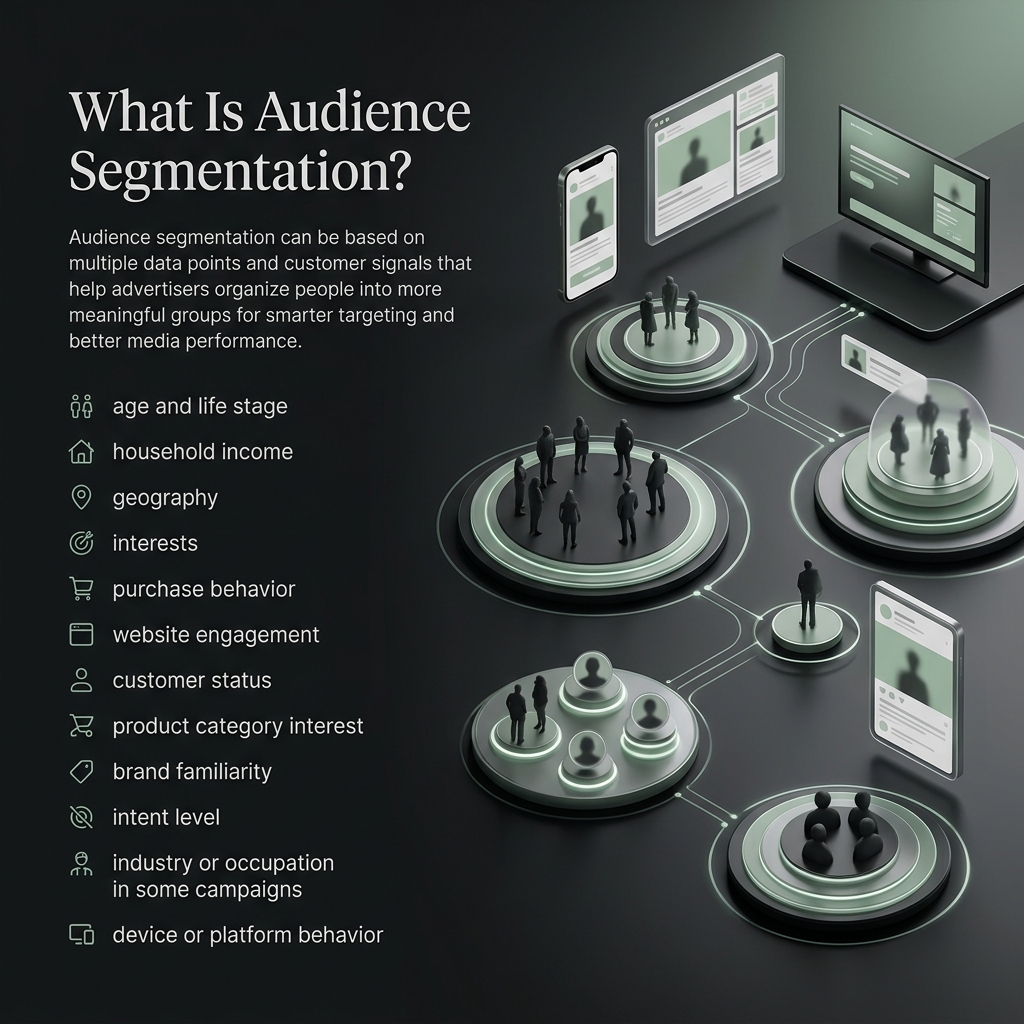
Audience segmentation is the process of dividing a broader target audience into smaller, more strategically useful groups based on shared characteristics. These groups can then be targeted with more relevant messaging, media placement, offers, creative, and budget allocation.
Audience segmentation can be based on factors such as:
- age and life stage
- household income
- geography
- interests
- purchase behavior
- website engagement
- customer status
- product category interest
- brand familiarity
- intent level
- industry or occupation in some campaigns
- device or platform behavior
The value of audience segmentation comes from turning broad audience assumptions into more structured, actionable media strategy.
Why Audience Segmentation Matters
Audience segmentation matters because different people respond differently to media. Some users are new prospects. Some are existing customers. Some are highly engaged. Some are just beginning to learn about a category. Some are ready to act now. Some need more education or reinforcement before they convert.
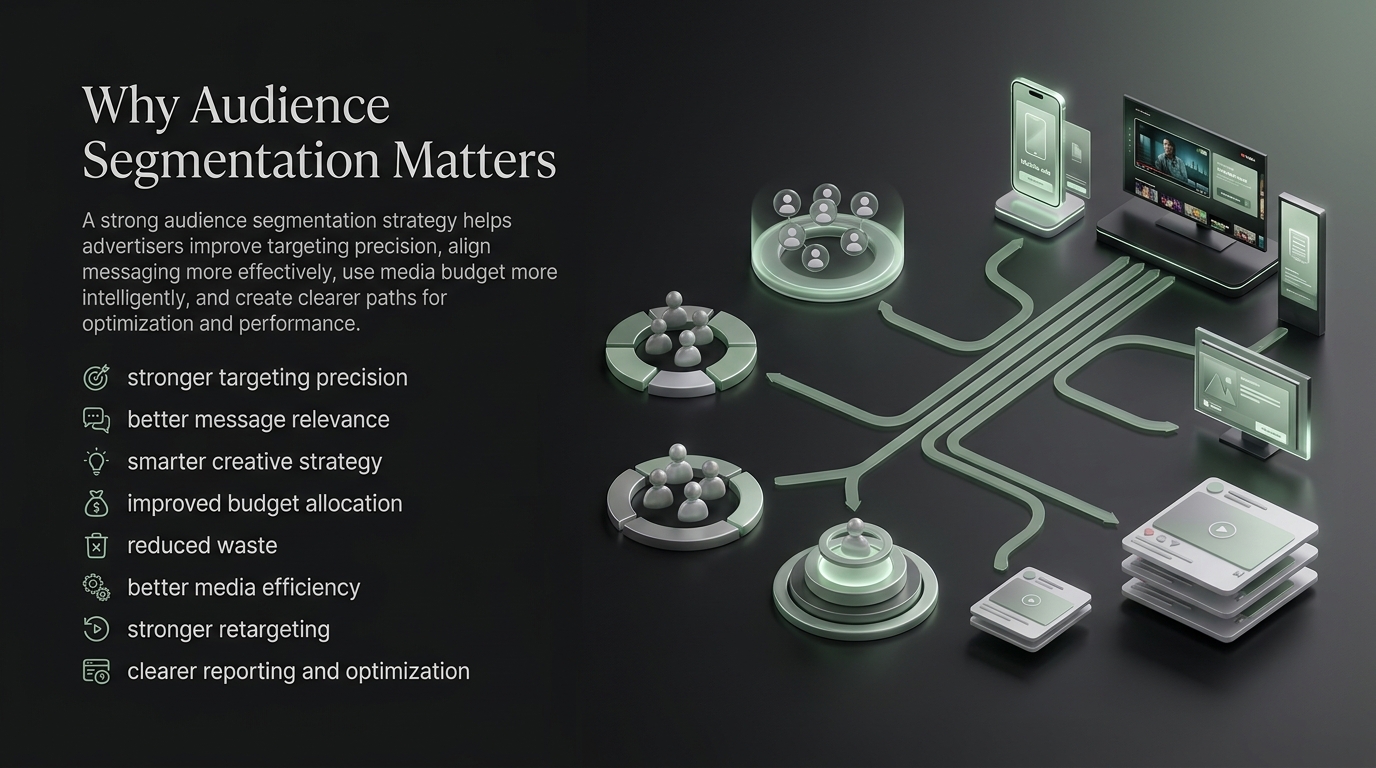
A strong audience segmentation strategy can help support:
- stronger targeting precision
- better message relevance
- smarter creative strategy
- improved budget allocation
- reduced waste
- better media efficiency
- stronger retargeting
- clearer reporting and optimization
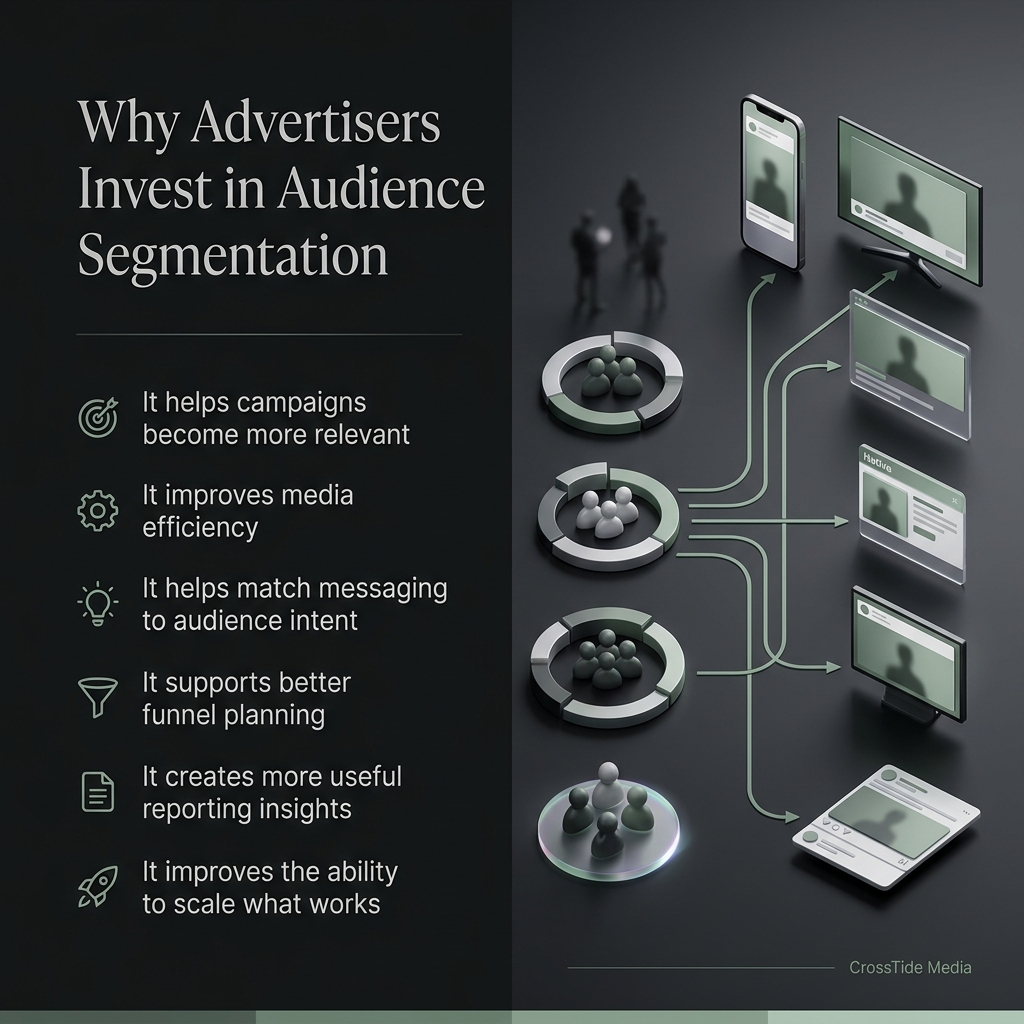
Why advertisers invest in audience segmentation
- It helps campaigns become more relevant
- It improves media efficiency
- It helps match messaging to audience intent
- It supports better funnel planning
- It creates more useful reporting insights
- It improves the ability to scale what works
For Crosstide Media, segmentation is valuable because it helps turn audience strategy into something more operational, measurable, and performance-oriented.
Why advertisers invest in audience segmentation
- It helps campaigns become more relevant
- It improves media efficiency
- It helps match messaging to audience intent
- It supports better funnel planning
- It creates more useful reporting insights
- It improves the ability to scale what works
For Crosstide Media, segmentation is valuable because it helps turn audience strategy into something more operational, measurable, and performance-oriented.
How Audience Segmentation Works
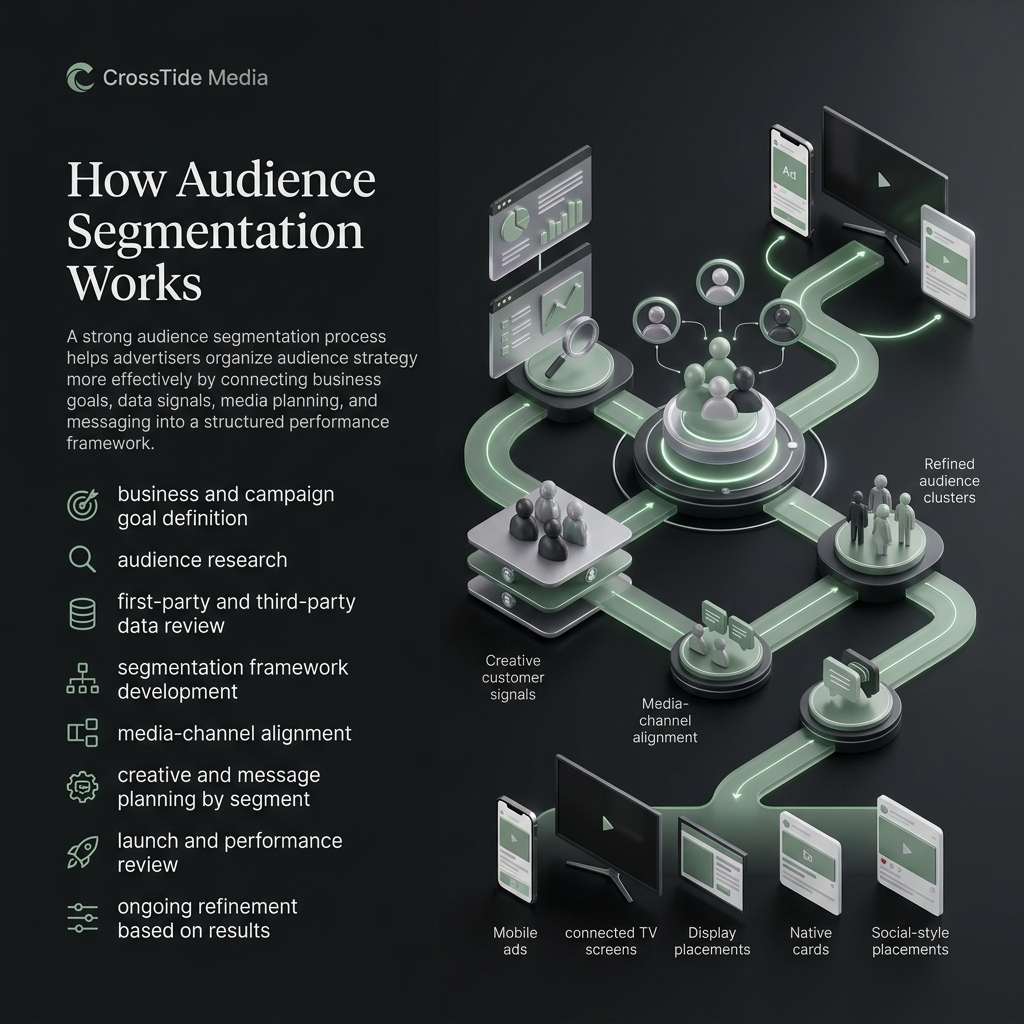
Audience segmentation works by identifying meaningful differences within a broader target audience and using those differences to shape targeting, messaging, budget allocation, and media structure.
A strong audience segmentation process often includes:
- business and campaign goal definition
- audience research
- first-party and third-party data review
- segmentation framework development
- media-channel alignment
- creative and message planning by segment
- launch and performance review
- ongoing refinement based on results

Why this matters
Segmentation is not just a targeting layer. It affects how campaigns are organized, how creative is developed, how frequency is managed, how budgets are allocated, and how results are measured.
Why this matters
Segmentation is not just a targeting layer. It affects how campaigns are organized, how creative is developed, how frequency is managed, how budgets are allocated, and how results are measured.
Types of Audience Segmentation
There are many ways to segment an audience, and the strongest campaigns often combine multiple methods rather than relying on only one.
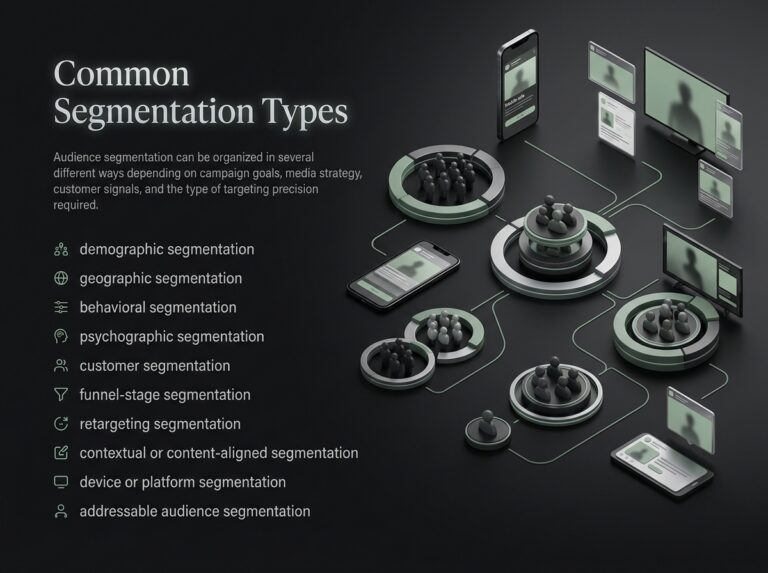
Common segmentation types include:
- demographic segmentation
- geographic segmentation
- behavioral segmentation
- psychographic segmentation
- customer segmentation
- funnel-stage segmentation
- retargeting segmentation
- contextual or content-aligned segmentation
- device or platform segmentation
- addressable audience segmentation
The right segmentation strategy depends on the campaign objective, the available data, the channel mix, and the type of business.
Demographic Segmentation
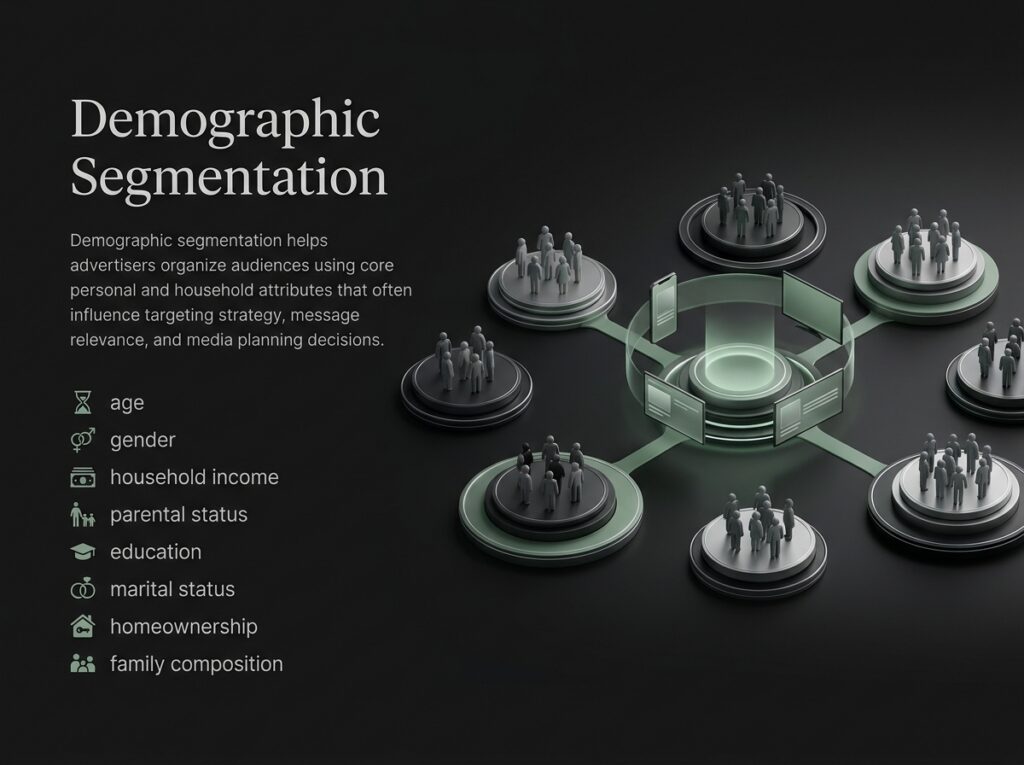
Demographic segmentation organizes audiences based on measurable population traits.
This can include:
- age
- gender
- household income
- parental status
- education
- marital status
- homeownership
- family composition
Demographic Segmentation
Demographic segmentation organizes audiences based on measurable population traits.
This can include:
- age
- gender
- household income
- parental status
- education
- marital status
- homeownership
- family composition
Why demographic segmentation matters
Demographic segmentation can be useful when certain customer traits strongly influence relevance, product fit, or likely response. However, demographics alone are rarely enough for a strong media strategy. They often work best when combined with behavior, geography, or first-party audience signals.

Geographic Segmentation
Geographic segmentation organizes audiences based on location and market relevance.
This can include:
- country
- state
- DMA
- city
- ZIP code
- neighborhood
- radius targeting
- trade area
- regional market groupings
Why geographic segmentation matters
Geography often shapes:
- service availability
- local market demand
- creative relevance
- offer structure
- language or regional context
- budget allocation
For Crosstide Media, geographic segmentation is especially important in local campaigns, regional growth plans, political campaigns, retail trade-area strategies, and location-sensitive programmatic media.
Behavioral Segmentation
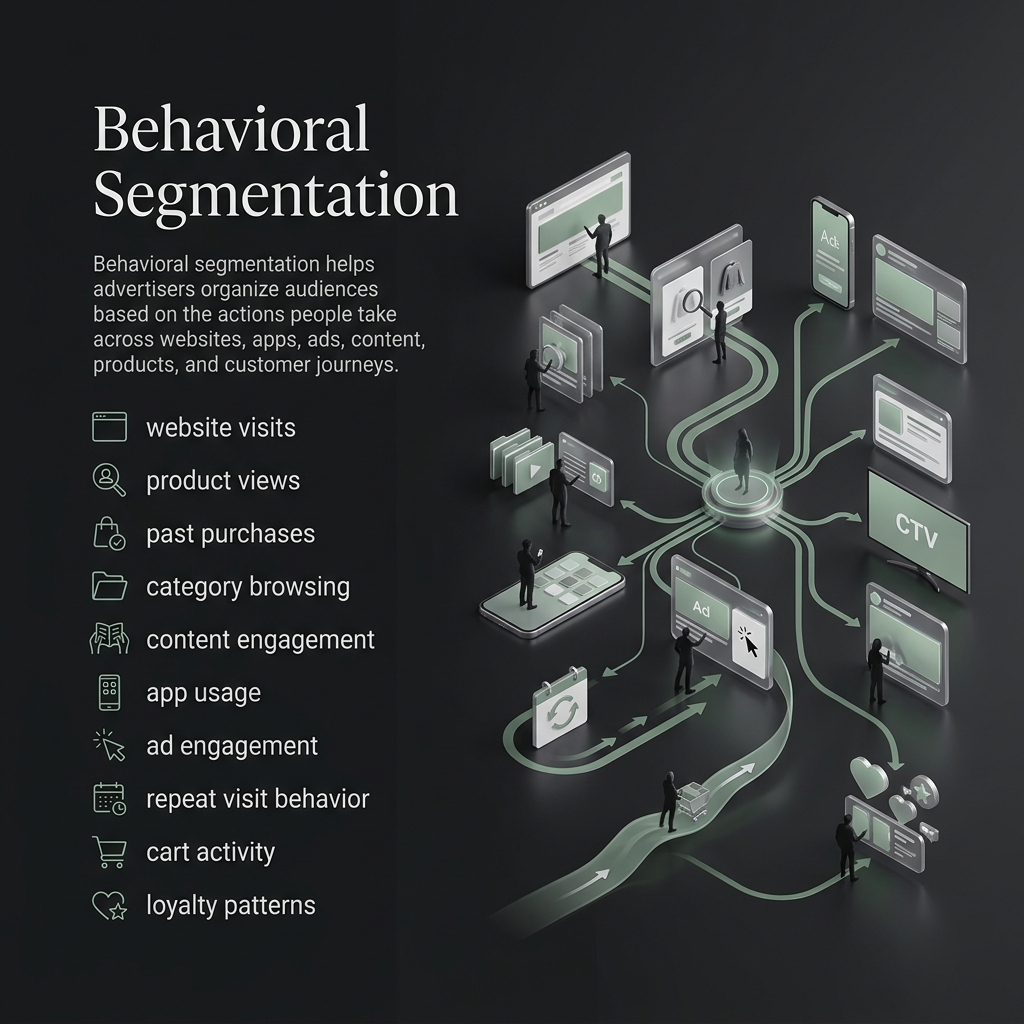
Behavioral segmentation groups audiences based on what they do rather than just who they are. This is often one of the most powerful forms of audience strategy because it reflects actual engagement or intent.
Behavioral segmentation can include:
- website visits
- product views
- past purchases
- category browsing
- content engagement
- app usage
- ad engagement
- repeat visit behavior
- cart activity
- loyalty patterns
A practical working benchmark for YouTube TV is often a CPM in roughly the $35 to $65+ range, though actual pricing can move higher or lower based on market, audience targeting, seasonality, deal structure, and inventory availability. For many advertisers, YouTube TV also tends to require a more meaningful budget commitment, especially for reserved or highly curated buys.
Why behavioral segmentation matters
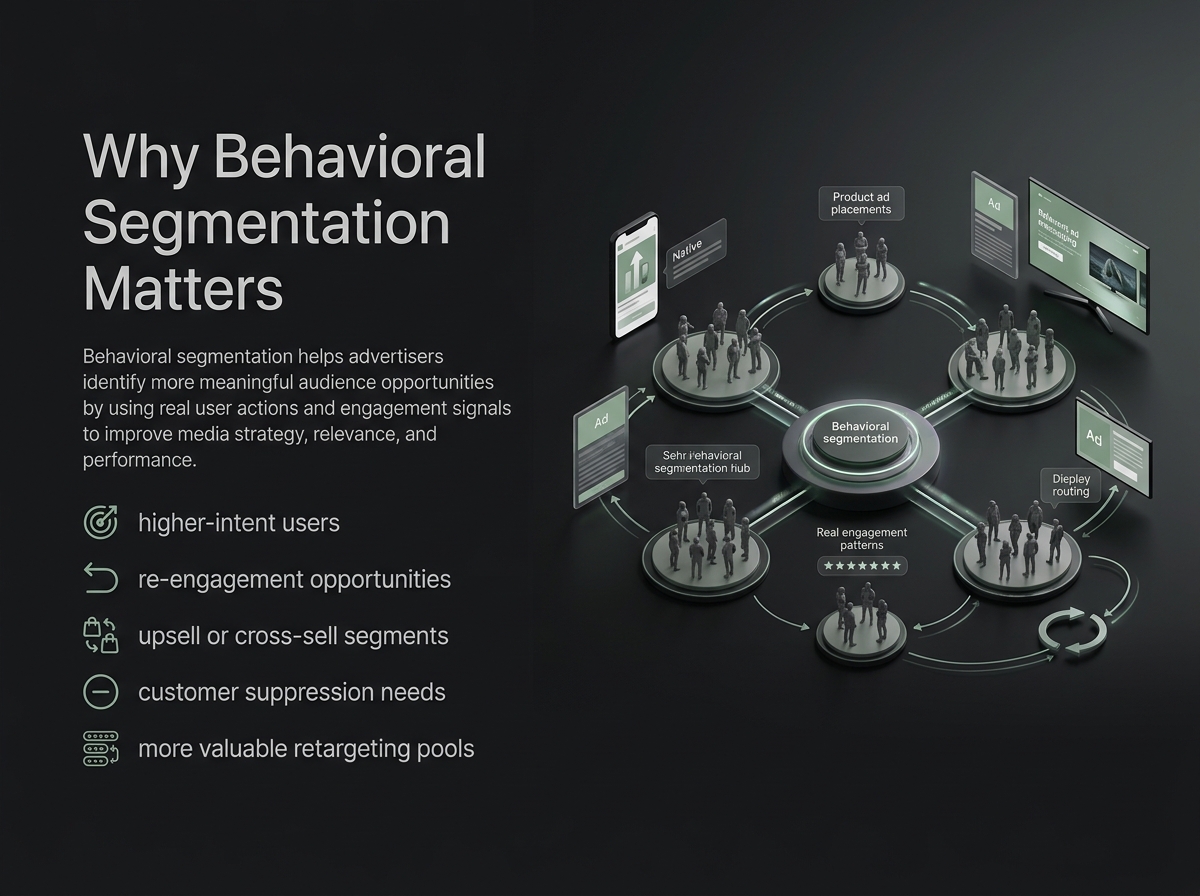
Behavior often provides stronger performance signals than broad demographics alone. It can help advertisers identify:
- higher-intent users
- re-engagement opportunities
- upsell or cross-sell segments
- customer suppression needs
- more valuable retargeting pools
For Crosstide Media, behavioral segmentation is often one of the most important tools for improving efficiency and performance.
Why behavioral segmentation matters
Behavior often provides stronger performance signals than broad demographics alone. It can help advertisers identify:
- higher-intent users
- re-engagement opportunities
- upsell or cross-sell segments
- customer suppression needs
- more valuable retargeting pools
For Crosstide Media, behavioral segmentation is often one of the most important tools for improving efficiency and performance.
Psychographic and Interest-Based Segmentation
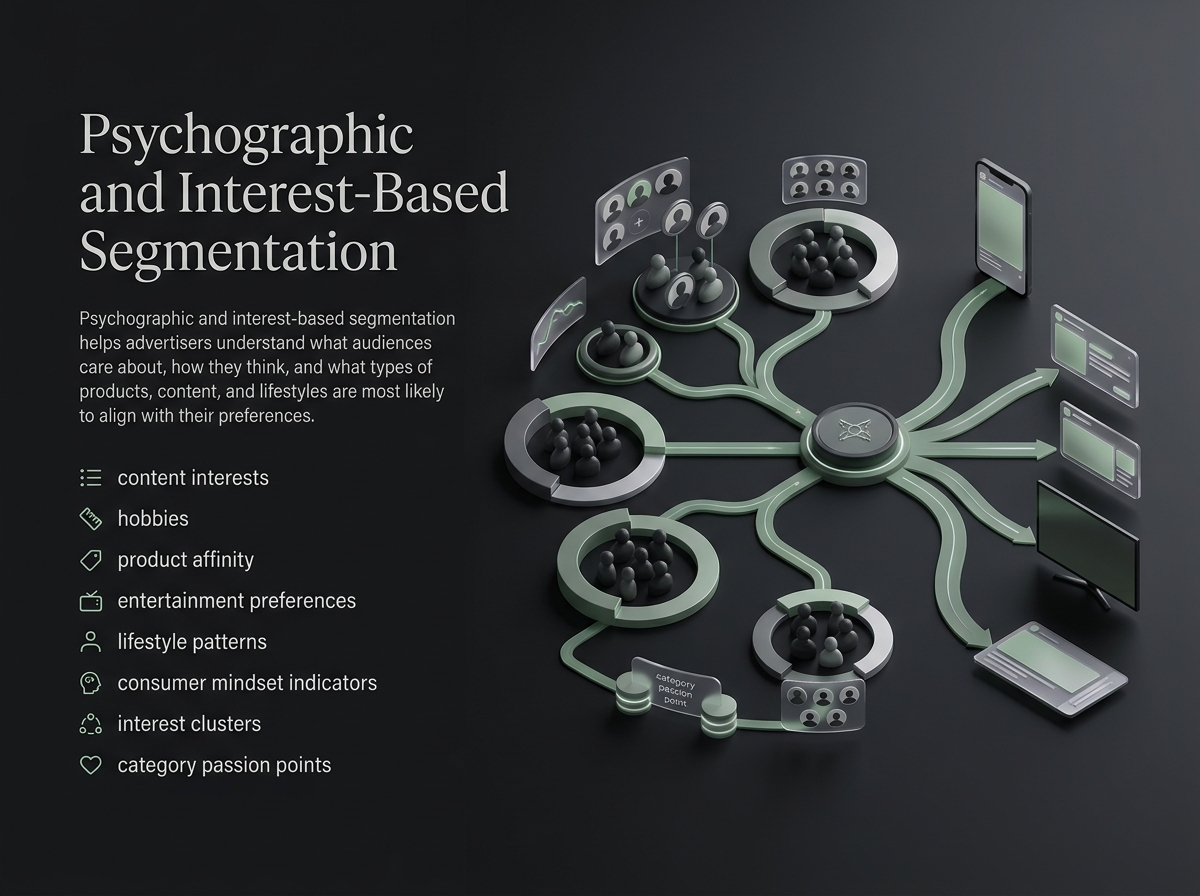
Psychographic and interest-based segmentation focuses on audience traits such as interests, preferences, attitudes, lifestyle patterns, and category affinities.
This can include:
- content interests
- hobbies
- product affinity
- entertainment preferences
- lifestyle patterns
- consumer mindset indicators
- interest clusters
- category passion points

Why this matters
This type of segmentation can be useful in awareness and mid-funnel campaigns where the goal is to align the message with likely interest or category relevance. It is especially useful in paid social, programmatic prospecting, and video strategy where audience discovery matters.
Why this matters
This type of segmentation can be useful in awareness and mid-funnel campaigns where the goal is to align the message with likely interest or category relevance. It is especially useful in paid social, programmatic prospecting, and video strategy where audience discovery matters.
First-Party Data and Customer Segmentation
First-party data is one of the strongest inputs for audience segmentation because it comes directly from the business’s own customer and audience relationships.
This can include:
- CRM data
- customer lists
- lead records
- website visitor pools
- email subscribers
- purchase history
- loyalty audiences
- customer value tiers
Customer segmentation can help support
- customer suppression
- retention strategy
- win-back campaigns
- upsell opportunities
- high-value customer targeting
- known-converter lookalike expansion
- lead-stage audience strategy
For Crosstide Media, first-party data segmentation is often one of the most important parts of a stronger performance-driven media strategy.
Prospecting vs Retargeting Segmentation
One of the most important practical ways to segment audiences is by separating prospecting from retargeting.
Prospecting segments
Prospecting segments focus on reaching new users who are not already engaged with the brand.
These may include:
- broad qualified audiences
- modeled audiences
- interest-based groups
- contextual prospecting groups
- addressable expansion audiences
- geographic or category-based targets
Retargeting segments
Retargeting segments focus on users who have already shown interest.
These may include:
- website visitors
- video viewers
- engaged users
- lead-form openers
- cart visitors
- prior converters for upsell or exclusion
- returning site users
Why this distinction matters
Prospecting and retargeting should not usually be treated the same way. They require different messaging, different frequency logic, different budget expectations, and often different KPIs.

Funnel-Based Audience Segmentation
Strong media strategy often uses segmentation tied to the customer journey.
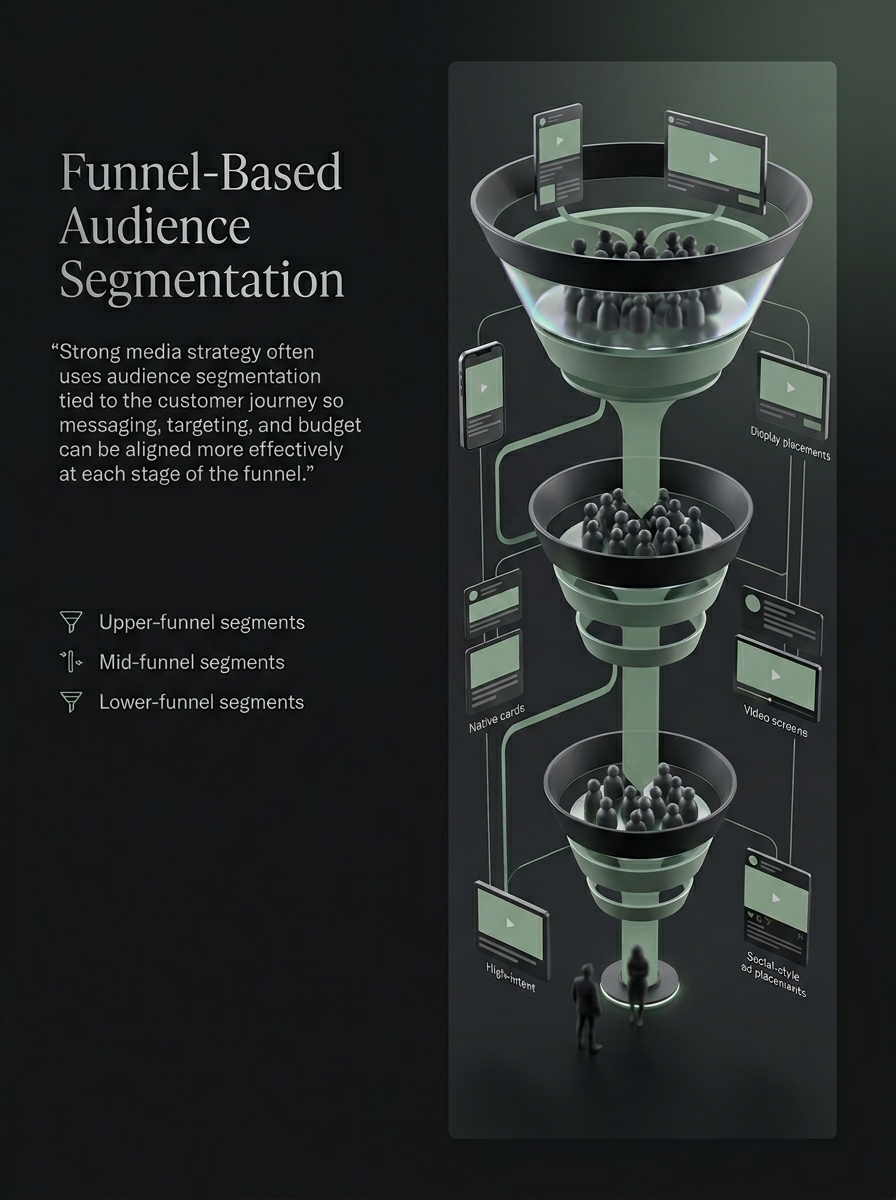
Upper-funnel segments
These are often audiences that need awareness, education, or category introduction.
Mid-funnel segments
These are often audiences that already know the category or brand but need stronger reasons to engage or consider.
Lower-funnel segments
These are often audiences with stronger intent, prior engagement, or immediate action potential.
Why this matters
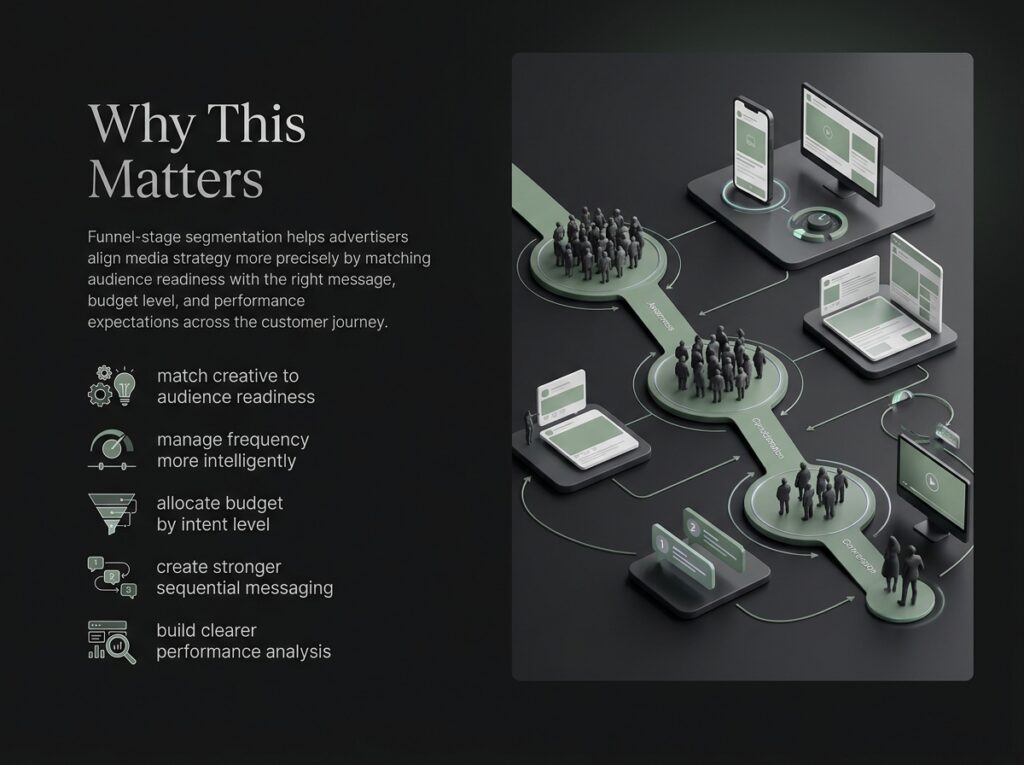
Funnel-stage segmentation helps advertisers:
- match creative to audience readiness
- manage frequency more intelligently
- allocate budget by intent level
- create stronger sequential messaging
- build clearer performance analysis
For Crosstide Media, funnel-based segmentation is one of the most useful ways to connect targeting strategy with business goals.
Audience Segmentation in Programmatic Advertising
Programmatic advertising is one of the places where audience segmentation becomes especially powerful because campaigns can be structured around multiple audience layers, data inputs, inventory types, and channel roles.
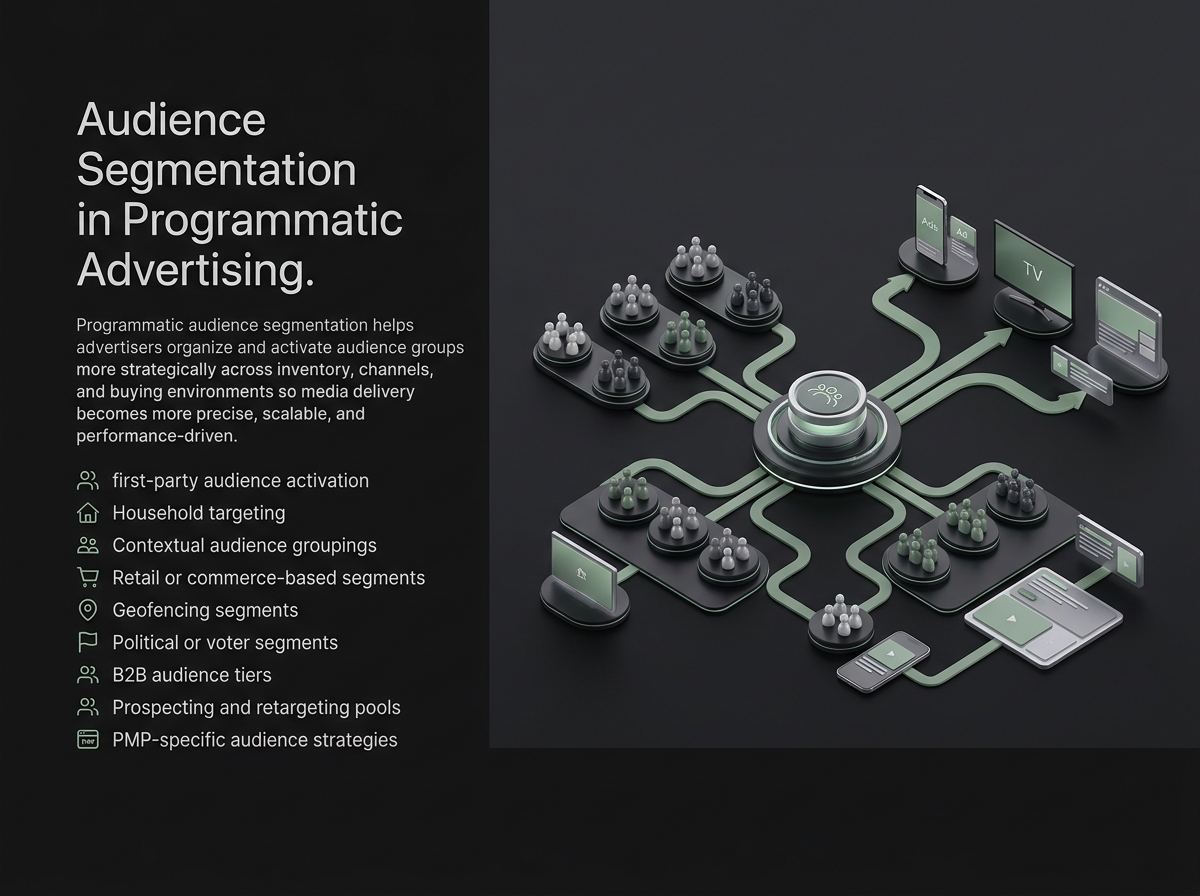
Programmatic audience segmentation may include:
- first-party audience activation
- household targeting
- contextual audience groupings
- retail or commerce-based segments
- geofencing segments
- political or voter segments
- B2B audience tiers
- prospecting and retargeting pools
- PMP-specific audience strategies
Programmatic audience segmentation may include:
- first-party audience activation
- household targeting
- contextual audience groupings
- retail or commerce-based segments
- geofencing segments
- political or voter segments
- B2B audience tiers
- prospecting and retargeting pools
- PMP-specific audience strategies
Why segmentation matters in programmatic
In DSPs and programmatic environments, segmentation affects:
- bidding
- inventory selection
- frequency controls
- creative rotation
- PMP strategy
- data partner selection
- reporting clarity
- optimization potential
Strong programmatic campaigns are rarely one audience talking to one message. They are usually structured through multiple audience groups with different roles.

Audience Segmentation Across Paid Social, Search, and CTV
Audience segmentation is not limited to DSPs. It also plays a major role across other channels.
Paid social
Segmentation supports:
- interest audiences
- engagement audiences
- lookalikes
- prospecting vs retargeting
- funnel-stage creative strategy
Paid search
Segmentation supports:
- branded vs non-branded intent
- geography strategy
- service-line segmentation
- landing-page alignment
- audience layering where useful
Connected TV and premium video
Segmentation supports:
- market-by-market reach
- household planning
- awareness tiers
- cross-screen sequencing
- audience-based premium video strategy
For Crosstide Media, strong audience segmentation helps connect channels into one smarter media system rather than isolated tactics.
Addressable Audience Segmentation
Addressable audience segmentation focuses on identifying and targeting specific audience groups in a more direct, data-informed way across channels and devices.
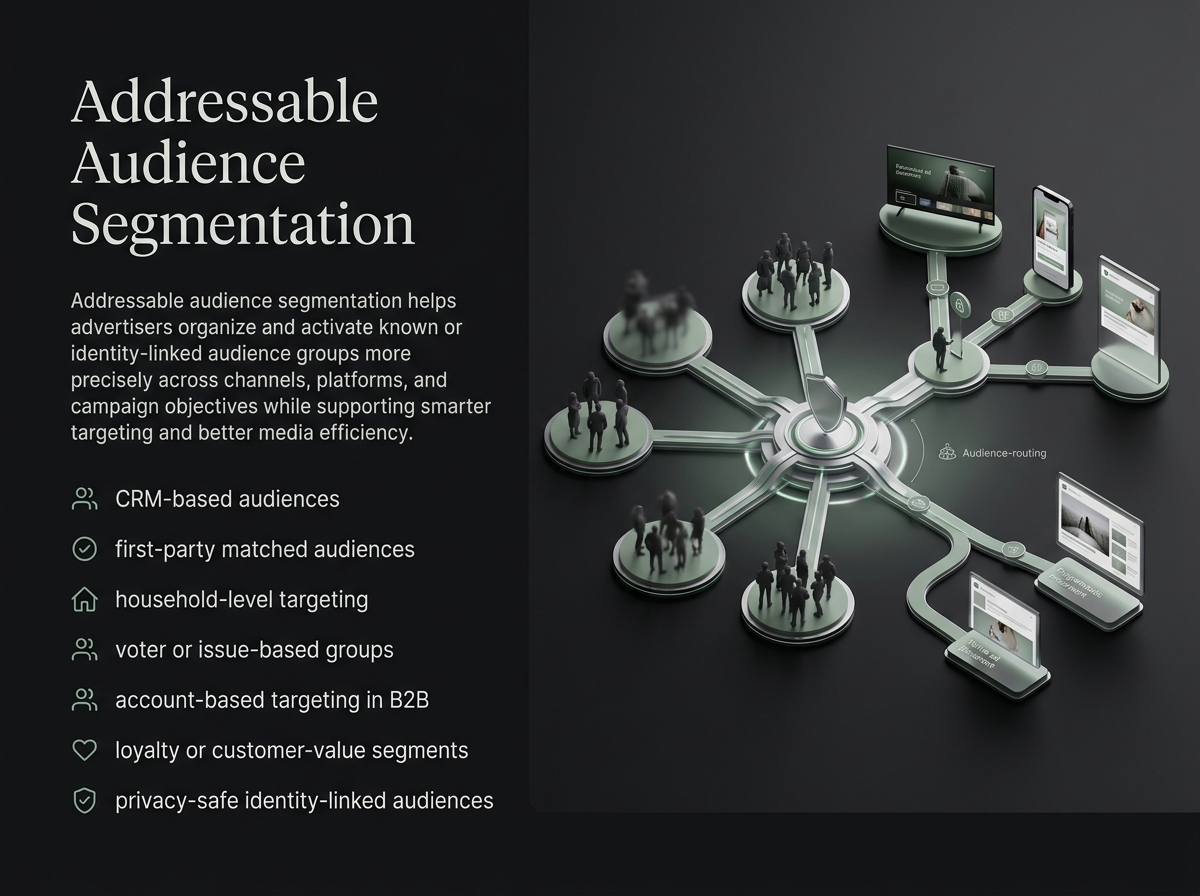
This can include:
- CRM-based audiences
- first-party matched audiences
- household-level targeting
- voter or issue-based groups
- account-based targeting in B2B
- loyalty or customer-value segments
- privacy-safe identity-linked audiences
This can include:
- CRM-based audiences
- first-party matched audiences
- household-level targeting
- voter or issue-based groups
- account-based targeting in B2B
- loyalty or customer-value segments
- privacy-safe identity-linked audiences
Why this matters
Addressable segmentation can create more precision, stronger media relevance, and better control over who is reached and who is excluded.
For Crosstide Media, addressable audience strategy is most useful when it is tied to strong first-party data, identity activation, and disciplined media planning.

Why Audience Segmentation Is Difficult
Audience segmentation sounds simple in theory, but in practice it can become one of the most strategically difficult parts of media planning.
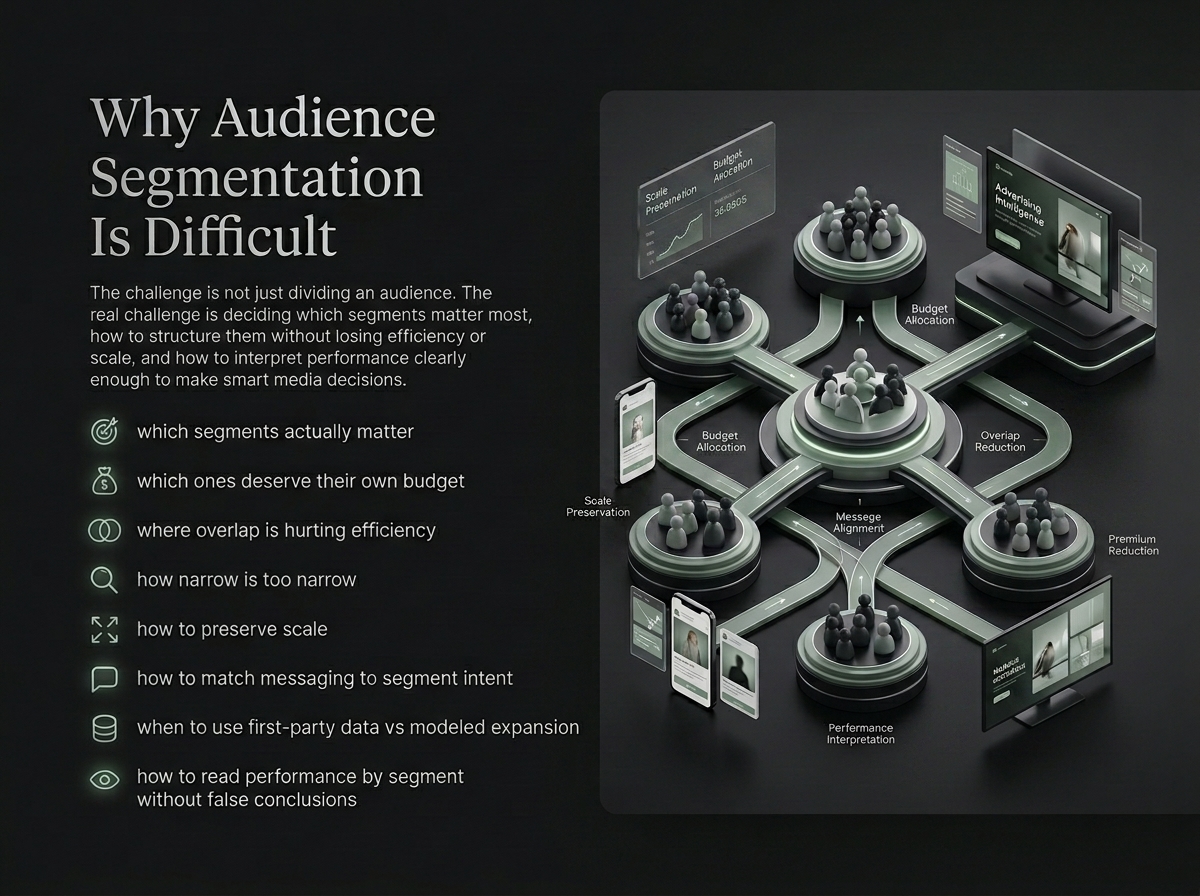
The challenge is not just dividing an audience. The challenge is knowing:
- which segments actually matter
- which ones deserve their own budget
- where overlap is hurting efficiency
- how narrow is too narrow
- how to preserve scale
- how to match messaging to segment intent
- when to use first-party data vs modeled expansion
- how to read performance by segment without false conclusions
The challenge is not just dividing an audience. The challenge is knowing:
- which segments actually matter
- which ones deserve their own budget
- where overlap is hurting efficiency
- how narrow is too narrow
- how to preserve scale
- how to match messaging to segment intent
- when to use first-party data vs modeled expansion
- how to read performance by segment without false conclusions
Why expertise matters
Without experience, it is easy to:
- create too many segments
- overcomplicate reporting
- reduce delivery scale
- create internal audience overlap
- misuse first-party data
- segment by weak assumptions
- underfund high-value segments
- miss the difference between awareness audiences and performance audiences
For Crosstide Media, strong segmentation is not about making campaigns look complicated. It is about making them more strategically clear.

Account Setup and Campaign Structure
Strong audience segmentation should shape how campaigns are organized from the start.
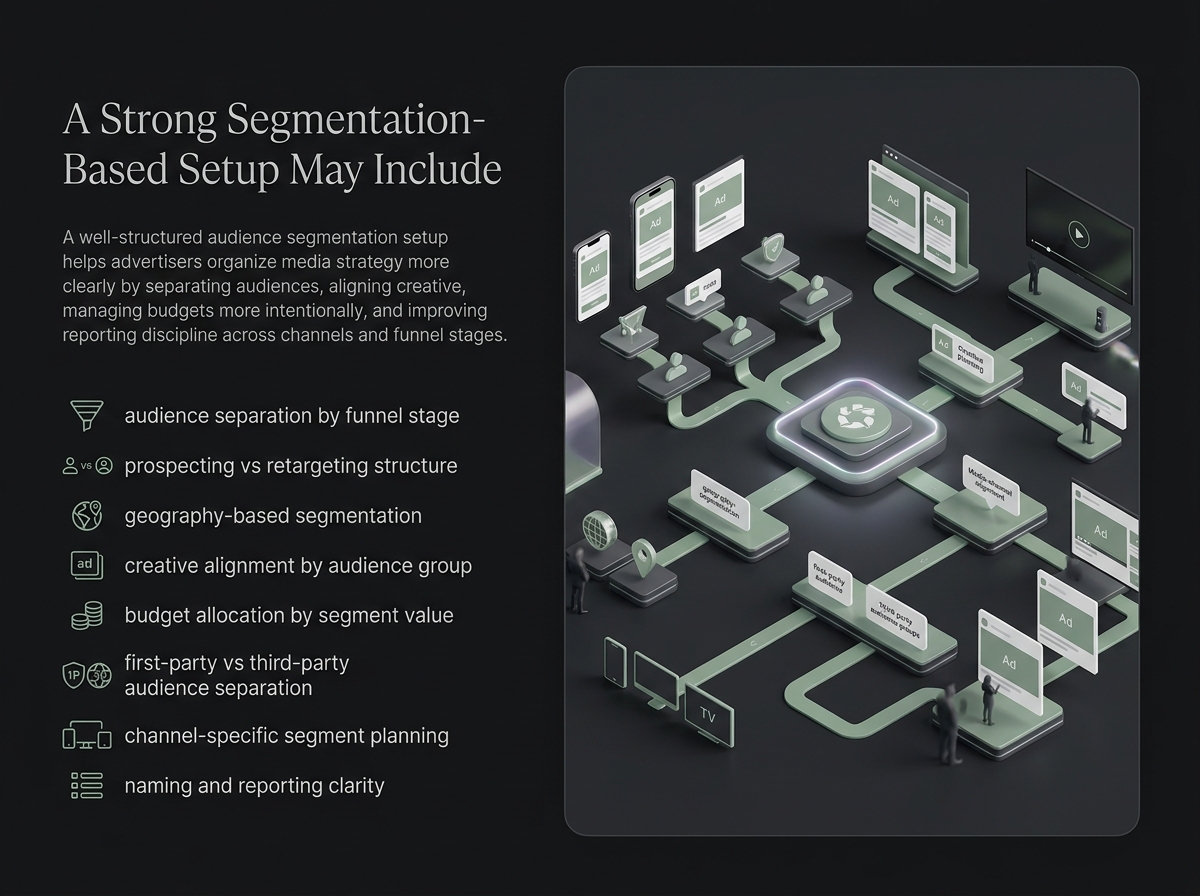
A strong segmentation-based setup may include
- audience separation by funnel stage
- prospecting vs retargeting structure
- geography-based segmentation
- creative alignment by audience group
- budget allocation by segment value
- first-party vs third-party audience separation
- channel-specific segment planning
- naming and reporting clarity
A strong segmentation-based setup may include
- audience separation by funnel stage
- prospecting vs retargeting structure
- geography-based segmentation
- creative alignment by audience group
- budget allocation by segment value
- first-party vs third-party audience separation
- channel-specific segment planning
- naming and reporting clarity
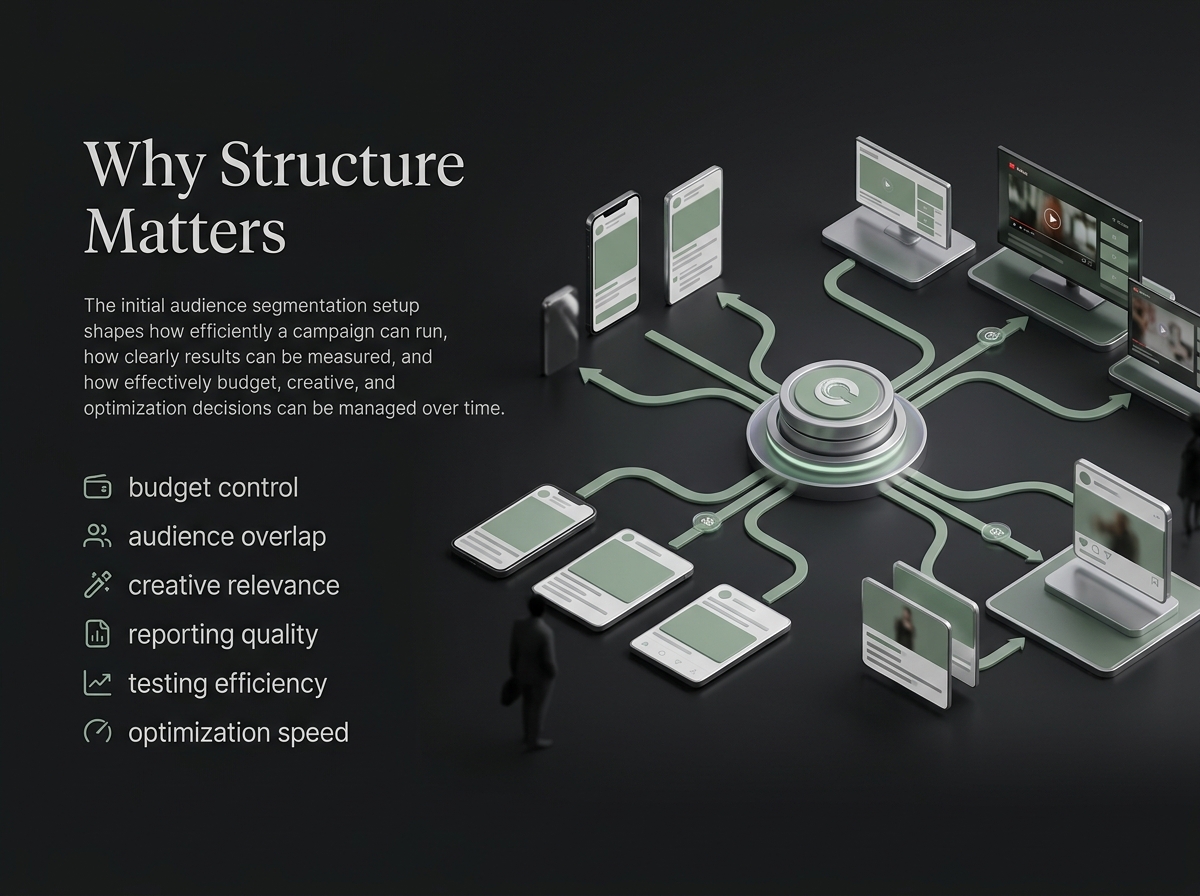
Why structure matters
The initial setup affects:
- budget control
- audience overlap
- creative relevance
- reporting quality
- testing efficiency
- optimization speed
For Crosstide Media, structure is one of the most important ways segmentation becomes operational rather than theoretical.
Why structure matters
The initial setup affects:
- budget control
- audience overlap
- creative relevance
- reporting quality
- testing efficiency
- optimization speed
For Crosstide Media, structure is one of the most important ways segmentation becomes operational rather than theoretical.
Auditing and Optimization Process
A strong audience segmentation strategy should be reviewed and refined over time.
What an audience segmentation audit may review
A segmentation audit may evaluate:
- audience definitions
- overlap across segments
- performance by audience group
- funnel-stage alignment
- retargeting structure
- first-party data usage
- geography performance
- creative relevance by segment
- budget allocation by segment
- scale vs efficiency balance
Ongoing optimization may include
- consolidating weak segments
- expanding strong-performing groups
- refining audience definitions
- improving message match by segment
- adjusting budgets across tiers
- improving exclusion logic
- strengthening retargeting pools
- improving lookalike or modeled audience quality
This is where audience strategy becomes smarter over time.
Measurement, Reporting, and Performance Insights
Audience segmentation improves reporting because it helps advertisers understand which groups are actually driving value.
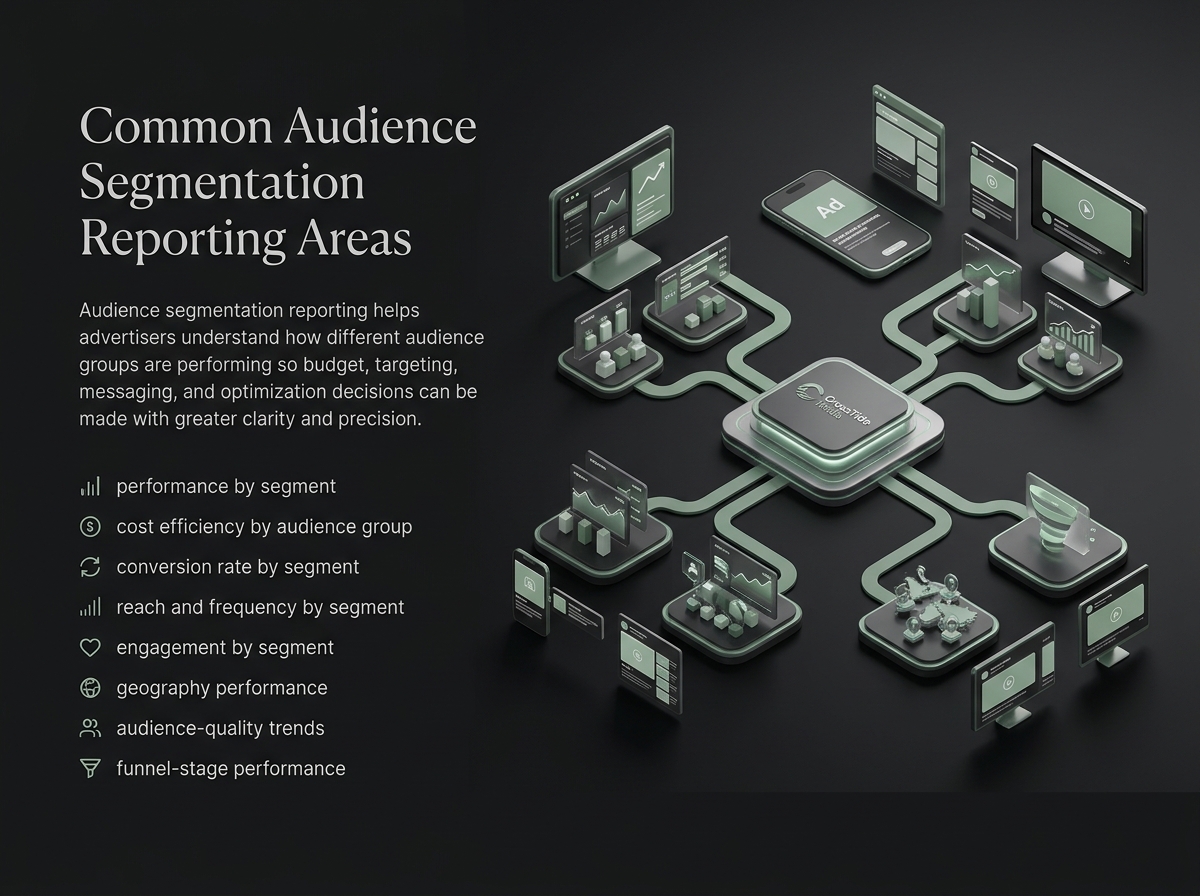
Common audience segmentation reporting areas include
- performance by segment
- cost efficiency by audience group
- conversion rate by segment
- reach and frequency by segment
- engagement by segment
- geography performance
- audience-quality trends
- funnel-stage performance
Common audience segmentation reporting areas include
- performance by segment
- cost efficiency by audience group
- conversion rate by segment
- reach and frequency by segment
- engagement by segment
- geography performance
- audience-quality trends
- funnel-stage performance
Why this matters
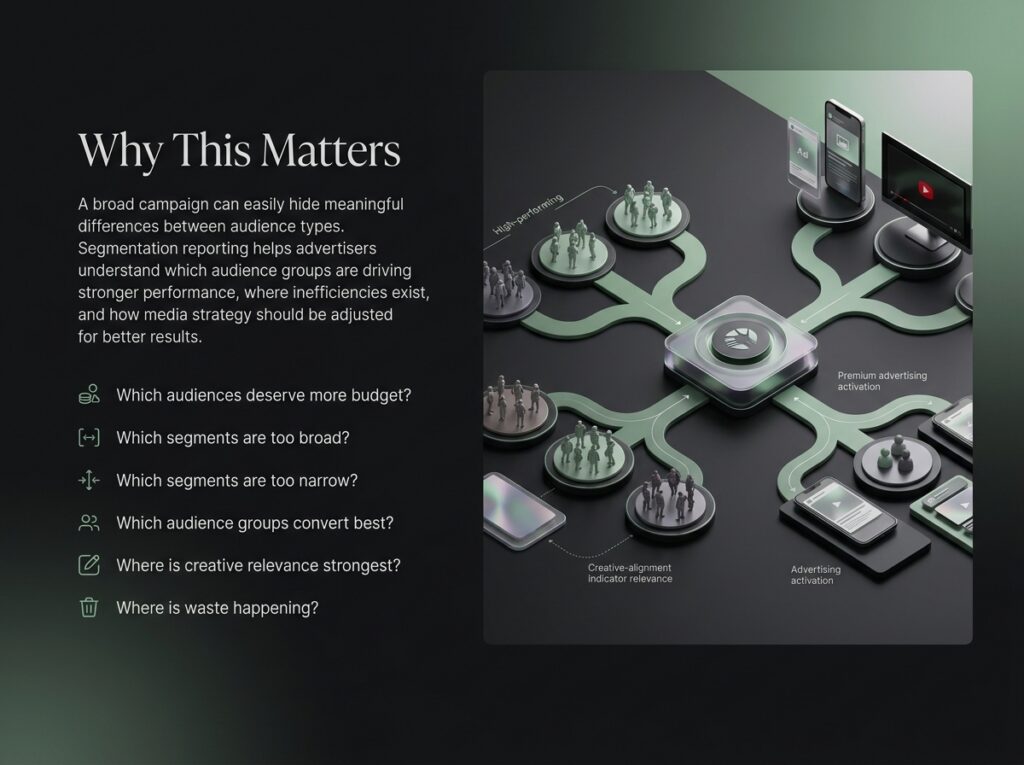
A broad campaign may hide meaningful differences between audience types. Segmentation reporting helps answer:
- Which audiences deserve more budget?
- Which segments are too broad?
- Which segments are too narrow?
- Which audience groups convert best?
- Where is creative relevance strongest?
- Where is waste happening?
For Crosstide Media, segmentation reporting turns targeting into a real decision-making tool.
Why Work With Crosstide Media?
Why Work With Crosstide Media?
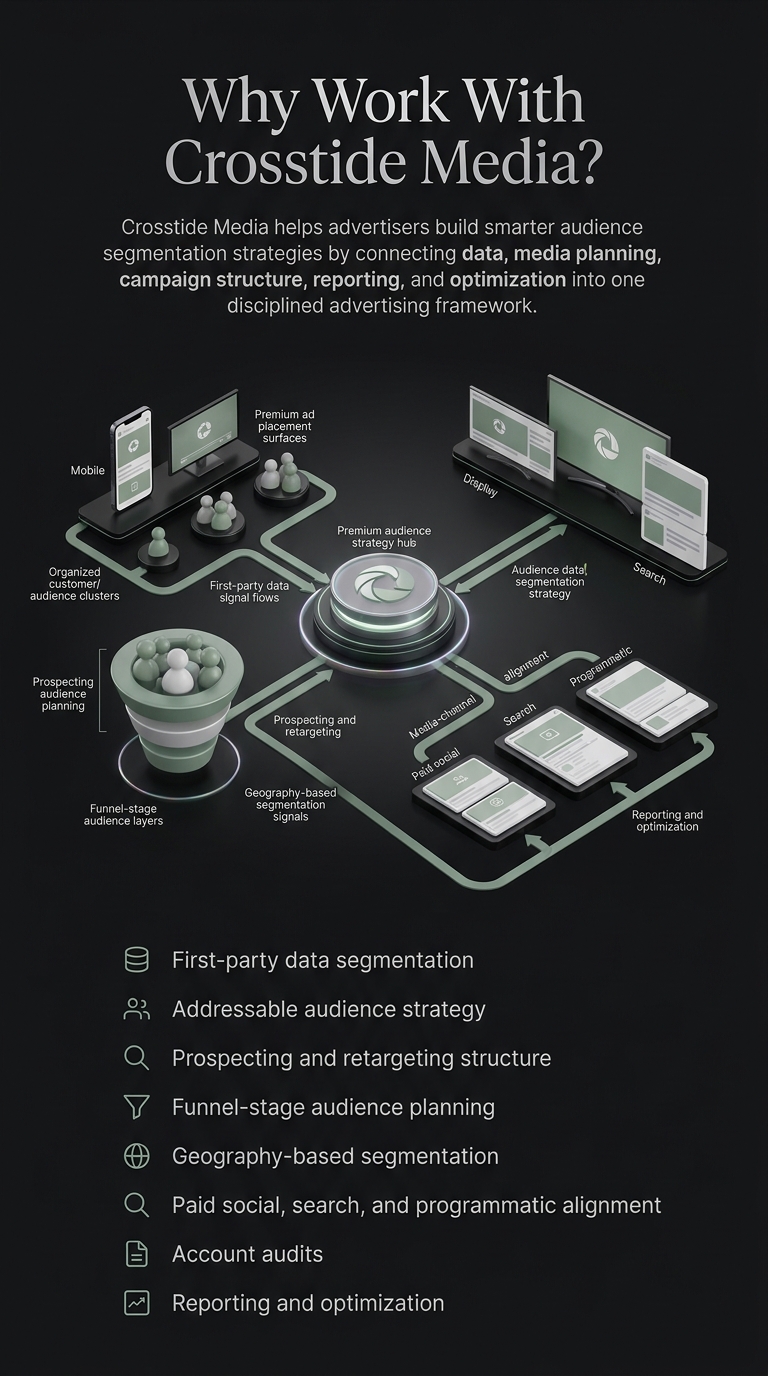
Effective audience segmentation requires more than selecting targeting boxes inside an ad platform. It takes planning, data strategy, funnel logic, message alignment, testing discipline, and cross-channel understanding.
Crosstide Media helps advertisers build audience segmentation strategies with:
- first-party data segmentation
- addressable audience strategy
- prospecting and retargeting structure
- funnel-stage audience planning
- geography-based segmentation
- paid social, search, and programmatic alignment
- account audits
- reporting and optimization
We approach audience segmentation as one of the most important strategic layers in modern advertising. Our focus is on helping brands organize audiences in a way that improves precision, reduces waste, strengthens message relevance, and creates better long-term performance.
Whether the goal is stronger programmatic performance, smarter paid social targeting, more efficient retargeting, or clearer full-funnel media planning, Crosstide Media helps brands build audience segmentation strategies with the structure and expertise required for better results.
Why Work With Crosstide Media?
Why Work With Crosstide Media?
Effective audience segmentation requires more than selecting targeting boxes inside an ad platform. It takes planning, data strategy, funnel logic, message alignment, testing discipline, and cross-channel understanding.
Crosstide Media helps advertisers build audience segmentation strategies with:
- first-party data segmentation
- addressable audience strategy
- prospecting and retargeting structure
- funnel-stage audience planning
- geography-based segmentation
- paid social, search, and programmatic alignment
- account audits
- reporting and optimization
We approach audience segmentation as one of the most important strategic layers in modern advertising. Our focus is on helping brands organize audiences in a way that improves precision, reduces waste, strengthens message relevance, and creates better long-term performance.
Whether the goal is stronger programmatic performance, smarter paid social targeting, more efficient retargeting, or clearer full-funnel media planning, Crosstide Media helps brands build audience segmentation strategies with the structure and expertise required for better results.
Frequently Asked Questions
What is audience segmentation?
Why is audience segmentation important?
What are the main types of audience segmentation?
What is behavioral segmentation?
What is first-party data segmentation?
What is the difference between prospecting and retargeting segmentation?
How does audience segmentation help programmatic advertising?
Can audience segmentation improve performance?
Is audience segmentation difficult?
Why work with an audience segmentation partner?
Build a Smarter Audience Segmentation Strategy
If your business needs a more strategic targeting approach, Crosstide Media can help you plan, organize, and optimize audience segmentation built around stronger data use, better message alignment, and clearer performance reporting. Whether your goal is to improve programmatic performance, strengthen retargeting, create better funnel-stage strategy, or build a smarter full-channel media plan, we help brands use audience segmentation in a more strategic and results-focused way.
Why Brands Choose Crosstide Media
Brands choose Crosstide Media because strong audience segmentation requires more than broad targeting categories. Strong results come from the right mix of data strategy, funnel logic, first-party audience planning, media structure, optimization, and real advertising expertise. Our approach is built to help advertisers improve precision, reduce waste, preserve scale, and make better decisions through stronger audience strategy and more actionable campaign insights.
Talk to Crosstide Media About Audience Segmentation
If you are looking for a partner that can help you build a smarter audience strategy, improve media targeting, and create better performance across channels, Crosstide Media can help. We build audience segmentation strategies with the planning, data discipline, media structure, and optimization focus needed to support stronger long-term results.