
Native Advertising
Native Advertising Campaigns Built for Attention, Engagement, and Qualified Traffic
Native advertising helps brands connect with audiences through paid placements that feel more natural within the surrounding content experience. Instead of relying only on standard banner ads, native placements are designed to align with the look, layout, and flow of publisher environments, helping brands appear in a way that feels more relevant and less disruptive to the user.
For advertisers focused on awareness, traffic, and consideration, native advertising offers a strong way to place messaging in front of users who are already engaged with content. It can support everything from content amplification and site traffic to lead generation and conversion support when paired with the right audience strategy, creative approach, and landing-page experience.
At Crosstide Media, we build native advertising campaigns around premium inventory access, strong audience planning, better creative alignment, and measurable performance. Whether the goal is to promote content, drive qualified visitors, strengthen retargeting, or support broader media strategy, we help brands execute native campaigns built for stronger engagement and smarter media efficiency.

Jump To
What Is Native Advertising?
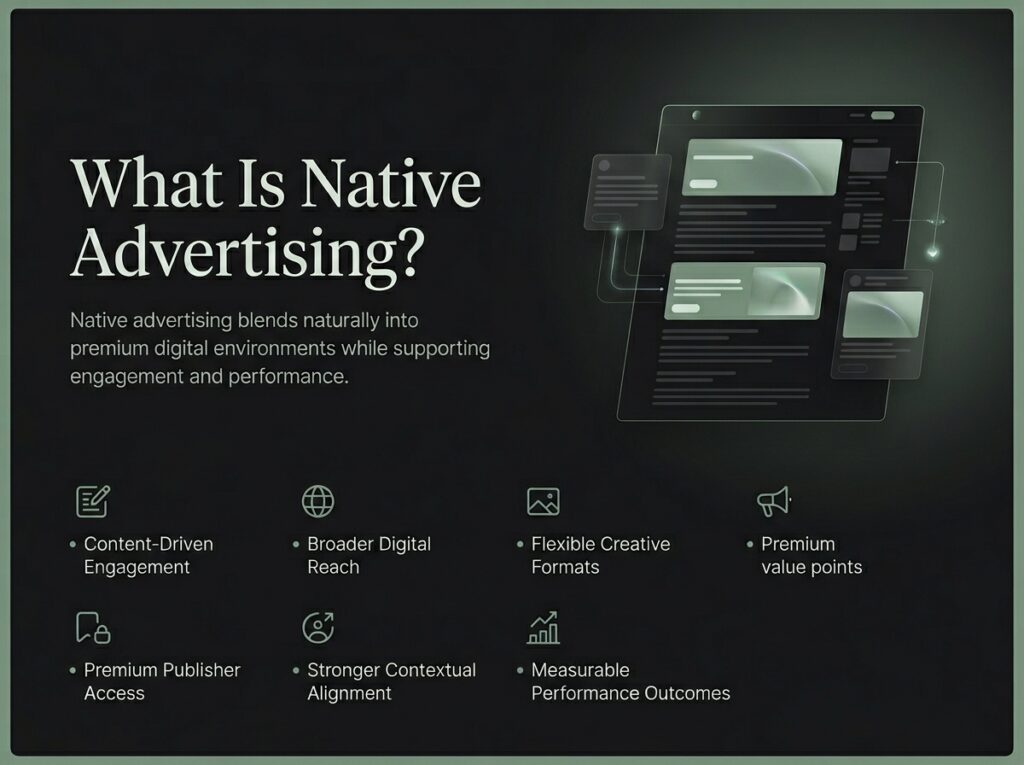
Native advertising is a form of paid digital media that is designed to match the appearance and experience of the environment where it appears. Rather than standing apart from the surrounding page like a traditional banner ad, native ads are created to fit more naturally into article feeds, recommendation units, content streams, and publisher layouts.
This format gives advertisers a way to place messaging in premium digital environments while creating a more seamless user experience. Native campaigns can run across editorial sites, content discovery environments, in-feed placements, mobile publisher experiences, and other premium digital properties. Depending on campaign structure and buying strategy, inventory may also be accessed through major native advertising platforms and exchanges such as TripleLift, Sharethrough, and other native supply partners.
The value of native advertising comes from its ability to combine:
- Content-driven engagement
- Broader digital reach
- Flexible creative formats
- Premium publisher access
- Stronger contextual alignment
- Measurable traffic and performance outcomes
This makes native advertising a strong option for brands that want more than visibility alone. It gives advertisers a way to connect messaging, content, and audience intent in a more integrated format.
Why Native Advertising Matters
Native advertising matters because it reaches people in the middle of active content consumption. Users are already reading, browsing, researching, or engaging with editorial environments, which gives advertisers the opportunity to present relevant messaging in a format that feels more aligned with how people naturally move through content online.
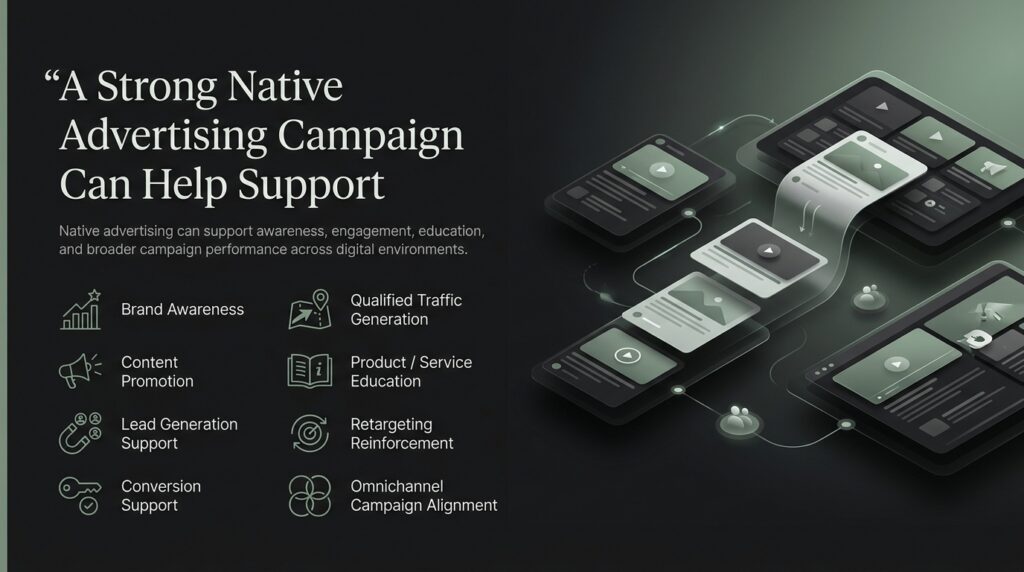
A strong native advertising campaign can help support:
- Brand awareness
- Qualified traffic generation
- Content promotion
- Service or product education
- Lead generation support
- Retargeting reinforcement
- Conversion support
- Broader omnichannel campaigns
Why advertisers use native advertising
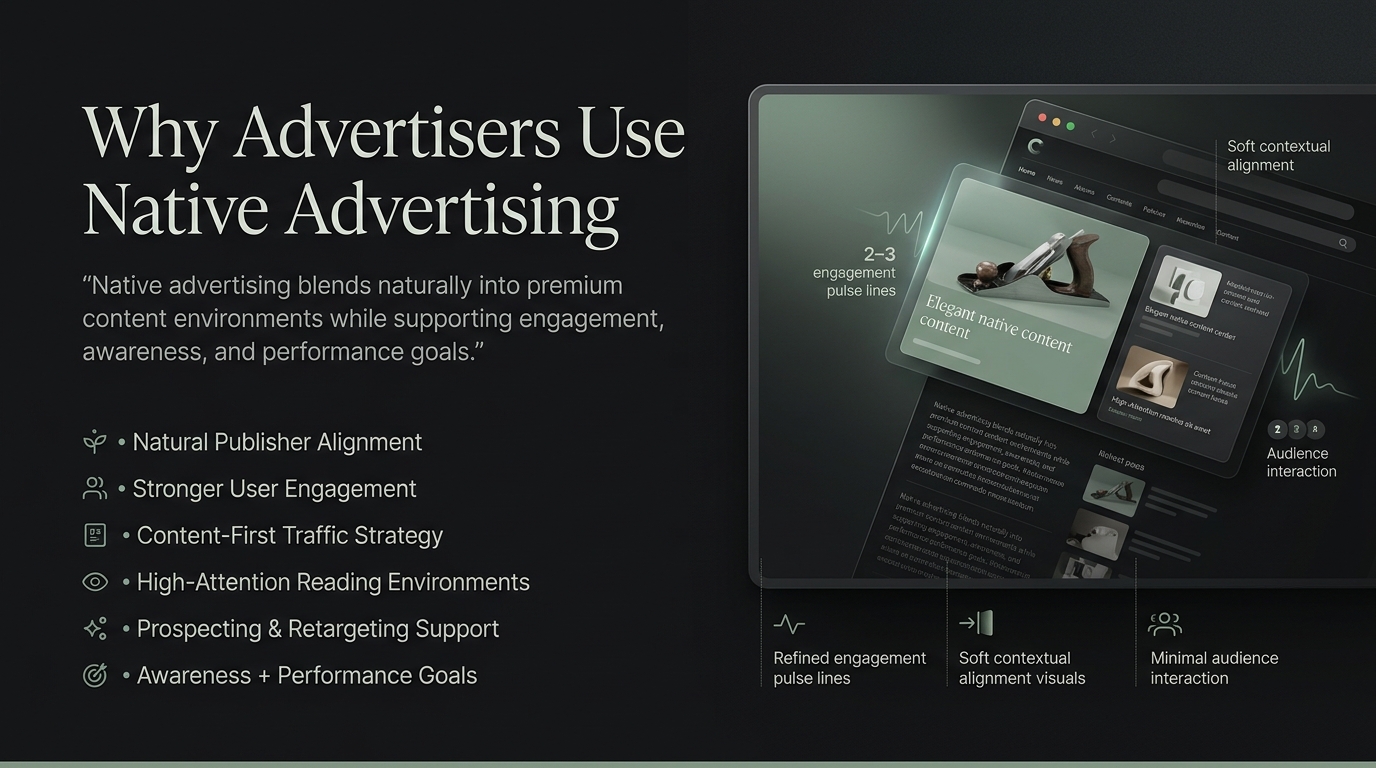
- It aligns more naturally with publisher environments
- It can drive stronger engagement than standard banner formats alone
- It supports content-first and traffic-driving strategies
- It can reach users in high-attention reading environments
- It works well for both prospecting and retargeting
- It can support awareness and performance-focused goals
For Crosstide Media, native advertising is valuable because it combines premium content environments, sharper audience targeting, and better traffic-driving potential in a format built for engagement.
Why advertisers use native advertising
- It aligns more naturally with publisher environments
- It can drive stronger engagement than standard banner formats alone
- It supports content-first and traffic-driving strategies
- It can reach users in high-attention reading environments
- It works well for both prospecting and retargeting
- It can support awareness and performance-focused goals
For Crosstide Media, native advertising is valuable because it combines premium content environments, sharper audience targeting, and better traffic-driving potential in a format built for engagement.
How Native Advertising Buying Works
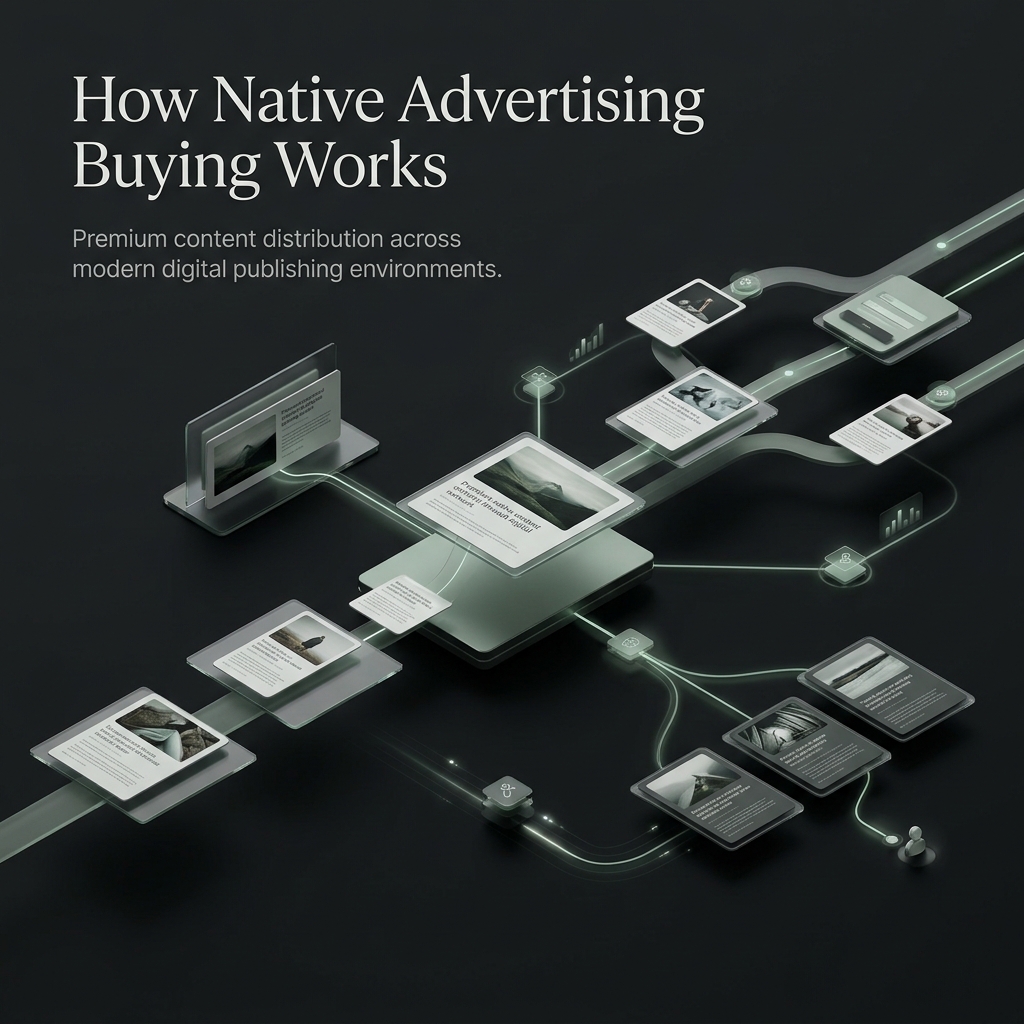
Native advertising buying uses digital media platforms and programmatic buying technology to connect advertisers with native placements made available through publishers, content recommendation environments, exchanges, and premium native supply partners. Campaigns are usually structured around audience targets, contextual fit, publisher quality, budgets, pacing controls, creative assets, and performance goals.
In practice, native campaigns may include inventory across premium editorial sites, content discovery placements, article recommendation units, mobile publisher environments, and broader native ecosystems. Depending on the setup, this may involve platforms such as TripleLift, Sharethrough, and other partners that support scaled native advertising across premium digital inventory.
Typical native advertising workflow
A well-managed campaign usually includes:
- audience planning and segmentation
- inventory strategy by publisher quality, context, and placement type
- headline, image, and creative setup
- bid and pacing controls
- landing-page and content alignment
- brand safety and suitability review
- mid-flight optimization
- reporting and attribution analysis
Why this buying model is useful
Native advertising gives advertisers more control over:
- who sees the ad
- where the ad appears
- which publisher environments are prioritized
- how headlines and visuals are tested
- which audiences and placements perform best
- how spend is adjusted while campaigns are live
That makes native advertising more adaptable than basic placement buying, especially for brands that want stronger content alignment, better traffic quality, and more useful reporting.
Native Ad Formats and Inventory Types
Native advertising can run across several placement types and publisher environments. The right mix depends on campaign goals, creative assets, content strategy, and target audience behavior.
In-feed native ads
In-feed native ads appear within content streams, homepage feeds, article feeds, and editorial layouts where they visually align with surrounding content. These placements are often useful for awareness, content promotion, and traffic generation.
Content recommendation placements
Content recommendation ads appear within recommendation modules, related-content sections, and content suggestion units. These are often used to promote service pages, articles, blog content, landing pages, guides, and other traffic-driving destinations.
In-article native placements
Some native ads appear directly within article environments in a way that fits the page structure and reading experience. These can help advertisers stay visible in premium editorial contexts.
Native display and enhanced formats
Some native campaigns may include richer image-driven formats, advanced native display options, or dynamic native units depending on the platform and publisher environment.
Native advertising may run across:
- Desktop
- Mobile web
- Tablet
- Publisher apps
- Content recommendation environments
- Premium editorial properties
Performance can vary based on:
- Publisher quality
- Recommendation unit design
- Headline strength
- Image quality
- Device behavior
- Landing-page relevance
- Contextual alignment
- Premium vs broader
- Marketplace supply
Premium Native Inventory and Supply Strategy
Not all native inventory creates the same value. Two campaigns with similar budgets can perform very differently depending on publisher quality, contextual relevance, traffic source, placement visibility, and supply path efficiency.
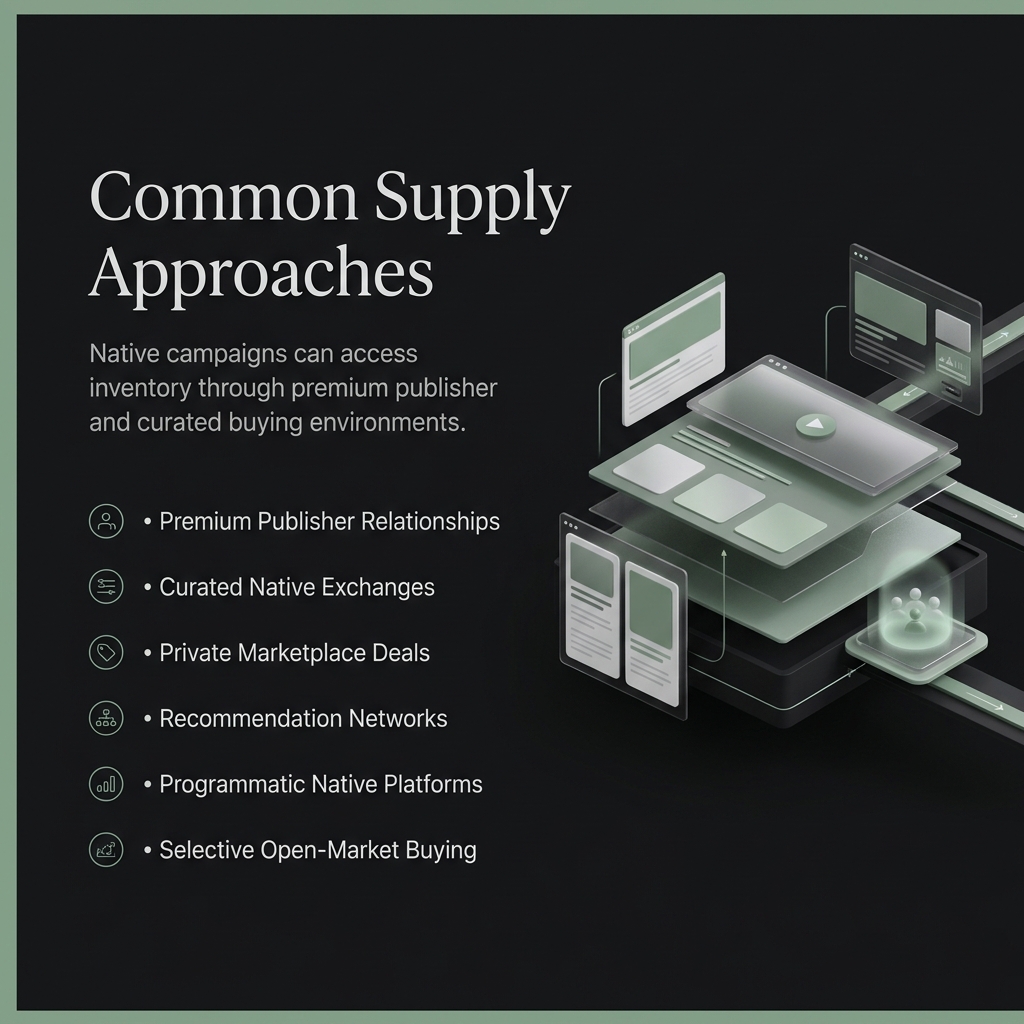
Common supply approaches
Native campaigns may source inventory through:
- Premium publisher relationships
- Curated native exchanges
- Private marketplace deals
- Recommendation networks
- Programmatic native platforms
- Selective open-market buying
Major native platforms like TripleLift and Sharethrough are often part of broader media planning because native campaign success depends heavily on publisher quality, contextual fit, and the strength of the supply path.
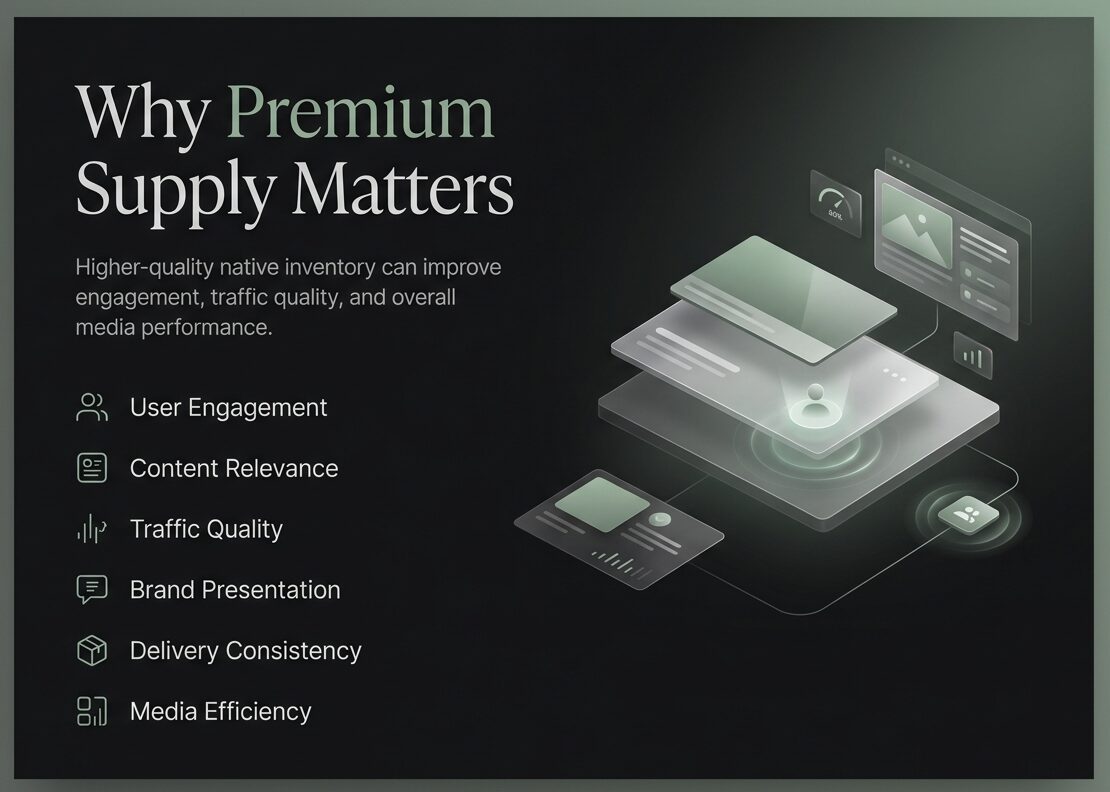
Why premium supply matters
Higher-quality native inventory can improve:
- User engagement
- Content relevance
- Traffic quality
- Brand presentation
- Delivery consistency
- Overall media efficiency
Why premium supply matters
Higher-quality native inventory can improve:
- User engagement
- Content relevance
- Traffic quality
- Brand presentation
- Delivery consistency
- Overall media efficiency
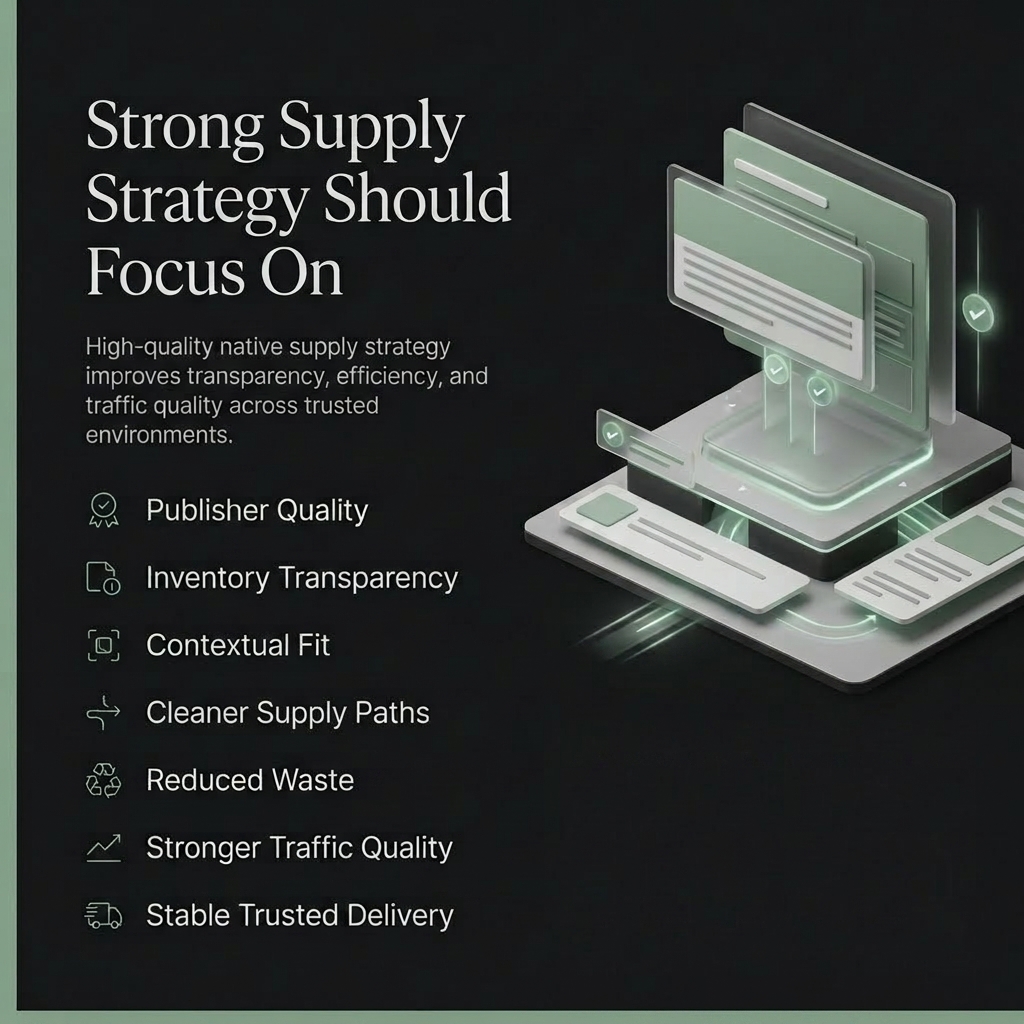
Strong supply strategy should focus on
- Publisher quality
- Inventory transparency
- Contextual fit
- Cleaner supply paths
- Reduced waste
- Stronger traffic quality
- Stable delivery across trusted environments
For Crosstide Media, supply quality is both a media quality issue and a performance issue.
Advanced Audience Targeting
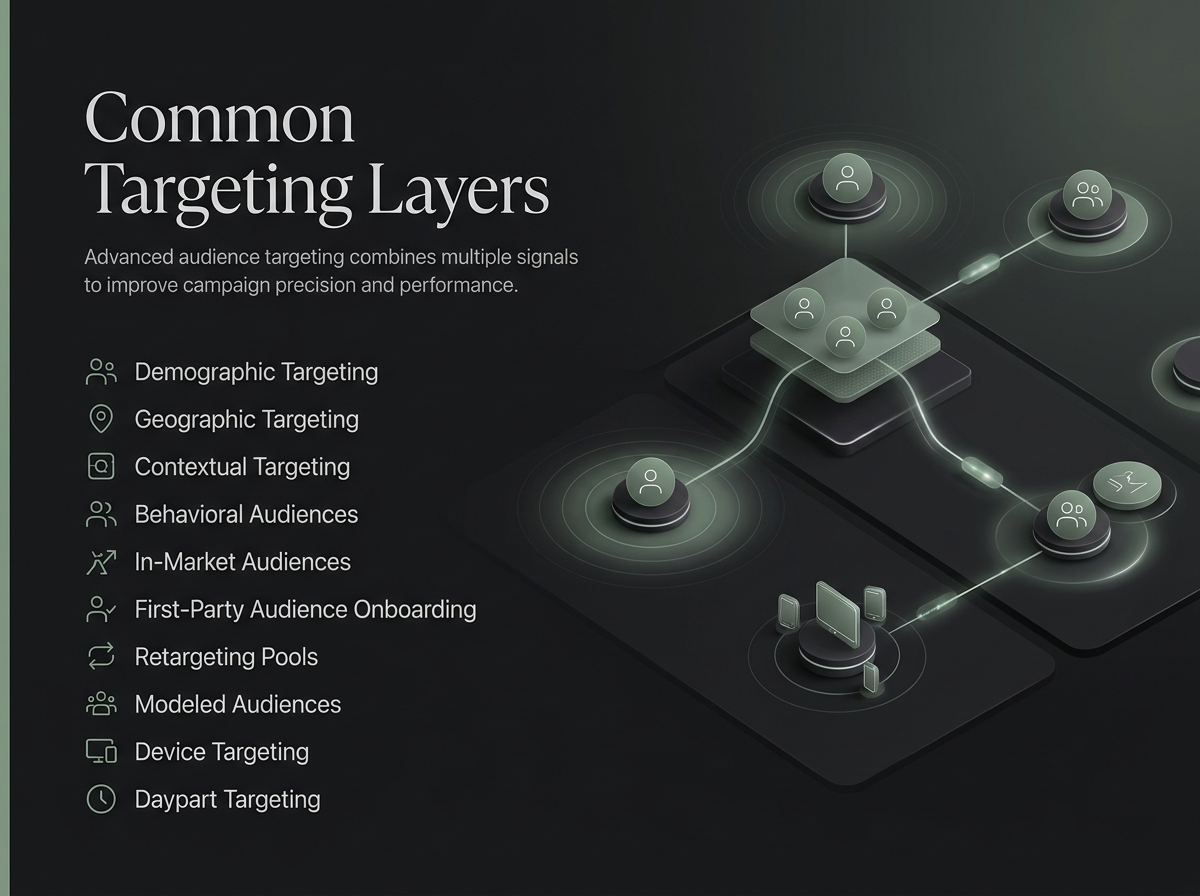
Native advertising campaigns can be built using a mix of audience, contextual, geographic, device, and first-party data signals.
Common targeting layers
- Demographic targeting
- Geographic targeting
- Contextual targeting
- Behavioral audiences
- In-market audiences
- First-party audience onboarding
- Retargeting pools
- Modeled audiences
- Device targeting
- Daypart targeting
Audience-first native strategy
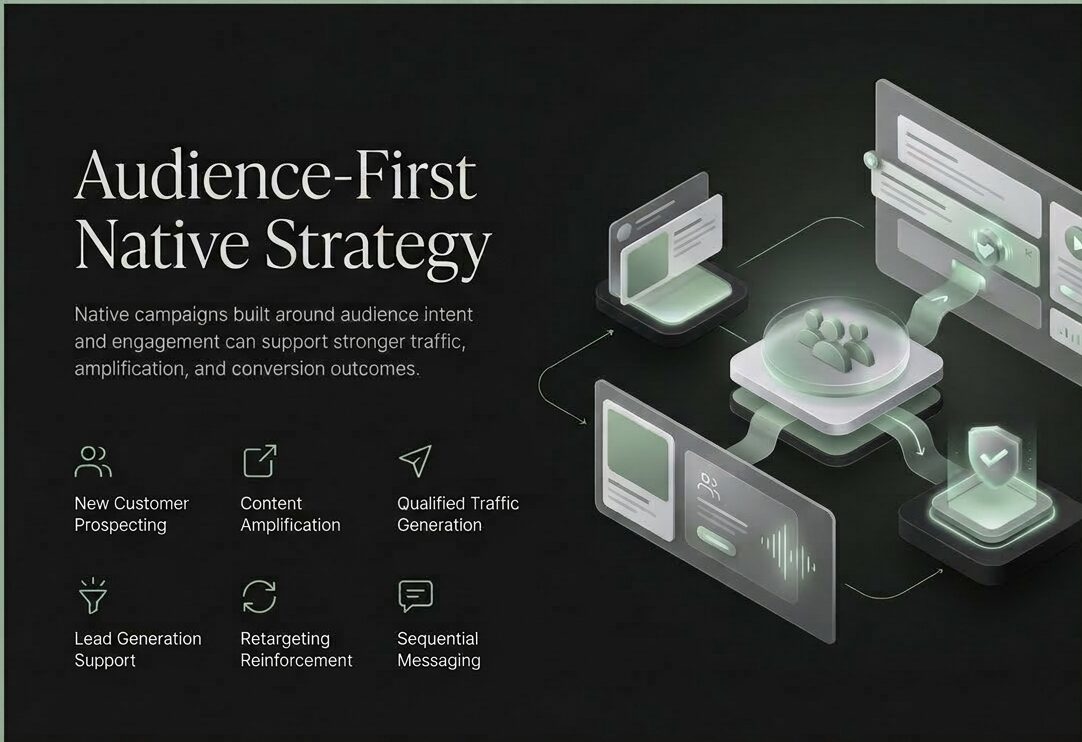
One of the biggest advantages of native advertising is the ability to pair content-friendly placements with audience targeting. Rather than relying only on publisher selection, advertisers can structure campaigns around the people most likely to engage with the message.
This can support:
- New customer prospecting
- Content amplification
- Qualified traffic generation
- Lead generation support
- Retargeting reinforcement
- Sequential messaging
Audience-first native strategy
One of the biggest advantages of native advertising is the ability to pair content-friendly placements with audience targeting. Rather than relying only on publisher selection, advertisers can structure campaigns around the people most likely to engage with the message.
This can support:
- New customer prospecting
- Content amplification
- Qualified traffic generation
- Lead generation support
- Retargeting reinforcement
- Sequential messaging
First-party data strategy
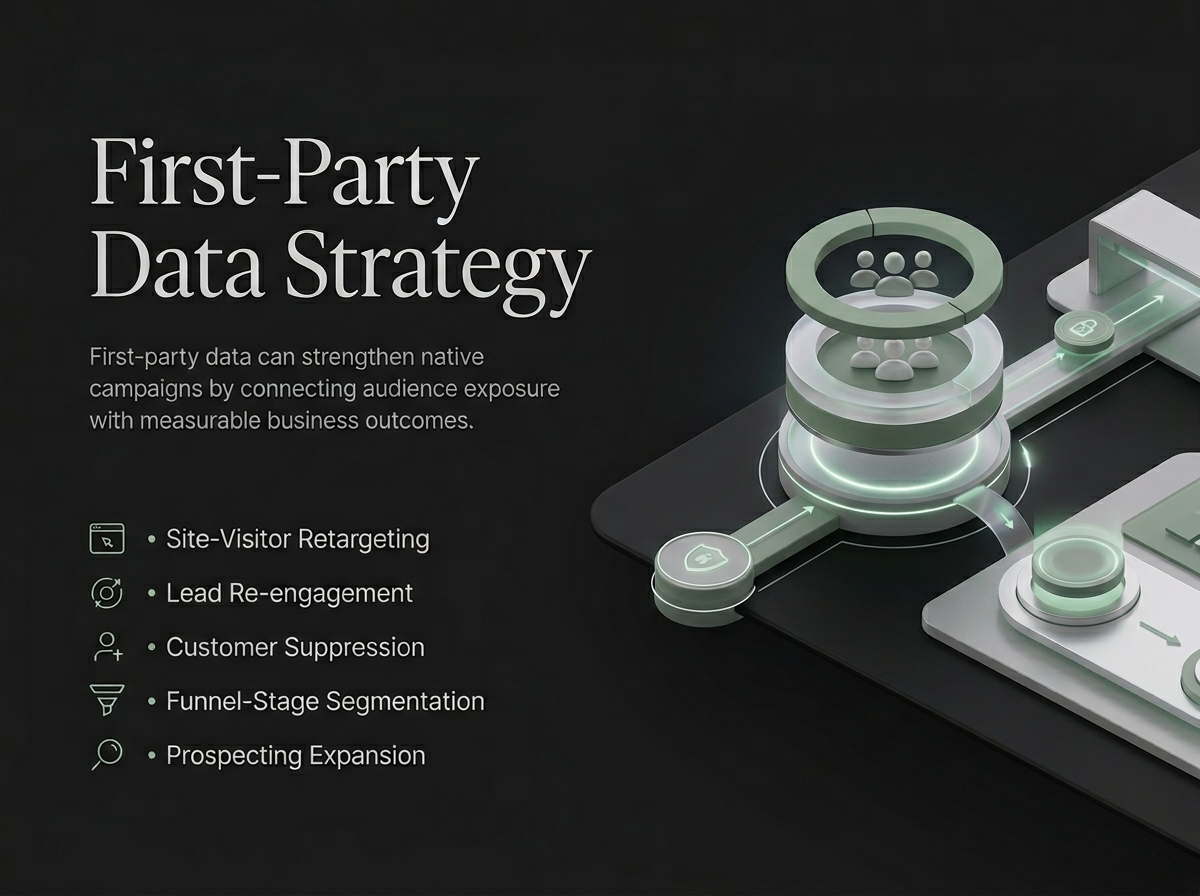
First-party data can add value to native campaigns when the goal is to connect ad exposure with real business outcomes. Depending on the setup, it may support:
- Site-visitor retargeting
- Lead re-engagement
- Customer suppression
- Audience segmentation by funnel stage
- Prospecting expansion from known converters

Geographic targeting options
Geographic precision may include:
- Country
- Region
- State
- DMA
- City
- ZIP code
- Radius targeting depending on platform support
Targeting best practices
The strongest native campaigns avoid becoming too narrow too early. Over-layering audiences can restrict scale, reduce learning, and make it harder to optimize. A better structure is to prioritize the most valuable signals, align them with strong publisher environments, and optimize based on actual performance after launch.
Geographic targeting options
Geographic precision may include:
- Country
- Region
- State
- DMA
- City
- ZIP code
- Radius targeting depending on platform support
Targeting best practices
The strongest native campaigns avoid becoming too narrow too early. Over-layering audiences can restrict scale, reduce learning, and make it harder to optimize. A better structure is to prioritize the most valuable signals, align them with strong publisher environments, and optimize based on actual performance after launch.
Creative Strategy and Native Ad Specifications
Creative plays a major role in native advertising because performance often depends on whether the headline, image, and message are compelling enough to earn a click. Native success is not just about being seen. It is about creating enough relevance and interest for the user to continue to the destination page.
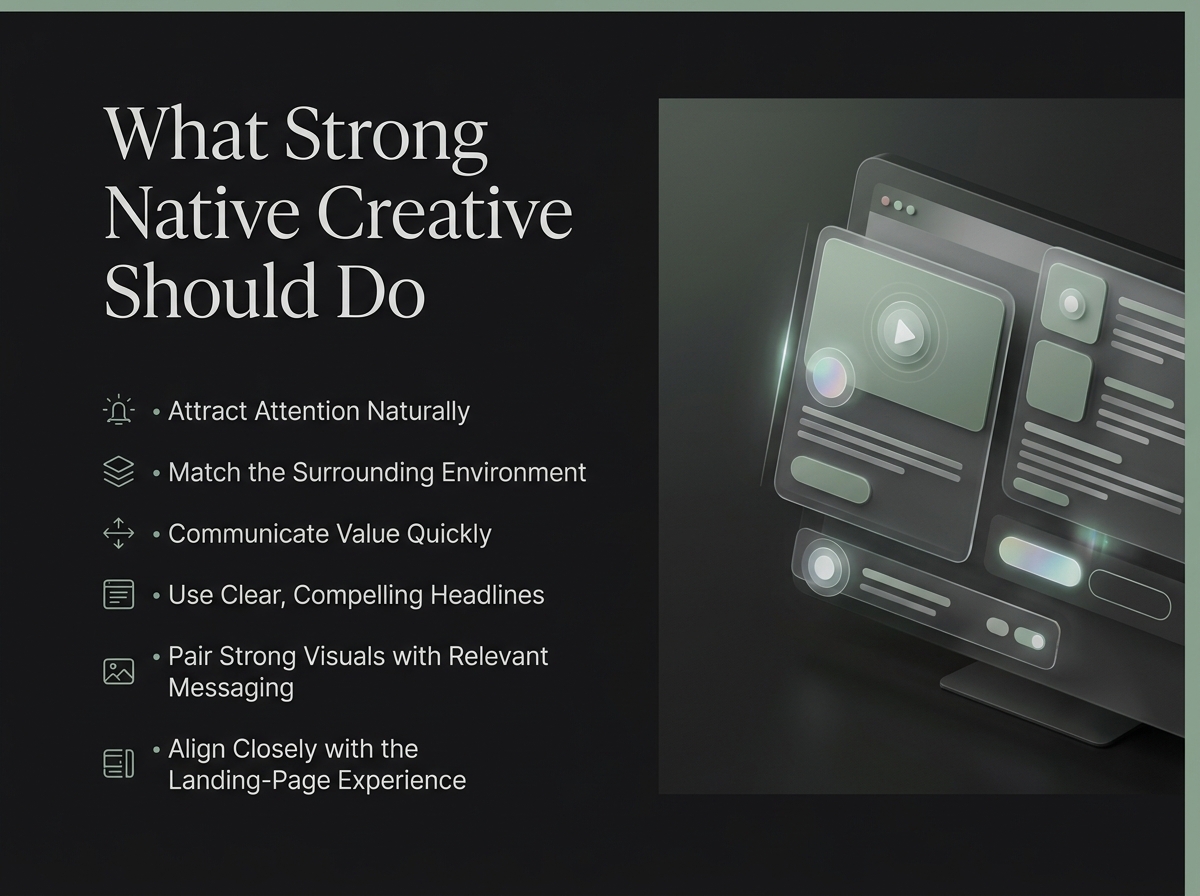
What strong native creative should do
- Attract attention naturally
- Match the surrounding environment
- Communicate value quickly
- Use clear, compelling headlines
- Pair strong visuals with relevant messaging
- Align closely with the landing-page experience
What strong native creative should do
- Attract attention naturally
- Match the surrounding environment
- Communicate value quickly
- Use clear, compelling headlines
- Pair strong visuals with relevant messaging
- Align closely with the landing-page experience
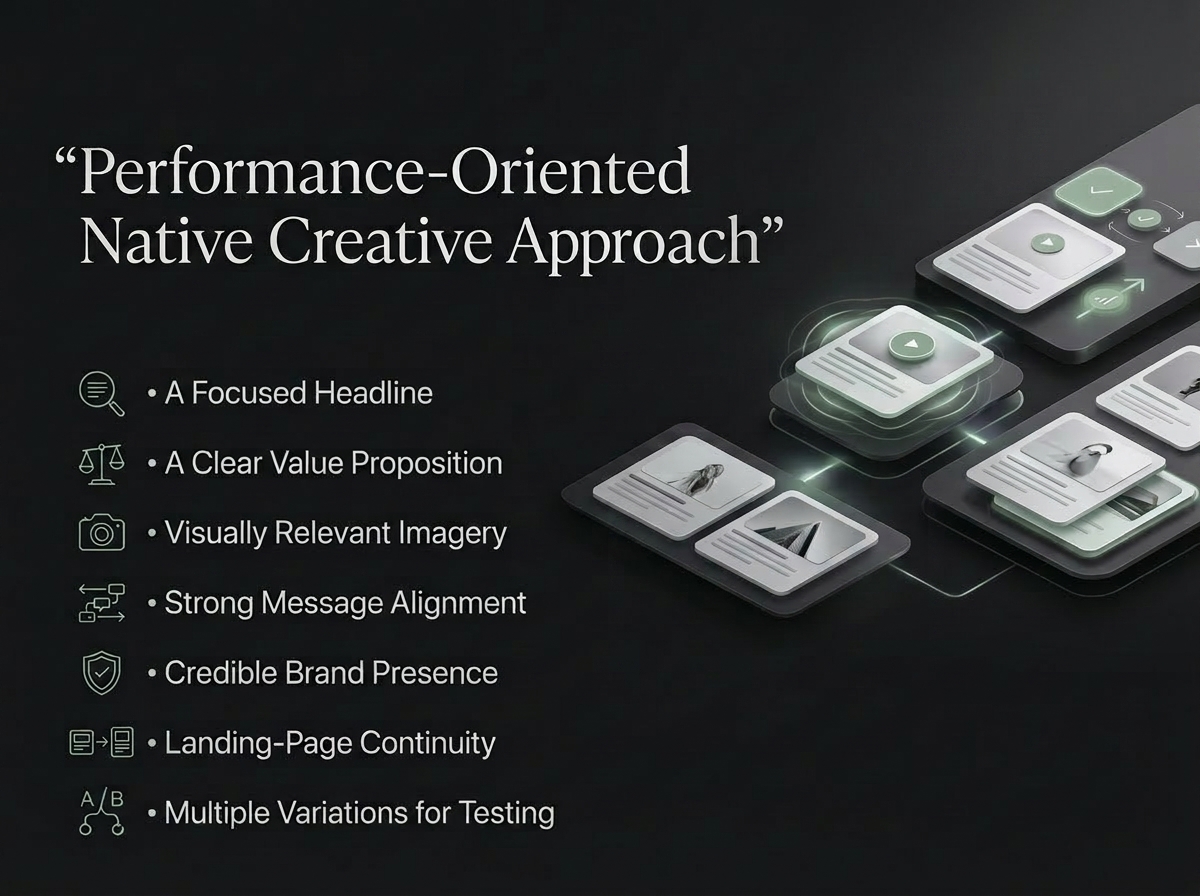
Performance-oriented native creative approach
Strong native creative usually includes:
- A focused headline
- A clear value proposition
- Visually relevant imagery
- Strong message alignment
- Credible brand presence
- Landing-page continuity
- Multiple variations for testing
Key message priorities
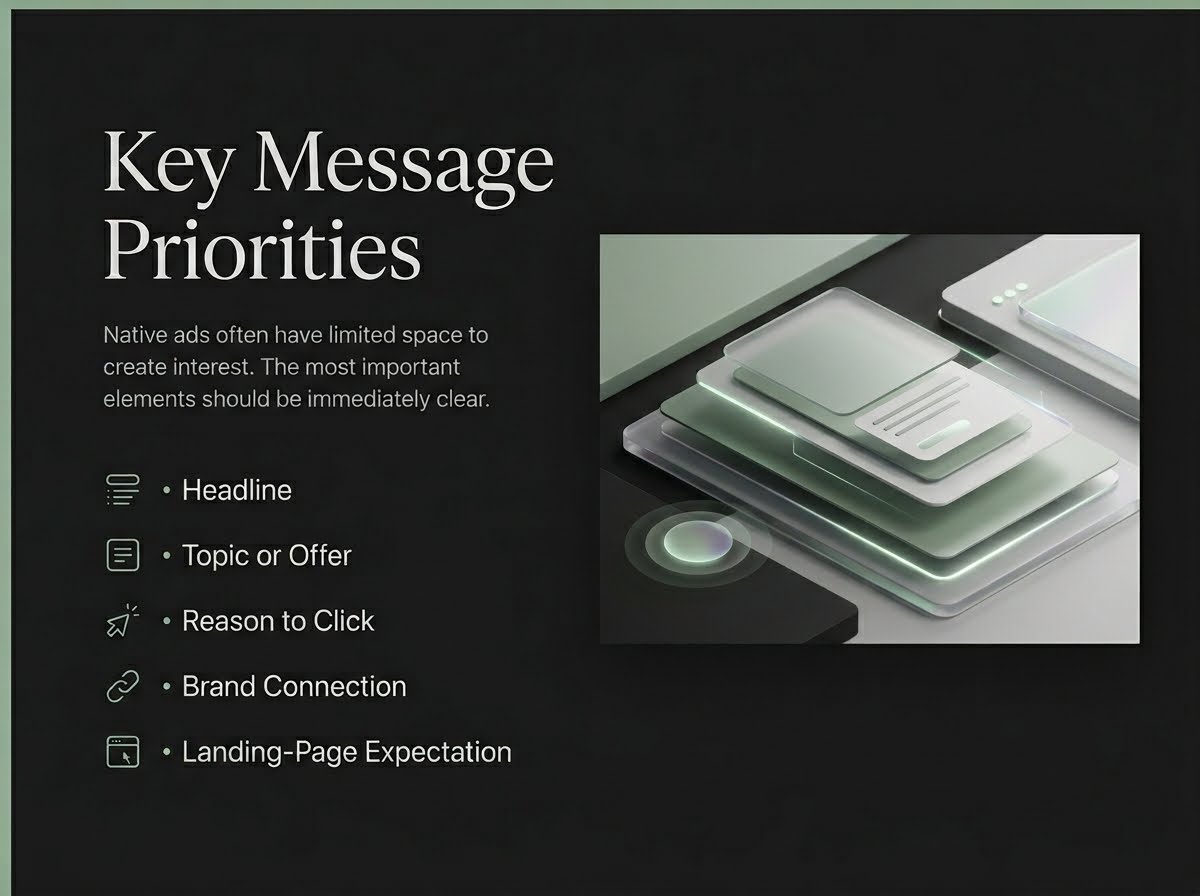
Native ads often have limited space to create interest. The most important elements should be immediately clear:
- Headline
- Topic or offer
- Reason to click
- Brand connection
- Landing-page expectation
Key message priorities
Native ads often have limited space to create interest. The most important elements should be immediately clear:
- Headline
- Topic or offer
- Reason to click
- Brand connection
- Landing-page expectation
Crosstide Media native ad specifications
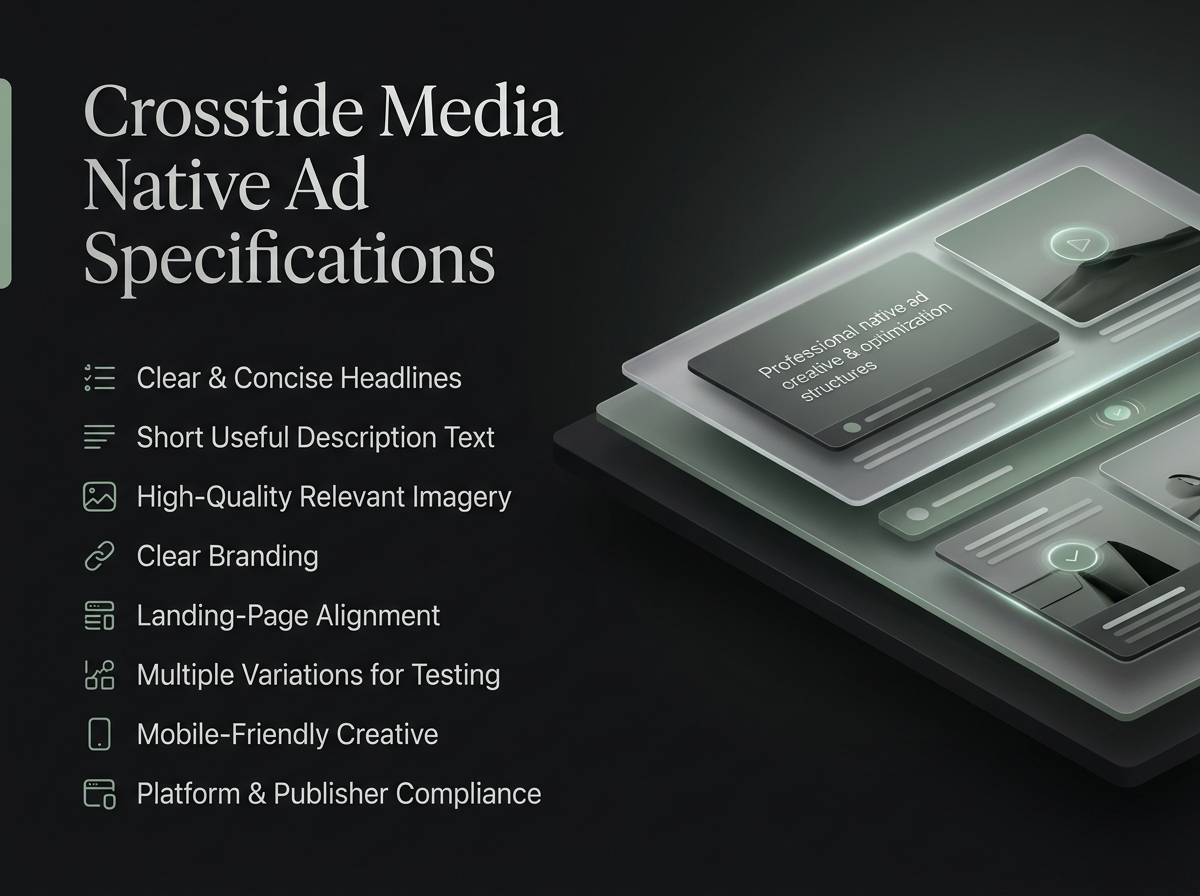
Use the following as a strong baseline for most native advertising campaigns:
- Headline: clear, concise, and built around relevance or curiosity without sounding misleading
- Description text: used when supported and kept short and useful
- Image: high-quality, relevant, and visually clean
- Branding: clear where the platform allows or requires it
- Landing page: aligned tightly with the promise of the ad
- Variations: multiple headline and image combinations for testing
- Mobile fit: confirm headlines and visuals work well on smaller screens
- Compliance: make sure all creative follows platform and publisher standards
Creative QA checklist before launch
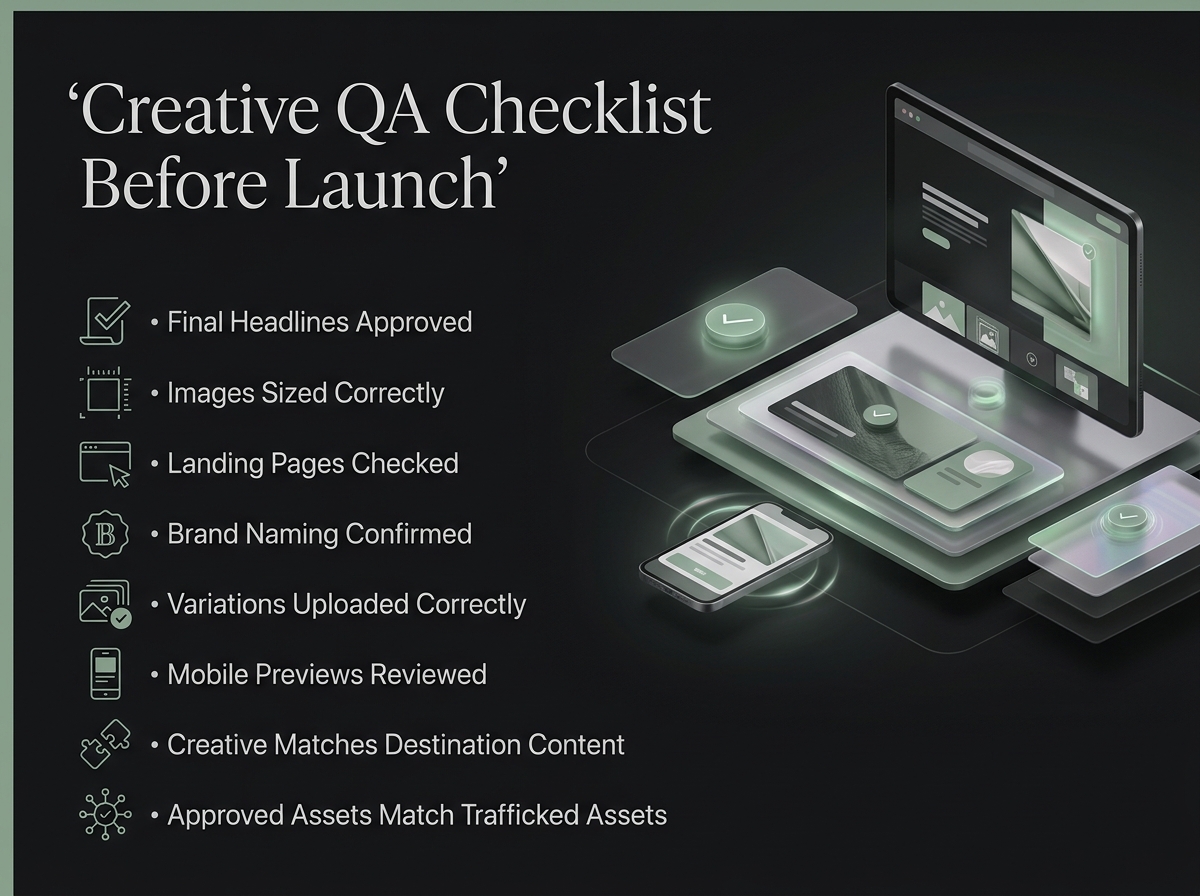
- Final headlines approved
- Images sized correctly
- Landing pages checked
- Brand naming confirmed
- Variations uploaded correctly
- Mobile previews reviewed
- Creative matches destination content
- Approved assets match trafficked assets
Creative QA checklist before launch
- Final headlines approved
- Images sized correctly
- Landing pages checked
- Brand naming confirmed
- Variations uploaded correctly
- Mobile previews reviewed
- Creative matches destination content
- Approved assets match trafficked assets
Creative best practices by campaign goal
Awareness campaigns
- Use broader interest-driven headlines
- Focus on relevance and brand visibility
- Prioritize strong imagery and clean messaging
Consideration campaigns
- Highlight differentiators or useful content
- Strengthen the value proposition
- Match content more closely to audience intent
Response-oriented campaigns
- Clarify the offer or next step
- Reduce friction between the ad and landing page
- Support with retargeting and stronger conversion paths
Native Advertising Pricing, CPCs, CPMs, and Media Efficiency
Native advertising pricing varies based on publisher quality, audience specificity, creative strength, geography, platform strategy, and supply path.
Common pricing variables
- premium vs broader marketplace inventory
- publisher quality
- audience targeting
- geography
- traffic source quality
- device mix
- campaign timing
- seasonality
- supply path efficiency
- creative performance
Common pricing models
Native advertising is often evaluated through CPC and CPM models, though campaign performance should not be judged on cost alone.
Advertisers may evaluate campaigns using:
- CPC
- CPM
- click-through rate
- engagement quality
- landing-page performance
- CPA
- ROAS
- assisted conversion trends
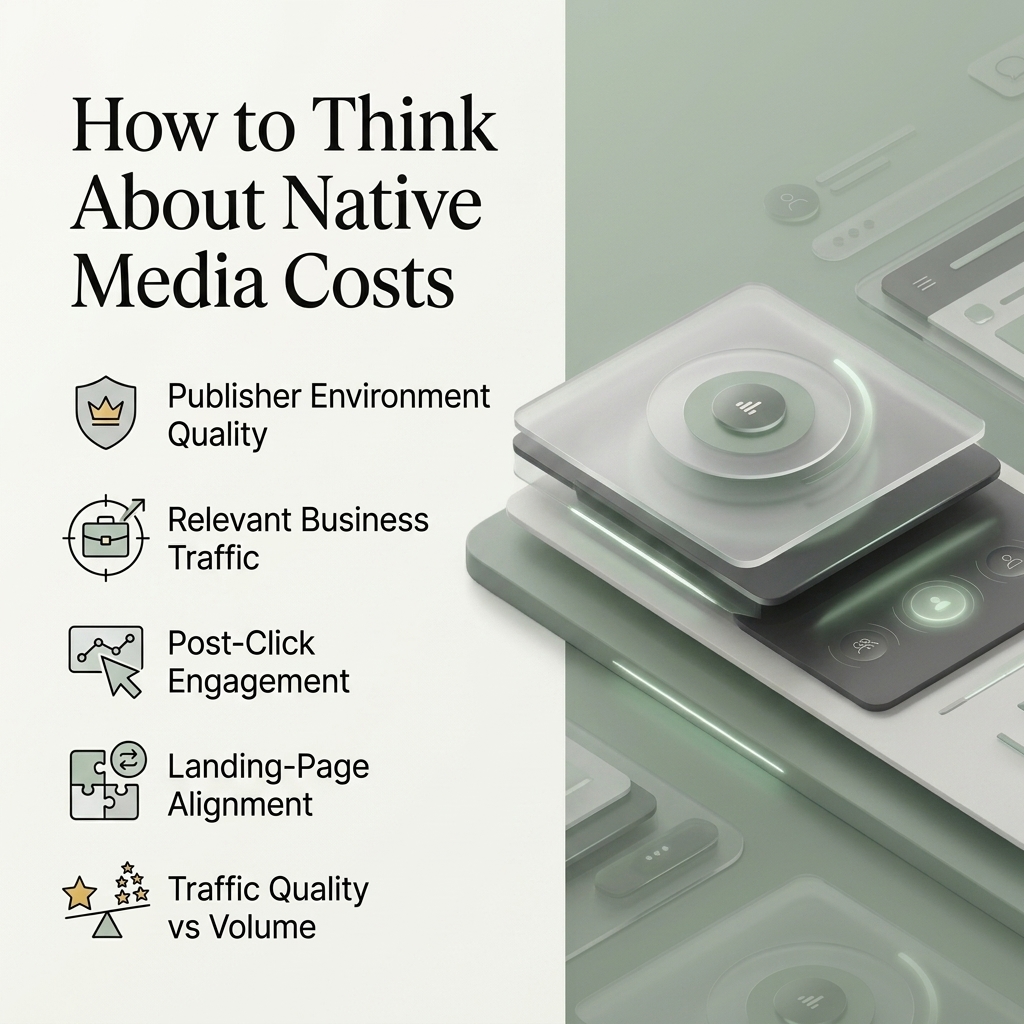
How to think about native media costs
The more useful question is not only what the CPC or CPM is, but also:
- What quality of publisher environment am I buying?
- Is the traffic relevant to the business?
- Am I seeing engagement after the click?
- Is the landing page aligned with the ad?
- Am I paying for stronger traffic quality or just more volume?
A higher CPC is not automatically a negative if it comes with:
- Stronger engagement
- Better publisher quality
- More qualified traffic
- Stronger landing-page behavior
- Less wasted spend
The strongest pricing analysis looks at cost alongside traffic quality, site engagement, lead activity, conversion performance, and broader media efficiency.
Budget Planning and Optimization Strategy
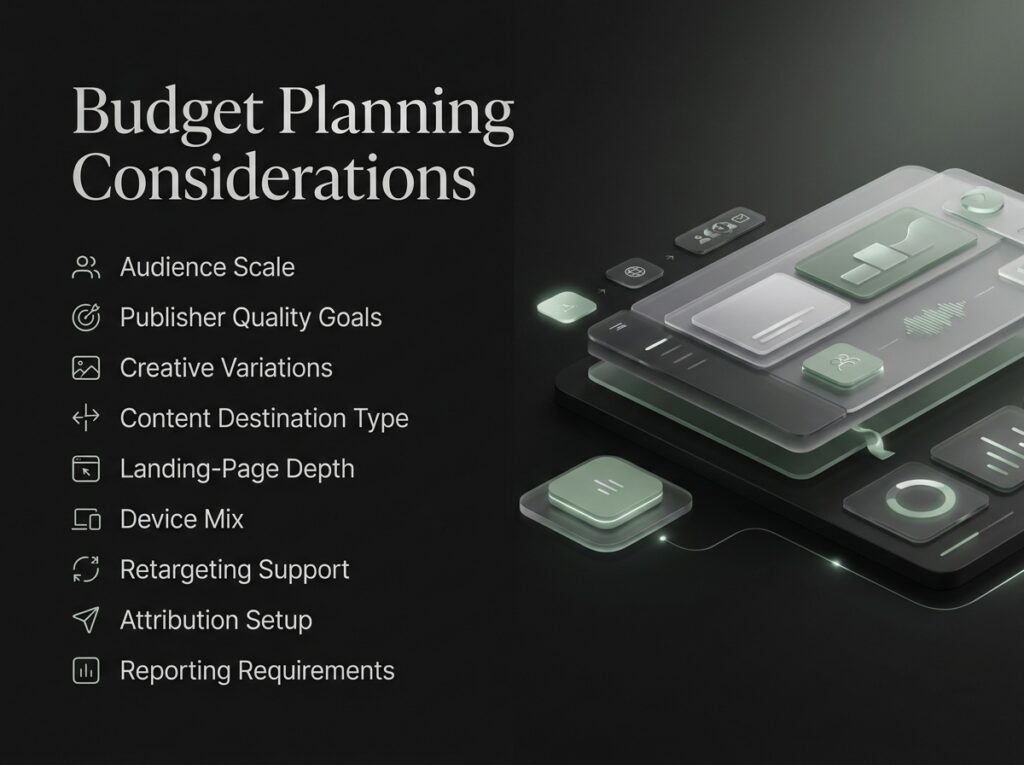
Native campaigns need enough budget to generate meaningful traffic, useful testing volume, and enough delivery to evaluate headlines, images, audiences, and publisher quality with confidence.
Budget planning considerations
- Audience scale
- Publisher quality goals
- Number of creative variations
- Content destination type
- Landing-page depth
- Device mix
- Retargeting support
- Attribution setup
- Reporting requirements
A budget that is too small can make it difficult to test creative effectively or identify which audiences and placements are truly creating value.
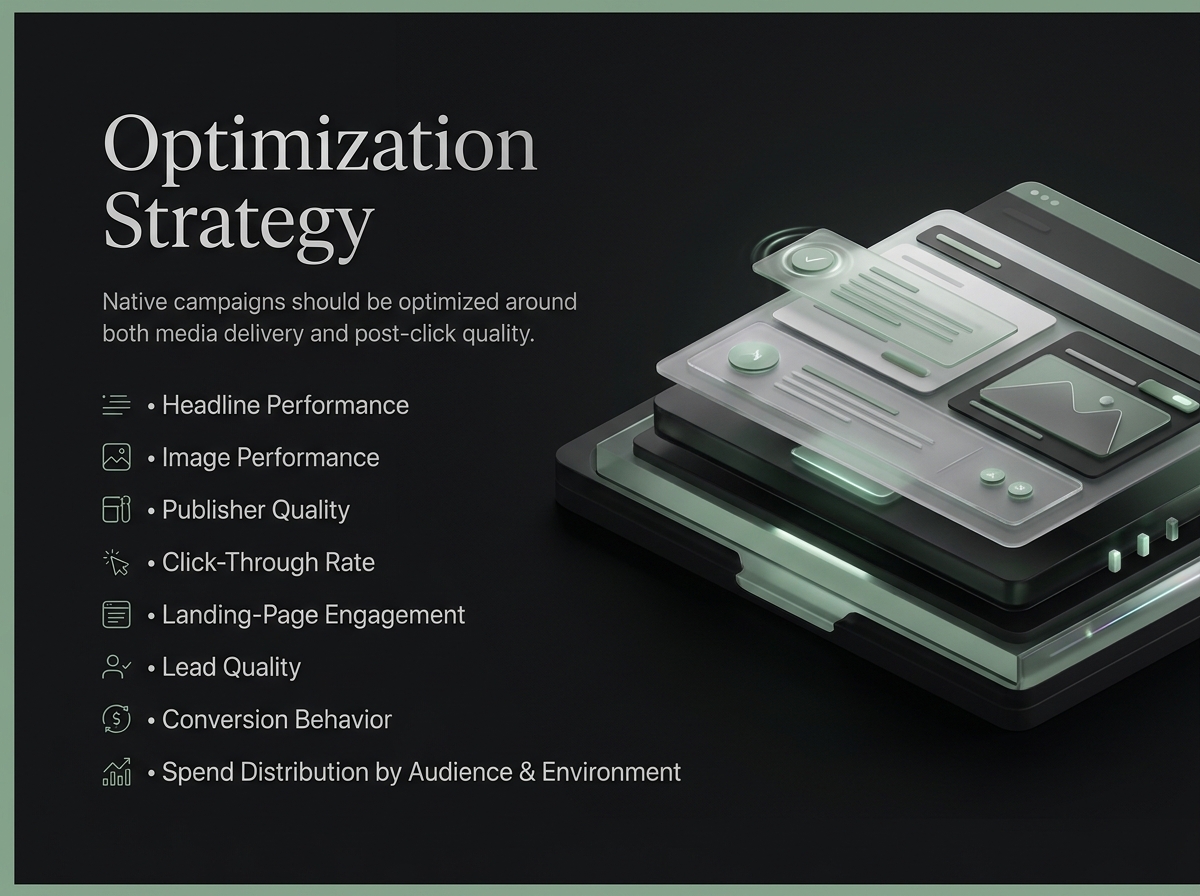
Optimization strategy
Native campaigns should be optimized around both media delivery and post-click quality.
A strong optimization structure usually looks at:
- Headline performance
- Image performance
- Publisher quality
- Click-through rate
- Landing-page engagement
- Lead quality
- Conversion behavior
- Spend distribution by audience and environment
Optimization strategy
Native campaigns should be optimized around both media delivery and post-click quality.
A strong optimization structure usually looks at:
- Headline performance
- Image performance
- Publisher quality
- Click-through rate
- Landing-page engagement
- Lead quality
- Conversion behavior
- Spend distribution by audience and environment
Measurement and Attribution
Native advertising can be measured across delivery metrics, click behavior, landing-page engagement, and broader business outcomes.
Common campaign metrics
- Impressions
- Clicks
- Click-through rate
- CPC
- Reach
- Frequency
- Device distribution
- Publisher-level delivery
Post-click and business outcome metrics
- Landing-page engagement
- Time on site
- Bounce behavior
- Lead volume
- Conversion rate
- CPA
- ROAS
- Assisted conversions
Advanced measurement approaches
- Audience-quality analysis
- Publisher-level traffic comparison
- Headline and image testing analysis
- Time-to-conversion review
- Incremental lift analysis
- Cross-channel attribution review
Attribution reality
Native advertising often influences users before conversion happens later through another channel or another session. Because of that, native should not be judged only by last-click conversions. A stronger framework combines delivery quality, engagement signals, conversion patterns, and broader media impact.
What strong reporting should include
- Delivery by publisher or inventory grouping
- Click-through and CPC trends
- Landing-page engagement
- Audience and geography performance
- Optimization actions taken during flight
- Lead and conversion insights
- Key findings and recommended next steps
That makes reporting a more useful media decision tool instead of just a click report
Brand Safety, Placement Quality, and Supply Standards
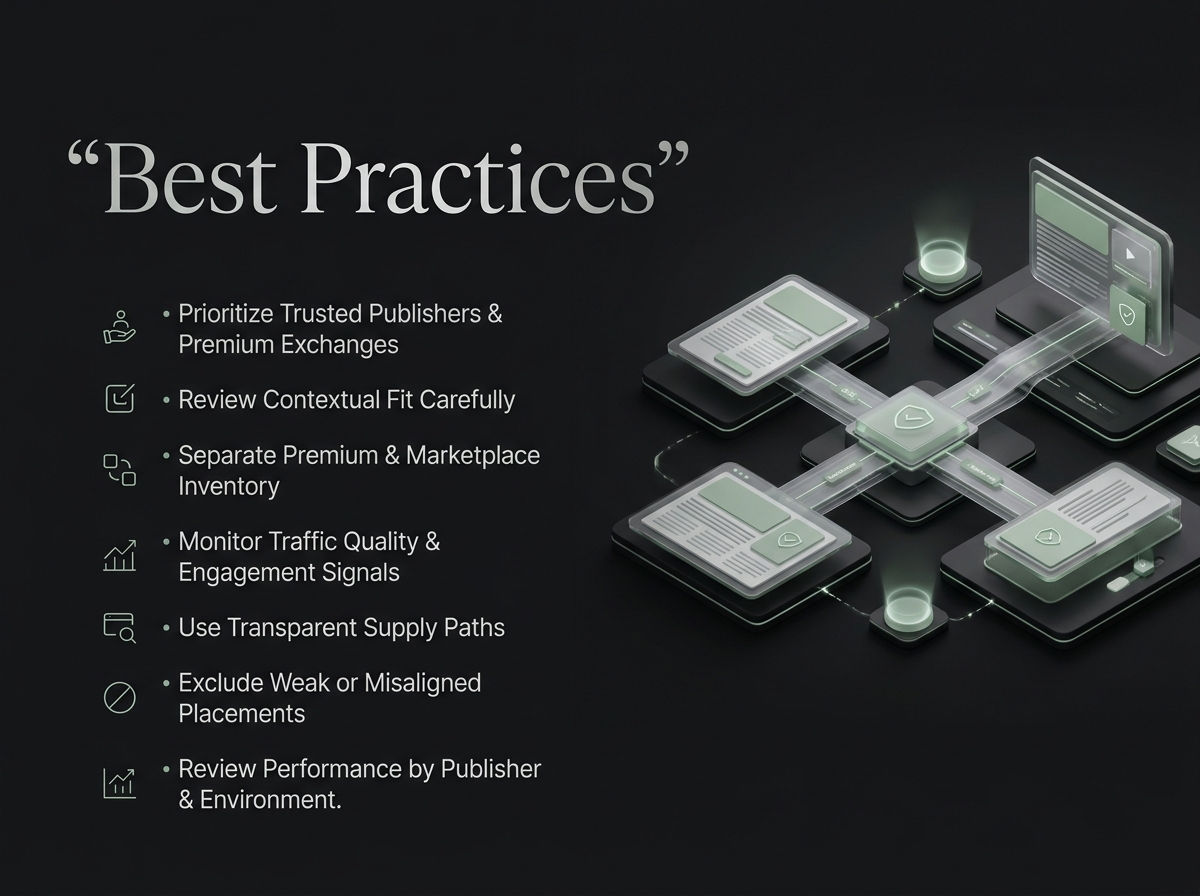
Brand safety in native advertising depends on publisher quality, placement transparency, contextual fit, user experience standards, and traffic quality.
Best practices
- Prioritize trusted publishers and premium exchanges
- Review contextual fit carefully
- Separate premium supply from broader marketplace inventory
- Monitor traffic quality and engagement signals
- Use transparent supply paths
- Exclude weak or misaligned placements
- Review performance by publisher and environment regularly
For Crosstide Media, placement quality is not just a brand concern. It directly affects traffic quality, user engagement, and campaign performance.
Why Work With Crosstide Media?
Effective native advertising requires more than simply launching headlines and images into market. It takes audience strategy, publisher selection, creative testing, landing-page alignment, technical setup, measurement discipline, and ongoing optimization.
Crosstide Media helps advertisers execute native campaigns with:
- media buying expertise
- audience planning
- premium inventory strategy
- creative readiness
- technical QA
- supply quality controls
- performance reporting
- ongoing optimization
We approach native advertising as both a traffic-driving channel and a measurable media investment. Our focus is on building campaigns that combine premium environments, strong creative alignment, smart targeting, and actionable reporting so brands can grow with more confidence.
Whether the goal is content promotion, qualified traffic, lead generation support, retargeting, or broader omnichannel reach, Crosstide Media helps brands build native campaigns with the structure and discipline required for modern media buying.
Why Work With Crosstide Media?
Effective native advertising requires more than simply launching headlines and images into market. It takes audience strategy, publisher selection, creative testing, landing-page alignment, technical setup, measurement discipline, and ongoing optimization.
Crosstide Media helps advertisers execute native campaigns with:
- media buying expertise
- audience planning
- premium inventory strategy
- creative readiness
- technical QA
- supply quality controls
- performance reporting
- ongoing optimization
We approach native advertising as both a traffic-driving channel and a measurable media investment. Our focus is on building campaigns that combine premium environments, strong creative alignment, smart targeting, and actionable reporting so brands can grow with more confidence.
Whether the goal is content promotion, qualified traffic, lead generation support, retargeting, or broader omnichannel reach, Crosstide Media helps brands build native campaigns with the structure and discipline required for modern media buying.
Frequently Asked Questions
What is native advertising?
How is native advertising different from display advertising?
What platforms can be included in native advertising?
Is native advertising good for traffic generation?
Can native advertising support lead generation?
What makes strong native creative?
How is native advertising measured?
What affects native advertising costs?
Is native advertising brand safe?
Why work with a managed native advertising partner?
Build a Smarter Native Advertising Campaign
If your brand needs a more strategic native advertising approach, Crosstide Media can help you plan, launch, and optimize campaigns built around stronger publisher quality, better content alignment, smarter targeting, and clearer reporting. Whether your goal is to increase awareness, drive qualified traffic, amplify content, support lead generation, or improve broader media performance, we help brands build native advertising campaigns designed to work more efficiently across today’s digital publishing landscape.
Why Brands Choose Crosstide Media
Brands work with Crosstide Media because effective digital out-of-home advertising requires more than just buying screens. Strong results come from the right mix of market strategy, location quality, creative discipline, campaign structure, and ongoing optimization. Our approach is built to help advertisers improve visibility, reduce waste, maintain stronger media quality, and make better decisions through clearer reporting and more actionable campaign insights.
Talk to Crosstide Media About Native Advertising
If you are looking for a native advertising partner that can help you reach the right audience, improve campaign efficiency, and deliver more measurable results, Crosstide Media can help. We build native advertising campaigns with the strategic planning, technical setup, inventory quality controls, creative alignment, and optimization discipline needed to support long-term growth.