
Amazon Advertising
Amazon Advertising Services for Sponsored Products, Sponsored Brands, Amazon DSP, and Growth
Amazon advertising gives brands multiple ways to reach shoppers across one of the most important commerce ecosystems in digital marketing. For some advertisers, the focus is on Amazon Sponsored Ads that help products appear where people are actively shopping and comparing options on Amazon. For others, the focus is on Amazon DSP, which uses programmatic media buying to reach audiences both on Amazon and across the wider web through display and video advertising. Together, these tools give brands a way to support both direct retail demand and broader audience growth.
That distinction is important because Amazon advertising is not just one tactic. It is a broader media system with different tools built for different goals. Sponsored Ads are often strongest for product discovery, retail visibility, and conversion oriented activity closer to the point of purchase. Amazon DSP is often stronger for prospecting, audience targeting, retargeting, display and video strategy, premium inventory access, and broader full funnel advertising. When used together, they can help brands move from awareness to consideration to purchase more efficiently.
At Crosstide Media, we build Amazon advertising strategies around platform fit, audience intent, product visibility, programmatic targeting, creative alignment, measurement, and long term efficiency. Whether the goal is increasing sales on Amazon, improving retail visibility, expanding audience reach beyond Amazon, or building a stronger full funnel retail media strategy, we help brands use Amazon Sponsored Ads and Amazon DSP in a smarter, more strategic way.
Jump To
What Is Amazon Advertising?
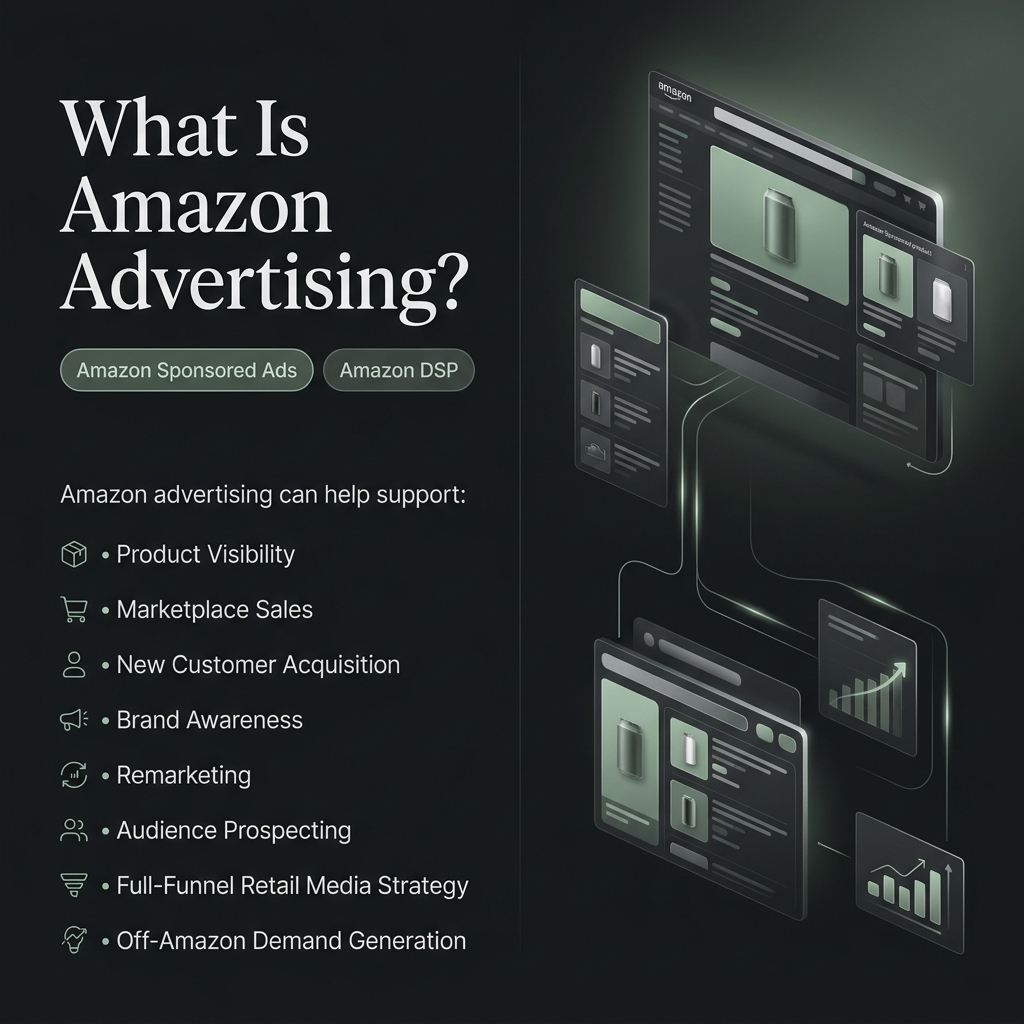
Amazon advertising refers to paid media solutions available within the Amazon ecosystem and through Amazon’s broader advertising technology. In most cases, advertisers use Amazon in one of two main ways:
Amazon Sponsored Ads, which are designed to help products and brands gain visibility inside Amazon’s shopping environment
Amazon DSP, which is designed to help advertisers buy display and video media programmatically on and off Amazon
This gives advertisers a way to influence both shopping behavior and broader audience behavior depending on the campaign objective.
Amazon advertising can help support:
- Product visibility
- Marketplace sales
- New customer acquisition
- Brand awareness
- Remarketing
- Audience prospecting
- Full-funnel retail media strategy
- Off-Amazon demand generation
The value of Amazon advertising comes from its ability to connect media buying with shopping behavior, purchase intent, and audience targeting in a commerce-driven environment.
Why Amazon Advertising Matters
Amazon matters because people do not only use it to purchase. They also use it to research, compare, evaluate, and discover products. That makes Amazon one of the most important environments for brands that want to influence buying behavior close to the point of decision.
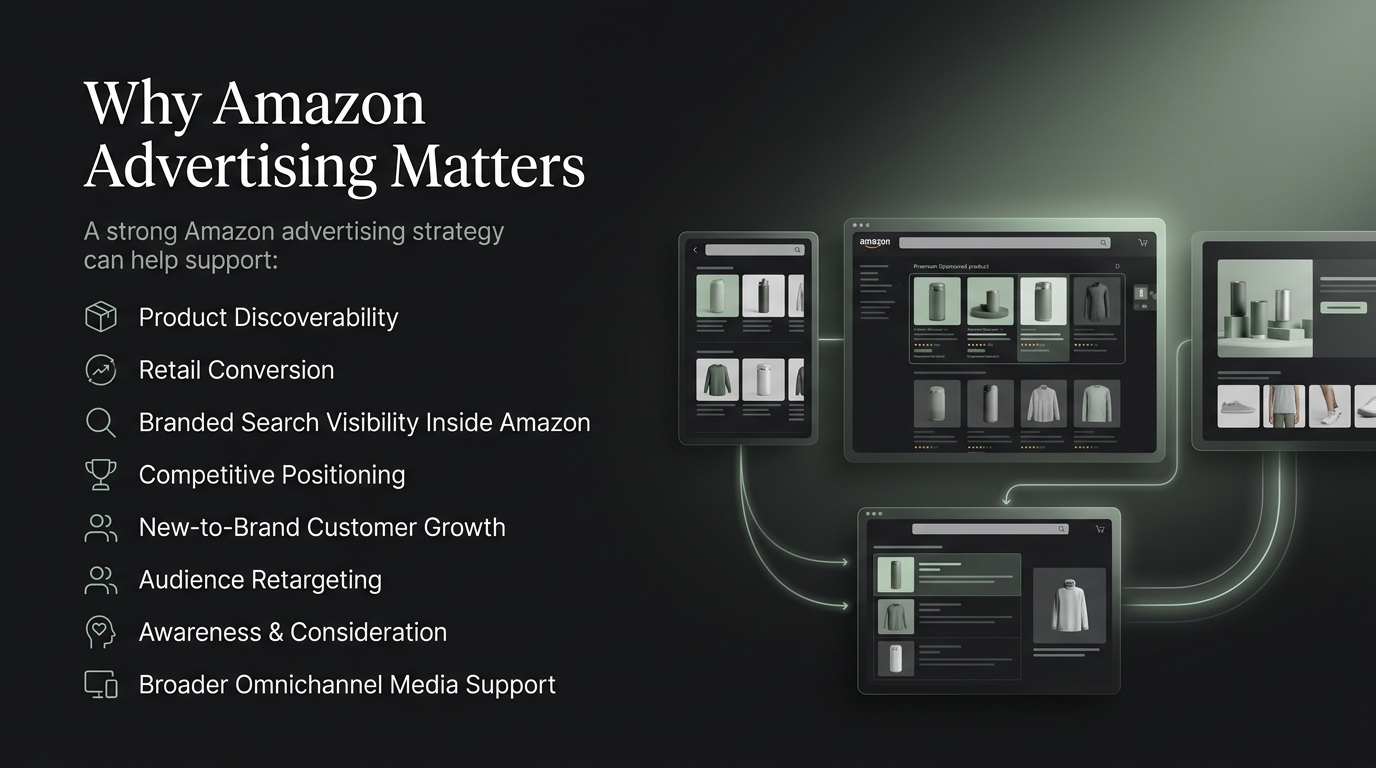
A strong Amazon advertising strategy can help support:
- Product discoverability
- Retail conversion
- Branded search visibility inside Amazon
- Competitive positioning
- New-to-brand customer growth
- Audience retargeting
- Awareness and consideration
- Broader omnichannel media support
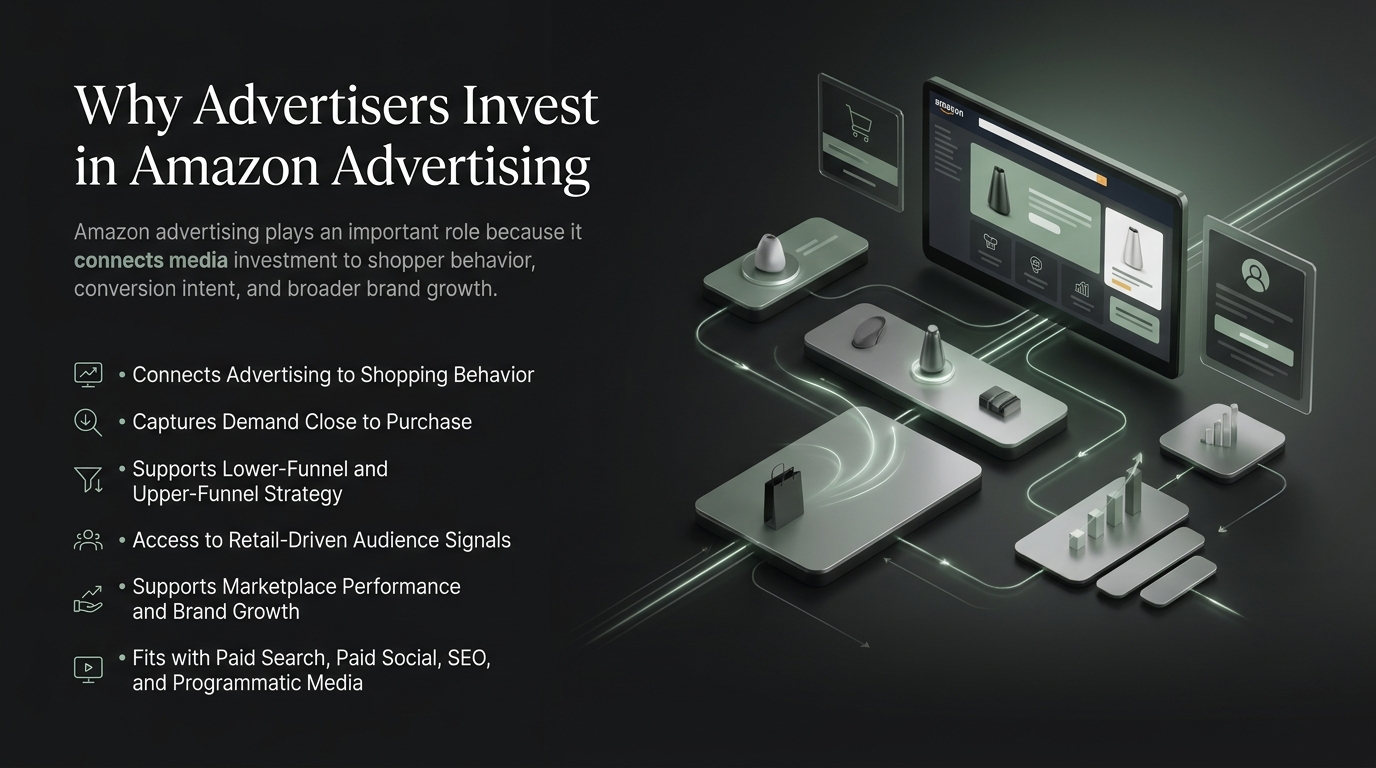
Why advertisers invest in Amazon advertising
- It connects advertising to shopping behavior
- It can capture demand close to purchase
- It supports both lower-funnel and upper-funnel strategy
- It gives brands access to retail-driven audience signals
- It can support direct marketplace performance and broader brand growth
- It fits well with paid search, paid social, SEO, and programmatic media
For Crosstide Media, Amazon advertising is valuable because it combines commerce intent, retail visibility, and audience intelligence in a way that few other platforms can.
Amazon Sponsored Ads vs Amazon DSP
One of the most important parts of Amazon advertising strategy is understanding the difference between Sponsored Ads and Amazon DSP.
Amazon Sponsored Ads
Sponsored Ads are built primarily to drive visibility and sales inside the Amazon marketplace. These campaigns are usually tied more directly to product listings, branded search behavior, product comparison activity, and retail conversion goals.
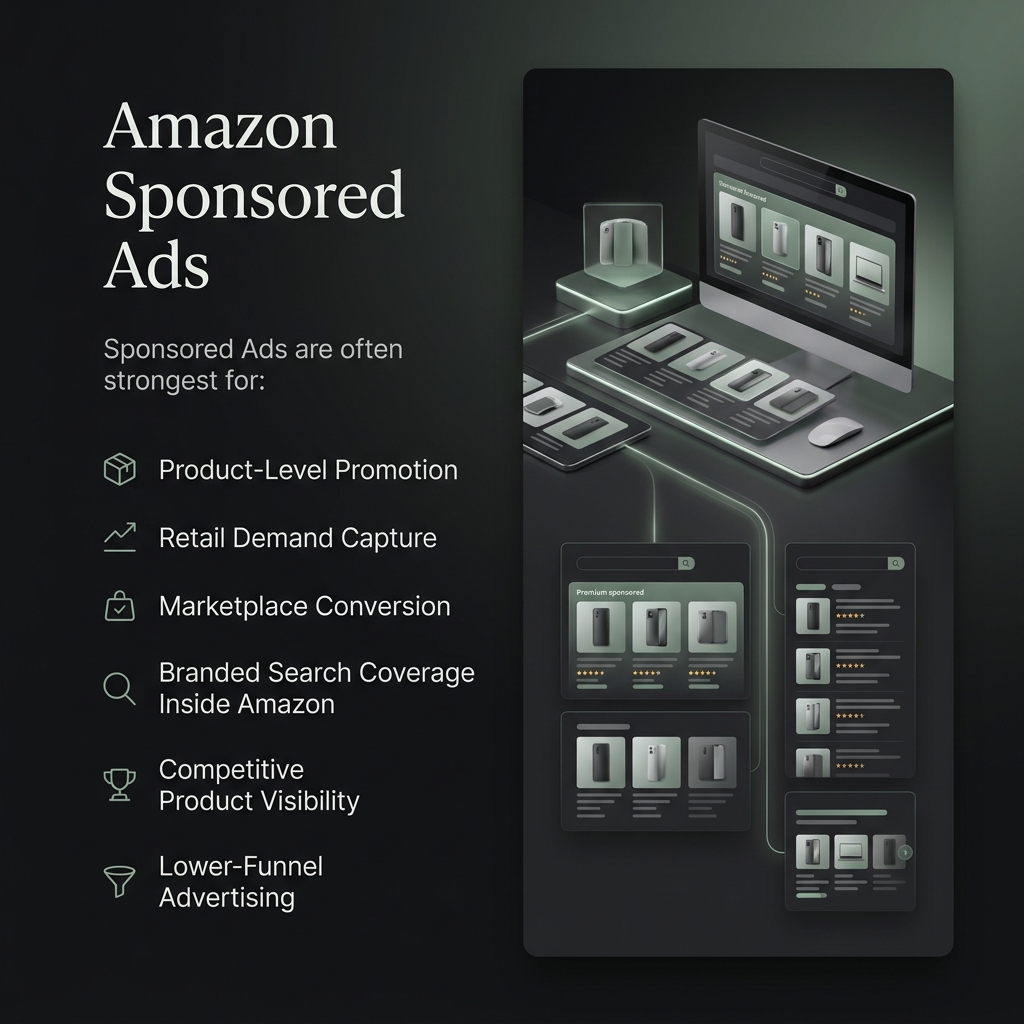
Sponsored Ads are often strongest for:
- Product-level promotion
- Retail demand capture
- Marketplace conversion
- Branded search coverage inside Amazon
- Competitive product visibility
- Lower-funnel advertising
Amazon DSP
Amazon DSP is a demand-side platform used to buy display and video media programmatically. It gives advertisers the ability to reach audiences on Amazon-owned properties as well as third-party websites and apps, depending on strategy.
Amazon DSP is often strongest for:
- upper-funnel awareness
- audience prospecting
- retargeting
- off-Amazon reach
- display and video strategy
- cross-channel retail media support
- broader full-funnel planning
The main difference
The simplest way to think about it is this:
- Sponsored Ads help products get found and purchased inside Amazon
- Amazon DSP helps brands reach audiences with programmatic media on and off Amazon
For Crosstide Media, the strongest Amazon strategies often use both, but with clearly defined roles.
Where Amazon Advertising Fits in the Marketing Landscape
Amazon advertising sits at the intersection of retail media, search behavior, and programmatic audience targeting. It is especially important for brands selling products online, but it can also play a role in broader demand generation and brand awareness strategy.
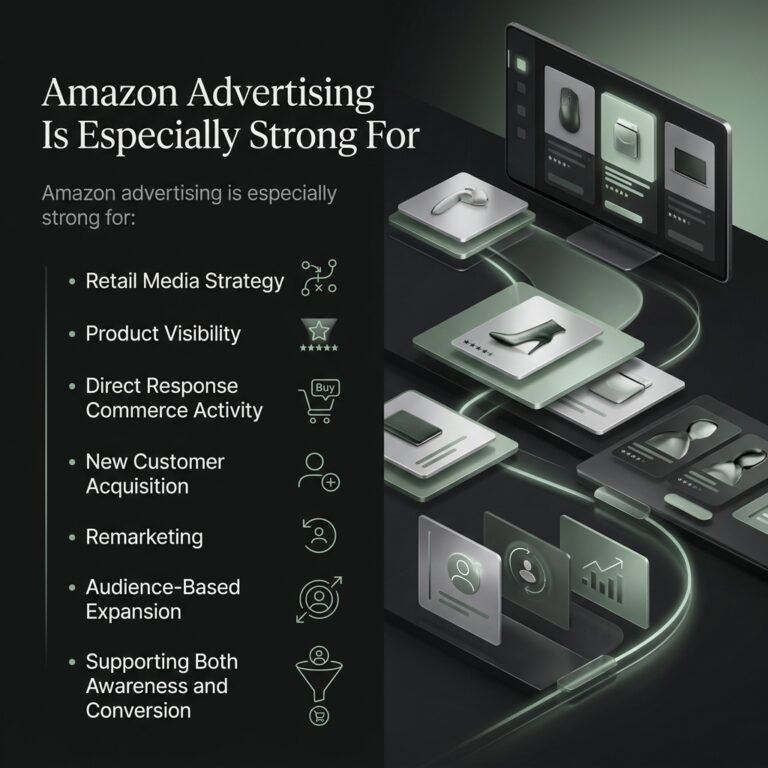
Amazon advertising is especially strong for
- Retail media strategy
- Product visibility
- Direct response commerce activity
- New customer acquisition
- Remarketing
- Audience-based expansion
- Supporting both awareness and conversion
How Amazon complements other channels
Amazon and paid search
Paid search captures users searching on Google or Bing, while Amazon captures users searching and shopping inside a commerce environment.
Amazon and paid social
Paid social can create interest and discovery, while Amazon captures conversion-oriented shopping behavior.
Amazon and programmatic
Amazon DSP can function as part of a broader programmatic display and video strategy, especially when retail audiences matter.
Amazon and SEO
SEO builds long-term visibility outside of Amazon, while Sponsored Ads help products surface inside Amazon when shoppers are actively comparing options.
That makes Amazon one of the most important channels for brands that want to influence both marketplace activity and broader digital commerce performance.
How Amazon Sponsored Ads Work
Amazon Sponsored Ads are designed to help brands and products appear in high-visibility positions inside Amazon’s shopping experience. These campaigns usually show up in search results, product detail pages, and other commerce-driven placements depending on format and setup.
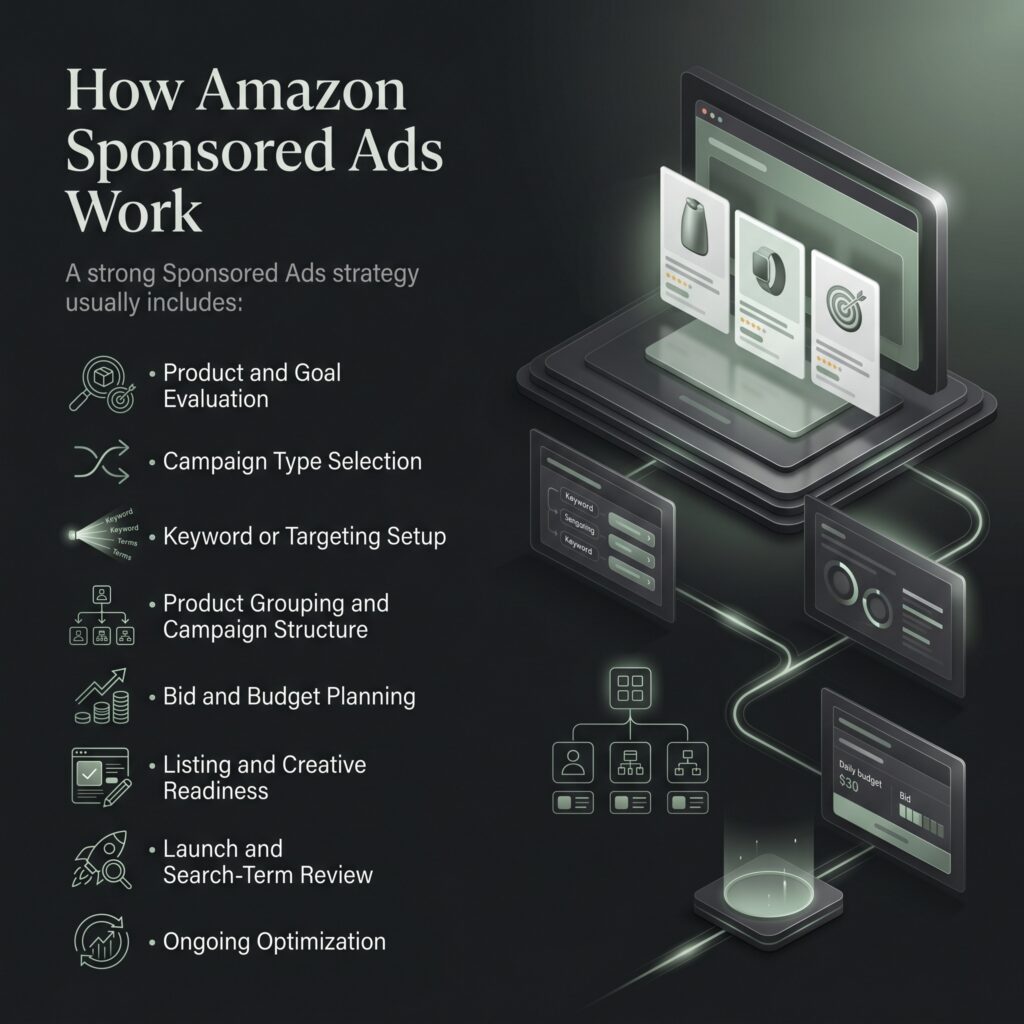
A strong Sponsored Ads strategy usually includes:
- Product and goal evaluation
- Campaign type selection
- Keyword or targeting setup
- Product grouping and campaign structure
- Bid and budget planning
- Listing and creative readiness
- Launch and search-term review
- Ongoing optimization
Sponsored Ads are often the most direct way to improve visibility and drive measurable sales activity inside Amazon.
Sponsored Products Strategy
Sponsored Products are often the most foundational Amazon ad format because they help individual products appear in shopping results and product-level environments.
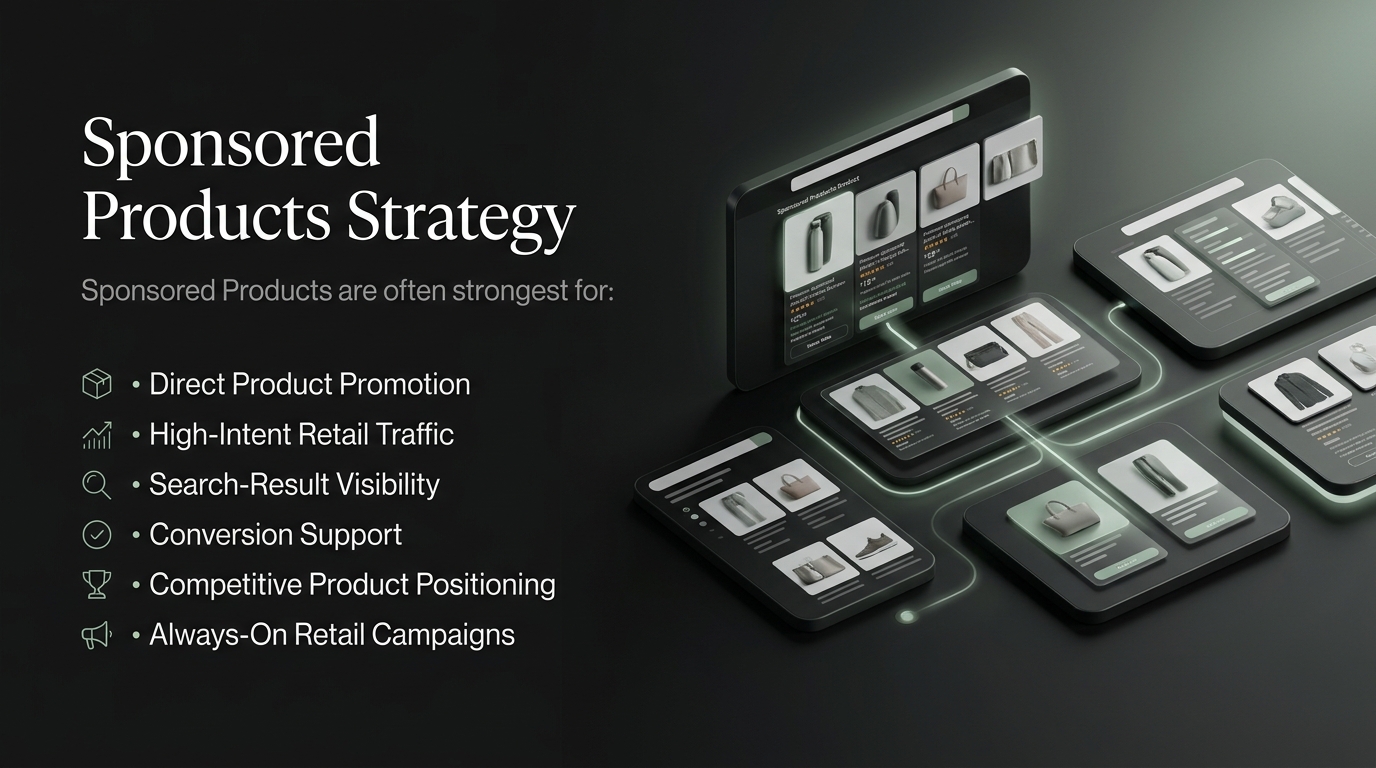
Sponsored Products are often strongest for:
- Direct product promotion
- High-intent retail traffic
- Search-result visibility
- Conversion support
- Competitive product positioning
- Always-on retail campaigns

Strong Sponsored Products strategy often includes
- Product-specific campaign groupings
- Keyword segmentation
- Branded and non-branded separation
- Strong negative keyword management
- Budget concentration on priority SKUs
- Bid control by product value and margin
- Search-term analysis
- Listing quality review
For many brands, Sponsored Products are the backbone of Amazon marketplace advertising because they are tied closely to product-level shopping behavior.
Sponsored Brands Strategy
Sponsored Brands help advertisers promote the brand more broadly within Amazon and can support stronger visibility across multiple products at once.
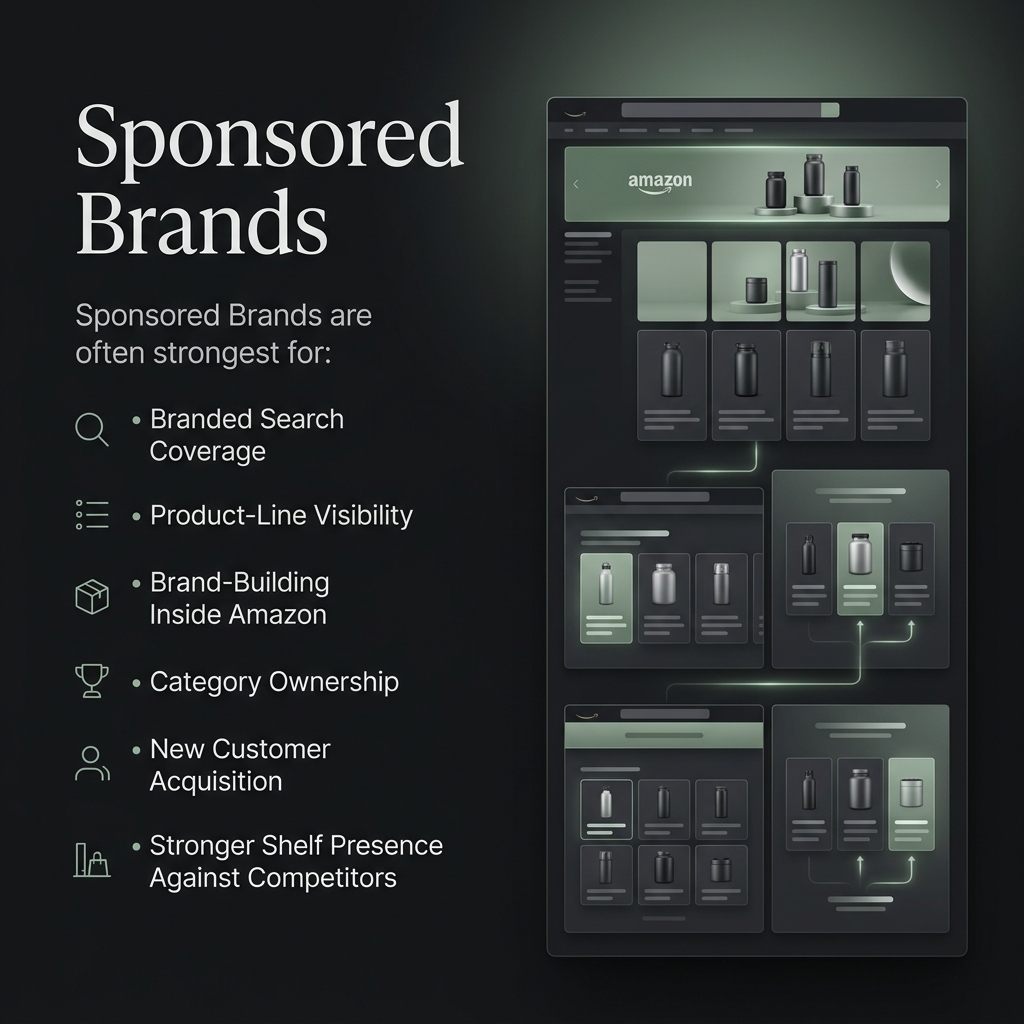
Sponsored Brands are often strongest for
- Branded search coverage
- Product-line visibility
- Brand-building inside Amazon
- Category ownership
- New customer acquisition
- Stronger shelf presence against competitors
Sponsored Brands are often strongest for
- Branded search coverage
- Product-line visibility
- Brand-building inside Amazon
- Category ownership
- New customer acquisition
- Stronger shelf presence against competitors
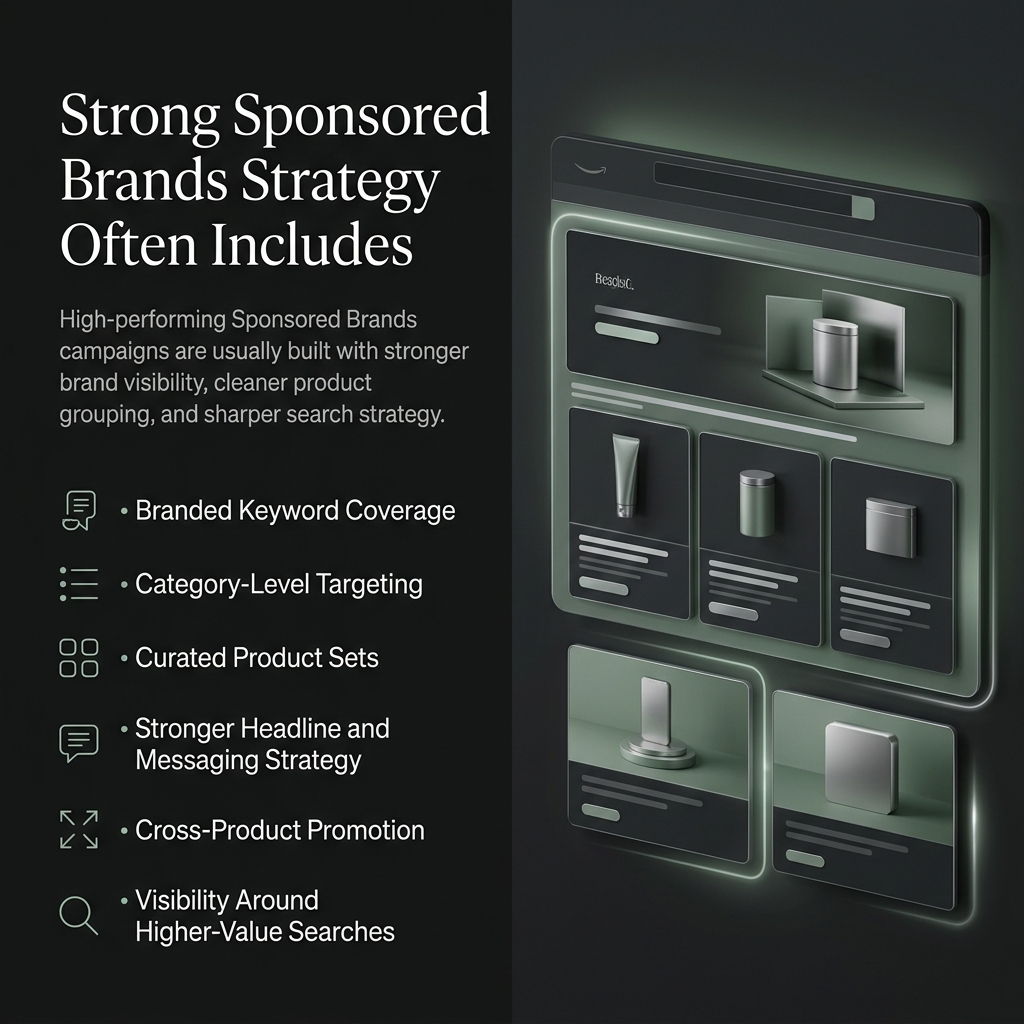
Strong Sponsored Brands strategy often includes
- Branded keyword coverage
- Category-level targeting
- Curated product sets
- Stronger headline and messaging strategy
- Cross-product promotion
- Visibility around higher-value searches
Sponsored Brands can be especially useful when a business wants to move beyond individual SKUs and create a stronger branded presence inside Amazon.
Sponsored Display Strategy
Sponsored Display can help brands extend product visibility, retarget shoppers, and maintain presence beyond standard search-result placements within Amazon’s ecosystem.

Sponsored Display is often useful for
- Retargeting
- Product-detail-page presence
- Defensive visibility
- Competitor adjacency strategy
- Audience re-engagement
- Expanded marketplace visibility
Sponsored Display is often useful for
- Retargeting
- Product-detail-page presence
- Defensive visibility
- Competitor adjacency strategy
- Audience re-engagement
- Expanded marketplace visibility
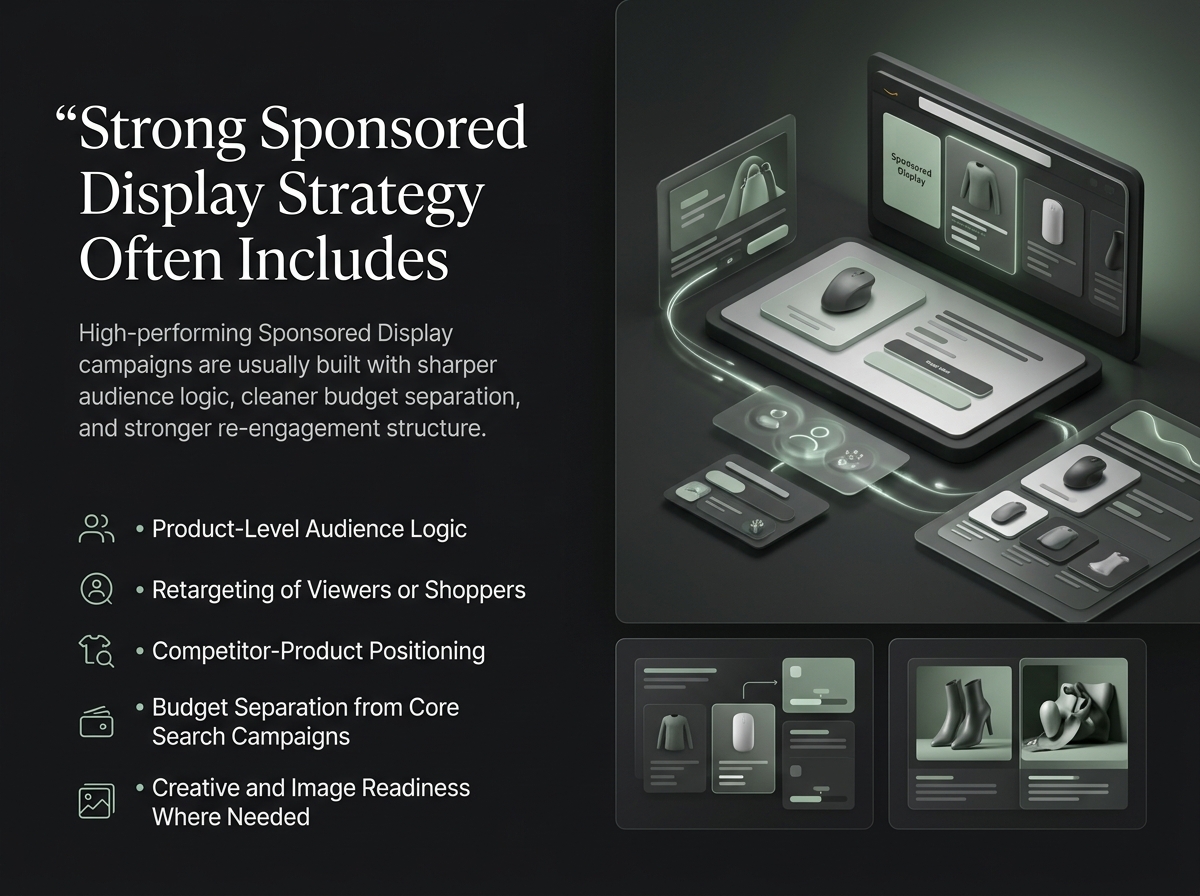
Strong Sponsored Display strategy often includes
- Product-level audience logic
- Retargeting of viewers or shoppers
- Competitor-product positioning
- Budget separation from core search campaigns
- Creative and image readiness where needed
Sponsored Display often sits between traditional Sponsored Ads and broader DSP-style strategy, making it useful for advertisers who want more audience-driven activity without moving fully into Amazon DSP
Amazon DSP Strategy
Amazon DSP gives advertisers the ability to buy display and video media using Amazon audience signals and programmatic inventory access. It is generally more expansive than Sponsored Ads and can support both on-Amazon and off-Amazon media strategy.
Amazon DSP is often strongest for
- Upper-funnel awareness
- Audience prospecting
- Product and brand education
- Display and video media buying
- Cross-channel reach
- Retargeting
- Retail media expansion beyond Amazon
Why Amazon DSP matters
Amazon DSP gives brands access to:
- Programmatic display
- Programmatic video
- Audience-based media buying
- Off-Amazon inventory
- Retargeting based on audience behavior
- Broader full-funnel campaign planning
For Crosstide Media, Amazon DSP is most valuable when the advertiser wants to use commerce-driven audience intelligence beyond basic marketplace ad placements.
Different Ways to Buy Media Through Amazon DSP
Amazon DSP can be used in different ways depending on the advertiser’s goal, budget, and audience strategy.
Common Amazon DSP buying approaches

Prospecting campaigns
Used to reach new audiences likely to be relevant based on retail, behavioral, or audience data.
Retargeting campaigns
Used to reconnect with users who have already interacted with the brand, product, or category.
On-Amazon media
Used to place ads within Amazon-owned environments where users may already be shopping or browsing.
Off-Amazon media
Used to extend Amazon audience targeting across third-party websites, apps, and digital media placements.
Display campaigns
Used for awareness, product visibility, and retargeting support.
Video campaigns
Used for stronger storytelling, product education, and upper-funnel reach.
Why buying path matters
Not every Amazon DSP campaign should be built the same way. A retargeting campaign, for example, usually has a very different role than a prospecting video campaign. The strongest DSP strategy starts with defining which type of media exposure is needed and where it should happen.

Audience Targeting and Retargeting Strategy
Audience strategy is one of the biggest strengths of Amazon advertising because it allows brands to align media buying with commerce-related behavior.
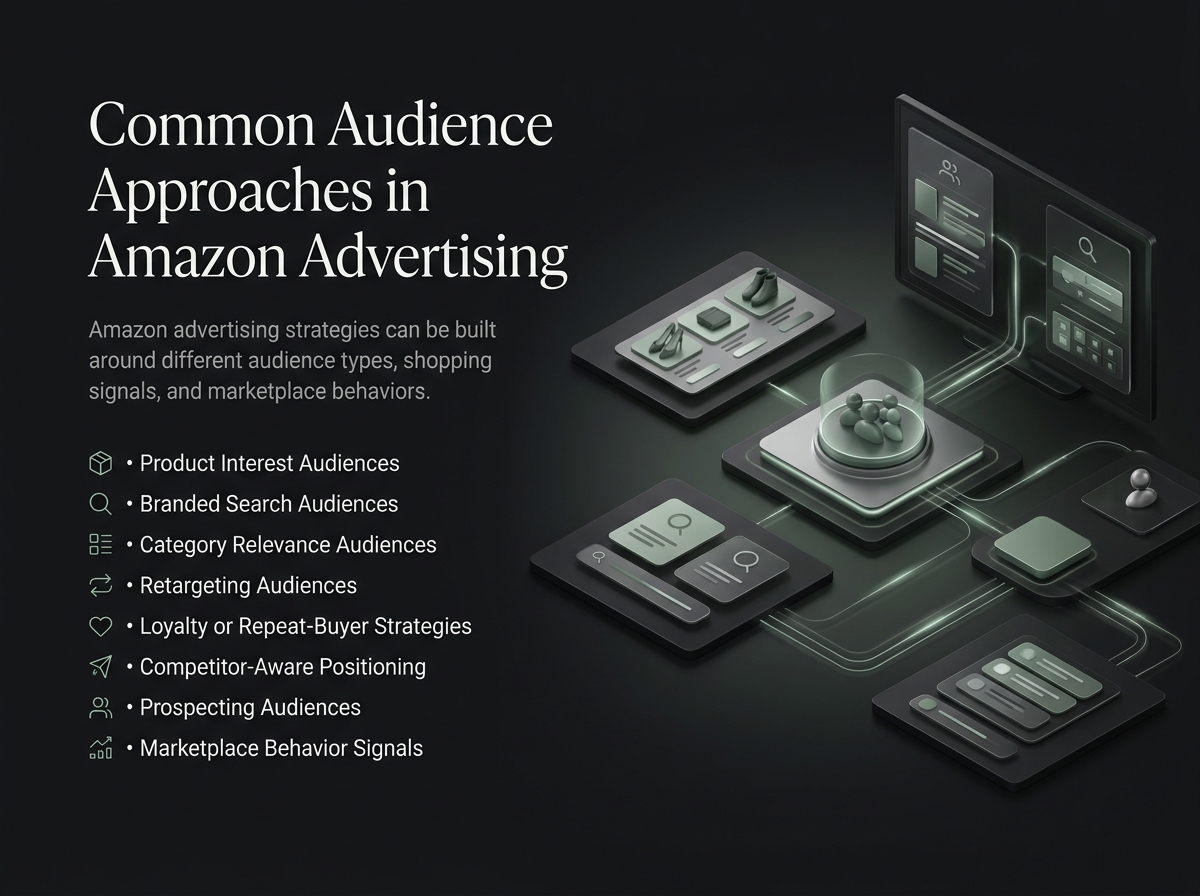
Common audience approaches in Amazon advertising
- Product interest audiences
- Branded search audiences
- Category relevance audiences
- Retargeting audiences
- Loyalty or repeat-buyer strategies
- Competitor-aware positioning
- Prospecting audiences
- Marketplace behavior signals
Why retargeting matters
Retargeting is important because many shoppers do not convert the first time they see a product. Amazon advertising can help brands stay visible as users compare options, revisit products, and move closer to purchase.
Why prospecting matters
Prospecting is important because growth usually depends on reaching new shoppers, not just converting users already familiar with the brand. Amazon DSP is especially useful here because it can expand reach beyond direct marketplace search behavior.
Which Brands and Industries Benefit Most
Brands that often benefit most from Sponsored Ads
- consumer packaged goods
- health and wellness products
- beauty and personal care brands
- home goods brands
- food and beverage products
- electronics and accessories
- pet products
- household essentials
Brands that often benefit most from Amazon DSP
- brands with larger awareness budgets
- brands that need full-funnel retail media strategy
- brands launching new products
- brands with repeat-purchase cycles
- larger e-commerce businesses
- manufacturers and national consumer brands
- advertisers needing off-Amazon prospecting and retargeting
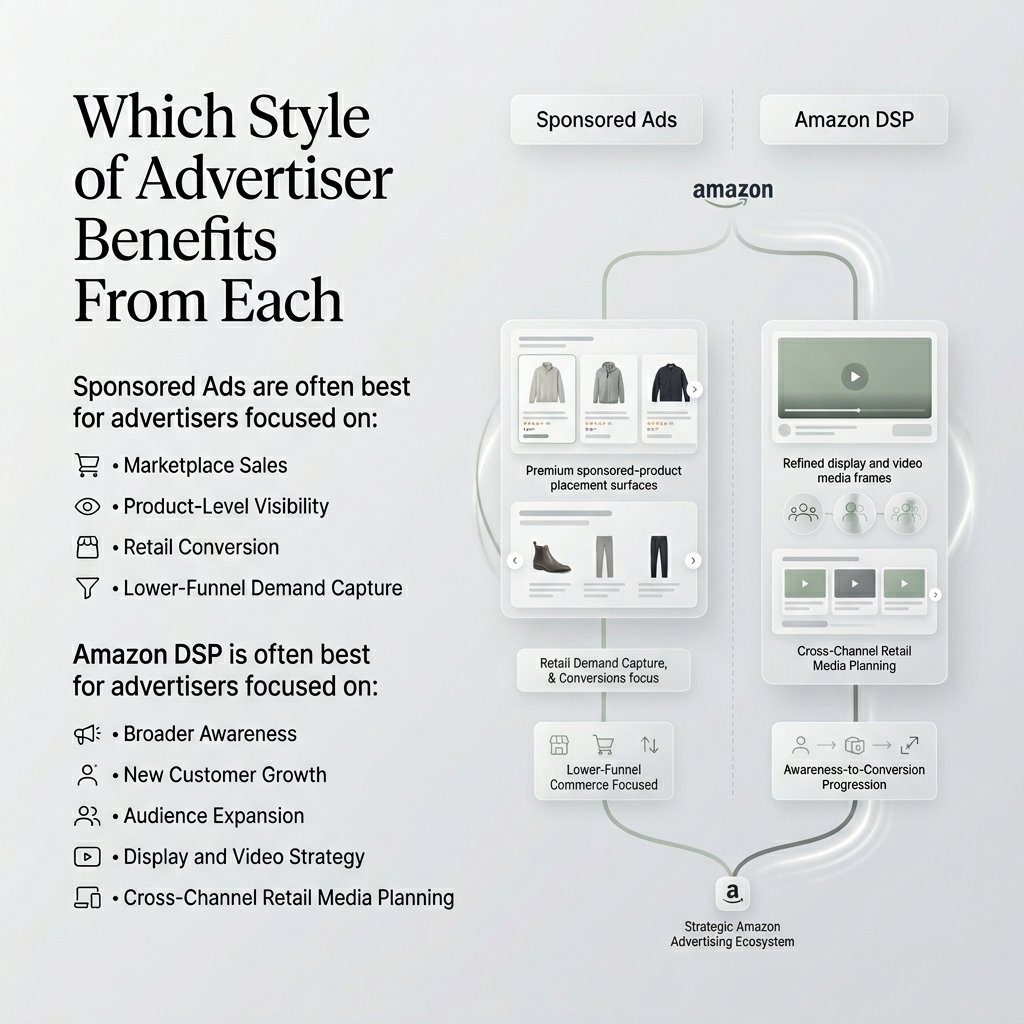
Which style of advertiser benefits from each
Sponsored Ads are often best for advertisers focused on:
- marketplace sales
- product-level visibility
- retail conversion
- lower-funnel demand capture
Amazon DSP is often best for advertisers focused on:
- broader awareness
- new customer growth
- audience expansion
- display and video strategy
- cross-channel retail media planning
Creative Strategy and Amazon Ad Specifications
Creative matters differently across Sponsored Ads and Amazon DSP, but in both cases it directly affects visibility, click behavior, and conversion support.
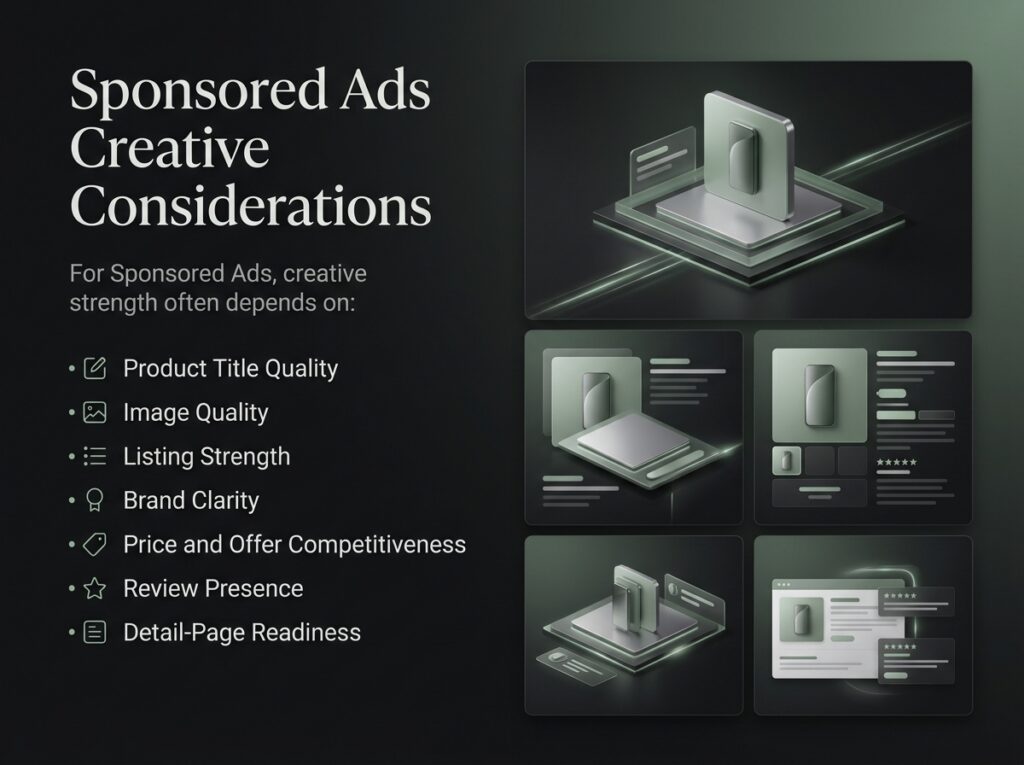
Sponsored Ads creative considerations
For Sponsored Ads, creative strength often depends on:
- product title quality
- image quality
- listing strength
- brand clarity
- price and offer competitiveness
- review presence
- detail-page readiness
Amazon DSP creative considerations
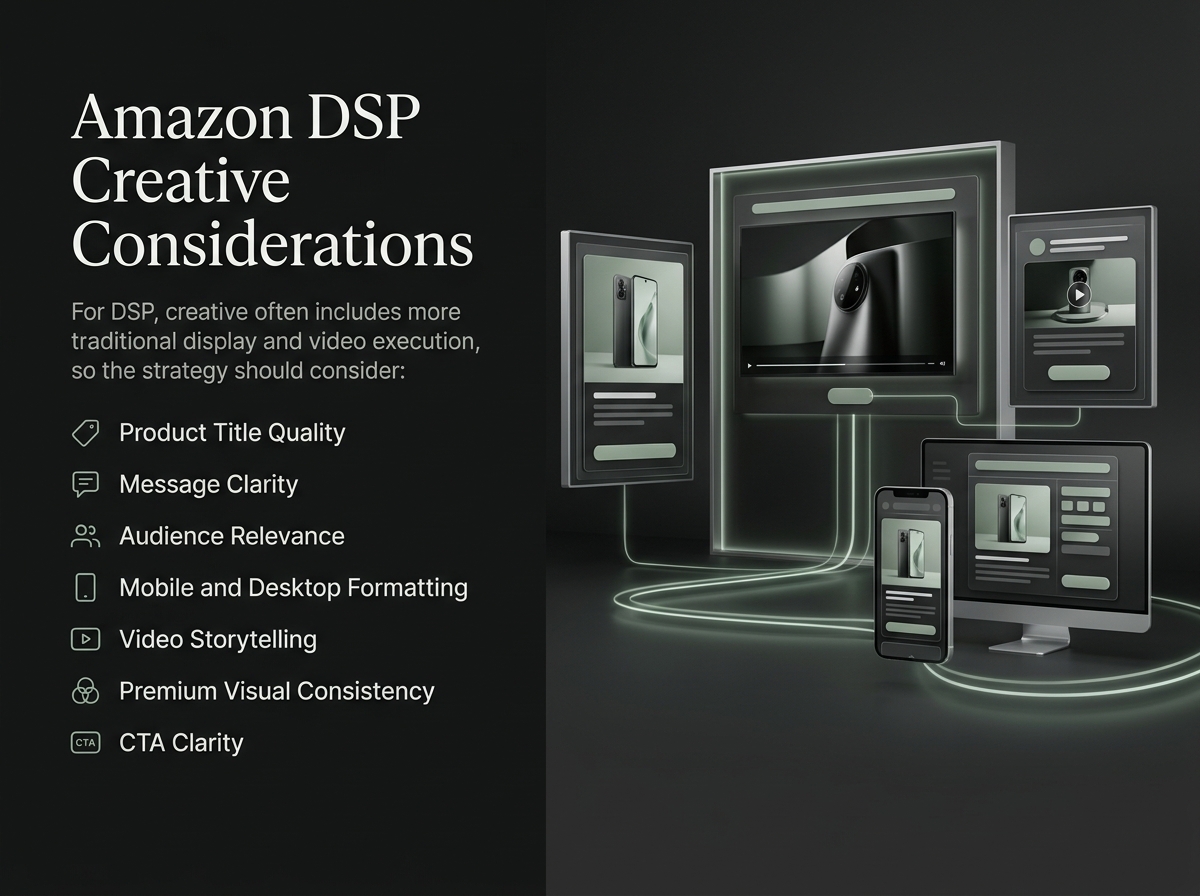
For DSP, creative often includes more traditional display and video execution, so the strategy should consider:
- product title quality
- message clarity
- audience relevance
- mobile and desktop formatting
- video storytelling
- premium visual consistency
- CTA clarity
Amazon DSP creative considerations
For DSP, creative often includes more traditional display and video execution, so the strategy should consider:
- product title quality
- message clarity
- audience relevance
- mobile and desktop formatting
- video storytelling
- premium visual consistency
- CTA clarity
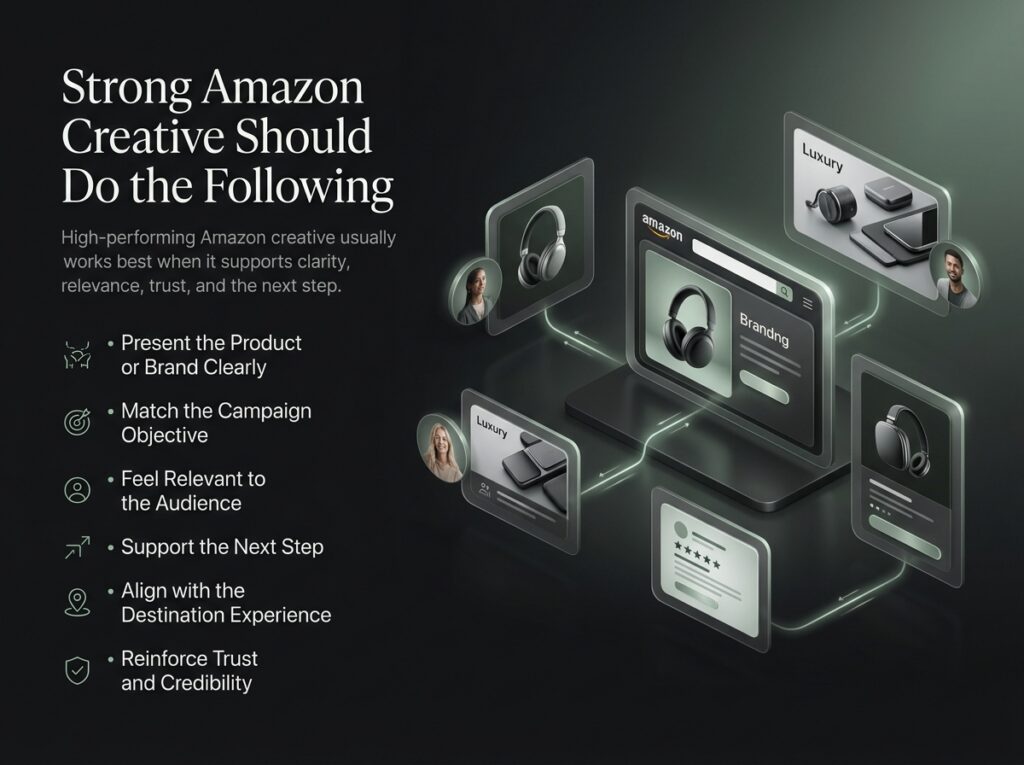
Strong Amazon creative should do the following
- present the product or brand clearly
- match the campaign objective
- feel relevant to the audience
- support the next step
- align with the destination experience
- reinforce trust and credibility
For Crosstide Media, creative strategy should reflect whether the campaign is trying to close a sale, reinforce brand consideration, or build broader awareness.
Account Setup and Campaign Structure
Strong Amazon performance usually starts with clean structure. Campaigns should be organized in a way that supports efficiency, budget control, reporting clarity, and optimization.
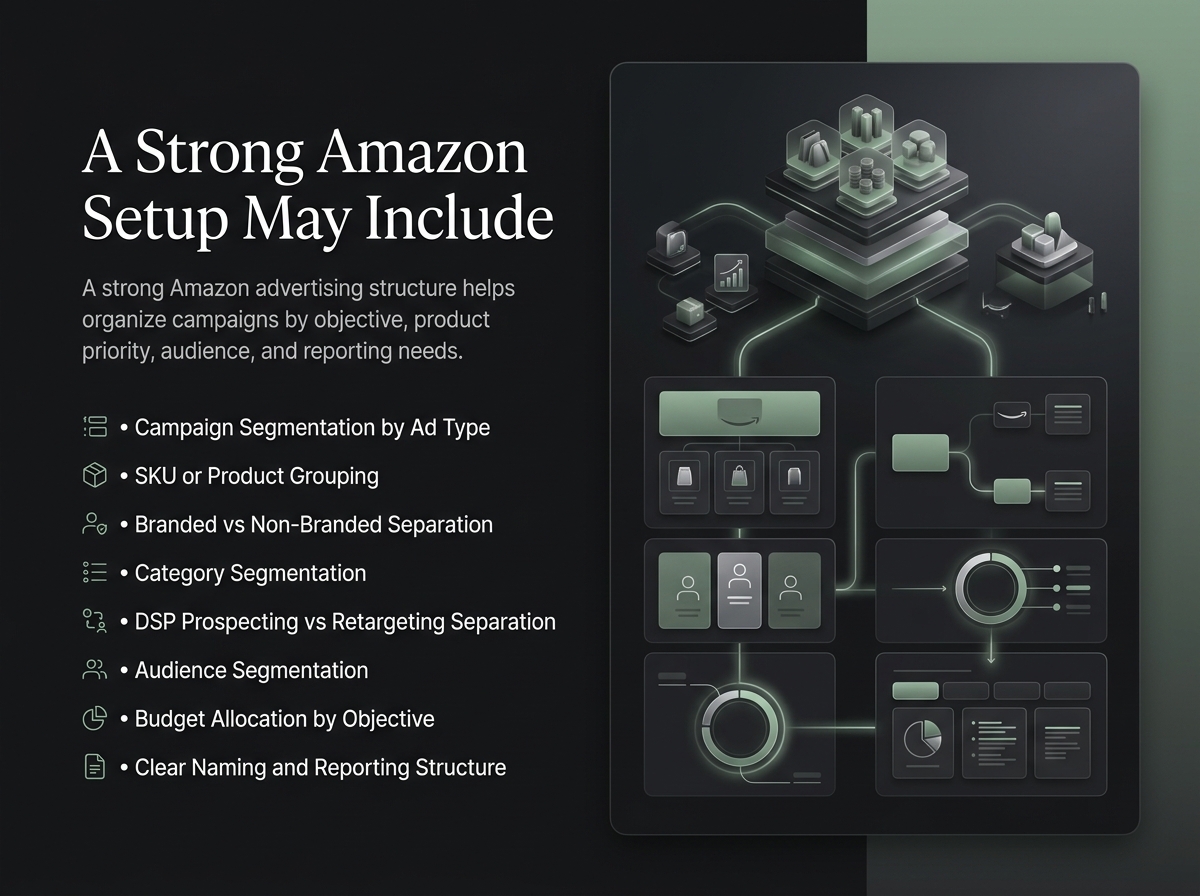
A strong Amazon setup may include
- campaign segmentation by ad type
- SKU or product grouping
- branded vs non-branded separation
- category segmentation
- DSP prospecting vs retargeting separation
- audience segmentation
- budget allocation by objective
- clear naming and reporting structure
A strong Amazon setup may include
- campaign segmentation by ad type
- SKU or product grouping
- branded vs non-branded separation
- category segmentation
- DSP prospecting vs retargeting separation
- audience segmentation
- budget allocation by objective
- clear naming and reporting structure
Why structure matters
The initial setup affects:
- budget efficiency
- reporting visibility
- search-term quality
- audience clarity
- optimization speed
- scaling potential
For Crosstide Media, account structure is a major part of long-term Amazon advertising performance.

Auditing and Optimization Process
A strong Amazon strategy should include both a setup phase and an ongoing audit-and-optimization process. Many Amazon advertising accounts underperform because they carry weak structure, poor product prioritization, unclear budget allocation, weak search-term control, or inefficient DSP audience planning.
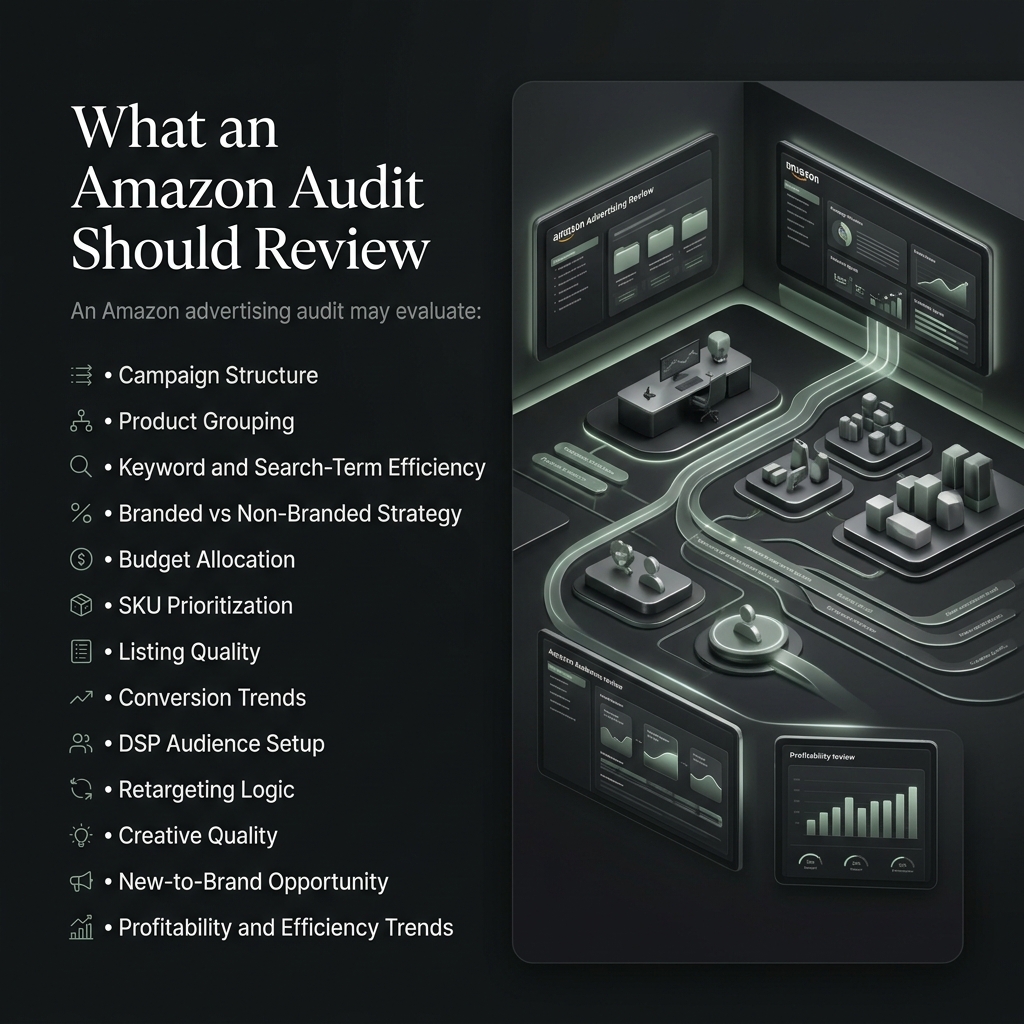
What an Amazon audit should review
An Amazon advertising audit may evaluate:
- campaign structure
- product grouping
- keyword and search-term efficiency
- branded vs non-branded strategy
- budget allocation
- SKU prioritization
- listing quality
- conversion trends
- DSP audience setup
- retargeting logic
- creative quality
- new-to-brand opportunity
- profitability and efficiency trends
What an Amazon audit should review
An Amazon advertising audit may evaluate:
- campaign structure
- product grouping
- keyword and search-term efficiency
- branded vs non-branded strategy
- budget allocation
- SKU prioritization
- listing quality
- conversion trends
- DSP audience setup
- retargeting logic
- creative quality
- new-to-brand opportunity
- profitability and efficiency trends
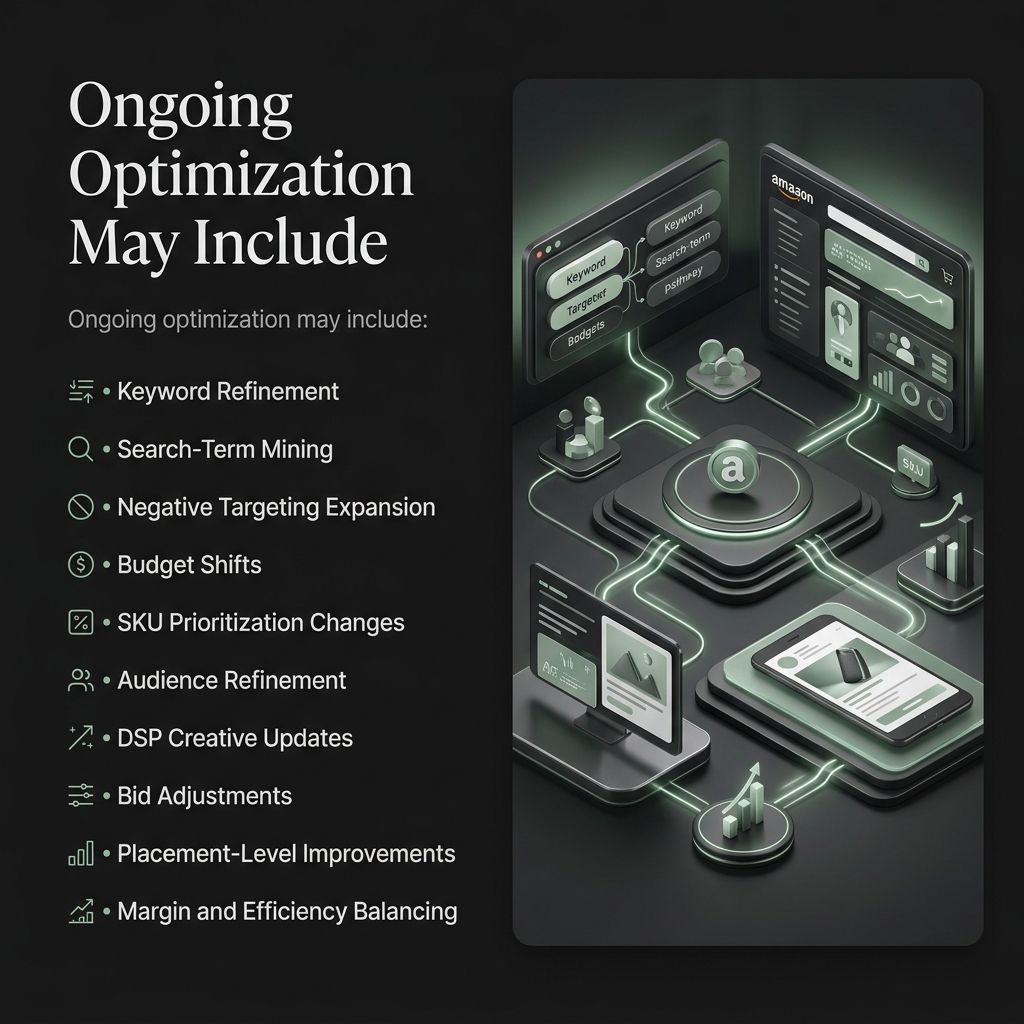
Ongoing optimization may include
- keyword refinement
- search-term mining
- negative targeting expansion
- budget shifts
- SKU prioritization changes
- audience refinement
- DSP creative updates
- bid adjustments
- placement-level improvements
- margin and efficiency balancing
This is where many long-term retail media gains are created.
Budgeting, Bidding, and Media Efficiency
Amazon advertising budgets should be guided by business goals, product economics, margin structure, sales velocity, and campaign role.
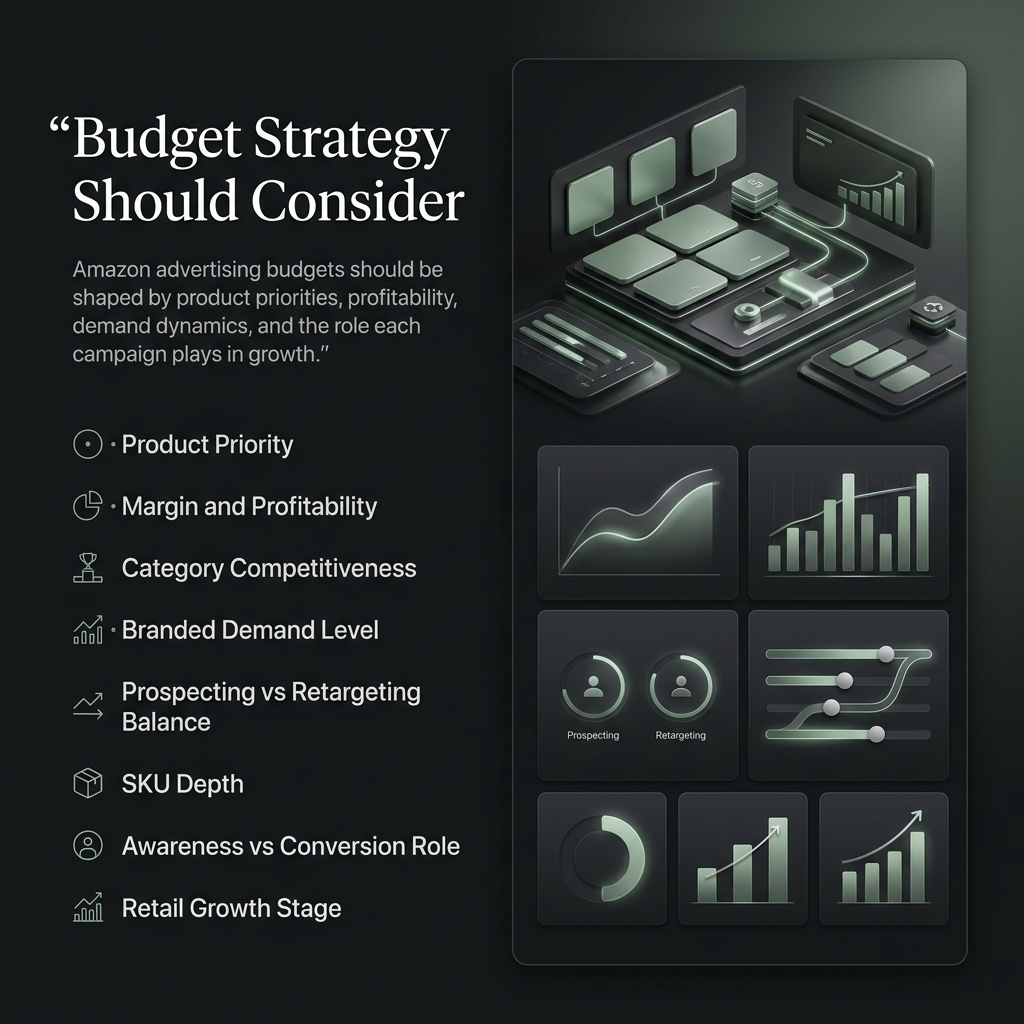
Budget strategy should consider
- product priority
- margin and profitability
- category competitiveness
- branded demand level
- prospecting vs retargeting balance
- SKU depth
- awareness vs conversion role
- retail growth stage
A budget that is too small can limit scale, reduce learning, and make it harder to understand whether the campaign is working across different listening environments.
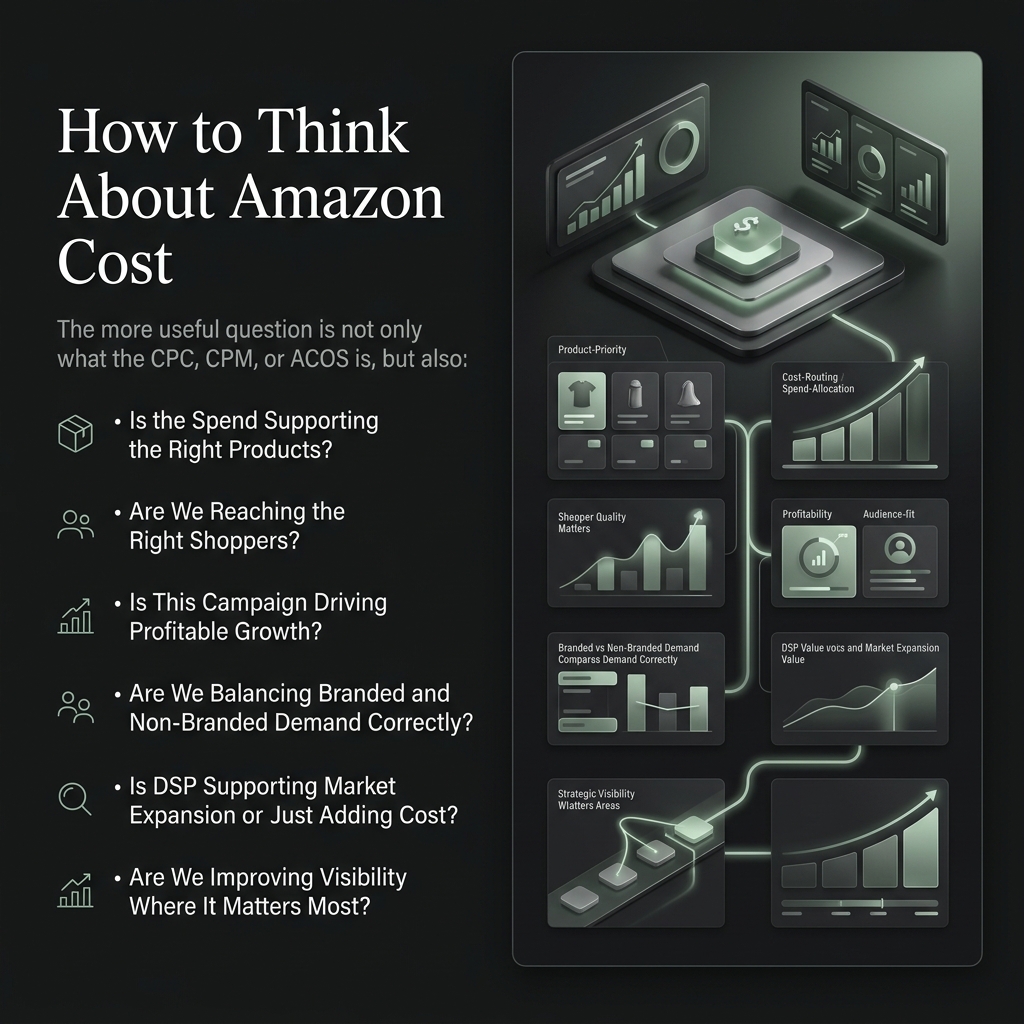
How to think about Amazon cost
The more useful question is not only what the CPC, CPM, or ACOS is, but also:
- Is the spend supporting the right products?
- Are we reaching the right shoppers?
- Is this campaign driving profitable growth?
- Are we balancing branded and non-branded demand correctly?
- Is DSP supporting market expansion or just adding cost?
- Are we improving visibility where it matters most?
A higher cost is not automatically a negative if it comes with stronger new customer growth, higher-value sales, better category visibility, or stronger full-funnel contribution.
How to think about Amazon cost
The more useful question is not only what the CPC, CPM, or ACOS is, but also:
- Is the spend supporting the right products?
- Are we reaching the right shoppers?
- Is this campaign driving profitable growth?
- Are we balancing branded and non-branded demand correctly?
- Is DSP supporting market expansion or just adding cost?
- Are we improving visibility where it matters most?
A higher cost is not automatically a negative if it comes with stronger new customer growth, higher-value sales, better category visibility, or stronger full-funnel contribution.
Measurement, Attribution, and Reporting
Amazon campaigns should be measured in a way that reflects both retail performance and broader media contribution.
Common Amazon metrics may include
- impressions
- clicks
- click-through rate
- cost per click
- conversion rate
- sales
- return on ad spend
- advertising cost efficiency
- new-to-brand performance where relevant
- audience engagement
- DSP reach and frequency
- product-level performance
Strong reporting should also include
- product and SKU insights
- branded vs non-branded trends
- search-term quality
- DSP audience performance
- retargeting efficiency
- budget allocation trends
- profitability signals
- optimization actions taken
Why attribution matters
Amazon advertising can influence both immediate purchases and later conversion behavior. Sponsored Ads may be closer to direct response, while DSP often plays a broader awareness and retargeting role. Because of that, reporting should reflect the real role of each tactic rather than treating them all the same.
Why Work With Crosstide Media?
Effective Amazon advertising requires more than turning on Sponsored Ads or launching a DSP campaign. It takes platform strategy, retail awareness, audience planning, creative alignment, product prioritization, account structure, and ongoing optimization.
Crosstide Media helps advertisers execute Amazon advertising strategies with:
- Sponsored Ads strategy
- Amazon DSP planning
- product-level campaign structure
- audience targeting and retargeting
- keyword and retail intent strategy
- creative alignment
- account audits
- performance reporting
- ongoing optimization
We approach Amazon advertising as both a retail growth channel and a broader full-funnel media opportunity. Our focus is on helping brands use Sponsored Ads and Amazon DSP in a way that improves visibility, reduces waste, and drives stronger business results.
Whether the goal is product visibility, marketplace growth, audience expansion, or a more advanced retail media strategy, Crosstide Media helps advertisers build Amazon campaigns with the structure and discipline required for long-term growth.
Why Work With Crosstide Media?
Effective Amazon advertising requires more than turning on Sponsored Ads or launching a DSP campaign. It takes platform strategy, retail awareness, audience planning, creative alignment, product prioritization, account structure, and ongoing optimization.
Crosstide Media helps advertisers execute Amazon advertising strategies with:
- Sponsored Ads strategy
- Amazon DSP planning
- product-level campaign structure
- audience targeting and retargeting
- keyword and retail intent strategy
- creative alignment
- account audits
- performance reporting
- ongoing optimization
We approach Amazon advertising as both a retail growth channel and a broader full-funnel media opportunity. Our focus is on helping brands use Sponsored Ads and Amazon DSP in a way that improves visibility, reduces waste, and drives stronger business results.
Whether the goal is product visibility, marketplace growth, audience expansion, or a more advanced retail media strategy, Crosstide Media helps advertisers build Amazon campaigns with the structure and discipline required for long-term growth.
Frequently Asked Questions
What is Amazon advertising?
What is the difference between Amazon Sponsored Ads and Amazon DSP?
Sponsored Ads are built mainly for visibility and sales inside Amazon, while Amazon DSP is used for programmatic display and video campaigns that can reach audiences both on and off Amazon.
What are Sponsored Products?
What are Sponsored Brands?
What is Amazon DSP?
Is Amazon DSP only for brands that sell on Amazon?
Which is better: Sponsored Ads or Amazon DSP?
What types of brands benefit most from Amazon advertising?
Why does campaign structure matter in Amazon advertising?
Why work with an Amazon advertising partner?
Build a Smarter Amazon Advertising Strategy
If your brand needs a more strategic Amazon advertising approach, Crosstide Media can help you plan, launch, and optimize campaigns built around stronger retail visibility, cleaner product strategy, smarter audience targeting, and clearer reporting. Whether your goal is to increase sales on Amazon, improve Sponsored Ads performance, expand your reach with Amazon DSP, or build a stronger full-funnel retail media strategy, we help brands use Amazon advertising in a smarter, more results-focused way.
Why Brands Choose Crosstide Media
Brands choose Crosstide Media because effective Amazon advertising requires more than launching campaigns. Strong results come from the right mix of platform strategy, product prioritization, retail intent planning, audience segmentation, creative discipline, measurement, and ongoing optimization. Our approach is built to help advertisers improve visibility, reduce waste, strengthen media efficiency, and make better decisions through clearer reporting and more actionable campaign insights.
Talk to Crosstide Media About Amazon Advertising
If you are looking for a partner that can help you improve Amazon Sponsored Ads performance, understand Amazon DSP, and build a stronger retail media strategy, Crosstide Media can help. We build Amazon advertising strategies with the planning, structure, audience intelligence, creative alignment, and optimization discipline needed to support long-term growth.