
Brand Safety & Fraud Prevention
Brand Safety and Fraud Prevention Strategy Built for Cleaner Media, Smarter Programmatic Buying, and Better Campaign Performance
Brand safety and fraud prevention are some of the most important parts of modern digital advertising. In programmatic media especially, brands are not only trying to reach the right audience. They are also trying to make sure their ads appear in the right environments, avoid invalid traffic, reduce wasted spend, and protect campaign quality across websites, apps, video inventory, connected TV, and other digital placements.
That matters because not every impression carries the same value. Two campaigns may show similar CPMs, reach, or delivery totals, but the real quality of those impressions can be very different depending on inventory source, publisher standards, fraud exposure, viewability, contextual relevance, and supply-path quality. A campaign that runs in safer, cleaner, more transparent environments will often produce stronger long-term performance than one built around cheap volume alone.
At Crosstide Media, brand safety and fraud prevention are not treated as afterthoughts. They are built into how we plan, buy, monitor, and optimize digital media from the beginning. We use inventory controls, contextual standards, pre-bid segments, partner tools, supply-path evaluation, PMP strategy, fraud prevention safeguards, and ongoing reporting discipline to help advertisers protect their brand and improve media quality. Strong brand safety is not just a protection issue. It is also a performance issue.

Jump To
What Is Brand Safety in Digital Advertising?
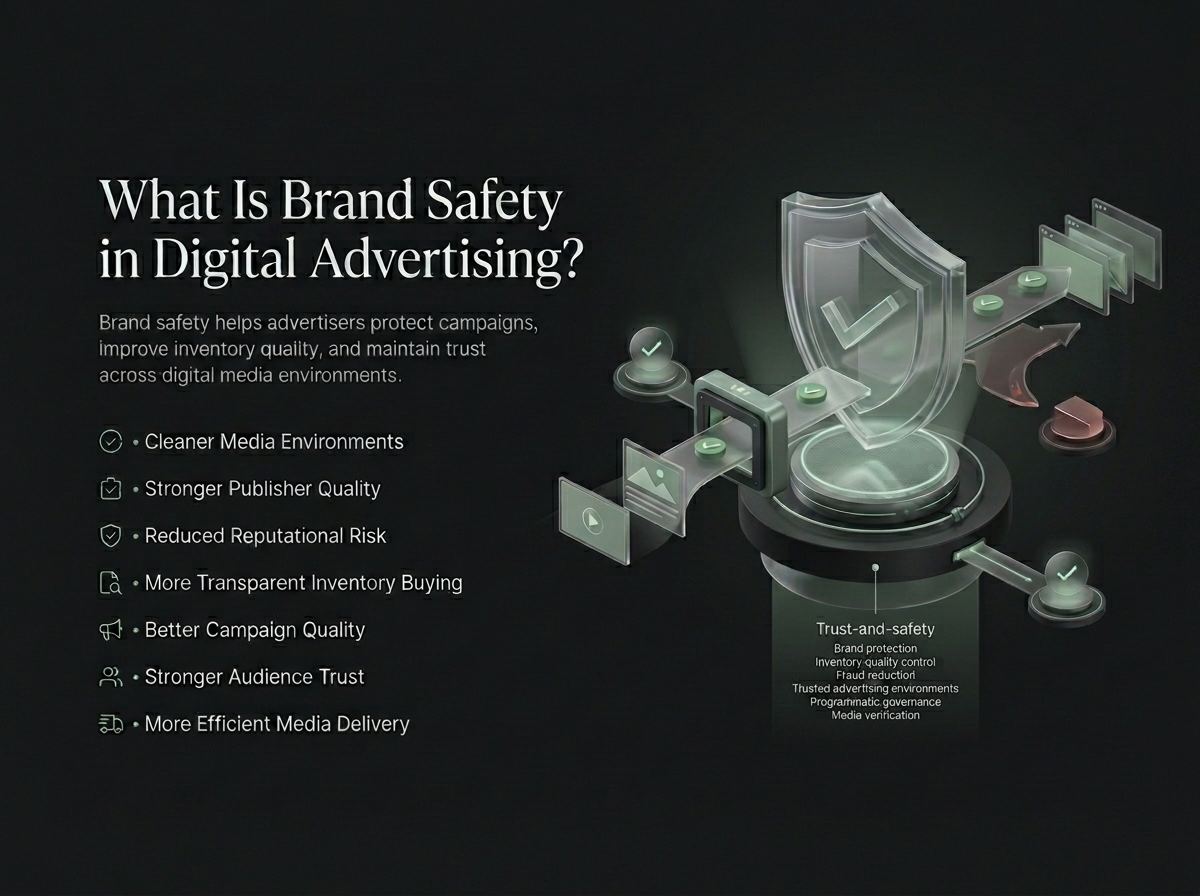
Brand safety in digital advertising refers to the steps advertisers take to make sure their ads do not appear in environments that could harm the brand, damage perception, or create unnecessary media risk. This often includes avoiding low-quality content, unsafe environments, invalid traffic, poor publisher standards, and placements that do not align with the advertiser’s values or campaign goals.
In digital advertising, brand safety can help support:
- cleaner media environments
- stronger publisher quality
- reduced reputational risk
- more transparent inventory buying
- better campaign quality
- stronger audience trust
- more efficient media delivery
Brand safety is especially important in programmatic advertising because campaigns often run across many publishers, apps, exchanges, and supply sources at scale.
Why Brand Safety and Fraud Prevention Matter
Brand safety and fraud prevention matter because digital advertising does not only involve opportunity. It also involves exposure. The more complex the media supply chain becomes, the more important it is to control where ads run and how inventory is evaluated.
A strong brand safety and fraud prevention strategy can help support:
- better publisher quality
- lower fraud exposure
- reduced wasted spend
- stronger viewability
- better contextual alignment
- improved supply-path transparency
- stronger campaign trust
- cleaner performance reporting

Why advertisers care about brand safety and fraud prevention
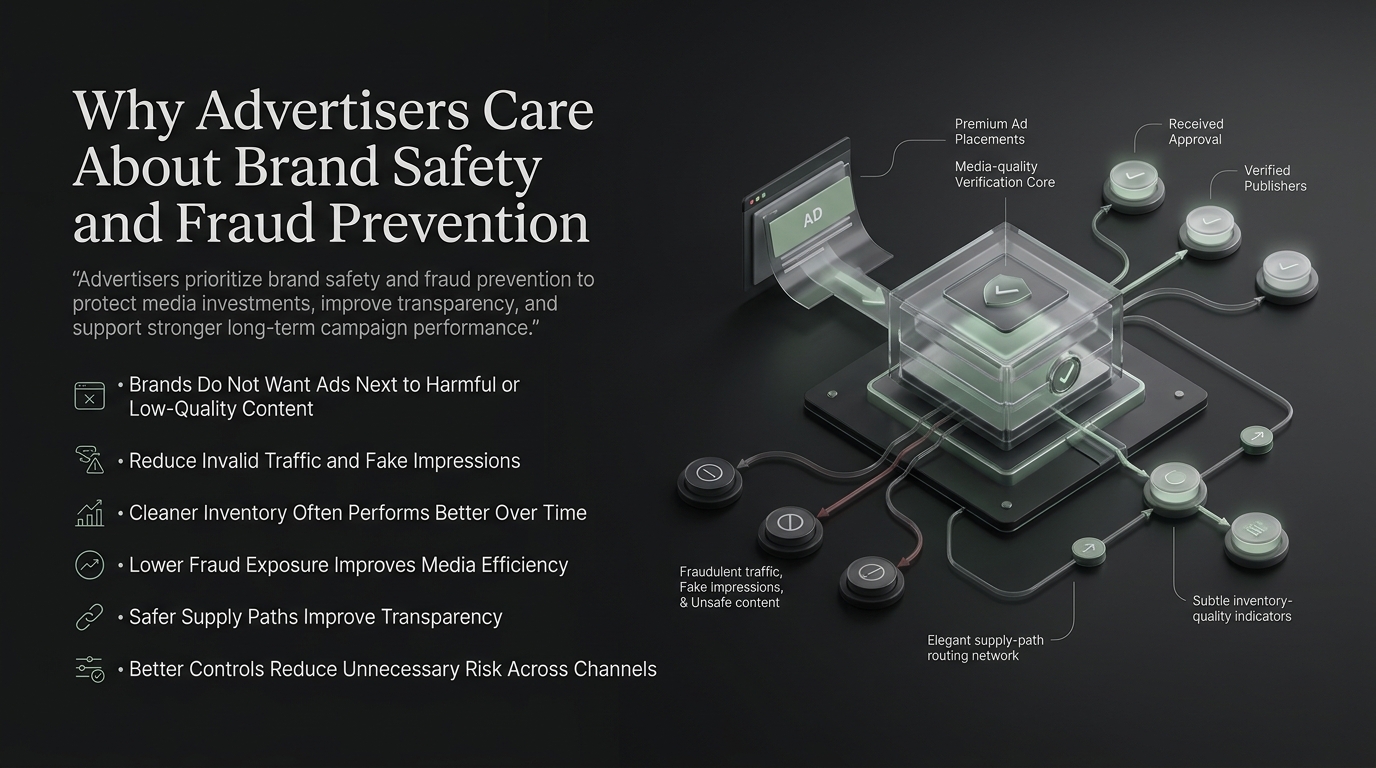
- Brands do not want ads next to harmful or low-quality content
- Advertisers want to reduce invalid traffic and fake impressions
- Cleaner inventory often performs better over time
- Lower fraud exposure helps improve media efficiency
- Safer supply paths improve transparency
- Better controls reduce unnecessary risk across channels
For Crosstide Media, brand safety is not just a protective layer. It is part of what helps create stronger, smarter media performance.
Why advertisers care about brand safety and fraud prevention
- Brands do not want ads next to harmful or low-quality content
- Advertisers want to reduce invalid traffic and fake impressions
- Cleaner inventory often performs better over time
- Lower fraud exposure helps improve media efficiency
- Safer supply paths improve transparency
- Better controls reduce unnecessary risk across channels
For Crosstide Media, brand safety is not just a protective layer. It is part of what helps create stronger, smarter media performance.
What Is Ad Fraud?
Ad fraud refers to deceptive activity that creates fake, low-value, or invalid advertising interactions in order to drain advertiser budget or misrepresent media quality. Fraud can happen in many ways, including fake traffic, bot activity, spoofed inventory, hidden ads, stacked ads, click manipulation, and other forms of invalid delivery.
In practical terms, ad fraud means advertisers may pay for impressions, clicks, traffic, or activity that do not represent real user value.
Why ad fraud matters
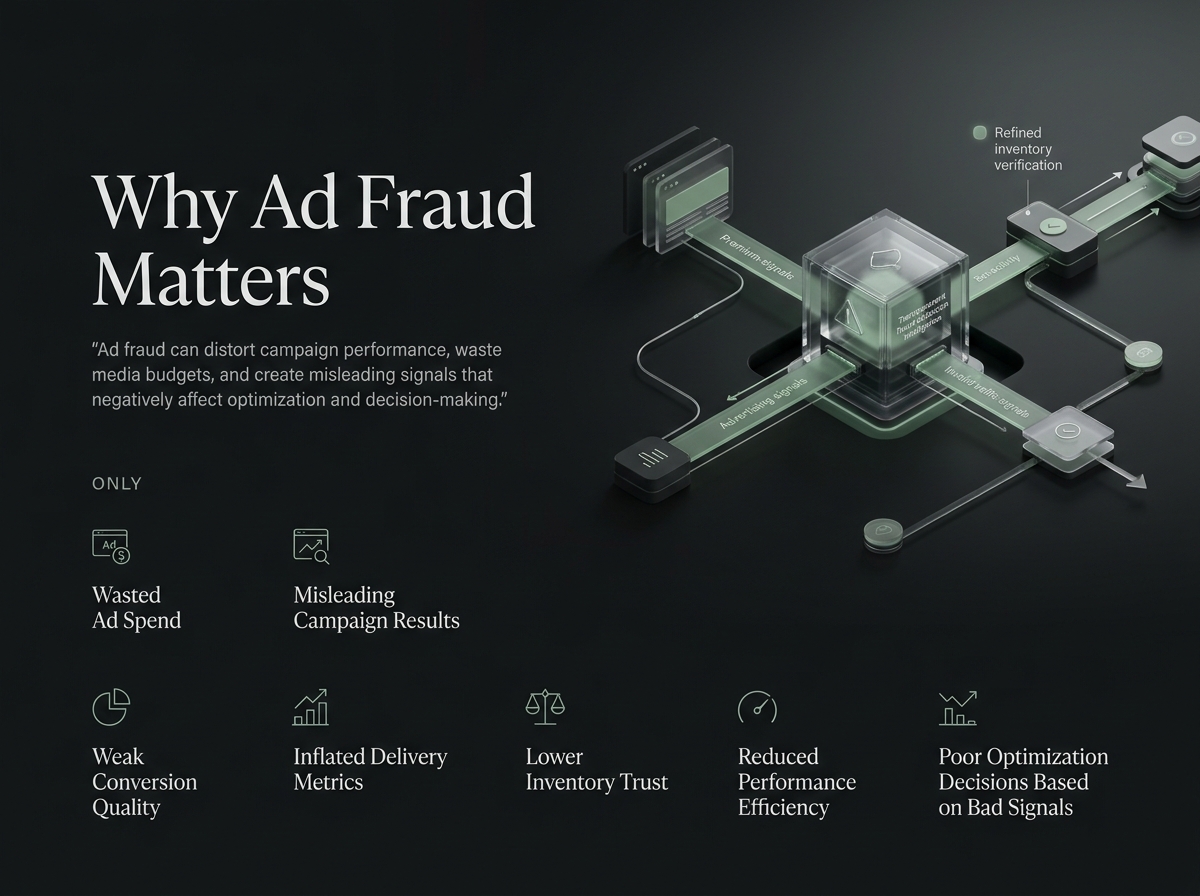
Ad fraud can lead to:
- wasted ad spend
- misleading campaign results
- weak conversion quality
- inflated delivery metrics
- lower inventory trust
- reduced performance efficiency
- poor optimization decisions based on bad signals
This is why fraud prevention should be treated as part of campaign strategy, not just an optional add-on
How Brand Safety Works in Programmatic Advertising
In programmatic advertising, brand safety works through a mix of inventory controls, publisher review, contextual filters, verification partners, blocklists, allowlists, fraud detection tools, supply-path analysis, pre-bid segments, and ongoing campaign monitoring.
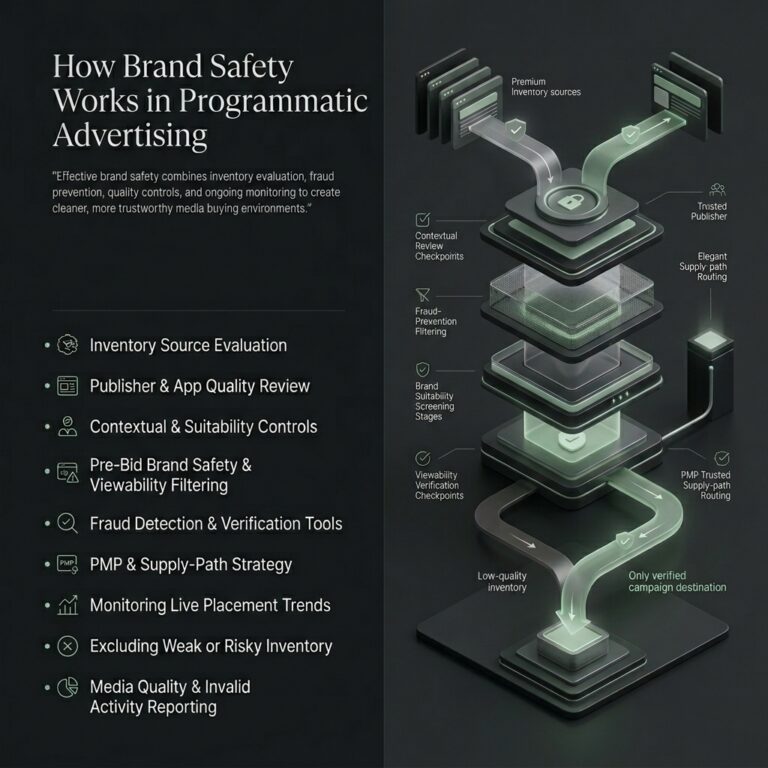
A strong brand safety process may include:
- inventory source evaluation
- publisher and app quality review
- contextual and suitability controls
- pre-bid segments for fraud prevention, brand safety, brand suitability, and viewability filtering
- fraud detection and verification tools
- PMP and supply-path strategy
- monitoring live placement trends
- excluding weak or risky inventory
- reporting on media quality and invalid activity
Pre-bid segments are an important part of modern brand safety strategy because they help advertisers filter impressions before the bid is ever placed. Instead of only reviewing problems after delivery, pre-bid targeting allows campaigns to avoid inventory associated with fraud risk, unsafe content, low viewability, invalid traffic, or unsuitable environments before spend is committed. In programmatic advertising, this can be one of the most effective ways to improve media quality from the start.
Because programmatic campaigns can scale quickly, brand safety controls need to be active from the start.
Brand Safety vs Brand Suitability
Brand safety and brand suitability are related, but they are not exactly the same.
Brand safety
Brand safety usually refers to avoiding clearly harmful, unsafe, or inappropriate environments that could damage the advertiser.
Brand suitability
Brand suitability is a more customized layer. It focuses on whether a specific environment is right for the brand, even if it is not broadly unsafe.
One brand may be comfortable advertising next to certain content themes that another brand would avoid. A strong media strategy should not only ask whether inventory is safe. It should also ask whether it is suitable for the brand’s goals, tone, and standards.
For Crosstide Media, suitability is where strategy becomes more refined. It is not just about avoiding bad inventory. It is about identifying the right inventory.
Common Types of Ad Fraud
Ad fraud can appear in many forms, and understanding the most common ones helps explain why prevention matters.

Common forms of ad fraud include
- bot traffic
- fake websites or apps
- domain spoofing
- ad stacking
- pixel stuffing
- click fraud
- invalid traffic
- misrepresented inventory
- low-quality app fraud
- false viewability signals
Common forms of ad fraud include
- bot traffic
- fake websites or apps
- domain spoofing
- ad stacking
- pixel stuffing
- click fraud
- invalid traffic
- misrepresented inventory
- low-quality app fraud
- false viewability signals
Why this matters
Not all fraud looks obvious. Some invalid activity can make campaigns appear active on paper while delivering little or no real user value. This is why strong verification, inventory review, and ongoing monitoring are essential.

Invalid Traffic and Wasted Impressions
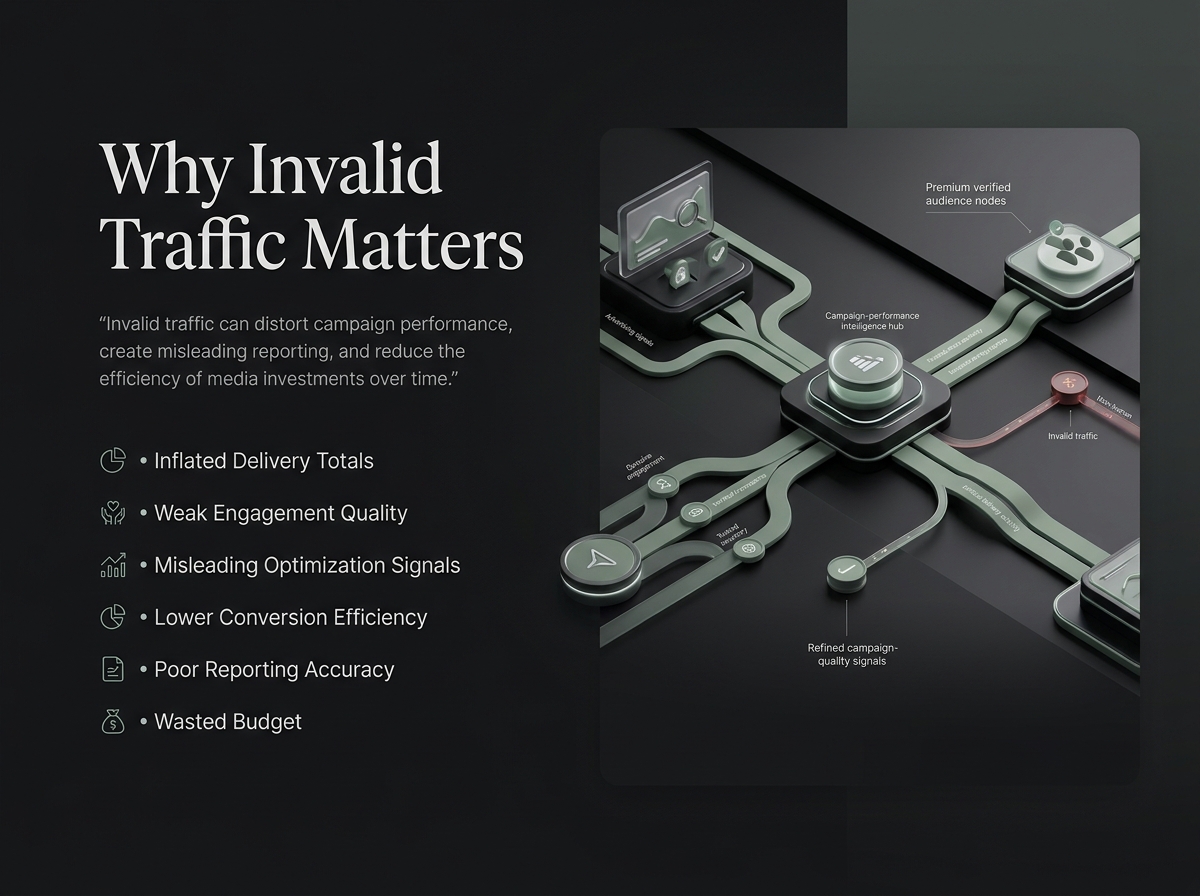
Invalid traffic refers to impressions, clicks, visits, or interactions that do not represent legitimate audience activity. This can include fraudulent activity, automated behavior, accidental traffic, or other low-value delivery patterns that distort media performance.
Why invalid traffic matters
Invalid traffic can create:
- inflated delivery totals
- weak engagement quality
- misleading optimization signals
- lower conversion efficiency
- poor reporting accuracy
- wasted budget
For Crosstide Media, reducing invalid traffic is a major part of building cleaner programmatic and digital media campaigns.
Viewability, Verification, and Media Quality
Brand safety is closely connected to broader media quality. A campaign can be technically safe but still perform poorly if the impressions are not viewable, if the traffic is weak, or if the placements are low quality.
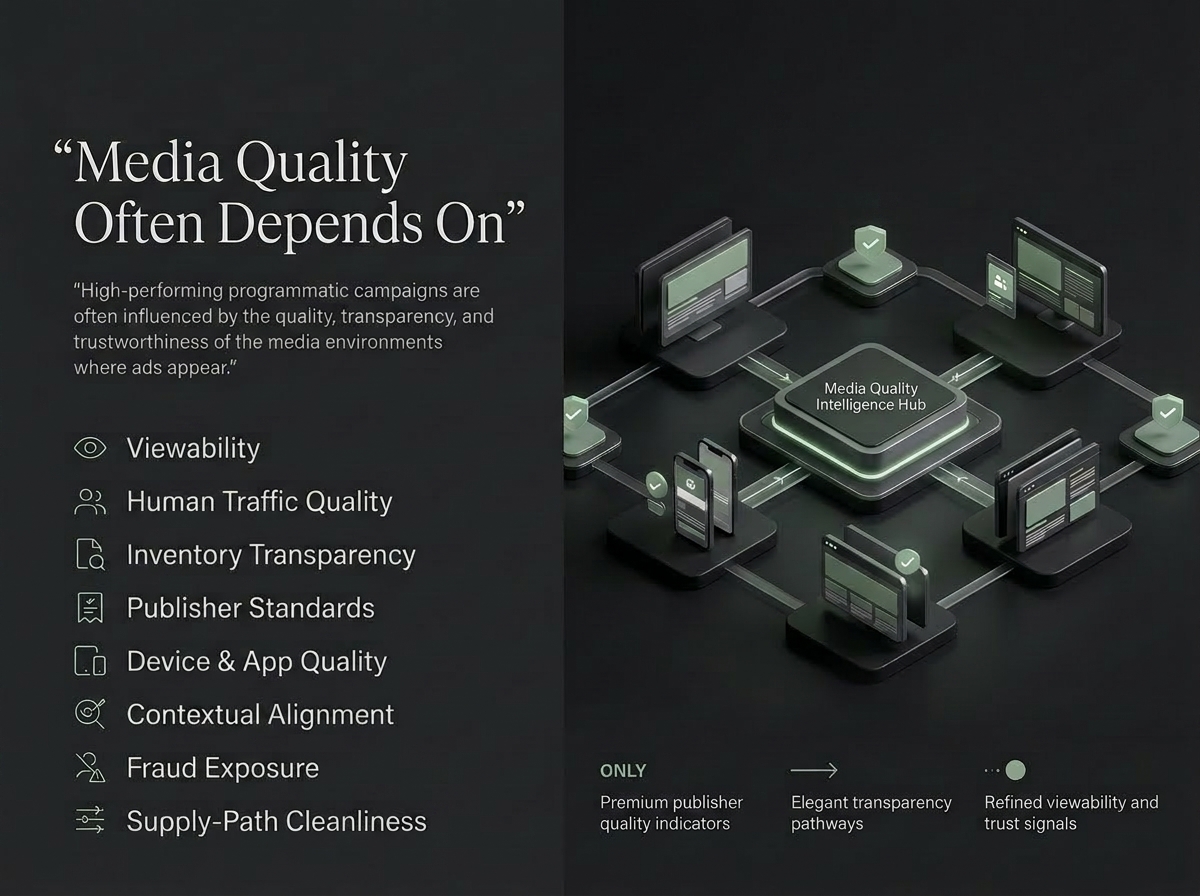
Media quality often depends on
- viewability
- human traffic quality
- inventory transparency
- publisher standards
- device and app quality
- contextual alignment
- fraud exposure
- supply-path cleanliness
Media quality often depends on
- viewability
- human traffic quality
- inventory transparency
- publisher standards
- device and app quality
- contextual alignment
- fraud exposure
- supply-path cleanliness
Why verification matters
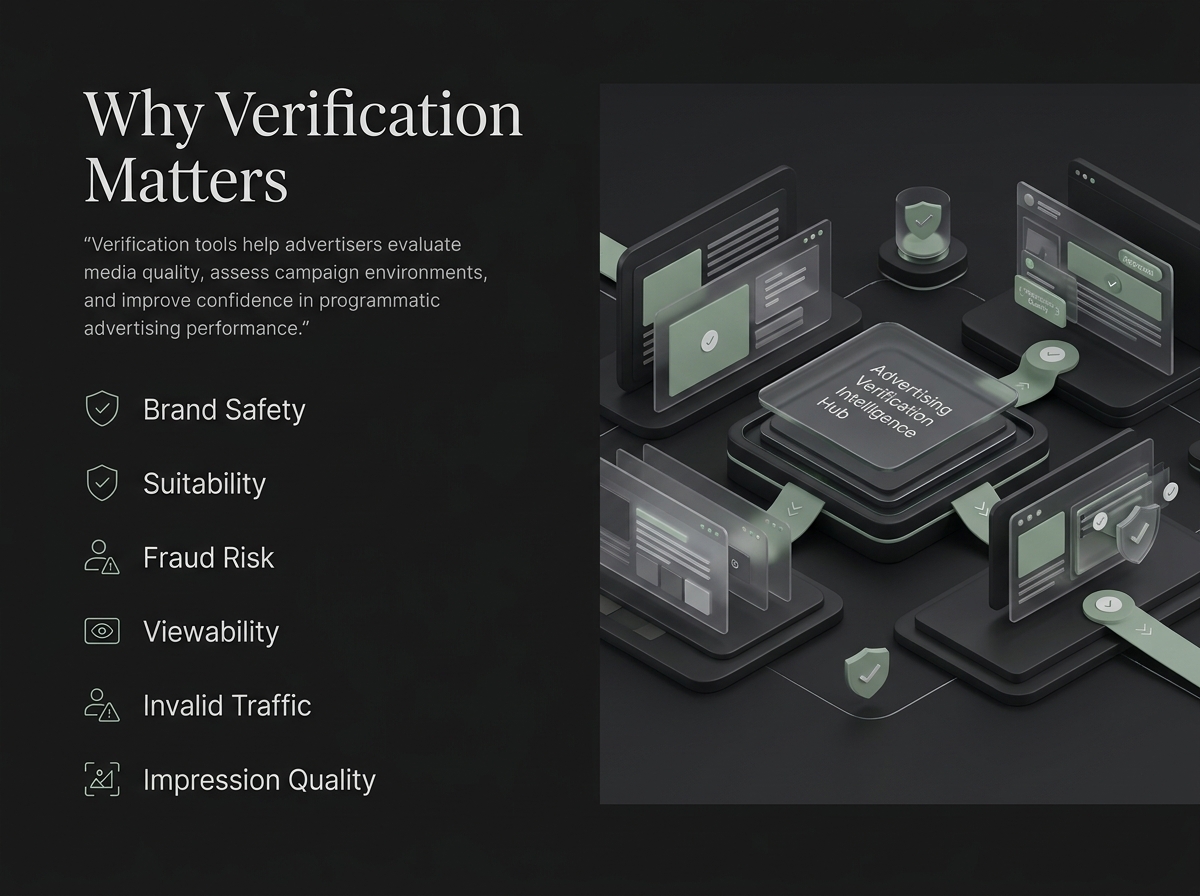
Verification tools help advertisers assess whether impressions were served in environments that meet quality standards. They can support stronger analysis of:
- brand safety
- suitability
- fraud risk
- viewability
- invalid traffic
- impression quality
Verification tools help advertisers assess whether impressions were served in environments that meet quality standards. They can support stronger analysis of:
SSPs, DSPs, Supply Paths, and Inventory Risk
Brand safety and fraud prevention are heavily influenced by how inventory is sourced through the programmatic supply chain.
DSPs
The DSP is where the advertiser buys media and applies campaign controls.
SSPs
The SSP is where publishers package and sell inventory into the market.
Supply path
The supply path is the route an impression takes from publisher inventory to advertiser demand.
Why supply path matters
Not every supply path is equally clean. Longer, less transparent, or lower-quality supply paths can increase:
- fraud risk
- resold inventory exposure
- pricing inefficiency
- transparency problems
- low-quality impression volume
For Crosstide Media, supply-path quality is one of the most important parts of risk control and media efficiency.

Contextual Controls and Content Alignment
One of the strongest ways to improve brand safety is to control the content environments where ads are allowed to run.
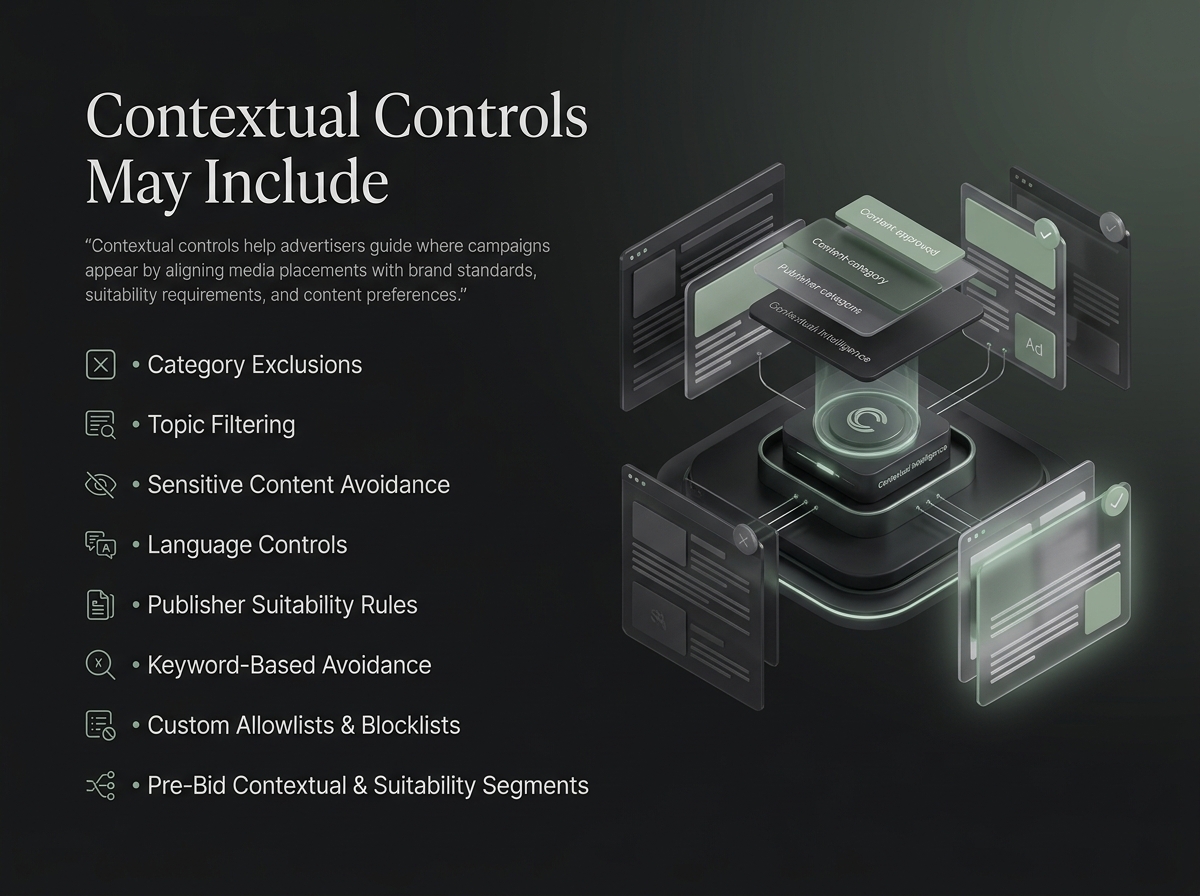
Contextual controls may include
- category exclusions
- topic filtering
- sensitive content avoidance
- language controls
- publisher suitability rules
- keyword-based avoidance
- custom allowlists and blocklists
- pre-bid contextual and suitability segments
Pre-bid contextual segments can help advertisers avoid categories, keywords, content themes, or environments that do not match the campaign. This gives buyers a more proactive way to improve placement quality before impressions are purchased rather than relying only on post-bid cleanup.
Contextual controls may include
- category exclusions
- topic filtering
- sensitive content avoidance
- language controls
- publisher suitability rules
- keyword-based avoidance
- custom allowlists and blocklists
- pre-bid contextual and suitability segments
Pre-bid contextual segments can help advertisers avoid categories, keywords, content themes, or environments that do not match the campaign. This gives buyers a more proactive way to improve placement quality before impressions are purchased rather than relying only on post-bid cleanup.
Why contextual alignment matters
Contextual alignment helps advertisers avoid running in environments that are either unsafe or simply wrong for the message. It can also help improve performance by placing campaigns in environments that feel more relevant and more credible.

Private Marketplace Strategy and Inventory Transparency
Private marketplace deals, or PMPs, often play a major role in stronger brand safety strategy because they give advertisers more controlled access to publisher inventory.

PMPs can help support
- higher-quality inventory
- more transparent supply paths
- premium publisher access
- cleaner contextual environments
- stronger placement control
- reduced open-exchange risk
PMPs can help support
- higher-quality inventory
- more transparent supply paths
- premium publisher access
- cleaner contextual environments
- stronger placement control
- reduced open-exchange risk
Why PMP strategy matters
Not every PMP is equally strong. Some are truly premium and transparent. Others may not deliver the quality the price suggests. This is one reason expertise matters. Strong buying requires more than access. It requires understanding which deals are worth using and how they fit the campaign.
For Crosstide Media, PMP strategy is one of the major ways we improve inventory quality and reduce media risk.

Brand Safety and Fraud Prevention Partners
Technology partners play an important role in helping advertisers protect campaigns and monitor media quality.

Common partner functions include
- brand safety verification
- suitability controls
- fraud detection
- invalid traffic analysis
- viewability measurement
- placement-level quality review
- media verification
- contextual intelligence
- pre-bid quality filtering
These partners do not replace strategy, but they strengthen the controls available to buyers who know how to use them correctly.
Common partner functions include
- brand safety verification
- suitability controls
- fraud detection
- invalid traffic analysis
- viewability measurement
- placement-level quality review
- media verification
- contextual intelligence
- pre-bid quality filtering
These partners do not replace strategy, but they strengthen the controls available to buyers who know how to use them correctly.
Double Verify, IAS, and Verification Tools
DoubleVerify and IAS are two of the most recognized names in brand safety, suitability, fraud prevention, and media verification.
They help advertisers monitor impression quality and identify issues across areas like:
- brand safety
- suitability
- viewability
- fraud detection
- invalid traffic
- media verification
Partners like DoubleVerify and IAS are often used not only for reporting and verification, but also for pre-bid activation. That means advertisers can apply pre-bid segments tied to fraud prevention, brand safety, brand suitability, contextual controls, and viewability thresholds before the campaign spends into the impression. This makes pre-bid strategy one of the most important tools for reducing waste and improving campaign quality at scale.

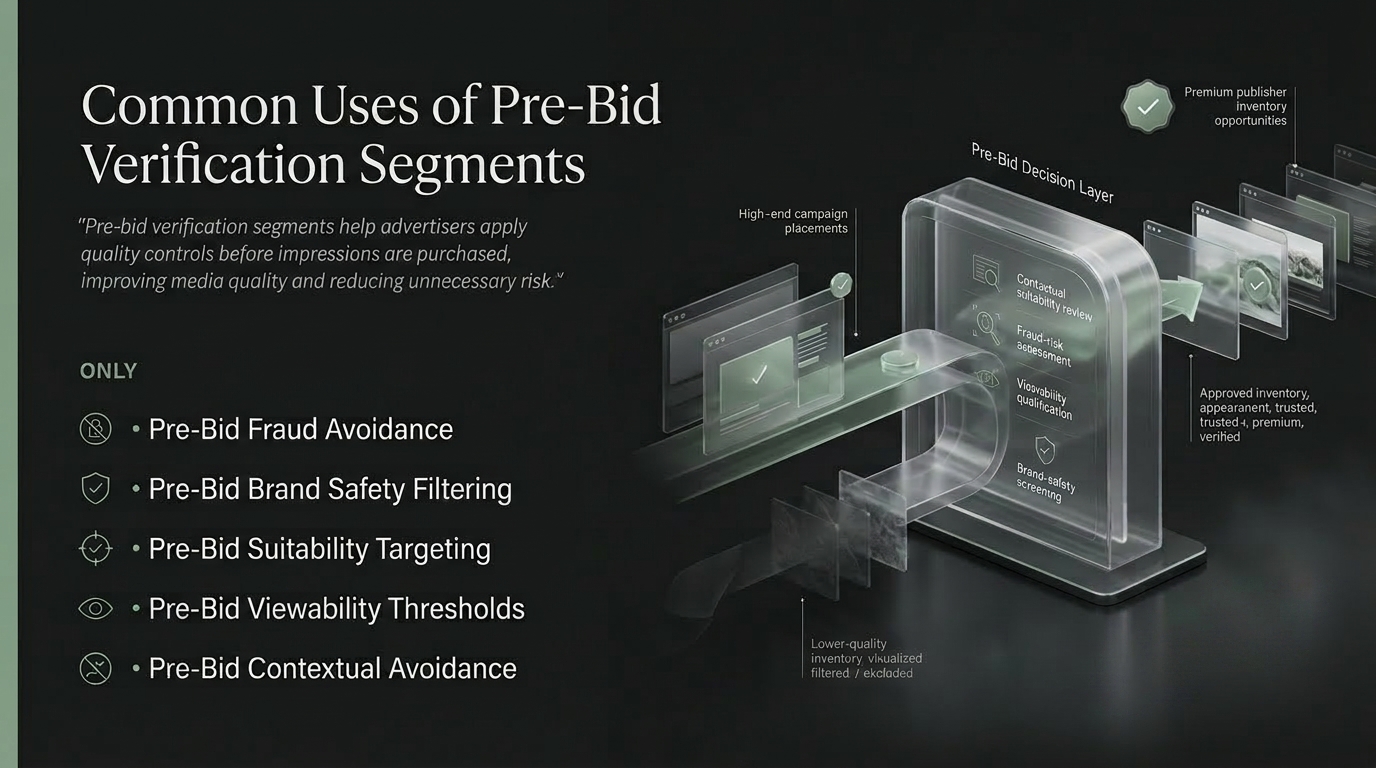
Common uses of pre-bid verification segments include
- pre-bid fraud avoidance
- pre-bid brand safety filtering
- pre-bid suitability targeting
- pre-bid viewability thresholds
- pre-bid contextual avoidance
Common uses of pre-bid verification segments include
- pre-bid fraud avoidance
- pre-bid brand safety filtering
- pre-bid suitability targeting
- pre-bid viewability thresholds
- pre-bid contextual avoidance
Why these tools matter
Verification partners help advertisers understand whether their media is being delivered in environments that meet campaign standards. They can also help surface issues that might otherwise go unnoticed inside large-scale programmatic campaigns.
For Crosstide Media, these kinds of tools are most valuable when they are paired with active optimization, supply-path discipline, contextual strategy, and real buyer expertise.

Connected TV, Display, Video, Audio, and Mobile Risk Considerations
Brand safety and fraud prevention look different depending on the media channel.

Connected TV
CTV generally benefits from more premium environments, but advertisers still need to monitor inventory quality, supply path, and app-level standards.
Display
Display often carries more open-web exposure, so fraud controls, contextual filters, and inventory review become especially important.
Video
Video can deliver strong attention, but it can also introduce risk if the inventory source, content environment, or measurement quality is weak.
Audio
Audio often has lower fraud visibility at the surface level, so strong partner controls and inventory transparency still matter.
Mobile
Mobile web and in-app environments can introduce both scale and quality risk, especially when app inventory, accidental clicks, or weak placements are not controlled well.
For Crosstide Media, channel-specific risk planning is a major part of strong programmatic strategy.
Pre-Bid Segments and Proactive Media Protection
Pre-bid segments are one of the most important tools in brand safety and fraud prevention because they allow advertisers to apply media quality rules before the impression is purchased. In a programmatic environment, this matters because preventing poor-quality impressions is often more efficient than trying to remove them after delivery has already happened.
Pre-bid segments can help advertisers filter for:
- fraud risk
- invalid traffic
- unsafe content
- unsuitable content
- low-viewability inventory
- contextual mismatches
- lower-quality app or site environments
For Crosstide Media, pre-bid strategy is an important part of proactive campaign protection. It helps us reduce waste earlier, improve inventory quality, and build cleaner media plans before budget is spent into weak placements.

Auditing and Optimization Process
A strong brand safety and fraud prevention strategy requires more than pre-launch settings. It also requires active auditing and optimization while campaigns are live.
What a brand safety audit may review
A campaign audit may evaluate:
- inventory source quality
- SSP and exchange mix
- publisher and app quality
- invalid traffic levels
- fraud exposure
- viewability
- contextual alignment
- PMP usage
- supply-path transparency
- verification partner findings
- placement exclusions
- wasted spend patterns
- pre-bid segment usage and effectiveness
Ongoing optimization may include
- excluding weak inventory
- refining contextual controls
- adjusting allowlists and blocklists
- shifting spend into cleaner supply paths
- increasing PMP usage where useful
- reducing fraud exposure
- improving quality filters
- tightening app and site review standards
- adjusting pre-bid fraud and safety segments
- tightening pre-bid suitability thresholds
- testing stricter or broader pre-bid controls based on delivery quality
This is where a large share of media quality improvement happens.
Why Brand Safety Is Also a Performance Strategy
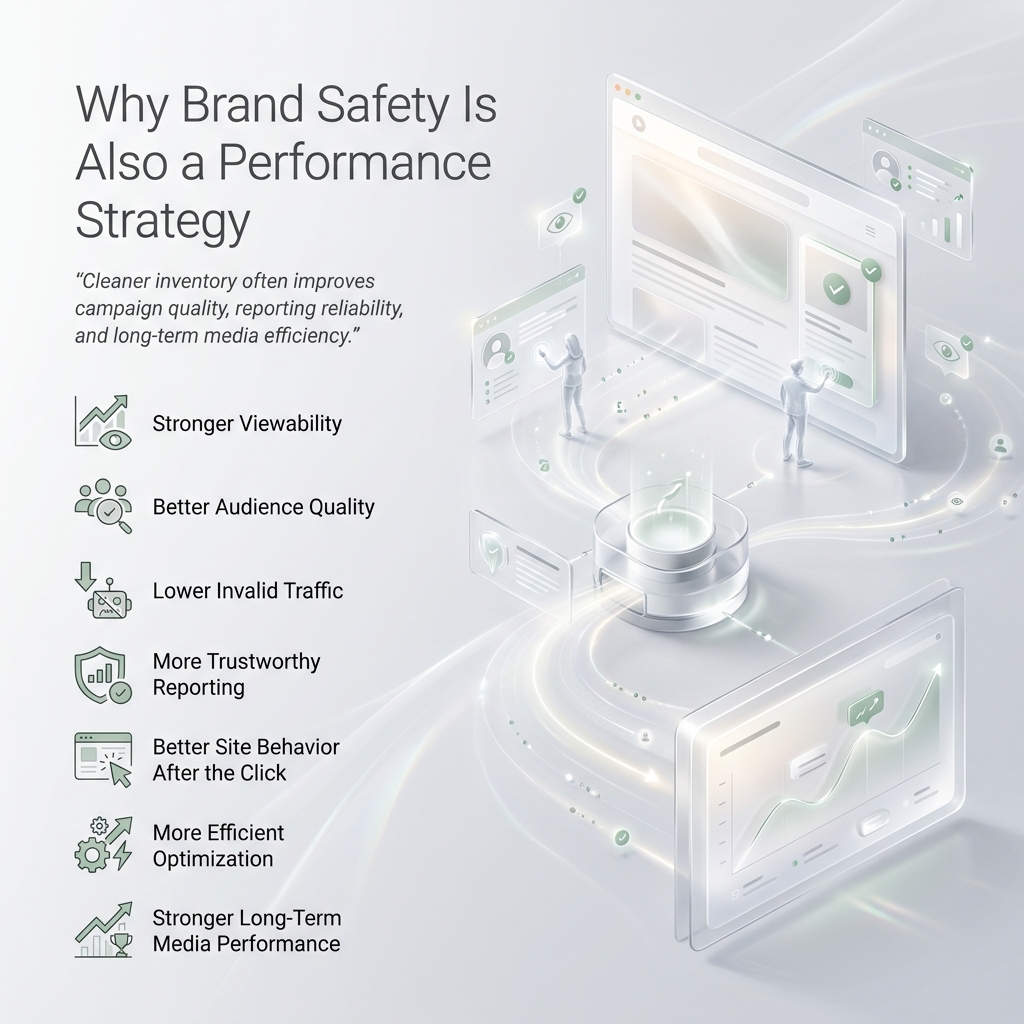
Brand safety is often discussed as a risk issue, but it is also a performance issue.
Cleaner inventory often leads to:
- stronger viewability
- better audience quality
- lower invalid traffic
- more trustworthy reporting
- better site behavior after the click
- more efficient optimization
- stronger long-term media performance
For Crosstide Media, this is one of the most important ideas on the page. Brand safety is not just about avoiding bad placements. It is also about improving the overall quality of the media investment.
Why Work With Crosstide Media?
Effective brand safety and fraud prevention require more than platform defaults. It takes inventory strategy, contextual controls, PMP discipline, verification tools, supply-path knowledge, active optimization, and real programmatic experience.
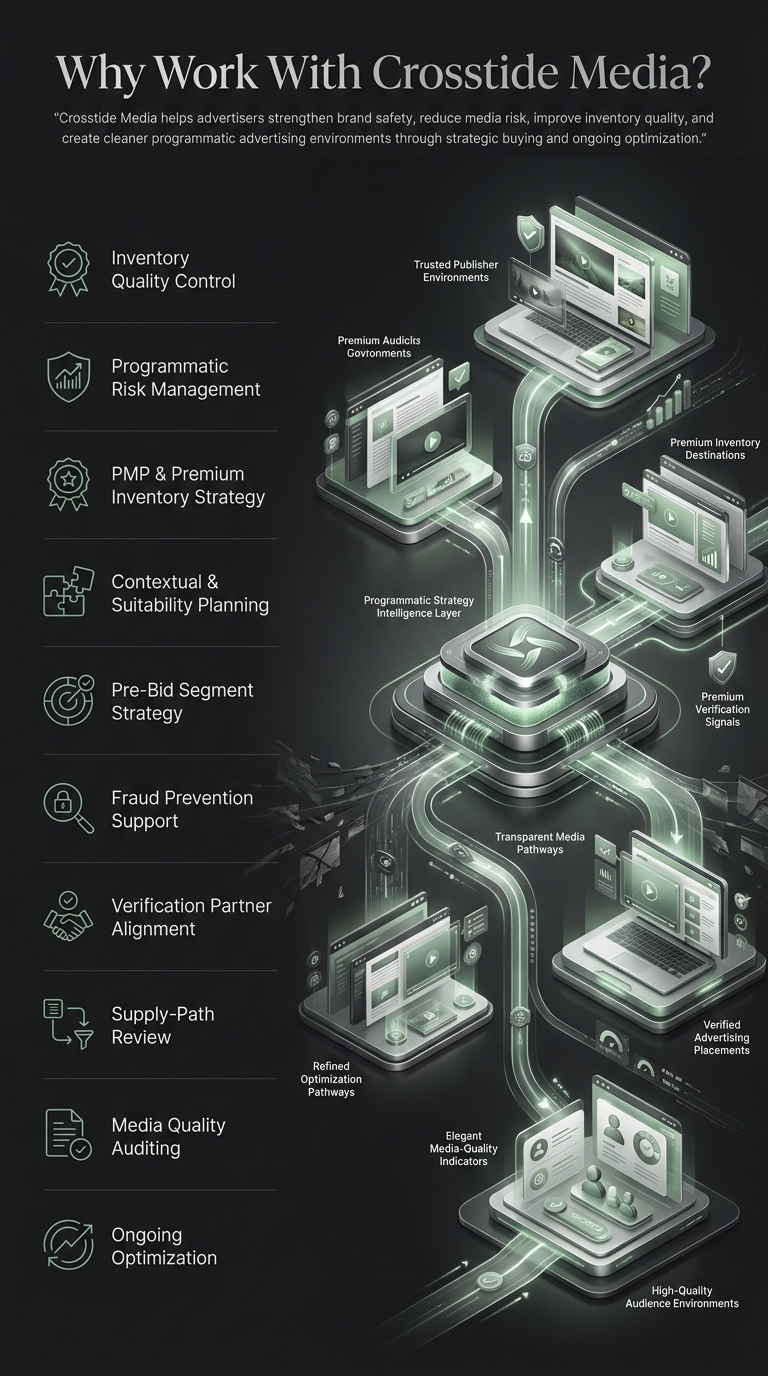
Crosstide Media helps advertisers strengthen brand safety and fraud prevention with:
- inventory quality control
- programmatic risk management
- PMP and premium inventory strategy
- contextual and suitability planning
- pre-bid segment strategy
- fraud prevention support
- verification partner alignment
- supply-path review
- media quality auditing
- ongoing optimization
We approach brand safety as part of smarter media buying, not just as a defensive setting inside a platform. Our focus is on helping advertisers protect the brand, reduce waste, improve media quality, and create stronger campaign outcomes across display, video, CTV, audio, mobile, and broader programmatic environments.
Whether the goal is cleaner programmatic delivery, safer publisher environments, lower fraud exposure, or stronger media performance, Crosstide Media helps brands build campaigns with the structure and discipline required for higher-quality advertising.
Why Work With Crosstide Media?
Effective brand safety and fraud prevention require more than platform defaults. It takes inventory strategy, contextual controls, PMP discipline, verification tools, supply-path knowledge, active optimization, and real programmatic experience.
Crosstide Media helps advertisers strengthen brand safety and fraud prevention with:
- inventory quality control
- programmatic risk management
- PMP and premium inventory strategy
- contextual and suitability planning
- pre-bid segment strategy
- fraud prevention support
- verification partner alignment
- supply-path review
- media quality auditing
- ongoing optimization
We approach brand safety as part of smarter media buying, not just as a defensive setting inside a platform. Our focus is on helping advertisers protect the brand, reduce waste, improve media quality, and create stronger campaign outcomes across display, video, CTV, audio, mobile, and broader programmatic environments.
Whether the goal is cleaner programmatic delivery, safer publisher environments, lower fraud exposure, or stronger media performance, Crosstide Media helps brands build campaigns with the structure and discipline required for higher-quality advertising.
Frequently Asked Questions
What is brand safety in digital advertising?
What is ad fraud?
Why do brand safety and fraud prevention matter?
What is the difference between brand safety and brand suitability?
What are common types of ad fraud?
Why work with a brand safety and fraud prevention partner?
What role do PMPs play in brand safety?
What do DoubleVerify and IAS do?
What are pre-bid segments in programmatic advertising?
Why are pre-bid segments important?
Is brand safety only important in programmatic advertising?
Can brand safety improve performance?
Build a Smarter Brand Safety and Fraud Prevention Strategy
If your business needs a cleaner, safer, and more strategic programmatic approach, Crosstide Media can help you plan, monitor, and optimize campaigns built around stronger inventory controls, fraud prevention safeguards, pre-bid segments, better contextual alignment, and clearer reporting. Whether your goal is to reduce wasted spend, protect the brand, improve media quality, strengthen PMP strategy, or create more trustworthy digital campaign performance, we help brands use brand safety and fraud prevention in a smarter, more results-focused way.
Why Brands Choose Crosstide Media
Brands choose Crosstide Media because effective brand safety requires more than broad exclusions and verification tags. Strong results come from the right mix of inventory discipline, contextual strategy, supply-path evaluation, pre-bid controls, fraud prevention safeguards, measurement, and real media buying expertise. Our approach is built to help advertisers reduce risk, improve media quality, protect brand standards, and make better decisions through clearer reporting and more actionable programmatic insights.
Talk to Crosstide Media About Brand Safety and Fraud Prevention
If you are looking for a partner that can help you improve media quality, reduce fraud exposure, strengthen brand safety, and build a cleaner programmatic strategy, Crosstide Media can help. We build brand safety and fraud prevention strategies with the planning, controls, inventory discipline, and optimization focus needed to support stronger long-term campaign performance.