
- Political & Government Advertising
Political Campaign Advertising and Government Messaging Campaigns Built for Precision, Audience Intelligence, and Strategic Media Execution
Political campaigns need digital advertising strategies that can reach persuadable voters, reinforce support, increase turnout, and maintain message discipline across every stage of the election cycle. From local candidate races to advocacy efforts, effective political advertising depends on smart audience segmentation, geographic concentration, voter-file-informed targeting, and media execution built for speed and accuracy.
Government campaigns require a different kind of media strategy, focused on public awareness, education, outreach, and behavior-influencing communication. Campaigns tied to gun safety, adoption, public health, transportation, or community services need clear creative, trusted environments, local relevance, and audience planning that supports broad visibility while still improving efficiency.
At Crosstide Media, we help political campaigns and government organizations execute digital media strategies built around audience relevance, smart channel planning, and measurable outcomes. Our focus is on building campaigns that deliver stronger visibility, more precise targeting, and better media performance across high-priority audiences.
Jump To
What Is Political and Government Advertising?
Political and government advertising refers to digital media campaigns built for candidates, advocacy groups, public affairs efforts, government organizations, civic initiatives, and public-facing programs that need to reach highly specific audiences with precision.
Political campaign advertising is typically focused on elections, voter persuasion, turnout, fundraising, issue education, and campaign visibility. Government messaging campaigns are typically focused on public awareness, community outreach, education, service participation, and behavior-change efforts tied to civic priorities.
Although both categories can use similar channels such as display, video, CTV, audio, mobile, native, and retargeting, the strategy behind them should reflect the real objective of the campaign. The targeting logic, messaging style, geographic planning, and success metrics are often very different depending on whether the campaign is trying to influence a vote or improve public awareness and action.
The value of a specialized political and government advertising strategy comes from its ability to combine:
- precision audience targeting
- geographic control
- household and community relevance
- faster campaign activation
- cross-channel message delivery
- measurable reporting and optimization
This creates a more focused media strategy for campaigns where audience quality matters more than generic reach alone.

Political Campaign Advertising
Political Advertising Built for Local Campaigns, Voter Persuasion, and Turnout Strategy
Political advertising is built to help candidates, campaigns, advocacy organizations, and ballot efforts reach the right voters with the right message at the right time. For local campaigns especially, this requires a more disciplined media strategy because budgets are tighter, geography is narrower, and message efficiency matters more.
A strong political advertising campaign can help support:
- name recognition
- voter persuasion
- issue education
- contrast messaging
- absentee and early-vote awareness
- election-day turnout
- donor outreach
- fundraising support
- volunteer recruitment
- coalition-specific messaging
Why political advertising requires specialized media planning
Political campaigns do not just need reach. They need the right combination of voter intelligence, geographic concentration, timing strategy, and message segmentation. A local candidate campaign, for example, may need to prioritize persuadable households in specific precincts while suppressing known supporters from persuasion spend and shifting those audiences into turnout messaging later in the cycle.
Core political campaign strategy components
A strong political campaign usually includes:
- voter universe development
- persuasion vs turnout segmentation
- district, county, city, DMA, or precinct prioritization
- addressable household targeting
- voter matching
- supporter suppression where appropriate
- audience expansion from modeled voter behaviors
- creative segmentation by audience type
- timing strategy by phase of the campaign
- rapid optimization around key election deadlines
Political campaign phases
Many political campaigns work best when they are structured in phases.
Introduction phase
- candidate awareness
- name recognition
- message framing
- issue definition
- early fundraising support
Persuasion phase
- voter persuasion
- opponent contrast when appropriate
- audience refinement
- coalition outreach
- issue-based message segmentation
Turnout phase
- early-vote education
- absentee chase efforts
- voter reminders
- urgency messaging
- turnout reinforcement across key households and geographies
Political audience strategy
Political audience planning may include:
- persuadable voters
- likely supporters
- low-propensity turnout audiences
- issue-based voters
- donor prospecting audiences
- donor reactivation audiences
- modeled supporter audiences
- swing households
- absentee and early-vote segments
- first-party supporter and donor files
For Crosstide Media, strong political strategy is not just about targeting more people. It is about targeting the right voters with the right level of message intensity at the right stage of the race.
Government Messaging Campaigns
Government Advertising Built for Public Awareness, Outreach, and Community Engagement
Government messaging campaigns are designed to inform, educate, and influence public awareness or public behavior around important civic initiatives. These campaigns often focus on community relevance, trust, clarity, accessibility, and repeated exposure across multiple digital channels.
Government campaigns may support initiatives such as:
- gun safety awareness
- adoption awareness
- foster care recruitment
- public health education
- transportation safety
- emergency preparedness
- workforce development programs
- public enrollment campaigns
- community services promotion
- civic participation and outreach efforts
Why government advertising needs its own strategy
Government messaging is not electoral persuasion. These campaigns often need to explain a public issue, introduce a resource, encourage participation, or shift community behavior over time. That means the media strategy should prioritize clarity, accessibility, community relevance, and trusted placement environments.
Common government campaign goals
Government advertising can help support:
- public awareness
- community education
- resource utilization
- service adoption
- program enrollment
- local engagement
- behavior change
- event awareness
- public trust and visibility
- multilingual communication where needed
Core government campaign strategy components
A strong government messaging campaign usually includes:
- geographic targeting by service area or community
- demographic and community-based targeting
- audience segmentation by life stage or relevance
- contextual targeting around related issues
- local and regional awareness layering
- accessibility and language planning
- cross-channel frequency strategy
- creative adaptation by audience segment
- optimization around engagement and response behavior
Government messaging approach
A government campaign about adoption awareness or gun safety needs a different kind of message structure than a political persuasion campaign. Government media often performs best when the creative is:
- trustworthy
- easy to understand
- community-relevant
- visually clear
- repeated consistently
- aligned to a simple action or awareness objective
For Crosstide Media, strong government messaging strategy means reaching the right communities with the right educational message in a way that feels relevant, clear, and actionable.
Why Political and Government Media Strategy Requires Precision
Political and government campaigns are often high-stakes, high-visibility, and highly dependent on message relevance. Broad digital buying without a precise strategy can create waste quickly.
A stronger media strategy should answer questions like:
- Who exactly needs to see this message?
- Which geographies matter most?
- Which households or communities deserve more concentration?
- Which channels are most useful for this audience?
- What message belongs to which segment?
- How should budget shift over time?
- What is the most meaningful action or outcome for this campaign?
The more defined the targeting and planning framework is, the more efficiently the campaign can perform.
How Political and Government Media Buying Works
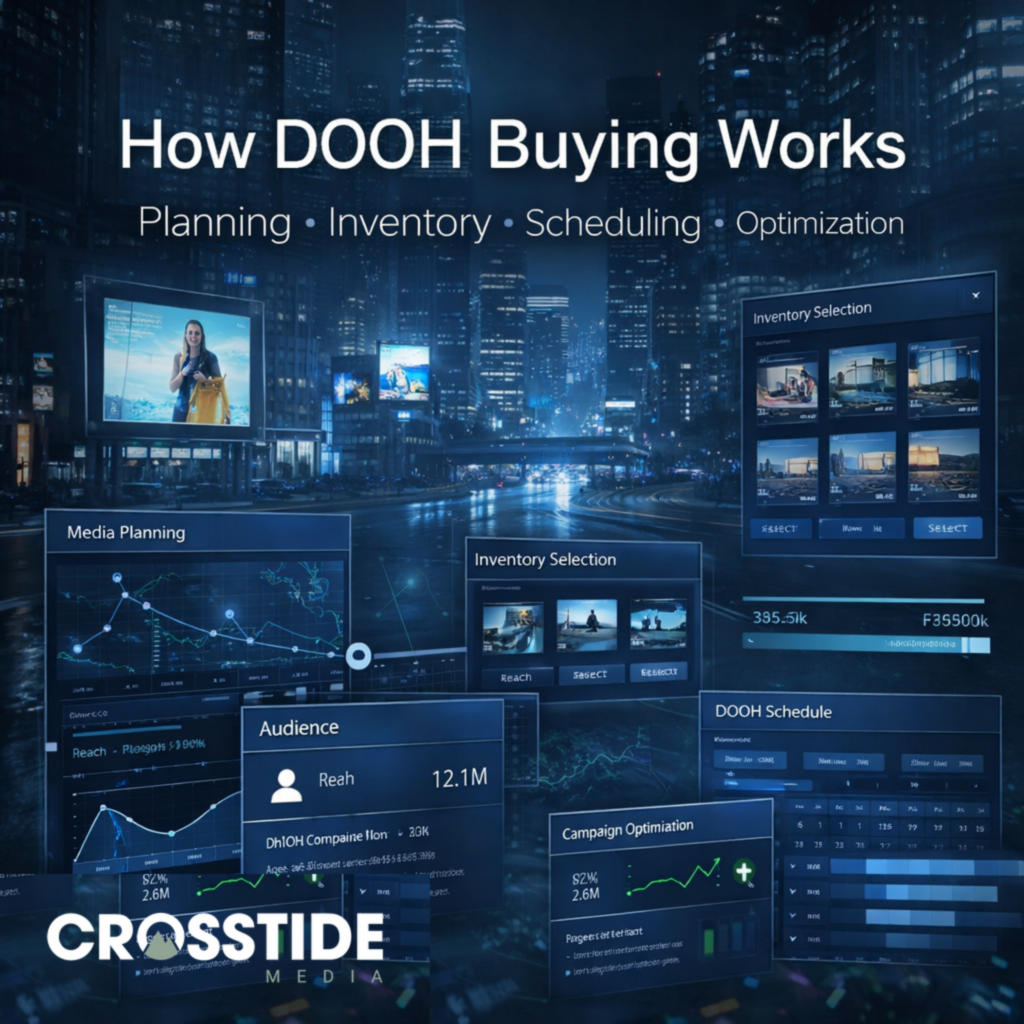
Political and government media buying uses programmatic technology, audience data, custom onboarding, geographic controls, and cross-channel planning to reach relevant audiences across digital environments.
Campaigns may include:
- display advertising
- online video
- connected TV
- digital audio
- mobile advertising
- native advertising
- retargeting
- programmatic DOOH where appropriate
Typical campaign workflow
A well-managed campaign usually includes:
- audience planning and segmentation
- geography and market prioritization
- inventory and channel strategy
- creative setup and compliance review
- bid and pacing controls
- frequency and sequencing strategy
- mid-flight optimization
- reporting and attribution analysis
Why this model is useful
This gives advertisers more control over:
- who sees the ad
- where the ad runs
- when the message is delivered
- which channels are prioritized
- how different audience groups are segmented
- how budgets are reallocated while campaigns are live
That flexibility is especially important when campaign timing is compressed or audience targeting needs to be highly specific.
Political Audience Targeting Strategy
Political audience targeting should be built around voter intelligence, household strategy, and election relevance.
Political targeting strategies may include
- voter matching
- addressable household targeting
- turnout propensity modeling
- persuasion modeling
- donor modeling
- issue affinity targeting
- precinct-level concentration
- swing geography targeting
- supporter suppression
- absentee and early-vote segmentation
- first-party list onboarding
- retargeting of engaged site visitors
Why audience segmentation matters in political advertising
Not every voter needs the same message. A persuadable voter may need issue-based education or candidate introduction, while a known supporter may be better suited for turnout messaging or fundraising. Strong political campaigns separate these audiences instead of using one message across the full universe.
Examples of political audience segments
A well-structured political campaign may create separate lines for:
- broad persuasion
- persuadable independents
- turnout reinforcement
- swing households
- early-vote audiences
- absentee ballot audiences
- donor prospecting
- donor reactivation
- volunteer recruitment
- coalition-specific messaging
Government Audience Targeting Strategy
Government audience targeting should be built around community relevance, public need, and audience fit.
Government targeting strategies may include
- local and regional geographic targeting
- ZIP-level targeting
- contextual targeting by issue
- demographic segmentation
- family and household audience planning
- life-stage targeting
- public-interest audience segments
- language and cultural targeting where appropriate
- CRM or first-party onboarding when available
- retargeting of engaged users
Why segmentation matters in government campaigns
A government awareness campaign is often trying to reach the people most likely to need, use, or respond to the information. A campaign about adoption awareness, for example, may prioritize families, caregivers, community-minded audiences, or users engaging with related social service topics. A gun safety campaign may prioritize household audiences, safety-focused audiences, parents, or community education segments depending on the objective.
Examples of government audience segments
A well-structured government campaign may create separate lines for:
- broad awareness
- parent and family audiences
- local service-area audiences
- multilingual audiences
- issue-interested audiences
- retargeting pools
- younger adult community segments
- household-focused safety education audiences
- event or resource-awareness segments
Addressable Household Targeting and Voter Matching
Addressable household targeting and voter matching are especially important in political advertising because they allow campaigns to move beyond broad demographic targeting into more precise household and voter-linked planning.
What voter matching means
Voter matching refers to using voter-file-informed data and onboarding processes to align campaign audiences with digital identifiers so ads can be delivered more precisely to the people or households that matter most.
What addressable household targeting means
Addressable household targeting helps campaigns reach likely voter households more directly across connected and cross-screen environments. This can be especially valuable for local races where household-level relevance matters.
Why this matters in political campaigns
This approach can improve:
- message relevance
- geographic precision
- audience efficiency
- household-level reinforcement
- waste reduction
- cross-screen consistency
For government campaigns, household-level planning may still be useful in some cases, but it is usually framed around community or family relevance rather than voter-file logic.
Audience Intelligence, Voter Behaviors, and Strategic Segmentation
Political campaigns can be built around large amounts of audience intelligence, voter-file attributes, modeled behaviors, and campaign-specific segmentation. The goal is not simply to collect more data, but to organize it into usable media strategy.
Common political audience signals and voter behaviors
Campaigns may build around signals such as:
- turnout propensity
- persuasion scores
- donor history
- issue affinity
- voting history
- geography and precinct relevance
- modeled ideology
- coalition relevance
- household composition
- first-party engagement
- site visitation and media engagement behavior
How campaigns use voter behavior data strategically
The strongest campaigns use audience intelligence to answer questions like:
- Who needs persuasion?
- Who needs turnout messaging?
- Which households matter most?
- Which segments should be suppressed from spend?
- Which messages belong to which universes?
- Which geographies deserve the most budget?
- Which audiences are large enough to matter but targeted enough to be efficient?
Strategic segmentation for better performance
The most effective political media plans are not built around one large audience. They are built around smaller, more strategic audience groups that can each receive more relevant messaging.
For Crosstide Media, audience intelligence is most valuable when it improves real campaign structure, not just audience size.
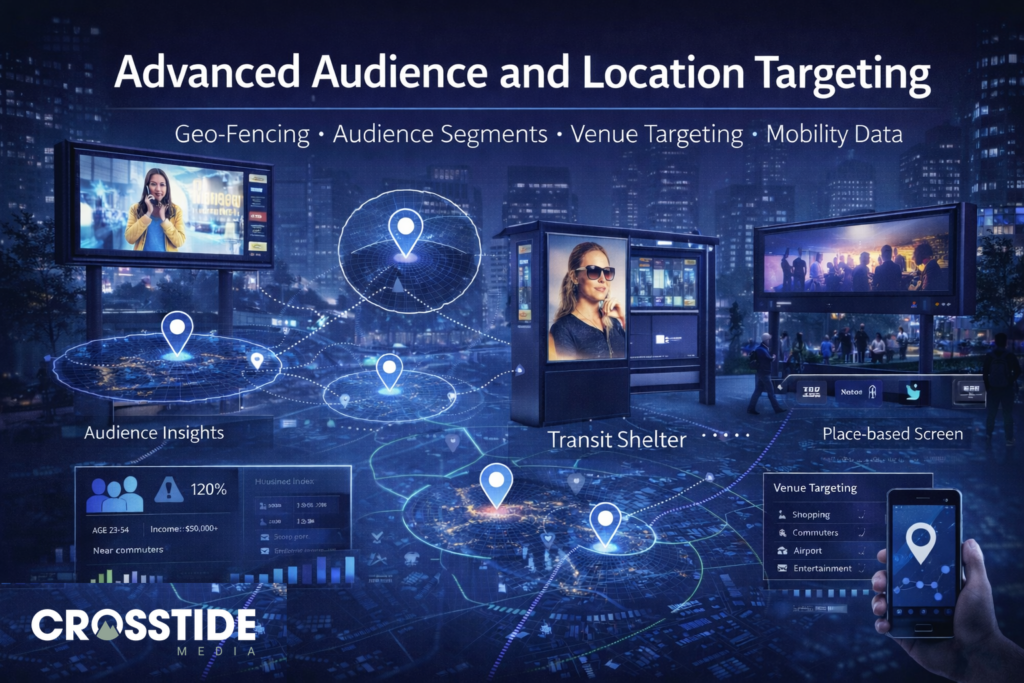
Community Messaging and Public Education Strategy
Government campaigns often need to do more than create awareness. They may need to educate, build trust, influence public behavior, or increase participation in services and programs.
Common government public education campaign types
Government messaging may focus on:
- gun safety awareness
- adoption and foster care awareness
- public health messaging
- transportation safety
- community service awareness
- public resource utilization
- enrollment campaigns
- emergency preparedness
- civic participation
- local outreach initiatives
Strong government campaign strategy often includes
- repeated exposure across trusted channels
- clear and direct message framing
- community-specific creative adaptation
- localized targeting
- landing pages built for trust and clarity
- accessible and multilingual execution where needed
- optimization focused on awareness, engagement, and response behavior
Why behavior-change campaigns require smart media planning
A government campaign tied to public behavior or awareness often needs message repetition, community trust, and simple calls to action. These campaigns work best when the media plan supports consistent exposure in relevant environments instead of relying on one-time impressions.
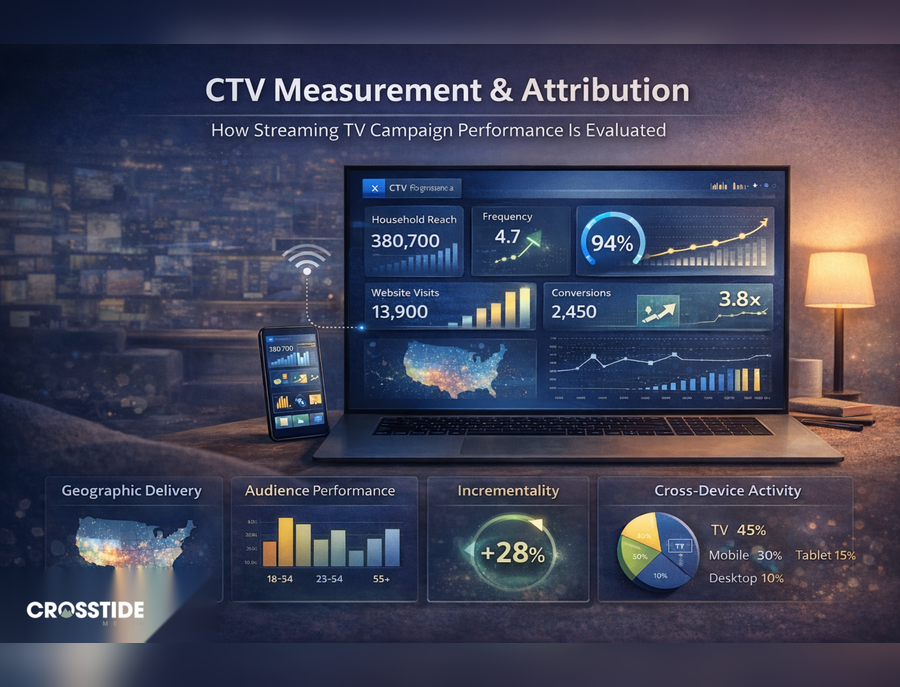
Ad Formats and Channel Strategy
Political and government campaigns usually perform best when they use a thoughtful mix of formats rather than relying on a single channel.
Political channel roles
- Display: reminders, fundraising, issue reinforcement
- Video: persuasion, candidate introduction, contrast, issue framing
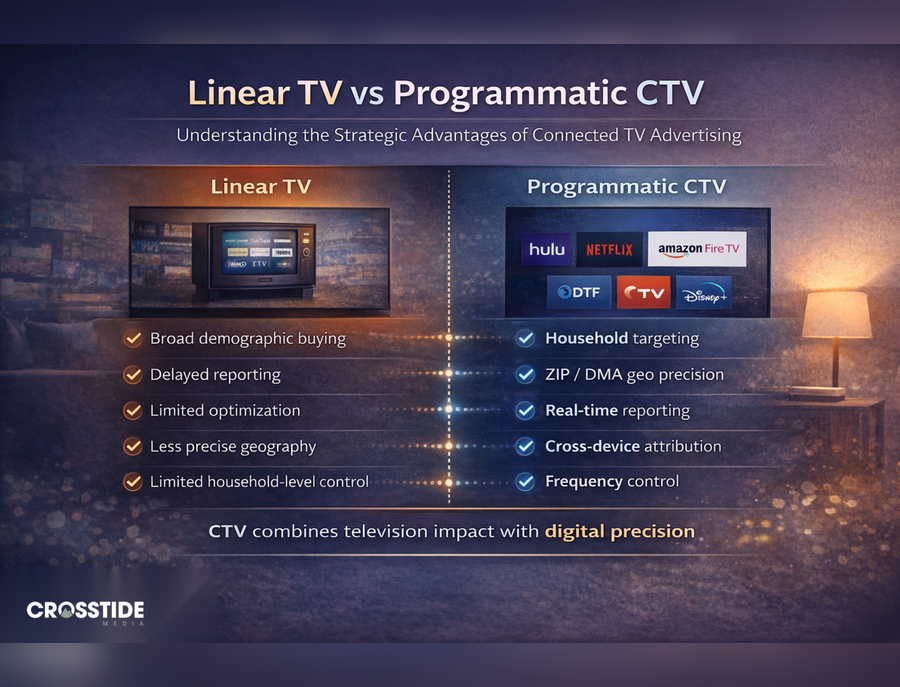
- CTV: household-level political messaging and premium reach
- Audio: frequency, commuting reach, message reinforcement
- Mobile: turnout, urgency, quick-response messaging
- Native: issue education and deeper message support
Government channel roles
- Display: public awareness and broad visibility
- Video: educational messaging and stronger visual storytelling
- CTV: household awareness in premium environments
- Audio: message repetition and community reach
- Mobile: local awareness and response support
- Native: education, trust-building, and deeper information engagement
Choosing the right mix
The best channel mix depends on:
- campaign objective
- audience behavior
- geography
- message complexity
- timing
- budget
- landing-page or action path
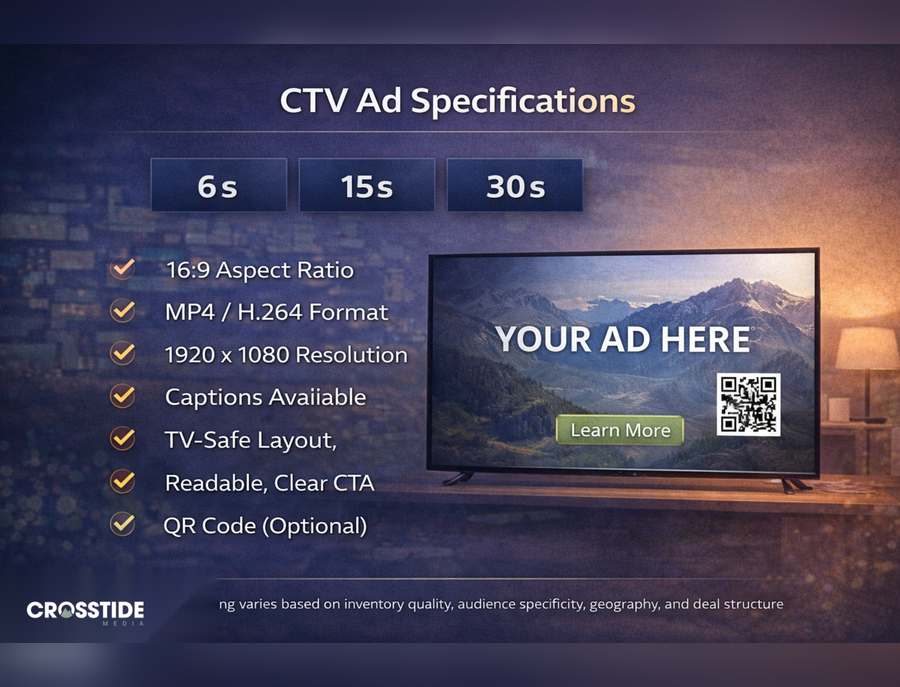
Creative Strategy and Ad Specifications
Creative matters heavily in political and government campaigns because the message often needs to be understood quickly and remembered clearly.
What strong creative should do
- communicate quickly
- establish relevance immediately
- align with the audience segment
- support the campaign goal
- maintain consistency across channels
- make the next step clear
Political creative strategy
Strong political creative often includes:
- clear candidate or organization identification
- concise issue framing
- stronger urgency when needed
- audience-specific message tailoring
- clear calls to action
- different creative by phase of the election cycle
Government creative strategy
Strong government creative often includes:
- clear educational message
- community relevance
- accessible language
- stronger trust signals
- action-oriented clarity
- creative tailored to local or demographic needs
Creative best practices by objective
Awareness campaigns
- simplify the message
- prioritize visibility and clarity
- reinforce the main point quickly
Persuasion campaigns
- narrow the argument
- tailor by audience segment
- keep the takeaway obvious
Turnout or action campaigns
- emphasize urgency
- clarify timing and action steps
- reinforce relevance by geography or audience
Government outreach campaigns
- focus on clarity over complexity
- build trust
- keep the action path simple
Political and Government Advertising Pricing, Budgeting, and Media Efficiency
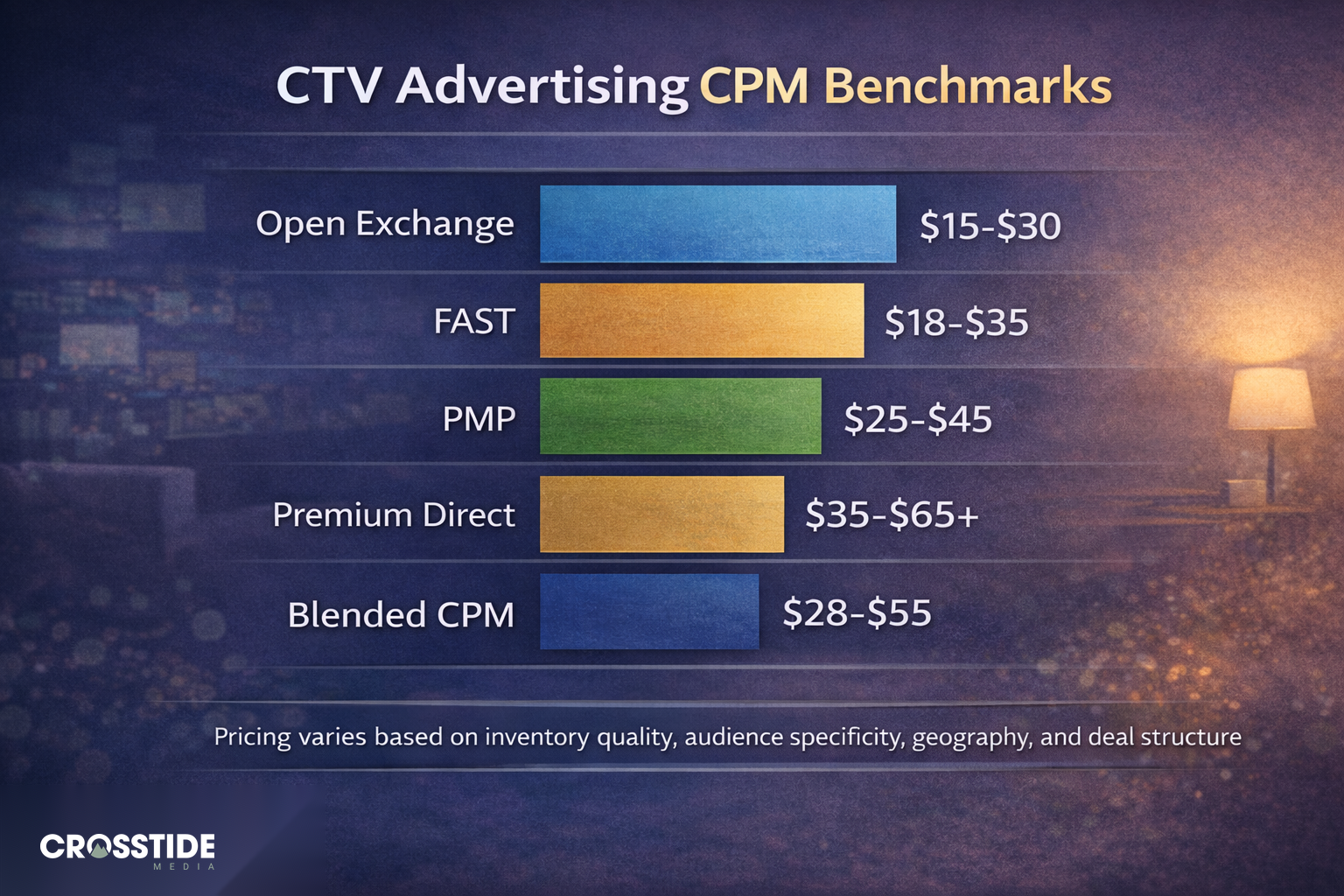
Costs can vary based on audience specificity, geography, timing, channel mix, inventory quality, and competitive conditions.
Common pricing variables
- audience precision
- household targeting depth
- geography
- format mix
- display vs video vs CTV allocation
- timing pressure
- premium vs broader inventory
- seasonality
- supply path efficiency
How to think about efficiency
The more useful question is not only what the CPM or CPC is, but also:
- Am I reaching the right voters or communities?
- Is the geography concentrated correctly?
- Are the channels aligned to the objective?
- Is the creative matched to the audience?
- Am I paying for quality reach or just more volume?
A higher media cost is not automatically negative if it comes with:
- stronger targeting precision
- better household or community relevance
- higher-quality delivery
- less wasted spend
- stronger campaign outcomes
The strongest pricing analysis looks at cost alongside audience quality, geographic discipline, engagement, and the real result the campaign is trying to achieve.
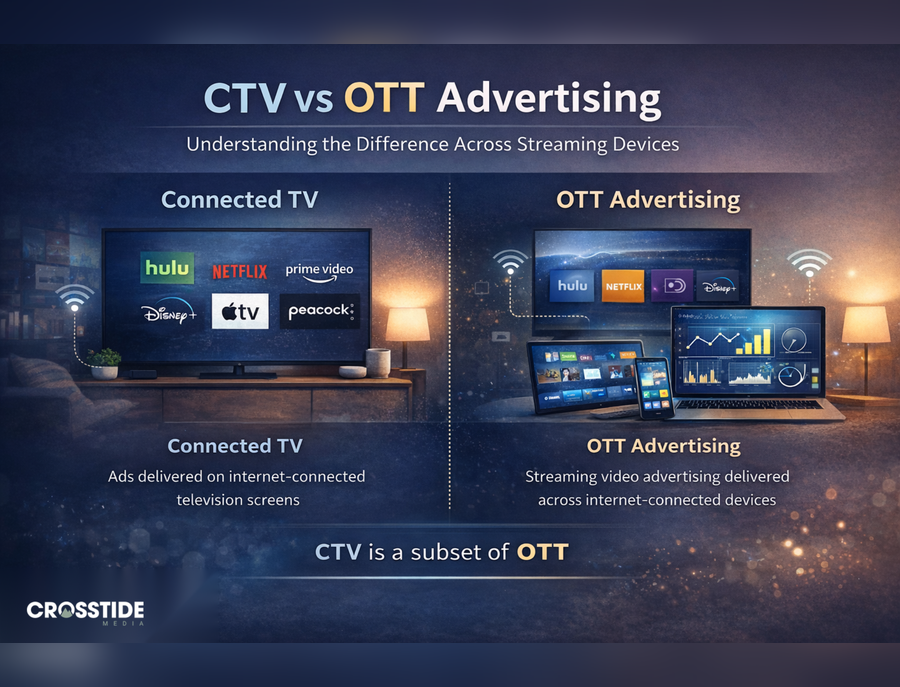
Measurement, Attribution, and Optimization
Political and government campaigns need reporting that supports decision-making, not just delivery summaries.
Common campaign metrics
- impressions
- reach
- frequency
- click-through rate
- video completion rate
- geographic delivery
- audience-level performance
- pacing and spend distribution
Political outcome metrics
Political campaigns may focus on:
- voter universe reach
- persuasion segment penetration
- household coverage
- donor activity
- fundraising volume
- volunteer signups
- turnout message delivery
- site engagement by geography
Government outcome metrics
Government campaigns may focus on:
- awareness reach
- landing-page visits
- community engagement
- resource utilization
- event or service interest
- response behavior
- geographic response trends
- engagement by segment
Optimization approach
A strong optimization framework looks at:
- audience segment performance
- geography performance
- channel performance
- creative fatigue
- landing-page behavior
- donor, lead, or engagement quality
- spend concentration by objective
Attribution reality
Political and government campaigns are often influenced by multiple exposures across multiple screens and sessions. Because of that, they should not be judged only through last-click logic. A stronger framework combines reach, frequency, site behavior, conversion activity, and broader campaign impact signals.
Compliance, Brand Safety, and Quality Control
Political and government campaigns need strong operational discipline because compliance, placement quality, and message control all matter heavily.
Best practices
- review platform and campaign-specific rules carefully
- confirm disclaimer and disclosure needs where applicable
- prioritize trusted inventory sources
- separate premium supply from weaker marketplace inventory
- monitor geography and audience delivery closely
- review creative and landing-page alignment carefully
- maintain QA throughout the campaign
Why quality control matters
For Crosstide Media, quality control is not just a risk-management issue. It directly affects trust, targeting accuracy, efficiency, and campaign performance.

Why Work With Crosstide Media?
Effective political and government advertising requires more than simply launching targeted ads into market. It takes audience intelligence, geographic discipline, creative strategy, inventory planning, technical setup, measurement logic, and ongoing optimization.
Crosstide Media helps advertisers execute political and government campaigns with:
- media buying expertise
- audience planning
- voter and household targeting strategy
- community and government audience strategy
- premium inventory planning
- creative readiness
- technical QA
- performance reporting
- ongoing optimization
We approach political and government advertising as high-precision media execution. Our focus is on building campaigns that combine audience intelligence, smart targeting, strong creative alignment, and actionable reporting so advertisers can move with more confidence.
Whether the goal is voter persuasion, turnout, fundraising, advocacy, public awareness, education, or community outreach, Crosstide Media helps organizations build campaigns with the structure and discipline required for modern media buying.
Frequently Asked Questions
What is political advertising in programmatic media?
What is voter matching in digital political advertising?
What is addressable household targeting?
What is government advertising in digital media?
What types of government campaigns can programmatic advertising support?
What channels work best for political advertising?
What channels work best for government awareness campaigns?
Why does geography matter so much in political and government campaigns?
How are political and government campaigns measured?
Why work with a managed political and government advertising partner?
Build a Smarter Political or Government Advertising Campaign
If your campaign needs a more strategic digital advertising approach, Crosstide Media can help you plan, launch, and optimize campaigns built around audience intelligence, stronger geographic precision, better channel strategy, and clearer reporting. Whether your goal is to persuade voters, improve turnout, support fundraising, build public awareness, promote a civic initiative, or strengthen community outreach, we help organizations build campaigns designed to work more efficiently in high-priority environments.
Why Campaigns and Organizations Choose Crosstide Media
Campaigns and organizations work with Crosstide Media because effective political and government advertising requires more than simply narrowing audience filters. Strong results come from the right mix of audience intelligence, household or community strategy, creative discipline, campaign structure, channel planning, and ongoing optimization. Our approach is built to help advertisers improve targeting precision, reduce waste, maintain stronger media standards, and make better decisions through clearer reporting and more actionable campaign insights.
Talk to Crosstide Media About Political and Government Advertising
If you are looking for a political and government advertising partner that can help you reach the right audience, improve campaign efficiency, and deliver more measurable results, Crosstide Media can help. We build political and government advertising campaigns with the strategic planning, technical setup, audience intelligence, inventory quality controls, creative alignment, and optimization discipline needed to support high-impact results.
