
Paid Social Advertising
Paid Social Advertising That Helps Brands Break Through, Build Demand, and Drive Action
Paid social advertising helps brands reach the right audience across some of the most active and influential digital platforms in the world. From Meta, Facebook, and Instagram to YouTube, TikTok, LinkedIn, and Snapchat, paid social gives advertisers the ability to place messaging in front of users based on interests, behavior, demographics, engagement patterns, professional attributes, and platform-specific signals. Unlike search, which captures existing demand, paid social often helps create demand, build awareness, shape consideration, and move audiences toward action over time.
Because people spend so much time in social and video-driven environments, paid social has become one of the most important channels in the modern advertising landscape. A strong paid social strategy can help brands increase visibility, drive qualified traffic, generate leads, support e-commerce growth, build retargeting audiences, and strengthen the performance of broader marketing efforts. Success depends on more than just turning on ads. It requires platform strategy, clear audience structure, strong creative, campaign discipline, and continuous optimization.
At Crosstide Media, we build paid social campaigns around audience intelligence, creative alignment, channel strategy, platform-specific best practices, and measurable performance. Whether the goal is brand awareness, website traffic, lead generation, video views, engagement, conversions, or full-funnel growth, we help brands execute paid social campaigns built for stronger efficiency and better results.
Jump To
What Is Paid Social Advertising?
Paid social advertising is the use of paid media placements across social platforms and social-style video environments to reach targeted audiences with promotional messaging. These campaigns can appear in feeds, stories, reels, shorts, in-stream video, discovery environments, professional networks, messaging surfaces, and other placements depending on the platform and campaign objective.
Paid social can include advertising across:
- Meta
- YouTube
- TikTok
- Snapchat
Each platform offers different strengths, audience behavior, creative dynamics, and ad formats, but together they form a major part of the digital advertising ecosystem.
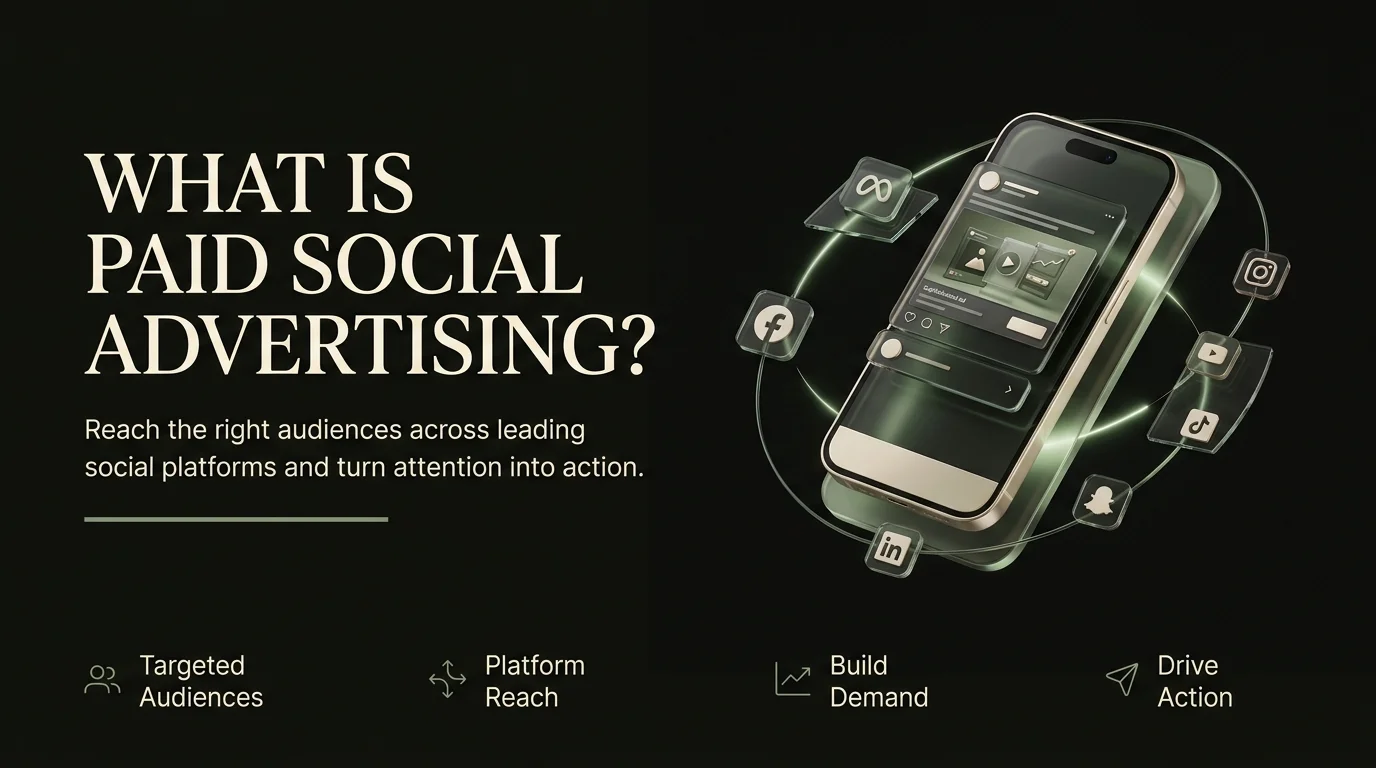
Paid social can help businesses support:
- brand awareness
- audience growth
- website traffic
- lead generation
- video engagement
- retargeting
- e-commerce conversions
- full-funnel campaign performance
The main value of paid social comes from its ability to combine audience targeting, visual storytelling, creative testing, and scalable reach across highly active consumer and professional platforms.
Why Paid Social Advertising Matters
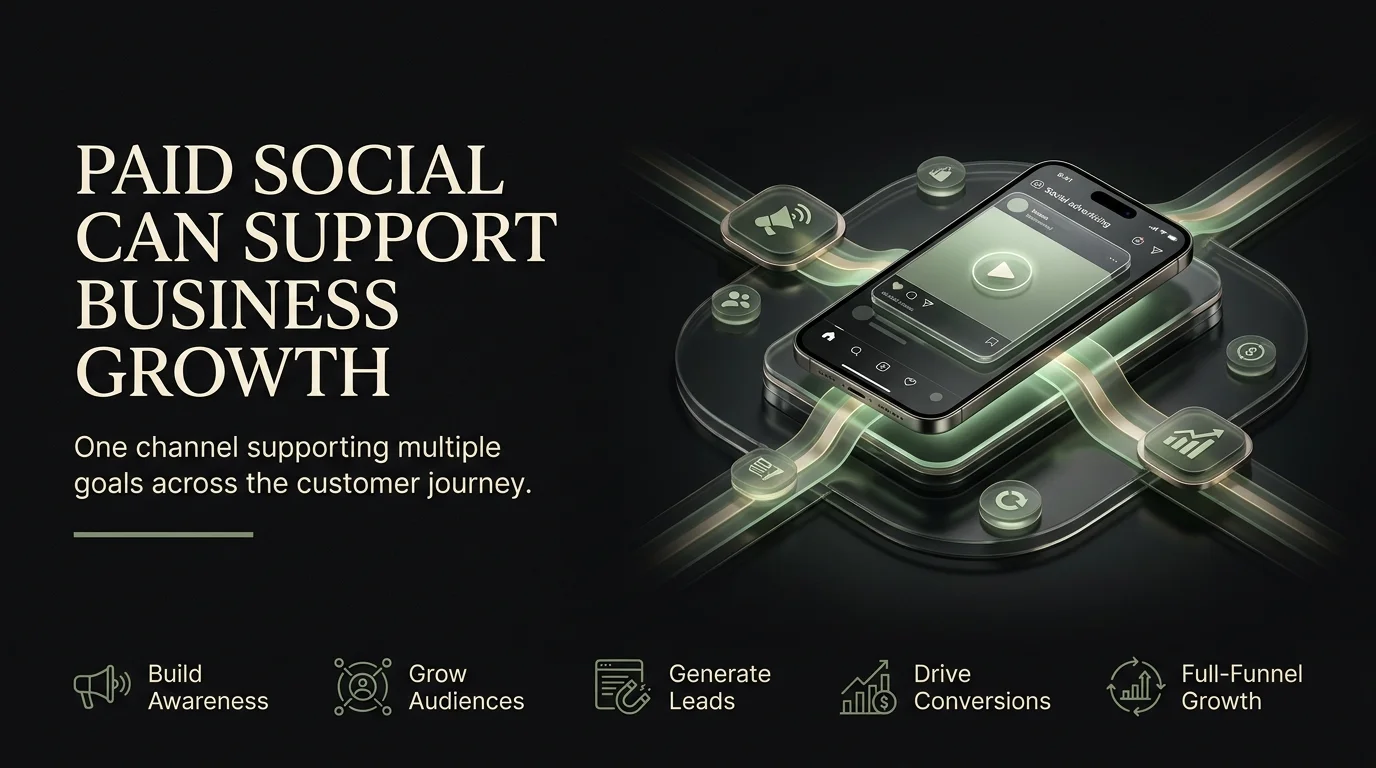
Paid social matters because it gives brands access to large, engaged audiences in the environments where people spend a meaningful amount of their time. Users scroll, watch, discover, engage, compare, and interact within social and video-driven platforms throughout the day. That gives advertisers a powerful opportunity to build visibility and move audiences through the customer journey.
A strong paid social campaign can help support:
- brand awareness
- audience education
- interest generation
- website traffic
- lead generation
- product discovery
- retargeting reinforcement
- conversion support
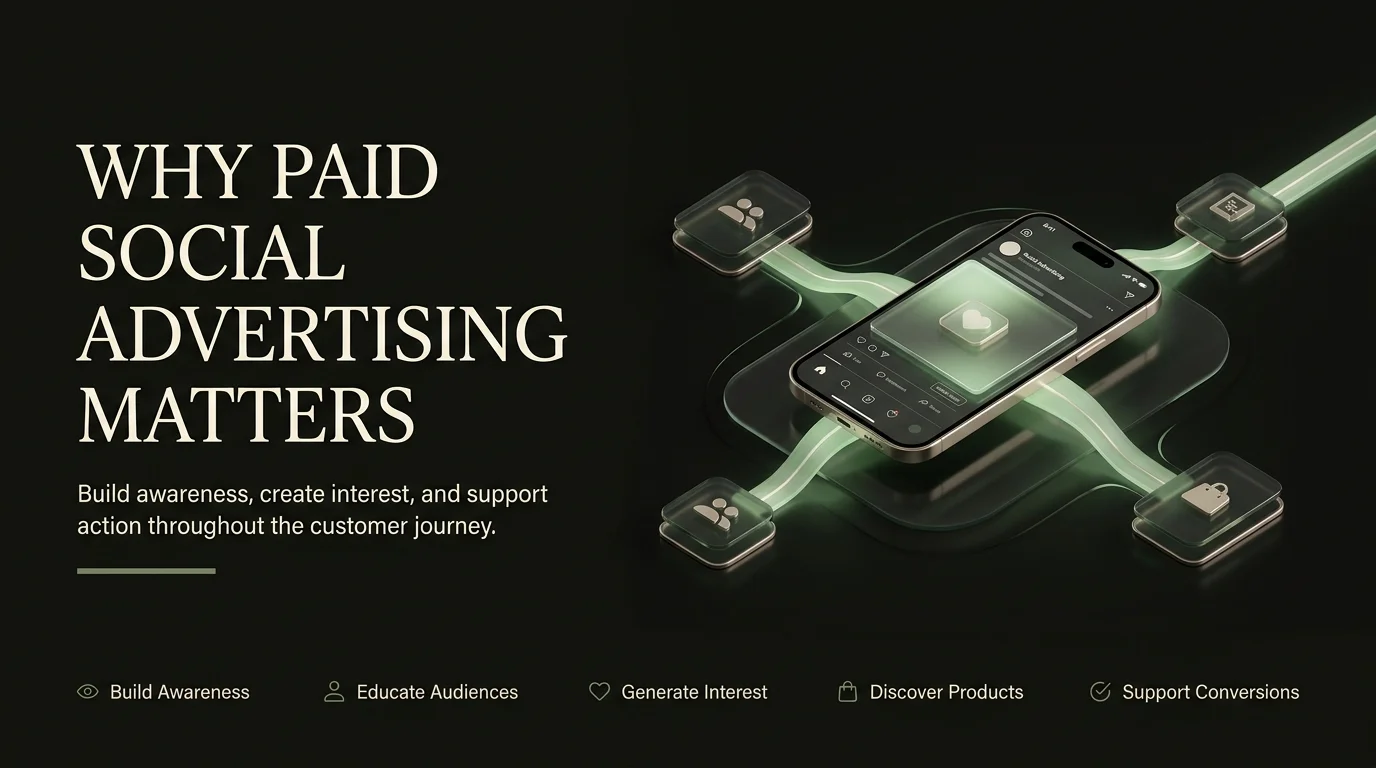
Why advertisers invest in paid social
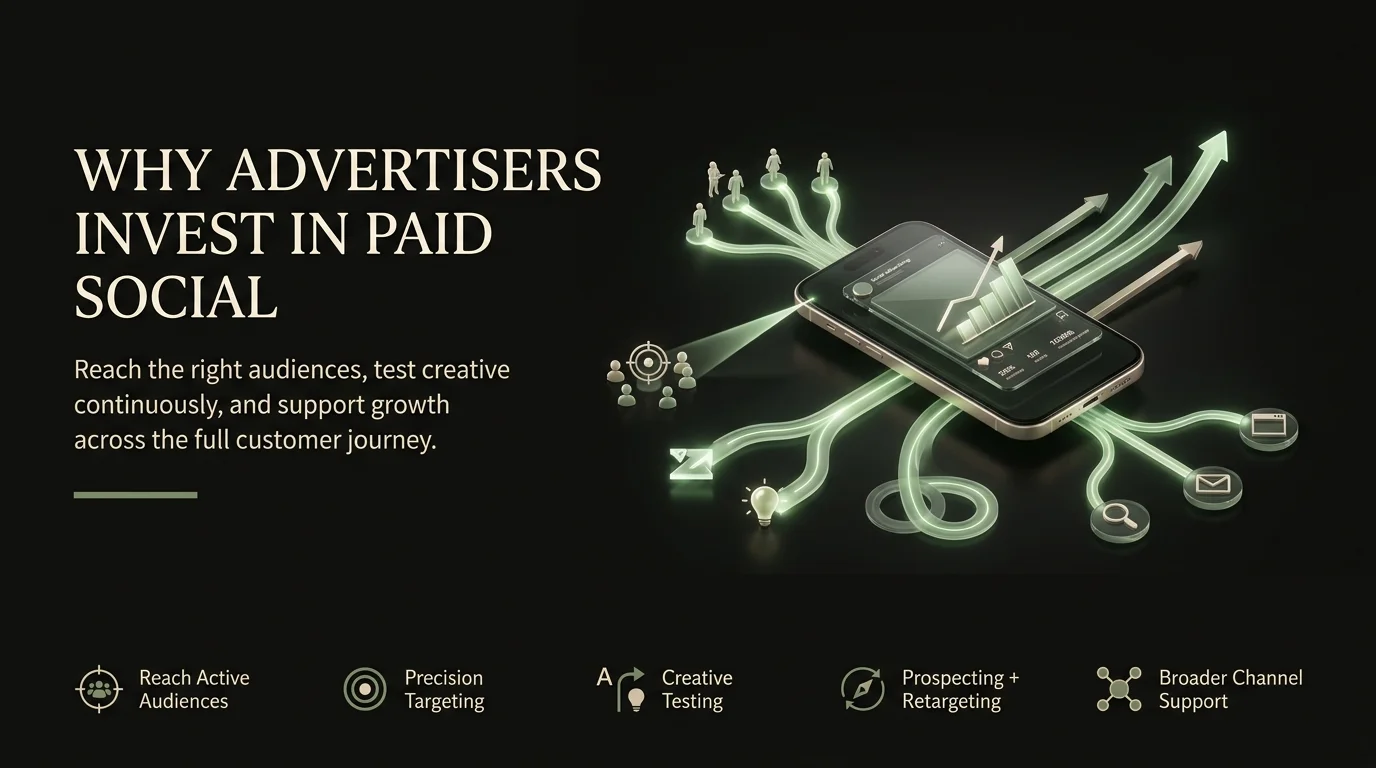
- It reaches users where they are already spending time
- It supports strong audience targeting
- It allows continuous creative testing
- It can drive both awareness and conversions
- It works well for prospecting and retargeting
- It helps support broader search, SEO, and programmatic strategies
For Crosstide Media, paid social is valuable because it combines platform-scale reach with targeted audience strategy and strong creative influence in environments built for attention and discovery.
Where Paid Social Fits in the Advertising Landscape
Paid social plays a different role than channels like paid search, SEO, programmatic display, or CTV. It is often strongest when it is used to create awareness, shape perception, build familiarity, and generate audience demand before a user actively searches or converts.
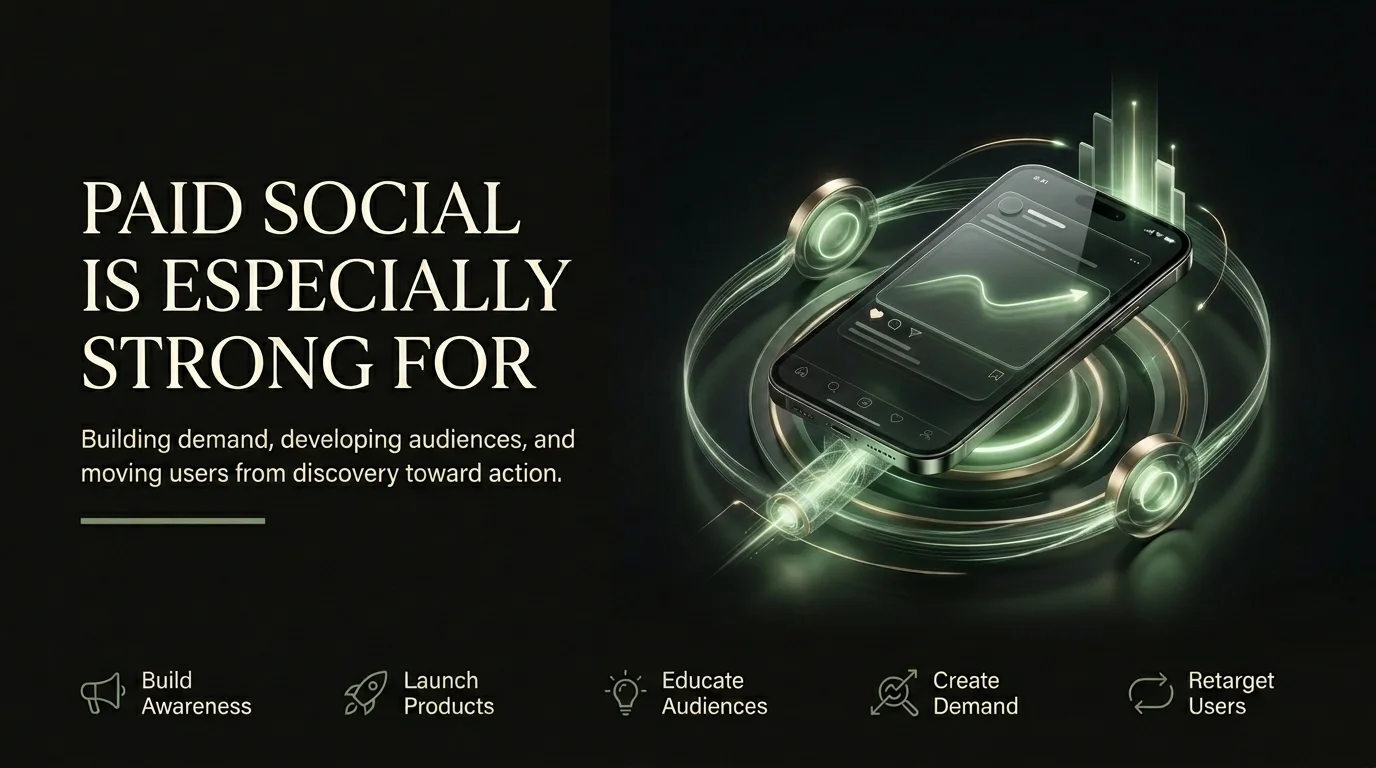
Paid social is especially strong for
- building awareness
- introducing new products or services
- educating audiences through video and creative
- generating demand before search happens
- driving traffic from social discovery environments
- retargeting engaged users
- supporting longer customer journeys
Paid social compared to other channels
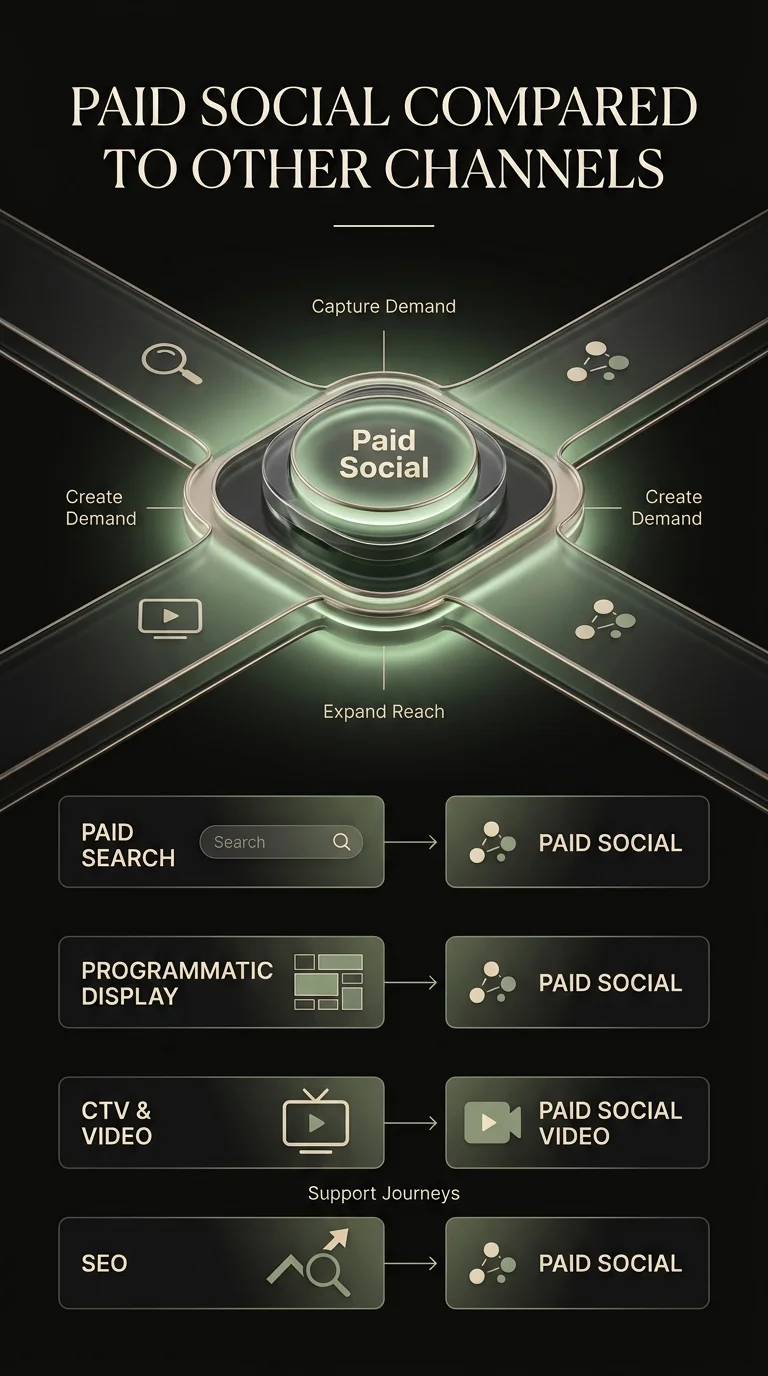
Paid search
Captures active intent when users are already searching.
Paid social
Helps create interest and demand earlier in the journey.
Programmatic display
Supports scalable reach and retargeting across the web.
Paid social
Supports audience engagement in platform-native environments.
CTV and video
Create premium awareness.
Paid social video
Often supports more interactive and repeated message exposure.
SEO
Supports long-term organic visibility.
Paid social
Supports immediate exposure and faster testing of messages, offers, and audience response.
That makes paid social one of the most important channels for brands that want to influence behavior before the search or purchase decision is fully formed.
How Paid Social Advertising Works
Paid social advertising works by using platform tools and audience data to show ads to specific users based on behavior, interests, demographics, engagement patterns, custom audiences, optimization goals, and platform-native signals. Campaigns are built around business objectives, audience structure, creative assets, placements, bidding strategies, budgets, and conversion tracking.
A strong paid social campaign usually includes:
Goal and KPI definition
audience research and segmentation
platform strategy
campaign structure and setup
creative development and formatting
tracking and conversion setup
launch and learning phase
optimization, reporting, and scaling
The strength of paid social comes from the ability to test and refine campaigns over time based on performance data, audience response, and creative effectiveness.
Meta, Facebook, and Instagram Advertising
Meta advertising includes placements across Facebook and Instagram and remains one of the most important paid social ecosystems for many advertisers. These platforms support a wide range of objectives, including awareness, traffic, leads, engagement, video views, catalog performance, and conversion-focused campaigns.
Why Meta, Facebook, and Instagram matter
Meta platforms offer:
- broad audience reach
- detailed audience targeting
- strong retargeting capabilities
- flexible ad formats
- strong lead generation tools
- visual storytelling across feed, story, and reel environments
Common Facebook and Instagram ad formats
- image ads
- video ads
- carousel ads
- story ads
- reel ads
- lead form ads
- collection ads
- feed ads
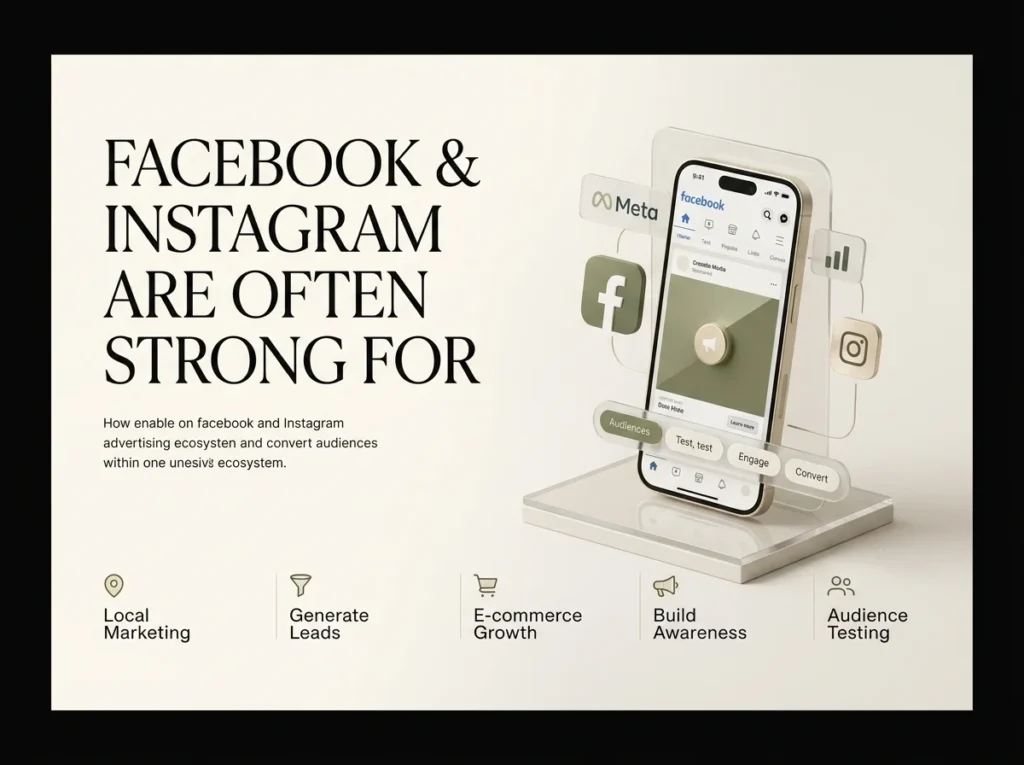
Facebook and Instagram are often strong for
- local service marketing
- lead generation
- e-commerce support
- brand awareness
- remarketing
- offer promotion
- audience testing
- creative iteration
Meta often serves as a core paid social channel because of its scale, flexibility, and strong full-funnel capabilities.
YouTube Advertising
YouTube advertising gives brands access to one of the most important video platforms in digital media. It combines the power of video storytelling with Google’s advertising ecosystem and allows brands to reach users across in-stream, in-feed, short-form, and video discovery environments.
Why YouTube matters
YouTube is especially strong for:
- brand awareness
- product education
- service explanation
- video engagement
- remarketing support
- visual storytelling
- search-connected video behavior
Common YouTube ad formats
- skippable in-stream ads
- non-skippable in-stream ads
- in-feed video ads
- bumper ads
- YouTube Shorts ads
- video action campaigns
YouTube is often strong for
- awareness campaigns
- mid-funnel education
- retargeting
- branded video promotion
- service explanation
- cross-channel reinforcement with search and display
YouTube can play an especially important role when advertisers want to pair paid social video with Google search demand and broader performance strategy.
TikTok Advertising
TikTok advertising has become an important paid social channel for brands that want to reach audiences in fast-moving, creative-driven, video-first environments. TikTok often rewards creative that feels native to the platform and can be highly effective for discovery, attention, and engagement.
Why TikTok matters
TikTok is especially useful for:
- awareness
- trend-responsive creative
- discovery
- audience engagement
- short-form video reach
- brand personality and storytelling
- product interest generation
Common TikTok ad formats
- in-feed ads
- spark ads
- video ads
- carousel ads in supported placements
- lead generation support where applicable
- short-form vertical video campaigns
TikTok is often strong for
- brand introductions
- product launches
- younger or trend-responsive audience reach
- creative testing
- visual storytelling
- engagement-first campaigns
A strong TikTok strategy usually depends on creative that feels native, fast, clear, and visually engaging from the first seconds.
LinkedIn Advertising
LinkedIn advertising is one of the most important paid social options for B2B marketing, professional audience targeting, recruiting, and campaigns that need to reach decision-makers in a business context. It offers a very different environment from Facebook, Instagram, or TikTok because audience targeting can be built around professional attributes and business relevance.
Why LinkedIn matters
LinkedIn is especially strong for:
- B2B lead generation
- professional audience targeting
- thought leadership promotion
- webinar and event promotion
- recruitment campaigns
- account-based marketing support
- public-sector and professional services visibility
Common LinkedIn ad formats
- single image ads
- video ads
- carousel ads
- document ads
- lead generation form ads
- conversation ads
- sponsored content
- text ads in supported placements
LinkedIn is often strong for
- reaching decision-makers
- targeting by job title or function
- promoting white papers and case studies
- professional lead generation
- account-focused campaigns
- higher-value, longer-cycle sales efforts
LinkedIn often plays a different role than consumer-focused platforms because it is usually more qualified from a professional targeting standpoint, even if media costs are higher.
Snapchat Advertising
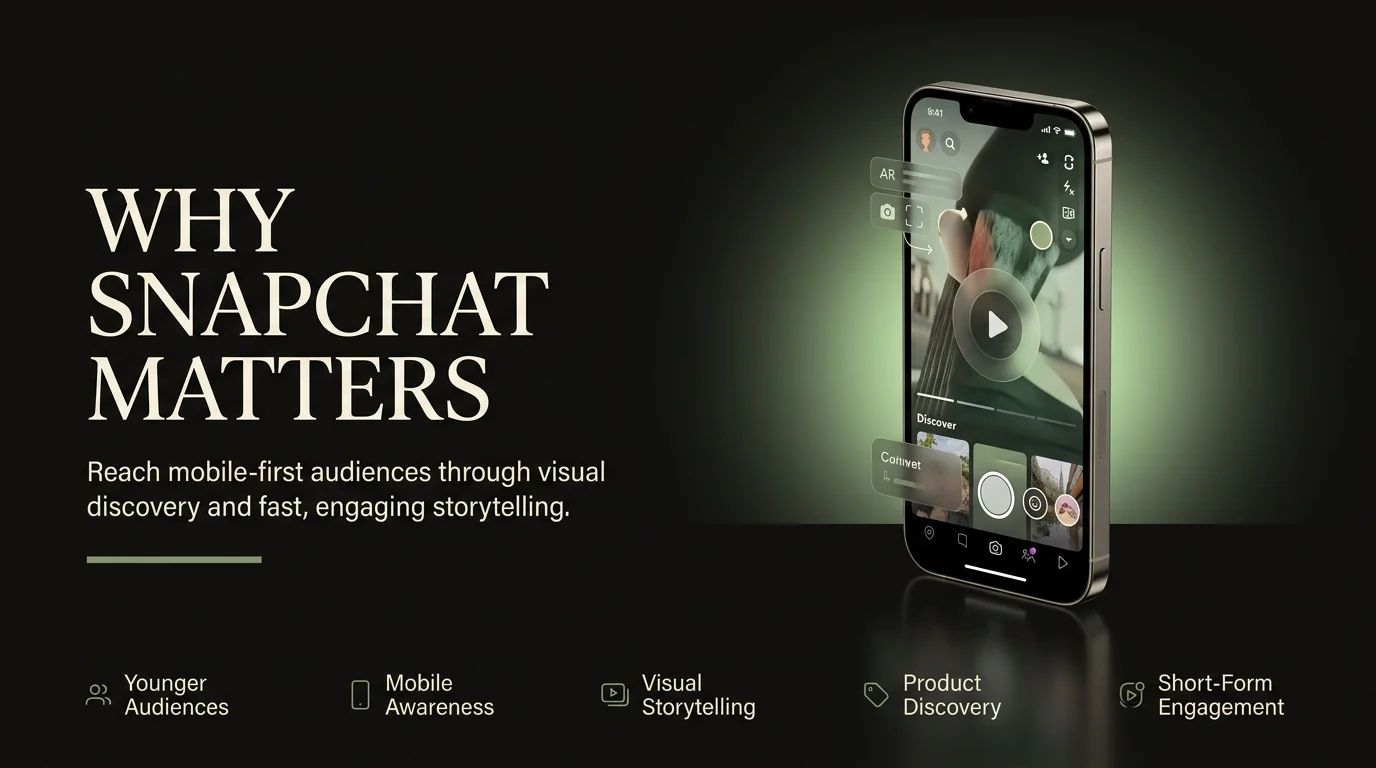
Snapchat advertising gives brands access to highly mobile, visually engaged audiences in a platform built around quick communication, discovery, and vertical content consumption. It can be especially useful for brands targeting younger audiences or mobile-first behaviors.
Why Snapchat matters
Snapchat is especially strong for:
- younger audience reach
- mobile-first awareness
- quick visual storytelling
- product discovery
- local promotions
- app-related campaigns
- short-form video engagement
Common Snapchat ad formats
- single image ads
- single video ads
- story ads
- collection ads
- AR lens experiences where applicable
- app-focused campaigns in supported environments
Snapchat is often strong for
- Gen Z and younger millennial targeting
- Mobile engagement
- Fast-paced visual promotion
- Local and retail campaigns
- Awareness and discovery
- Short-form creative testing
A strong Snapchat strategy usually works best when the creative is native, vertical, immediate, and built for quick mobile attention.
Paid Social Audience Targeting Strategy
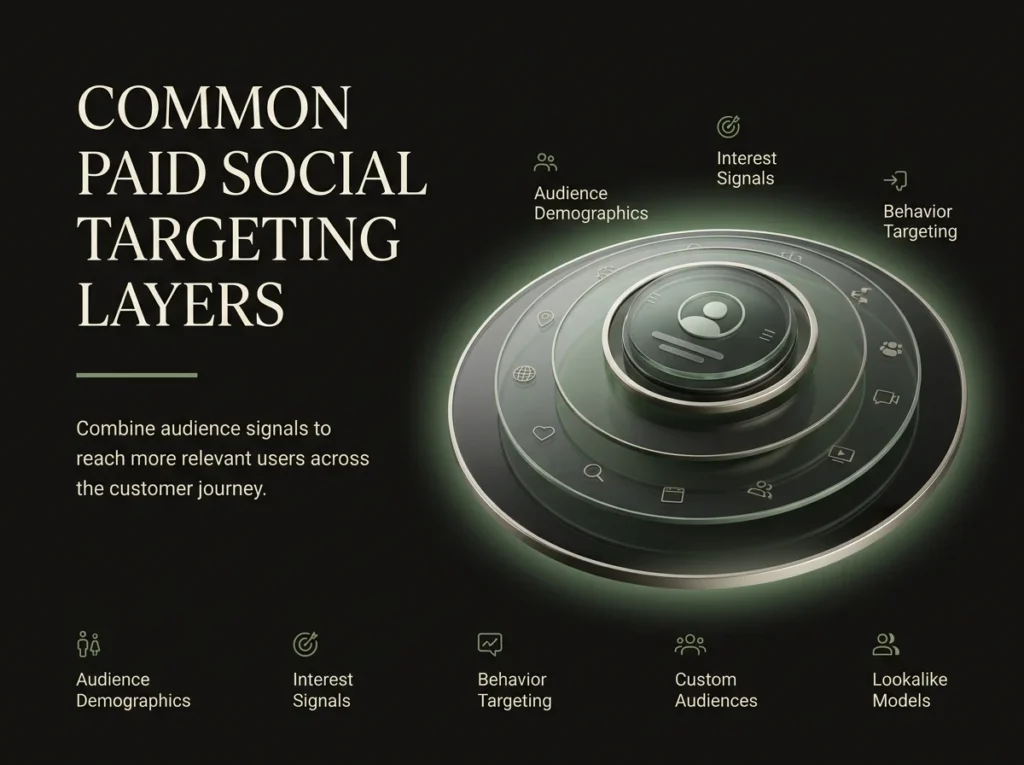
Audience targeting is one of the most important parts of paid social strategy because the platforms are powerful, but the campaign still needs to reach the right people with the right message.
Common paid social targeting layers
- demographic targeting
- geographic targeting
- interest targeting
- behavioral targeting
- custom audiences
- website retargeting
- customer list onboarding
- engagement audiences
- video viewer audiences
- lookalike or modeled audiences
- professional targeting on LinkedIn
- account or role-based targeting in B2B-focused campaigns
Prospecting strategy
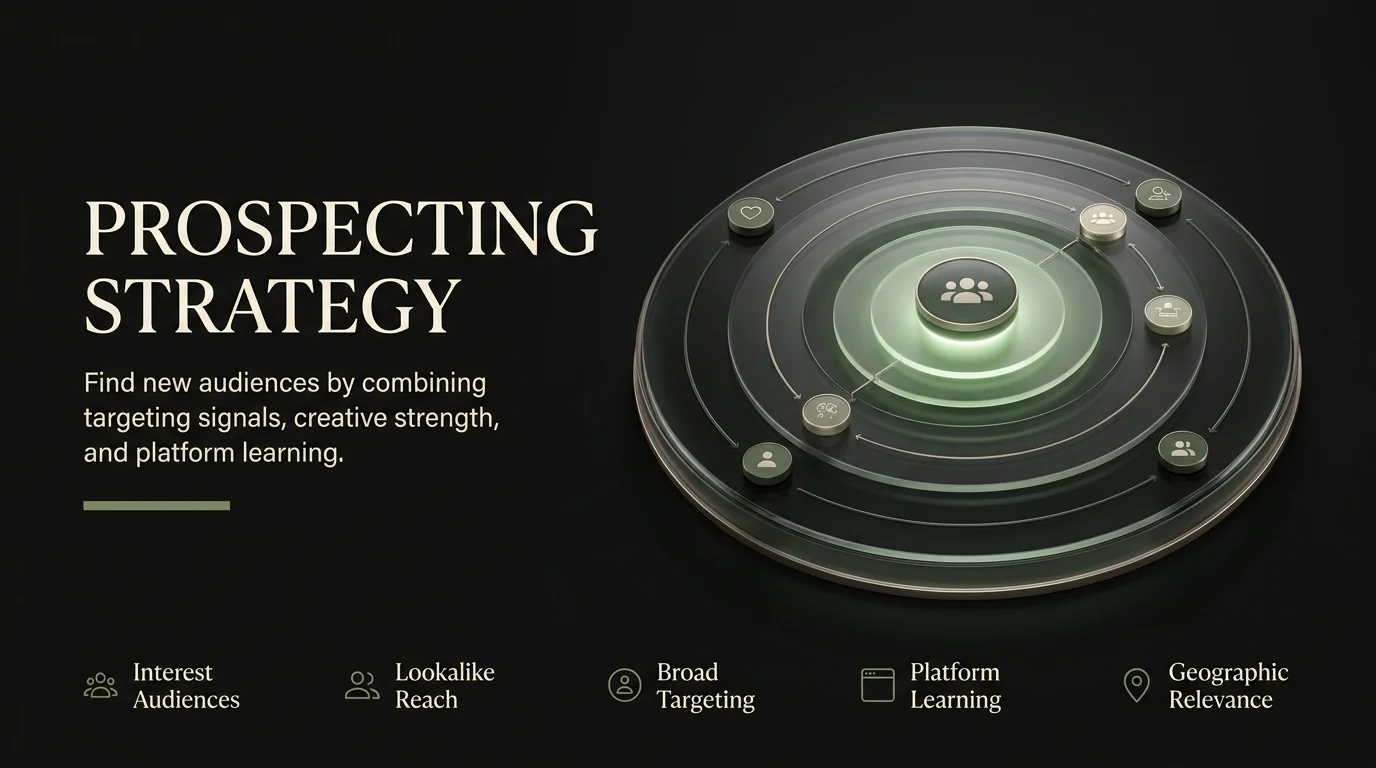
Prospecting campaigns are used to reach new audiences who may not yet know the brand. These may be built around:
- interest-based audiences
- lookalike audiences
- broad targeting with strong creative
- platform signals and learning
- geography and service-area relevance
- professional audiences where relevant
Retargeting strategy
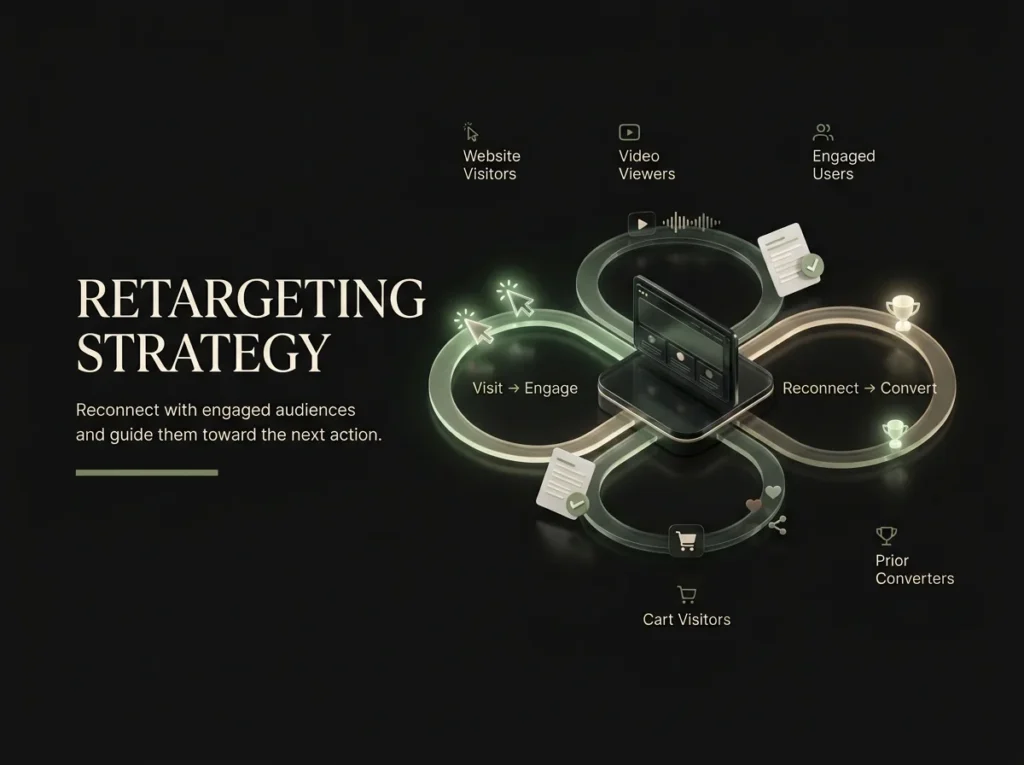
Retargeting campaigns are used to reconnect with users who have already shown some level of interest.
These audiences may include:
- website visitors
- video viewers
- engaged users
- lead-form openers
- cart visitors
- social engagers
- prior converters for upsell or exclusion purposes
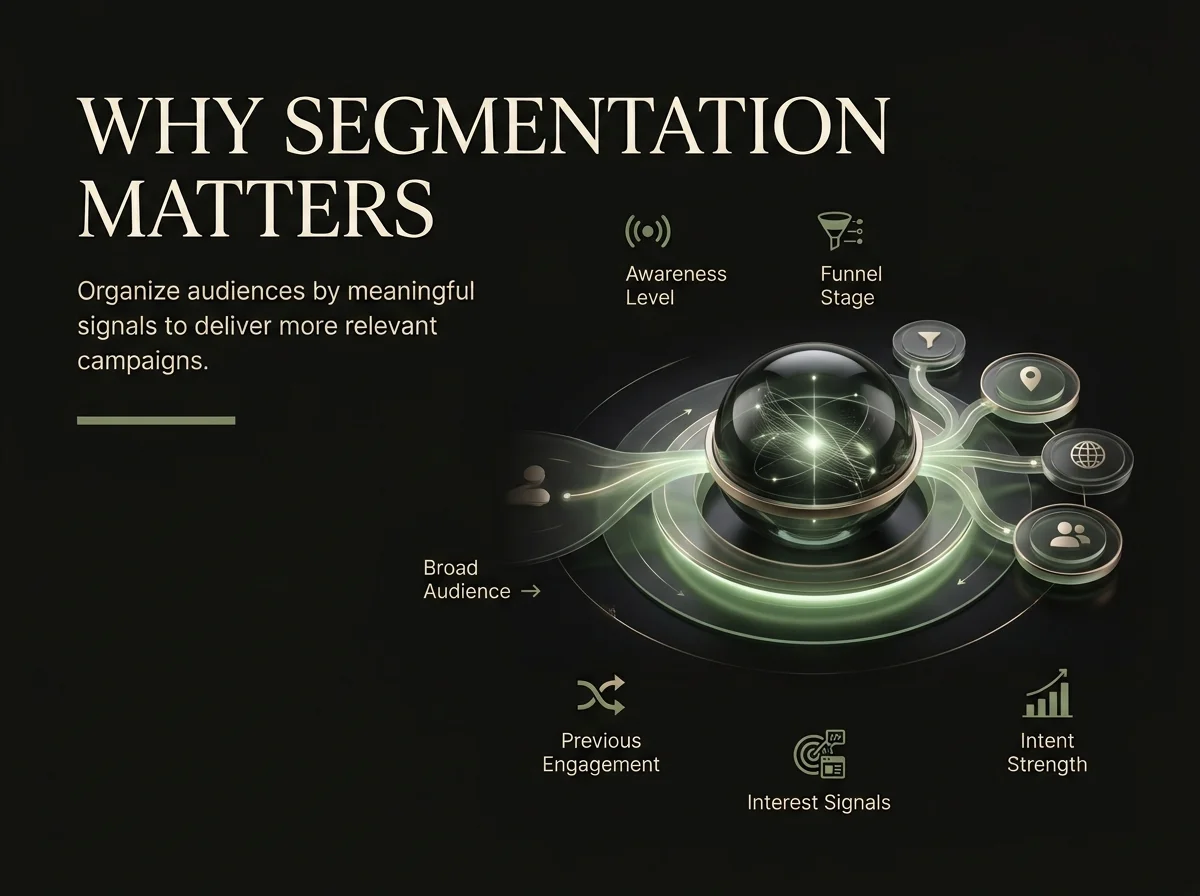
Why segmentation matters
A strong paid social campaign does not usually run one message to everyone. Different audiences may need different messaging based on:
- awareness level
- funnel stage
- previous engagement
- geography
- product or service interest
- intent strength
- professional role in B2B campaigns
For Crosstide Media, audience strategy is one of the main drivers of paid social efficiency because better audience structure usually leads to better creative relevance and better performance.
Creative Strategy and Paid Social Ad Specifications
Creative is one of the most important variables in paid social performance. Unlike some other channels, social platforms are heavily influenced by how quickly a creative asset captures attention and how naturally it fits the user experience of the platform.
A strong paid social strategy depends on strong creative.
Why creative matters so much in paid social
Creative affects:
- thumb-stop ability
- click-through rate
- video completion
- engagement quality
- lead efficiency
- audience retention
- conversion performance
Strong paid social creative should do the following
- capture attention quickly
- communicate the message early
- match the platform environment
- remain visually clear on mobile
- align with the campaign goal
- make the next step obvious
Platform-specific creative guidance
Meta, Facebook, and Instagram creative specifications
Common best practices often include:
- vertical and square creative options
- short-form videos built for mobile viewing
- feed-safe image formats
- story and reel creative built in vertical orientation
- clear on-screen text
- early branding
- concise headlines and primary text
- mobile-first readability

YouTube creative specifications
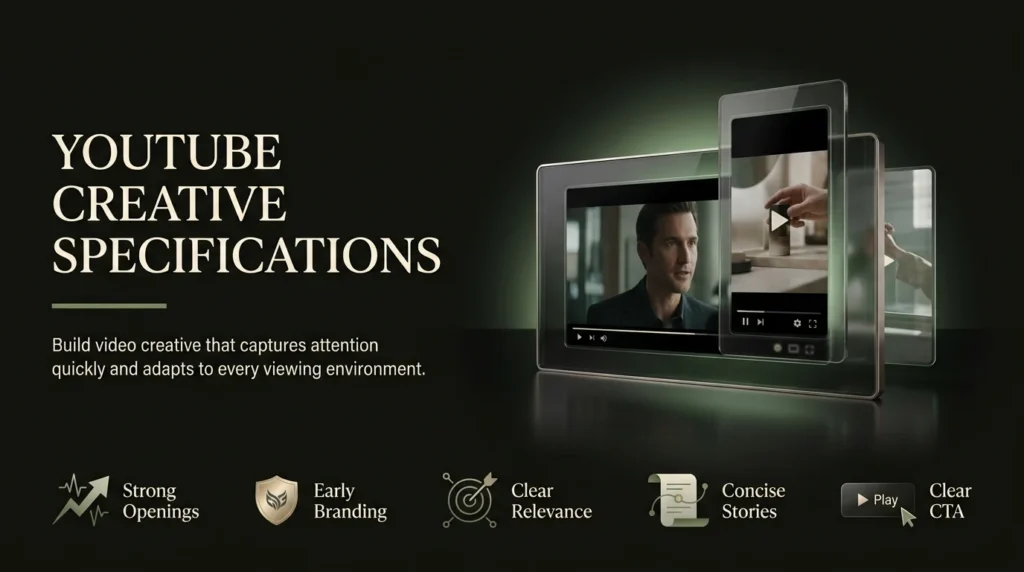
Common best practices often include:
- horizontal or vertical video depending on placement
- clear opening seconds
- early brand introduction
- strong first-frame relevance
- concise storytelling
- clean audio
- strong CTA where appropriate
- versions built for in-stream and short-form environments
TikTok creative specifications
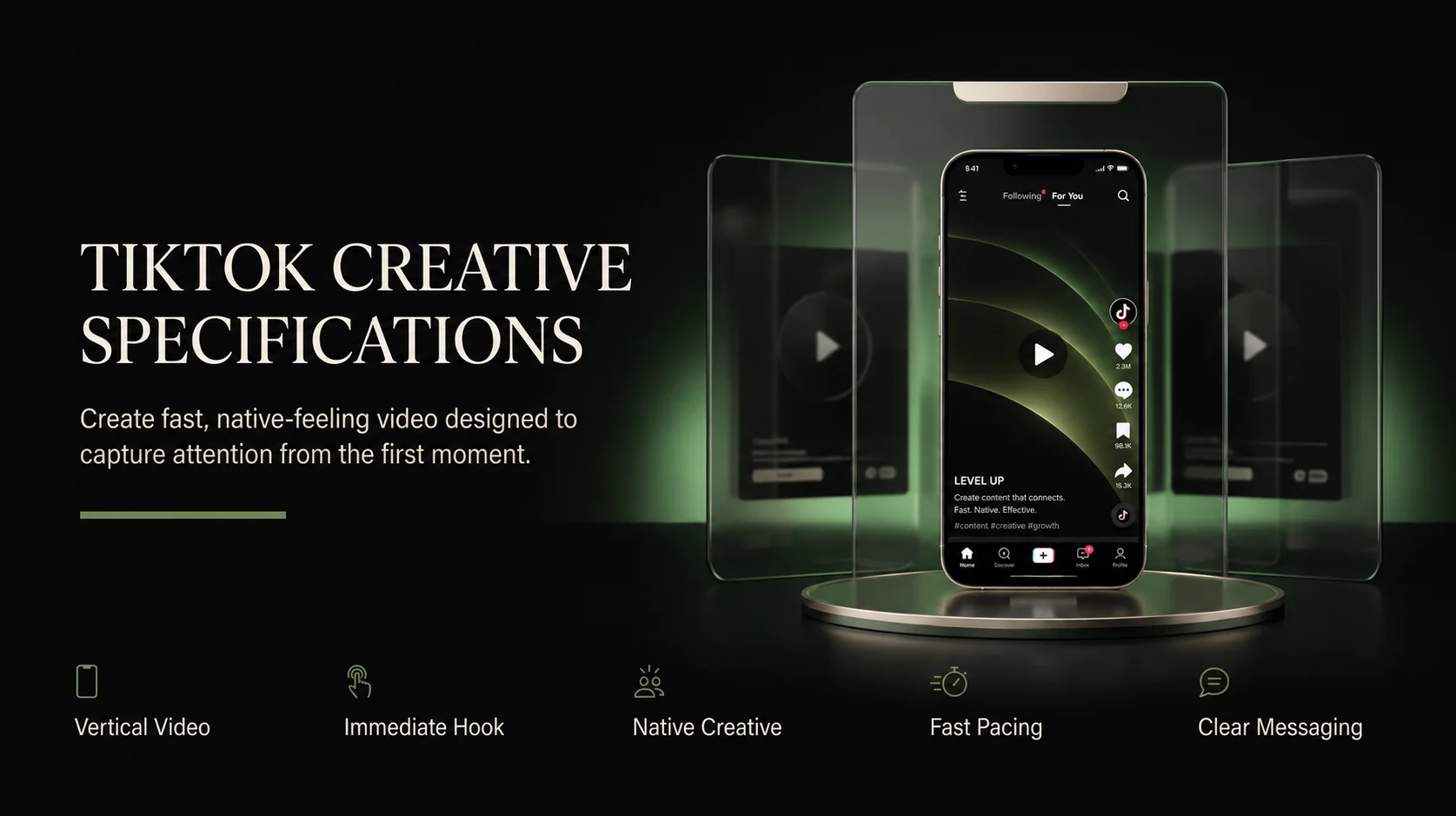
Common best practices often include:
- full-screen vertical video
- immediate visual hook
- native-looking platform style
- faster pacing
- strong first 1 to 3 seconds
- minimal friction in the message
- captions or text overlays where useful
- creative that feels less like a traditional ad and more like a platform-native video
LinkedIn creative specifications
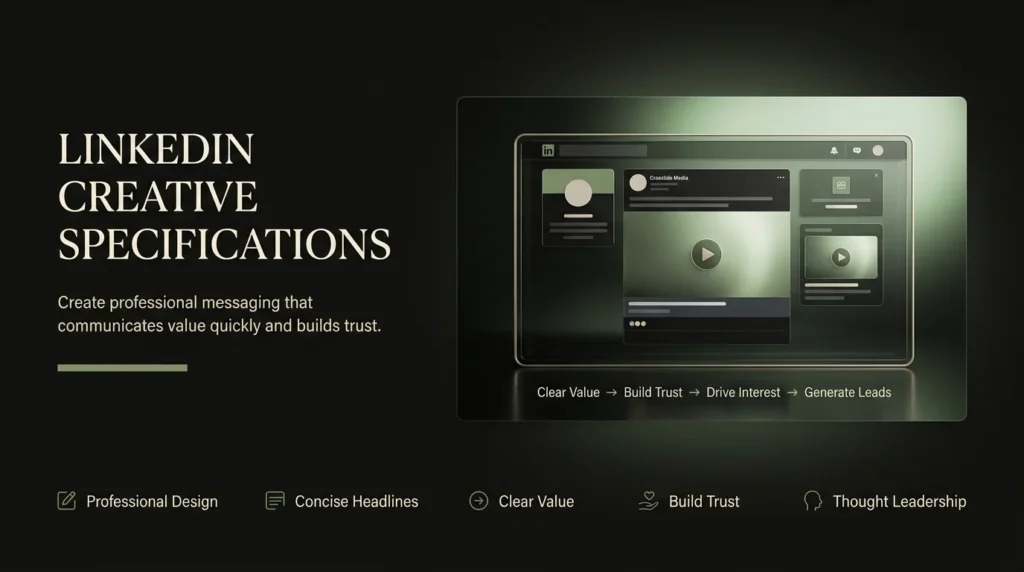
Common best practices often include:
- clean, professional design
- concise headlines
- strong business value proposition
- trust-oriented messaging
- thought leadership or offer clarity
- video or static assets that communicate quickly
- lead form alignment where applicable
- creative that reflects a professional context
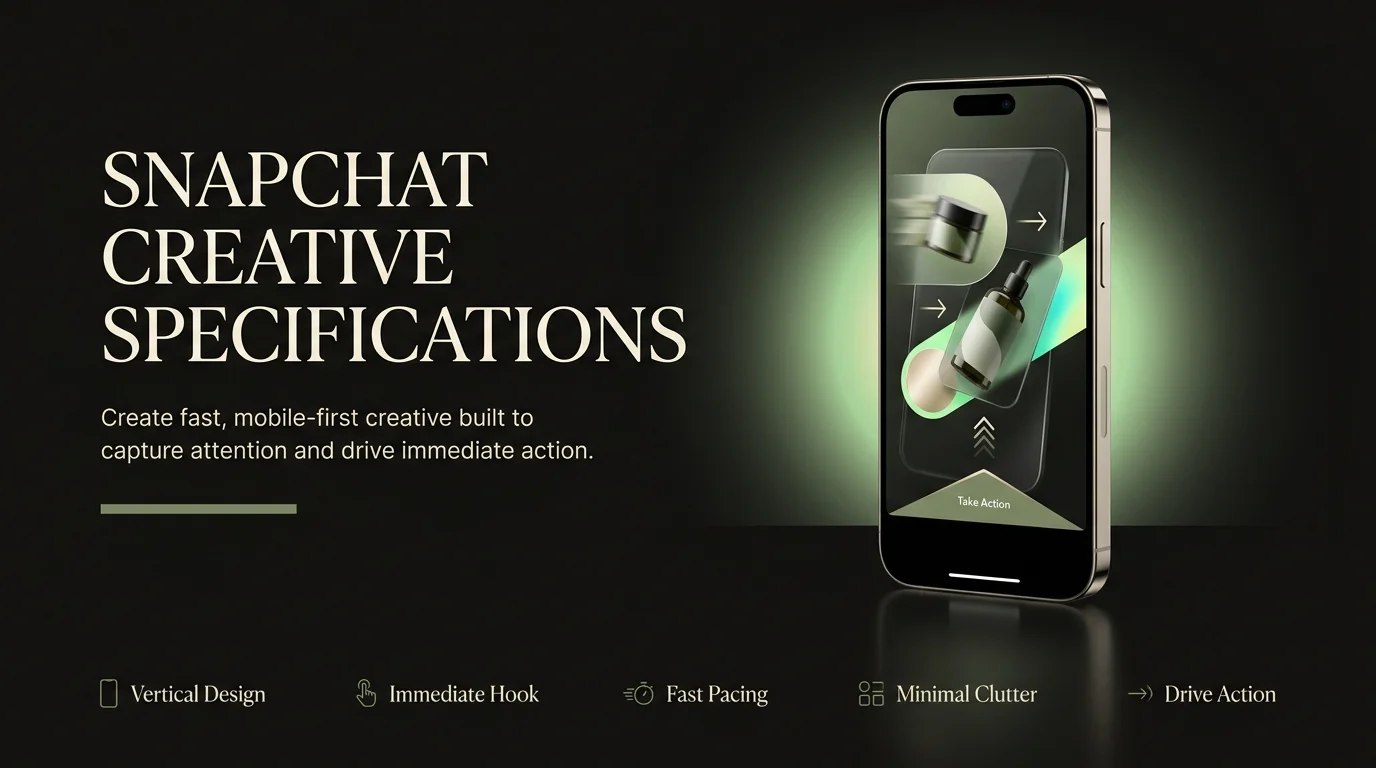
Snapchat creative specifications
Common best practices often include:
- full-screen vertical design
- fast visual pacing
- immediate hook
- minimal clutter
- mobile-first text usage
- clear branding without slowing the message
- strong CTA for swipe or action behavior
- creative that feels natural in a mobile social environment
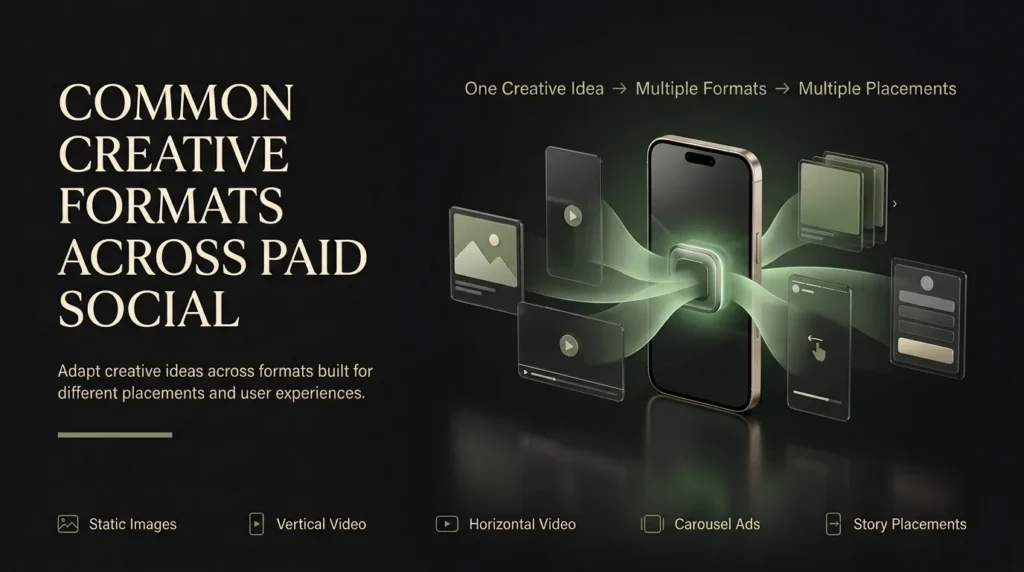
Common creative formats across paid social
- static image ads
- short-form vertical video
- horizontal video
- square video
- carousel ads
- story ads
- reel and short-form placements
- lead form ads
- branded promotional content
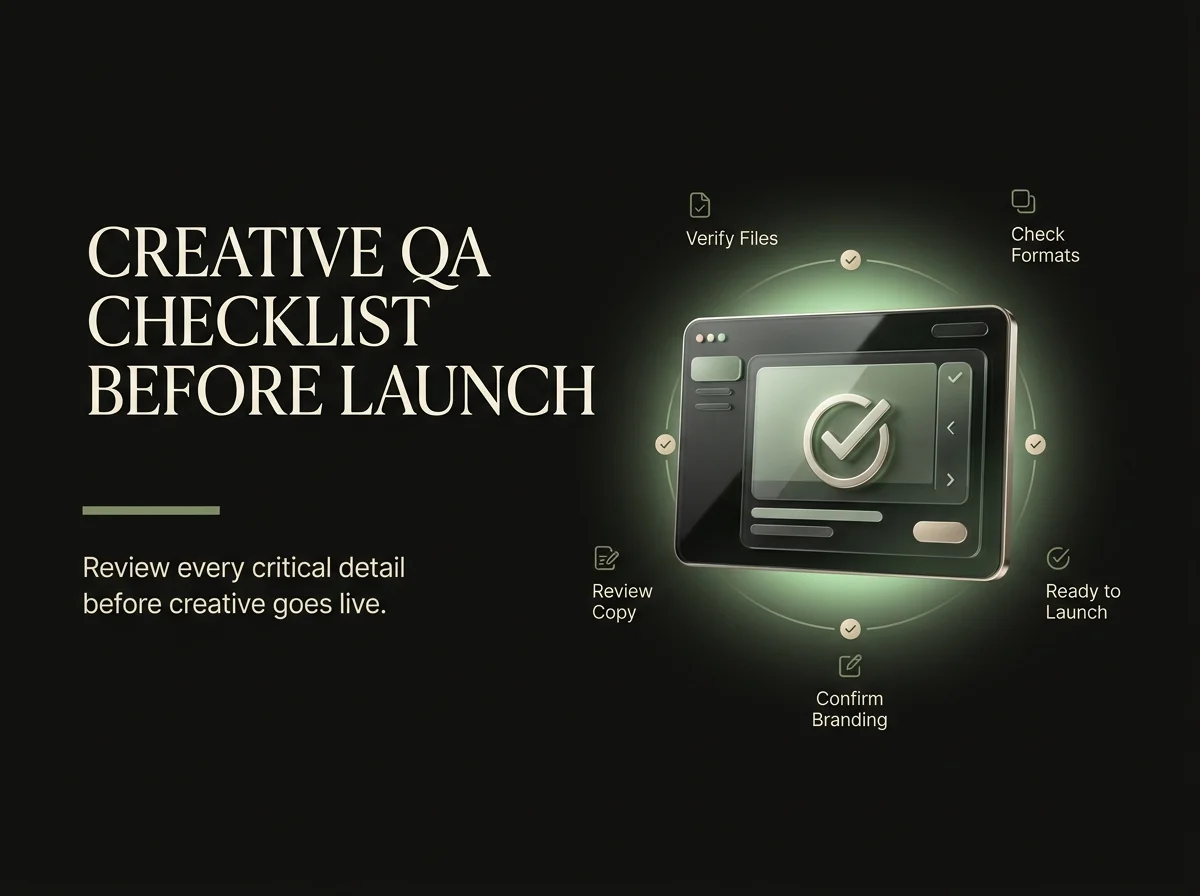
Creative QA checklist before launch
- File sizes confirmed
- Aspect ratios confirmed
- Copy reviewed
- CTA clearly visible
- Branding visible
- Audio checked for video assets
- Mobile previews reviewed
- Destination URLs confirmed
- Approved versions matched to uploaded assets
For Crosstide Media, creative strategy is not separate from media strategy. It is one of the biggest drivers of how well paid social campaigns perform.
Paid Social Account Setup and Campaign Structure
Strong paid social performance usually starts with clean structure. Campaigns need to be organized in a way that supports testing, reporting clarity, budget control, and message relevance.
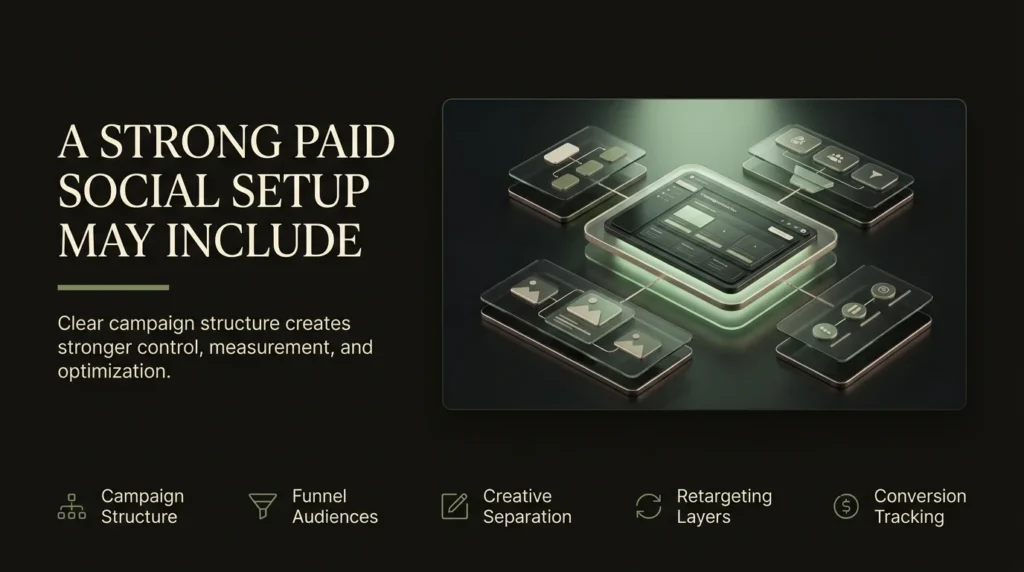
A strong paid social setup may include
- campaign segmentation by objective
- audience separation by funnel stage
- creative separation by format or message
- platform-specific campaign structure
- branded and non-branded offer separation where relevant
- retargeting layers
- conversion tracking and event setup
- naming conventions and reporting clarity
Common campaign segmentation approaches
Accounts may be structured by:
- awareness vs performance goals
- prospecting vs retargeting
- product or service line
- audience type
- creative theme
- geography
- lead type
- conversion objective
- platform role such as B2B vs consumer
Why structure matters
The initial setup affects:
- testing quality
- budget control
- reporting visibility
- creative insights
- scaling opportunities
- optimization efficiency
For Crosstide Media, setup is a major part of paid social strategy because strong structure makes the rest of the management process more effective.
Auditing and Optimization Process
A strong paid social strategy should include both a setup phase and an ongoing audit-and-optimization process. Many ad accounts run inefficiently because they carry weak audience segmentation, poor creative alignment, tracking issues, or wasted budget.

What a paid social audit should review
A paid social audit may evaluate:
- account structure
- campaign segmentation
- audience targeting
- audience overlap
- creative mix
- platform alignment
- conversion tracking
- lead quality
- remarketing structure
- budget allocation
- placement performance
- landing-page alignment
- attribution setup
- creative fatigue
- scaling opportunities
Launch and learning phase
After new setup or restructuring, the campaign enters a learning phase where performance data helps show:
- which audiences respond best
- which creatives are strongest
- which platforms drive better efficiency
- which placements deserve more spend
- what refinements are needed in messaging or targeting

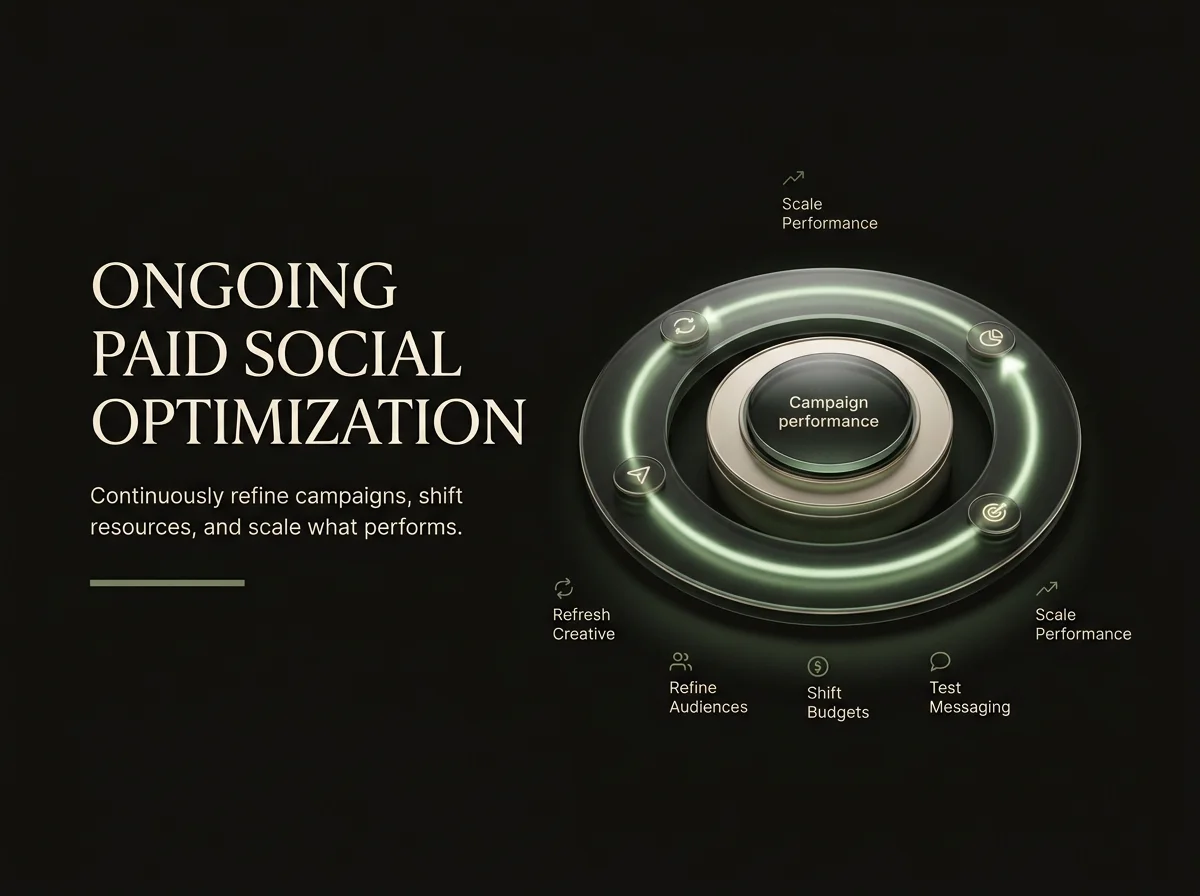
Ongoing paid social optimization
Paid social should be actively managed over time. Optimization may include:
- creative refreshes
- audience refinement
- budget shifts
- retargeting updates
- platform allocation changes
- placement exclusions or adjustments
- CTA testing
- copy updates
- landing-page alignment improvements
- scaling of strong-performing segments
This is where many long-term efficiency gains happen.
Budgeting, Bidding, and Media Efficiency
Paid social budgets should be guided by business goals, audience size, creative needs, platform mix, and expected funnel role.
Budget strategy should consider
- campaign objective
- audience scale
- platform role
- creative production needs
- funnel stage
- retargeting support
- geographic coverage
- seasonality
- lead quality expectations
- B2B vs consumer acquisition goals where relevant

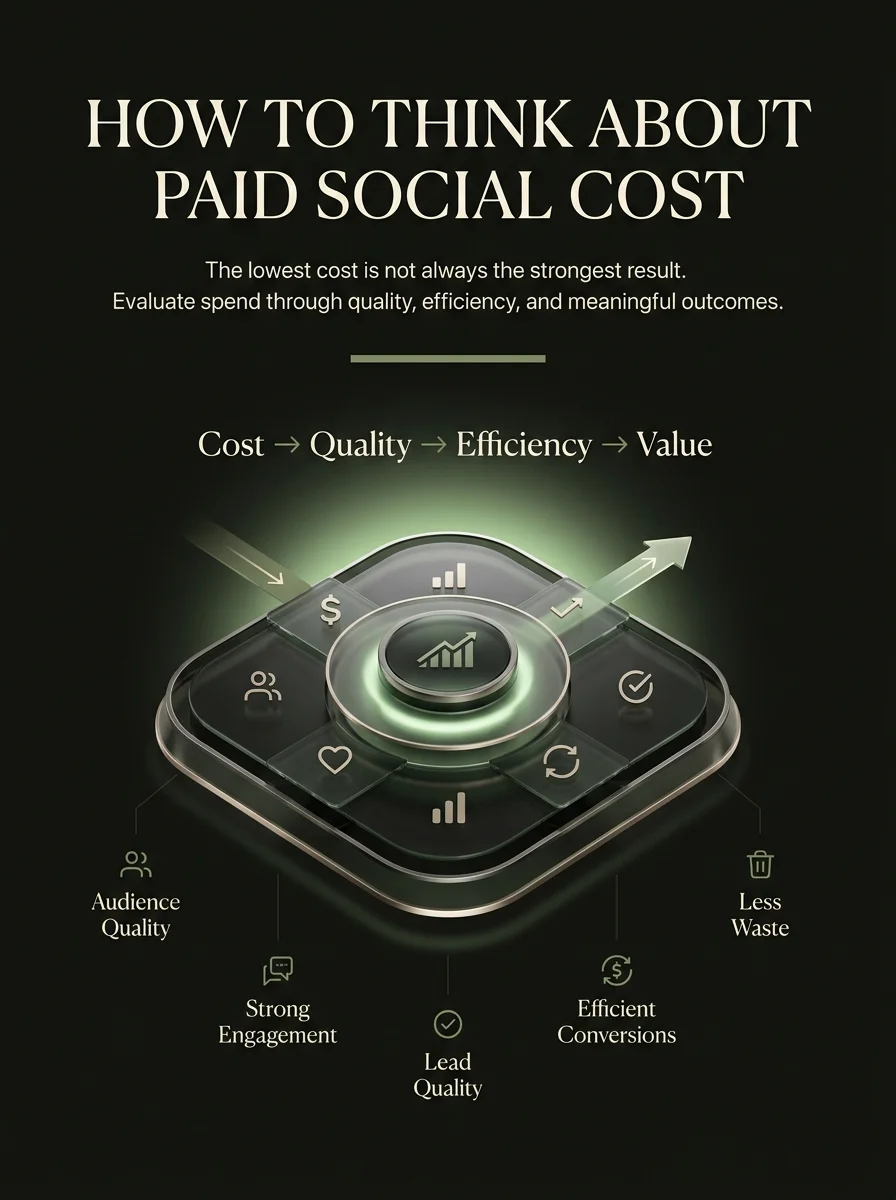
How to think about paid social cost
The more useful question is not only what the CPM, CPC, or CPA is, but also:
- Is the campaign reaching the right audience?
- Is the creative strong enough for the platform?
- Is traffic engaged after the click?
- Is the retargeting structure strong?
- Are conversions meaningful?
- Is each platform serving the right role?
A higher cost is not automatically a negative if it comes with:
- stronger audience quality
- better engagement
- stronger lead quality
- more efficient conversions
- less wasted spend
The strongest paid social strategy looks at cost in relation to business value and campaign role, not just surface-level platform metrics.
Measurement, Attribution, and Reporting
Paid social campaigns should be measured across both media performance and business outcomes. A strong reporting structure helps advertisers understand not only what happened, but what should happen next.
Common paid social metrics include
- impressions
- reach
- frequency
- click-through rate
- CPC
- CPM
- video completion
- engagement rate
- landing-page views
- lead volume
- conversion rate
- cost per lead
- ROAS where relevant
Strong reporting should also include
- audience-level performance
- creative-level performance
- platform-level efficiency
- placement insights
- geography performance
- lead quality trends
- optimization actions taken
- next-step recommendations
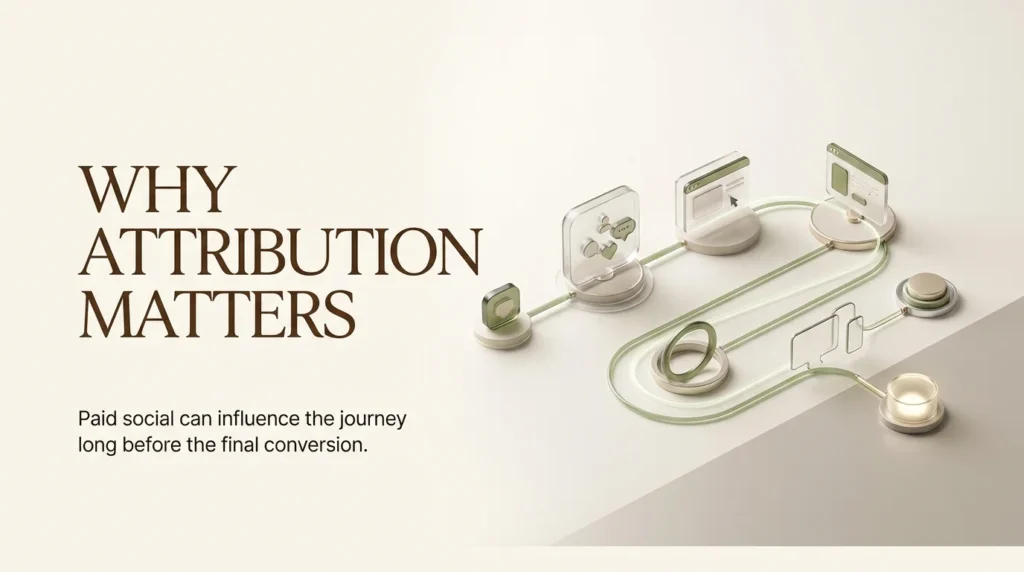
Why attribution matters
Paid social often influences users before conversion happens later through another session, device, or channel. Because of that, campaigns should not be judged only by last-click logic. A stronger framework combines engagement signals, landing-page behavior, assisted conversions, and broader funnel performance.
How Paid Social Works With Other Media Channels
Paid social becomes more powerful when it works alongside other channels instead of operating in isolation.
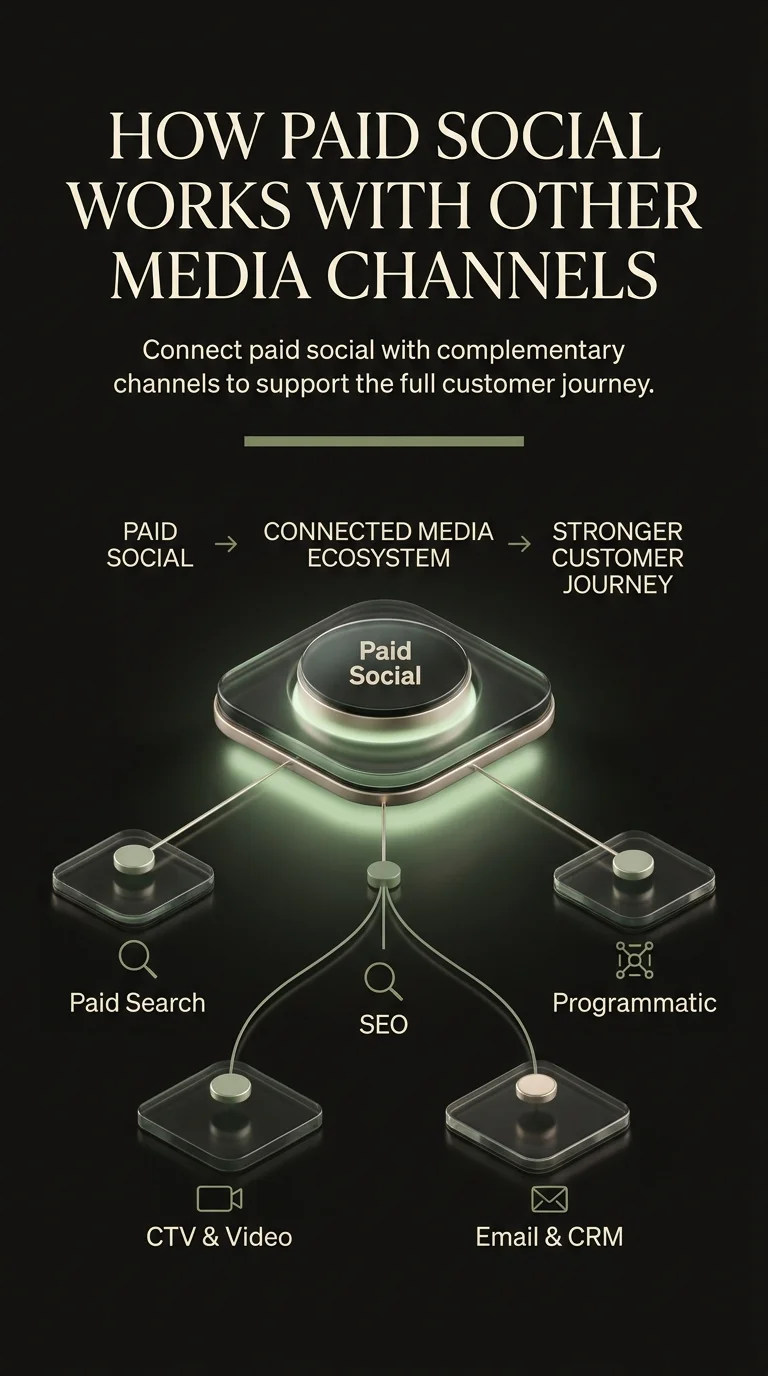
Paid social and paid search
Paid social helps create interest and demand. Paid search helps capture the click when users actively search later.
Paid social and SEO
SEO builds long-term organic visibility. Paid social helps increase awareness, drive content traffic, and create immediate exposure while organic efforts grow.
Paid social and programmatic display
Paid social helps build audience familiarity in platform-native environments. Programmatic display helps extend retargeting and message reinforcement across the open web.
Paid social and CTV/video
CTV and premium video help build broad awareness, while paid social helps continue the message in more interactive, mobile-first, and repeat-exposure environments.
Paid social and email or CRM strategy
Paid social can support CRM and lead generation strategy through retargeting, customer list activation, and audience reinforcement across campaign stages.
That is why paid social should be treated as part of a broader marketing system, not just a set of boosted posts or isolated campaigns.
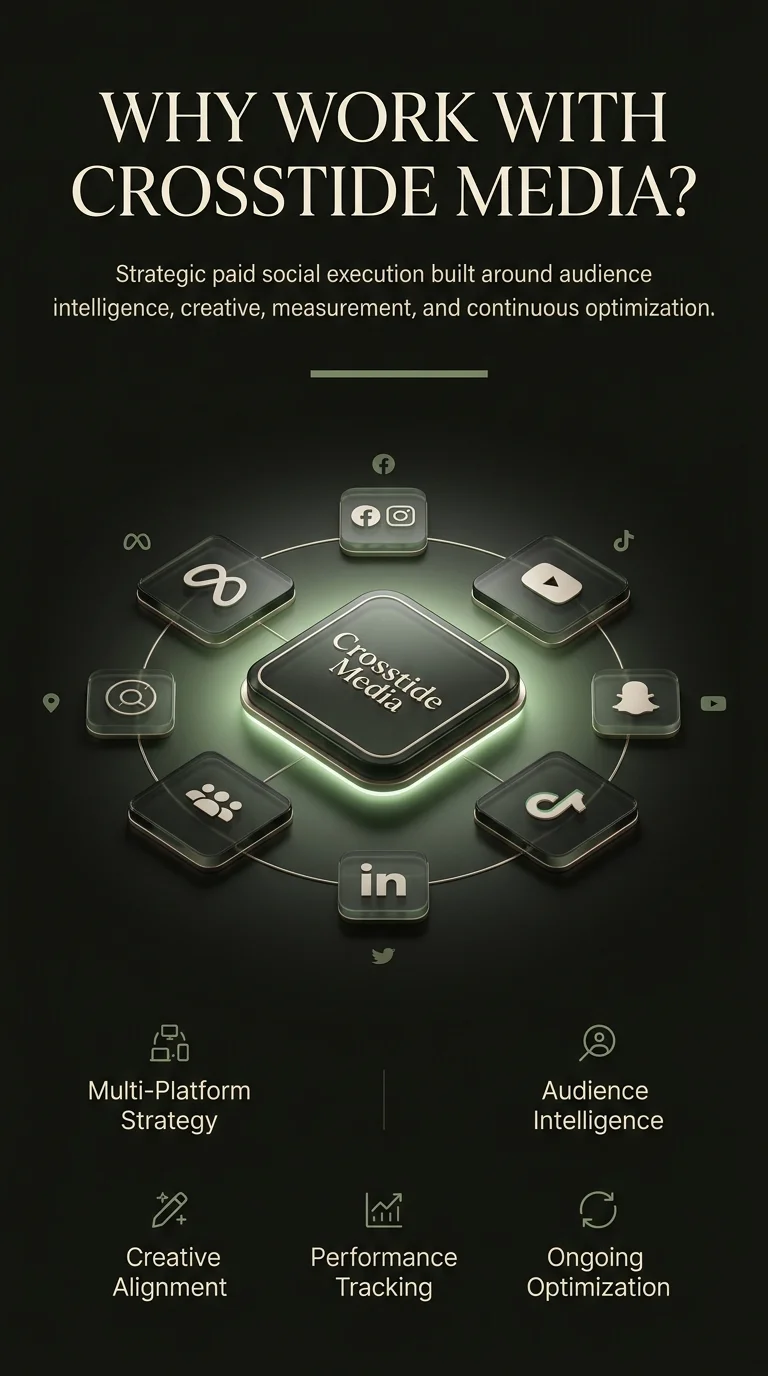
Why Work With Crosstide Media?
Effective paid social advertising requires more than launching ads across social platforms. It takes channel strategy, audience planning, creative discipline, tracking accuracy, ongoing auditing, and structured optimization.
Crosstide Media helps advertisers execute paid social campaigns with:
- Meta advertising strategy
- Facebook and Instagram campaign management
- YouTube advertising strategy
- TikTok campaign planning
- LinkedIn advertising strategy
- Snapchat advertising support
- audience targeting and retargeting
- creative alignment
- account audits
- tracking and reporting
- ongoing performance optimization
We approach paid social as both a brand-building channel and a measurable performance investment. Our focus is on helping brands use Meta, Facebook, Instagram, YouTube, TikTok, LinkedIn, and Snapchat in a way that improves audience relevance, strengthens creative performance, and drives better business results.
Whether the goal is awareness, website traffic, lead generation, engagement, or broader funnel growth, Crosstide Media helps advertisers build paid social campaigns with the structure and discipline required for long-term performance.
Frequently Asked Questions
What is paid social advertising?
What platforms are included in paid social?
What is the difference between paid social and paid search?
Is paid social good for lead generation?
Why is creative so important in paid social?
What is a paid social audit?
Which is better for paid social: Facebook, Instagram, YouTube, TikTok, LinkedIn, or Snapchat?
Is LinkedIn good for paid social advertising?
Is Snapchat good for paid social advertising?
How does retargeting work in paid social?
How is paid social measured?
Paid social can be measured through impressions, reach, engagement, clicks, video metrics, leads, conversion rate, cost per lead, ROAS, and broader attribution analysis.
Why work with a paid social agency?
Build a Smarter Paid Social Strategy
If your business needs a more strategic paid social approach, Crosstide Media can help you plan, launch, and optimize campaigns built around stronger audience targeting, better creative performance, cleaner account structure, and clearer reporting. Whether your goal is to increase awareness, generate more leads, improve campaign efficiency, expand your reach across Meta, Facebook, Instagram, YouTube, TikTok, LinkedIn, and Snapchat, or strengthen full-funnel growth, we help brands use paid social in a smarter, more results-focused way.
Why Brands Choose Crosstide Media
Brands work with Crosstide Media because effective paid social requires more than turning on ads across major platforms. Strong results come from the right mix of audience strategy, platform planning, creative discipline, account structure, measurement, and ongoing optimization. Our approach is built to help advertisers improve traffic quality, reduce waste, strengthen creative performance, and make better decisions through clearer reporting and more actionable campaign insights.
Talk to Crosstide Media About Paid Social Advertising
If you are looking for a paid social partner that can help you improve performance across Meta, Facebook, Instagram, YouTube, TikTok, LinkedIn, and Snapchat, Crosstide Media can help. We build paid social campaigns with the strategic planning, technical setup, audience intelligence, creative alignment, and optimization discipline needed to support long-term growth.