
- Programmatic Advertising
Programmatic Advertising Powered by Advanced Technology, Data Intelligence, and Cross-Channel Media Strategy
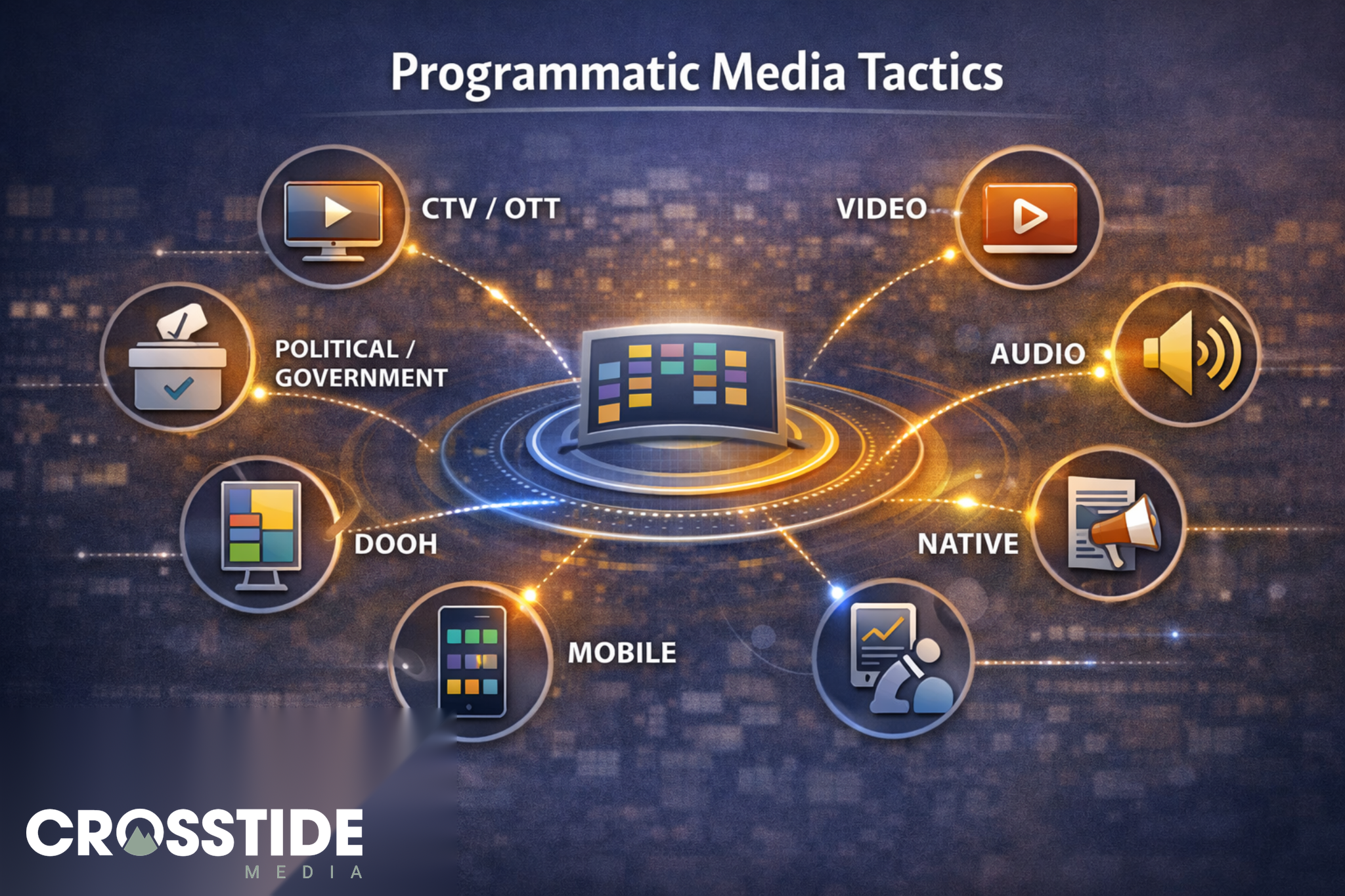
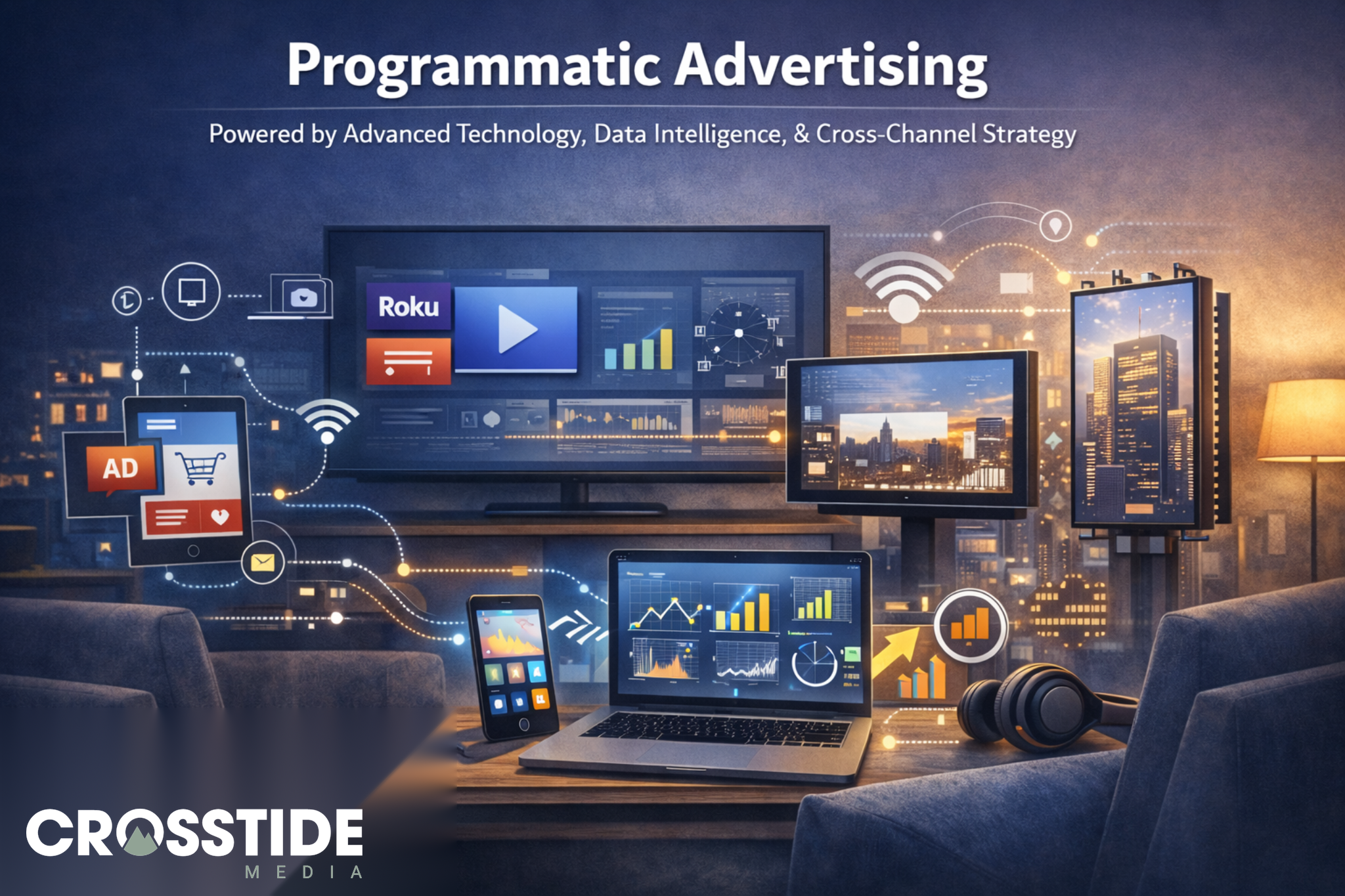
Programmatic advertising gives brands a more intelligent way to plan, buy, and optimize media across today’s digital landscape. Instead of approaching each channel as a separate tactic, programmatic media allows advertisers to reach the right audience across connected TV, digital video, display, audio, mobile, digital out of home, native advertising, and other environments through one coordinated, data-driven strategy.
At its core, programmatic advertising is about using technology, audience intelligence, automation, and real time optimization to improve how media is bought and how campaigns perform. Rather than relying only on manual placement buying, advertisers can use programmatic infrastructure to activate campaigns across premium inventory sources, manage audiences more precisely, control frequency across channels, and make smarter budget decisions while campaigns are live.
That matters because modern consumers do not move through one channel at a time. They stream content on connected TVs, browse websites on desktop, scroll on mobile devices, listen to streaming audio, engage with content in native environments, and move through physical spaces where digital out of home media can reinforce the message. A strong programmatic strategy brings those touchpoints together so the campaign feels more connected, more efficient, and more measurable.
At Crosstide Media, we build programmatic advertising strategies designed to help brands use these channels in a smarter, more coordinated way. Whether the goal is awareness, traffic, lead generation, conversion support, audience education, or full funnel media performance, we help advertisers build cross channel programmatic campaigns that are structured for reach, relevance, and measurable results.
Jump To Sections
What Is Programmatic Advertising?
Programmatic advertising is the automated buying and delivery of digital media across multiple channels using advertising technology, audience data, bidding systems, and real-time optimization. Rather than buying placements one publisher at a time through a fully manual process, advertisers can use programmatic media buying to access a wide range of inventory and reach audiences across different devices, platforms, and environments.
Programmatic advertising can include:
- CTV and OTT advertising
- programmatic video
- programmatic display
- programmatic audio
- programmatic mobile
- digital out-of-home
- native advertising
- political and government media strategies
The value of programmatic advertising comes from its ability to combine:
- audience precision
- scalable reach
- cross-channel delivery
- real-time optimization
- premium inventory access
- measurable performance reporting
This makes programmatic advertising one of the most effective ways for brands to run modern media campaigns across the full customer journey.
Why Programmatic Advertising Matters
Programmatic advertising matters because the customer journey is no longer linear. People move between screens, devices, content environments, and real-world locations throughout the day. They may see a message on connected TV, later browse on mobile, hear the brand through streaming audio, revisit the website through display retargeting, and eventually convert after multiple exposures across channels.
A strong programmatic strategy helps advertisers keep those touchpoints connected.
Programmatic advertising can help support:
- brand awareness
- audience reach
- message repetition
- website traffic
- lead generation
- retargeting
- conversion support
- geographic targeting
- omnichannel media performance
Why advertisers use programmatic advertising:
- It connects multiple media channels under one strategy
- It helps advertisers buy audiences, not just placements
- It allows campaigns to optimize while they are live
- It can improve efficiency across awareness and performance goals
- It supports stronger cross-channel reporting
- It gives brands more flexibility than siloed media buying
For Crosstide Media, programmatic advertising is valuable because it helps advertisers build cleaner, smarter, and more accountable media strategies across the channels where modern audiences actually spend time
How Programmatic Advertising Works
Programmatic advertising works by using ad technology platforms to connect advertisers with available inventory across digital channels. Campaigns are built around audience targets, formats, devices, budgets, frequency controls, creative assets, inventory preferences, and performance goals.
A programmatic campaign may run across multiple environments at the same time, including streaming TV, websites, mobile apps, digital audio, native placements, and digital screens in physical spaces. The key advantage is that all of these channels can be coordinated under a broader media strategy rather than planned in isolation.
Typical programmatic workflow
A well managed programmatic campaign usually includes:
- audience planning and segmentation
- channel strategy and inventory planning
- creative setup and quality assurance
- budget allocation and pacing controls
- targeting and frequency management
- brand safety and supply review
- mid-flight optimization
- reporting and attribution analysis
Why this model is useful
Programmatic advertising gives advertisers more control over:
- who sees the message
- where ads appear
- how often users are reached
- which channels are carrying the most value
- how spend shifts during the campaign
- how media performance is measured across environments
That makes programmatic advertising more adaptable, more efficient, and more measurable than a disconnected channel by channel approach.

The Programmatic Advertising Landscape
The programmatic landscape includes multiple media channels, each with its own strengths. Some channels are better for awareness and reach. Others are stronger for traffic, retargeting, consideration, or lower funnel support. The strongest campaigns are usually not built around one tactic alone. They are built around the right combination of tactics working together.
At a high level:
CTV and OTT create premium large-screen awareness and household reach
Programmatic video adds visual storytelling across more screens and placements
Programmatic display supports reach, retargeting, and efficient traffic generation
Programmatic audio extends the message into streaming, podcast, and listening environments
Programmatic mobile reaches users across mobile web and in-app environments
Digital out of home adds real world visibility and geographic presence
Native advertising supports engagement and content-driven traffic
Political and government media use specialized data, audience, and geographic strategy for high priority communication
CTV and OTT Advertising
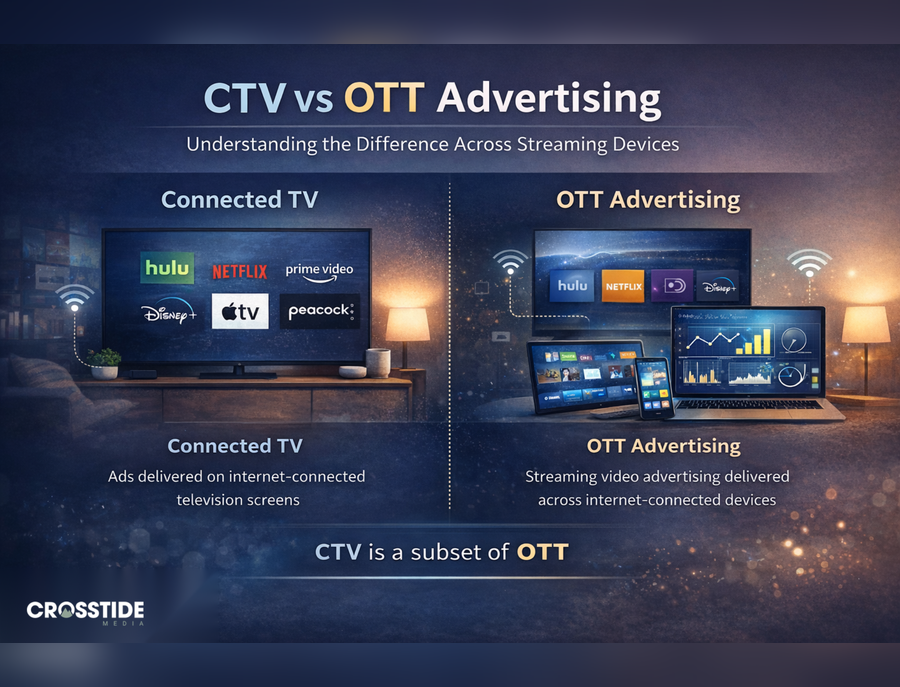
CTV and OTT advertising allows brands to reach audiences on internet-connected television screens and streaming environments. These campaigns are often used for premium awareness, household reach, and stronger visual storytelling in high-attention environments.
CTV and OTT can help support:
- brand awareness
- household-level reach
- premium video presence
- message repetition across larger screens
- cross-screen reinforcement with other channels
When used properly, CTV often acts as a top-of-funnel or mid-funnel anchor within a larger programmatic strategy.
Programmatic Video Advertising
Programmatic video advertising extends video messaging across desktop, mobile, app, streaming, and premium publisher environments. It offers flexibility across screen sizes, placement types, and campaign objectives.
Programmatic video can support:
- awareness
- product education
- consideration
- retargeting reinforcement
- traffic and conversion support
Video is often one of the strongest ways to build narrative and brand recognition, especially when paired with display, CTV, and mobile formats.

Programmatic Display Advertising
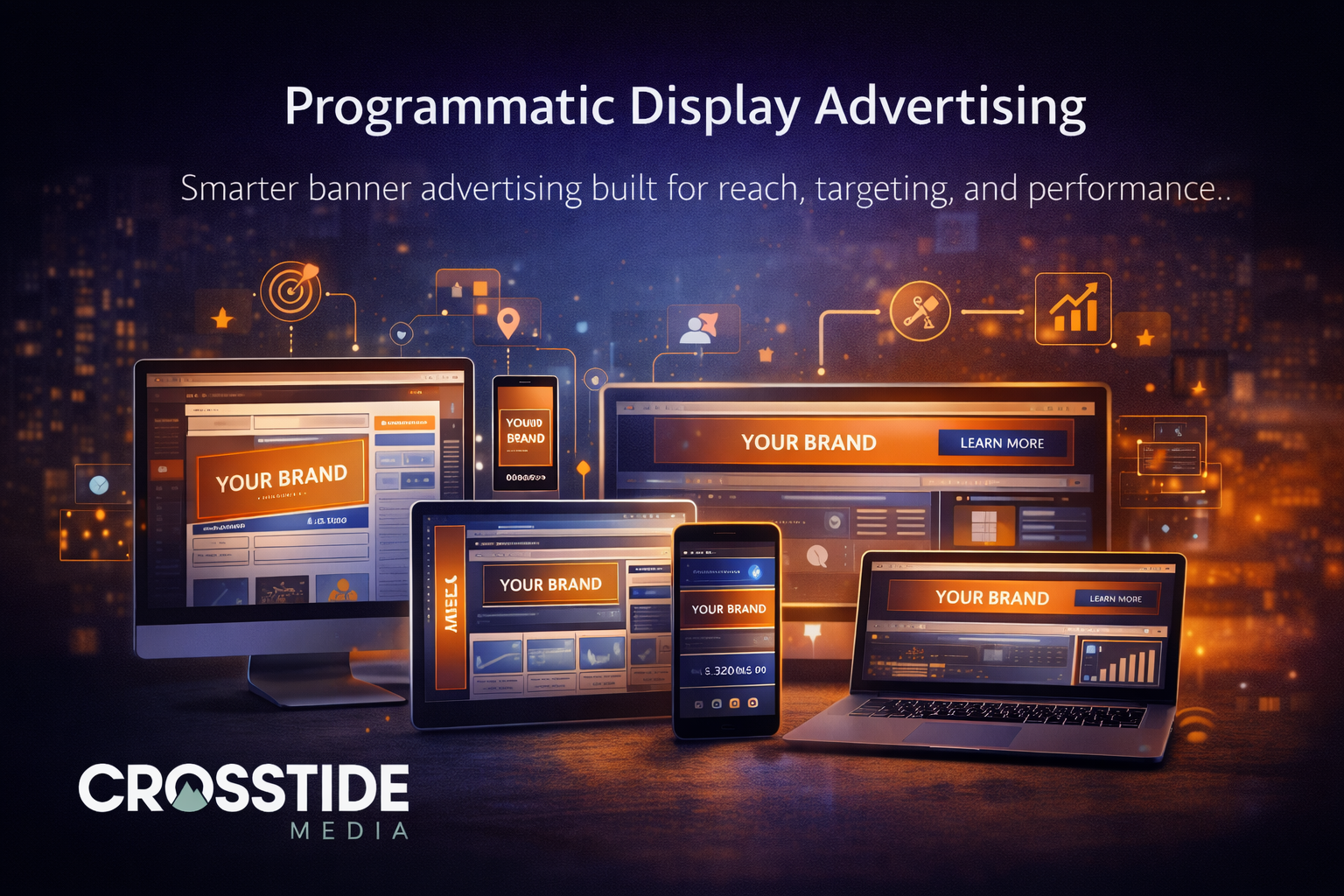
Programmatic display advertising gives brands scalable reach across websites, apps, and digital placements through banner and visual ad formats. It is one of the most flexible channels in the programmatic mix because it can support both prospecting and retargeting across a wide range of environments.
Programmatic display is often useful for:
- broad reach
- retargeting
- website traffic
- lead generation support
- message repetition
- conversion reinforcement
Display is often the connective tissue of an omnichannel campaign because it can follow up after exposure from video, CTV, audio, or native placements.
Programmatic Audio Advertising
Programmatic audio advertising helps brands reach listeners across streaming music, podcasts, internet radio, and other digital audio environments. It allows advertisers to deliver messaging in moments when users are listening rather than actively focused on a screen.
Programmatic audio is often useful for:
- awareness
- message recall
- frequency support
- commuting and daily-routine reach
- omnichannel reinforcement
Audio works especially well when combined with visual channels because it increases message repetition in environments where display and video may not always be present.
Programmatic Mobile Advertising
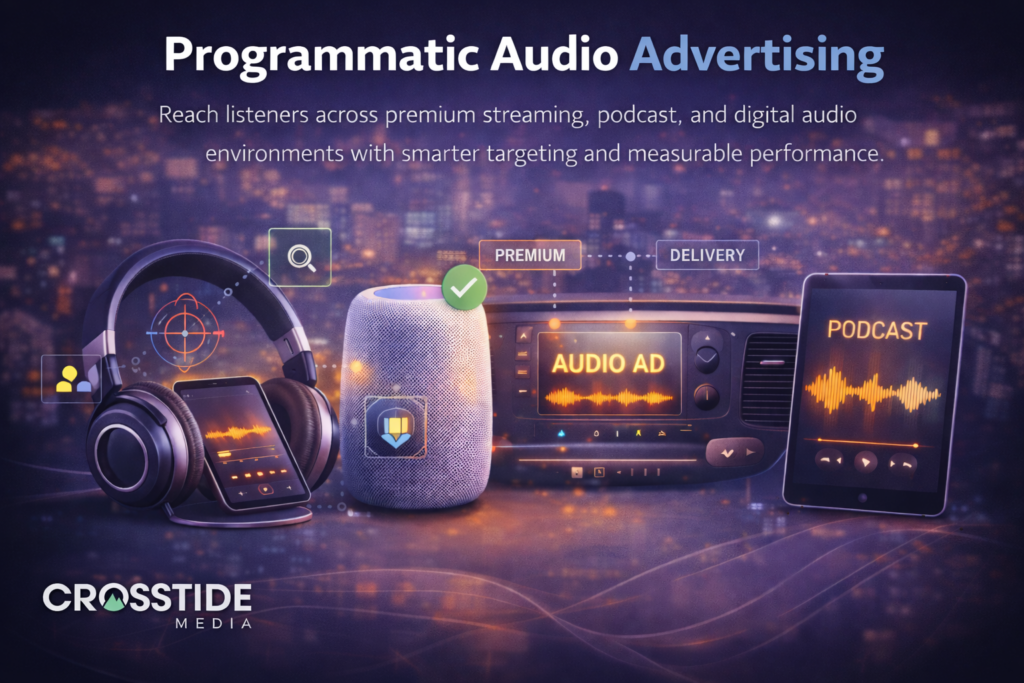
Programmatic mobile advertising helps brands reach users across smartphones and tablets through mobile web and in-app placements. Mobile campaigns can include display, video, native, and other mobile-first formats built around how people browse, scroll, stream, and engage on smaller screens.
Programmatic mobile can support:
- mobile traffic
- location-based targeting
- in-app reach
- retargeting
- mobile video engagement
- conversion support
A strong mobile strategy usually considers both mobile web and in-app environments, since user behavior, creative fit, and performance can vary between the two.
Digital Out-of-Home Advertising
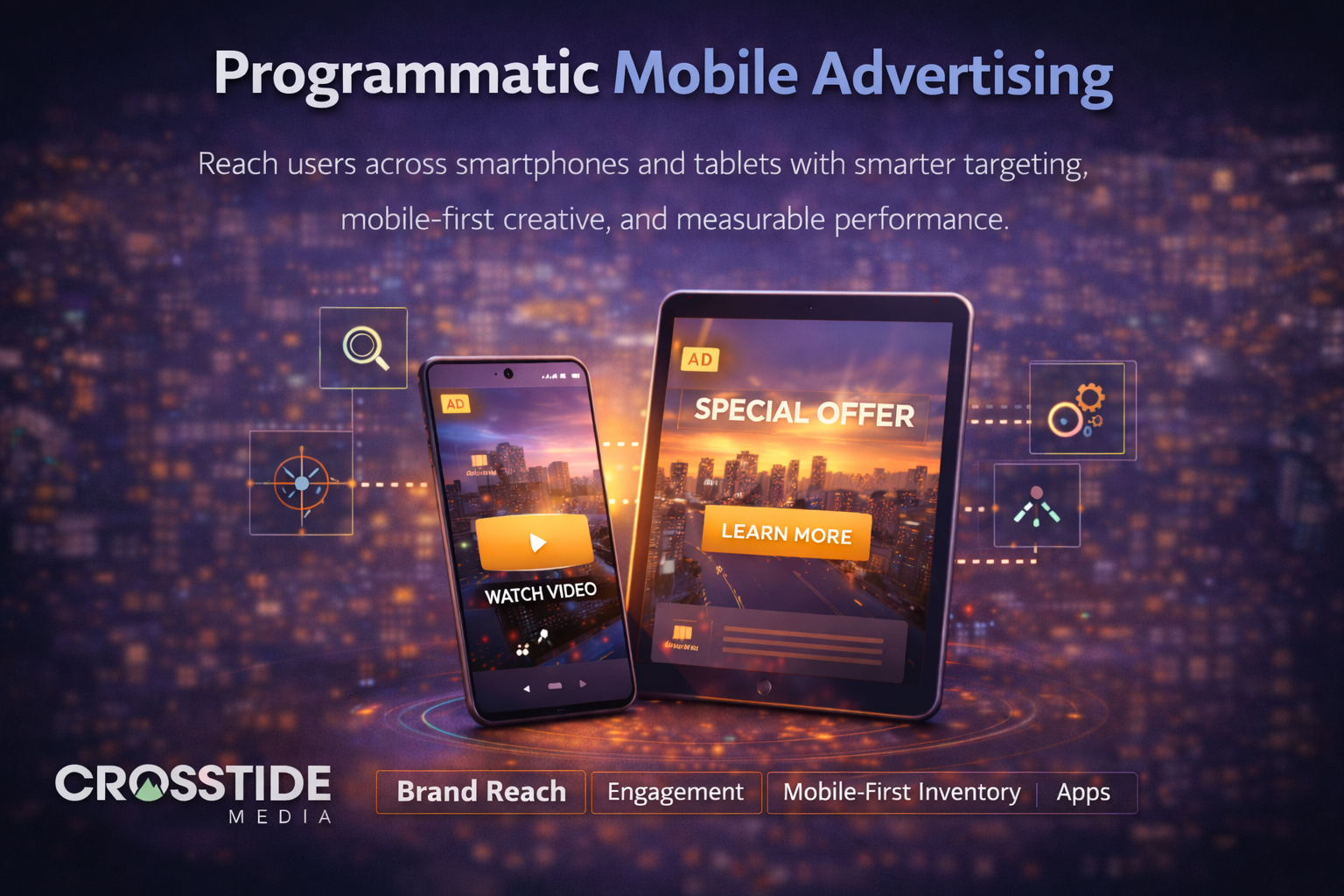
Digital out-of-home advertising places brand messaging on digital screens in physical environments such as roadways, transit locations, retail spaces, office buildings, gyms, and other high-traffic venues.
Digital out-of-home can support:
- market visibility
- local awareness
- brand presence in the real world
- campaign reinforcement outside of digital-only environments
- geographic concentration
DOOH becomes even more effective when it is used alongside mobile, display, video, and audio as part of a larger cross-channel strategy.
Native Advertising
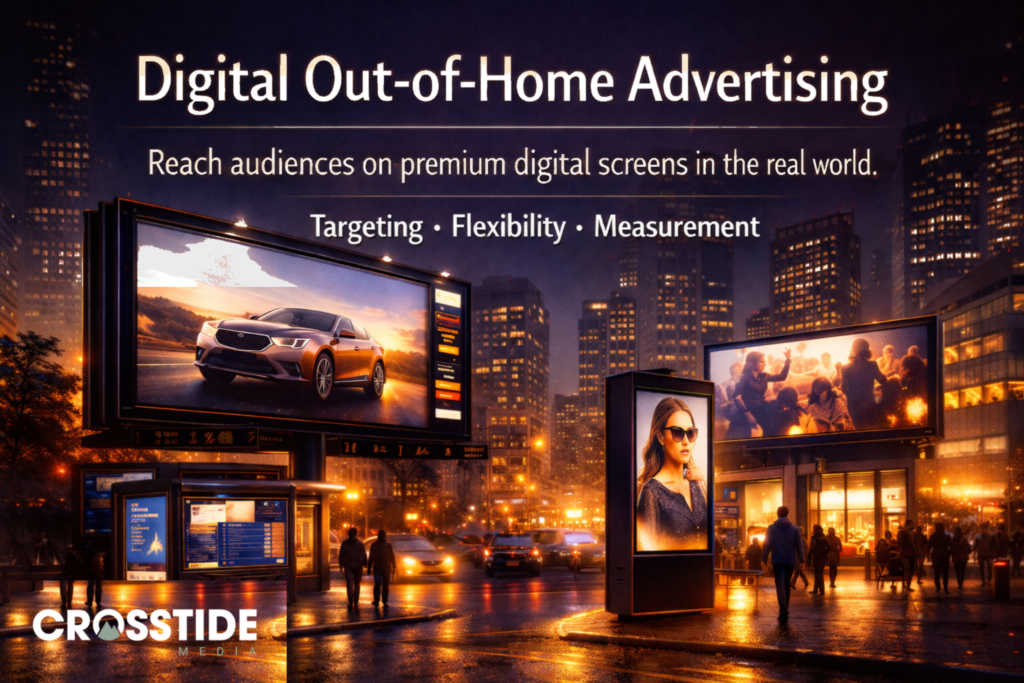
Native advertising helps brands appear within publisher and content environments in a format that feels more integrated into the surrounding experience. Instead of functioning like a standard banner, native ads are designed to match the structure and feel of the content environment where they appear.
Native advertising is often useful for:
- qualified traffic generation
- content promotion
- product or service education
- engagement with articles or landing pages
- awareness and consideration support
Native often works especially well when advertisers want to combine audience targeting with content-driven engagement.
Political and Government Advertising
Political and government advertising uses many of the same programmatic tools as commercial media buying, but with more specialized audience, geographic, and messaging strategy.
Political campaigns often focus on:
- voter persuasion
- turnout
- fundraising
- voter matching
- addressable household targeting
- geographic concentration
Government campaigns often focus on:
- public awareness
- community outreach
- education campaigns
- behavior change
- public safety and service messaging
- localized audience targeting
These campaigns require more precise structure because the objective, audience, and timing are often more sensitive than standard commercial advertising.
How These Channels Work Together
The real strength of programmatic advertising is not just that each tactic can work individually. It is that they become more powerful when they are planned together.
A coordinated programmatic strategy might work like this:
- CTV and video build initial awareness and message recognition
- Display and mobile continue the message and drive traffic
- Audio reinforces the brand in screen-light moments
- Native deepens engagement through content environments
- DOOH adds local visibility and physical-world presence
- Retargeting across channels helps move audiences from awareness to action
When these tactics are aligned correctly, they do not compete with one another. They support one another.
Why integration matters
Integrated programmatic strategy helps improve:
- message consistency
- frequency management
- audience quality
- budget efficiency
- cross-screen reach
- conversion support
- reporting visibility across channels
This is what separates a true programmatic media strategy from simply running several digital tactics at once.
Audience Targeting and Data Strategy
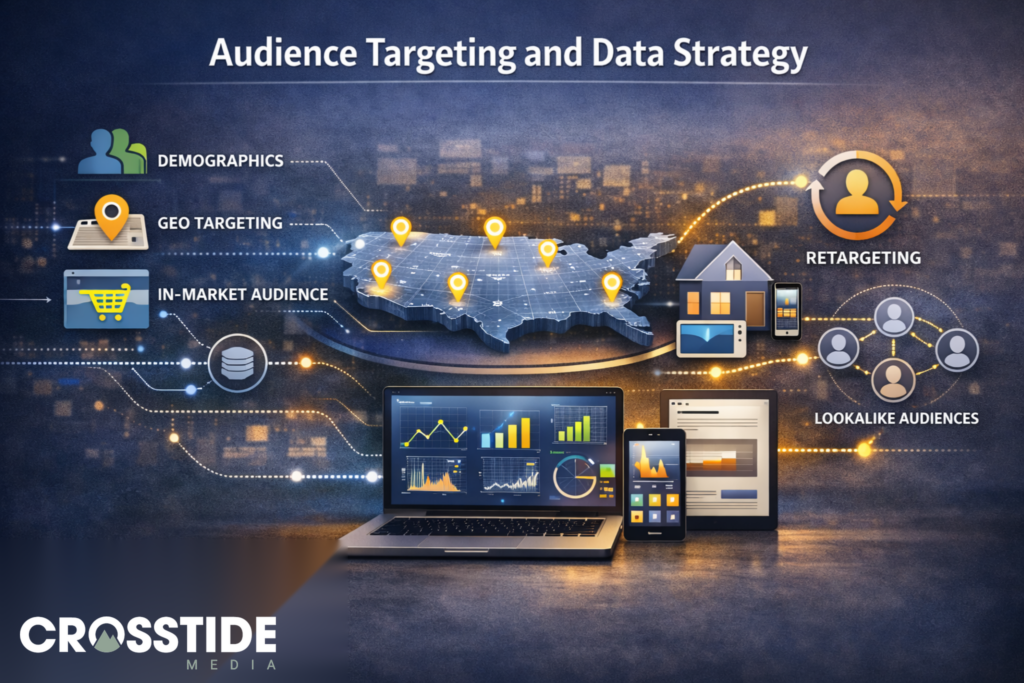
A strong programmatic campaign starts with audience strategy. The best media plans are not just built around channels. They are built around who the advertiser needs to reach and what action they want that audience to take.
Programmatic audience targeting may include:
- demographic targeting
- geographic targeting
- contextual targeting
- behavioral audiences
- in-market audiences
- first-party audience onboarding
- retargeting pools
- modeled or lookalike audiences
- household targeting
- account-based targeting in certain campaign types
The value of audience intelligence is not just better targeting. It is building a cleaner media structure where different audience segments receive the right message in the right environment.
Creative Strategy Across Programmatic Channels
Creative is one of the biggest variables in programmatic performance because every channel has different strengths, screen sizes, attention conditions, and user behaviors.
A strong programmatic creative strategy should consider:
- video storytelling for CTV and online video
- concise visual communication for display
- audio clarity and message pacing for streaming audio
- mobile-first design for smartphones and tablets
- headline and image alignment for native
- larger-format readability for DOOH
- consistent branding across all channels
The strongest campaigns do not simply resize one ad into many formats. They adapt the message to fit the channel while keeping the overall campaign story consistent.
Measurement, Attribution, and Optimization
Programmatic advertising should be measured across both media delivery and business outcomes. Because users often move across channels before taking action, programmatic campaigns should not be judged only through last-click reporting.
A stronger reporting framework may include:
- impressions
- reach
- frequency
- video completion rate
- click-through rate
- site traffic
- landing-page engagement
- leads
- CPA
- ROAS
- assisted conversions
- audience-level performance
- channel-level performance
- geographic performance
Why optimization matters
One of the biggest advantages of programmatic media is the ability to optimize while campaigns are live. That can include:
- shifting budget between tactics
- adjusting audiences
- refining geography
- removing weak placements
- managing frequency
- updating creative
- reallocating spend toward stronger-performing environments
This turns reporting into a decision-making tool, not just a summary after the fact.

Why Work With Crosstide Media?
Effective programmatic advertising requires more than simply turning on multiple channels. It takes audience intelligence, media planning, creative strategy, technical setup, inventory quality control, optimization discipline, and actionable reporting.
Crosstide Media helps advertisers execute programmatic campaigns with:
- media buying expertise
- cross-channel strategy
- audience planning
- premium inventory access
- creative readiness
- technical QA
- performance reporting
- ongoing optimization
We approach programmatic advertising as a connected system, not a disconnected list of tactics. Our focus is on helping brands use CTV, video, display, audio, mobile, DOOH, native, and specialized targeting in a way that improves relevance, reduces waste, and drives stronger results.
Whether the goal is awareness, traffic, lead generation, public education, or broader full-funnel media performance, Crosstide Media helps advertisers build programmatic strategies with the structure and discipline required for modern media buying.
Frequently Asked Questions
What is programmatic advertising?
Connected TV advertising refers to video ads delivered through internet connected television devices such as Smart TVs, Roku, Amazon Fire TV, and Apple TV. Unlike traditional linear television, CTV advertising allows advertisers to target specific households using digital data, geographic precision, and behavioral audience segments while measuring performance in real time.
What channels are included in programmatic advertising?
Why is programmatic advertising effective?
How do CTV, video, display, audio, mobile, DOOH, and native work together?
Is programmatic advertising only for awareness campaigns?
What is the difference between programmatic display and programmatic video?
A practical working target is to keep the final asset under 100 MB when possible, especially for smoother trafficking and compatibility. Some platforms support materially larger files, but lighter high quality files are often easier operationally.
What is the difference between mobile web and in-app advertising?
Is digital out-of-home part of programmatic advertising?
Can native advertising be part of a programmatic media strategy?
Why work with a managed programmatic advertising partner?
Build a Smarter Programmatic Advertising Strategy
If your brand needs a more connected and strategic media approach, Crosstide Media can help you plan, launch, and optimize programmatic campaigns built around stronger audience intelligence, cleaner inventory, better creative execution, and clearer reporting. Whether your goal is to increase awareness, improve traffic quality, support lead generation, strengthen retargeting, or build a more effective full-funnel media plan, we help brands use programmatic advertising in a smarter, more coordinated way.
Why Brands Choose Crosstide Media
Brands work with Crosstide Media because effective programmatic advertising requires more than buying impressions across multiple channels. Strong results come from the right mix of audience strategy, channel planning, creative discipline, inventory quality, measurement, and optimization. Our approach is built to help advertisers improve reach, reduce waste, maintain stronger media standards, and make better decisions through clearer reporting and more actionable campaign insights.
Talk to Crosstide Media About Programmatic Advertising
If you are looking for a programmatic advertising partner that can help you connect CTV, video, display, audio, mobile, DOOH, native, and specialized targeting into a stronger media strategy, Crosstide Media can help. We build programmatic advertising campaigns with the strategic planning, technical setup, inventory quality controls, creative alignment, and optimization discipline needed to support long-term growth.
